Support WBUR
Essay
Mutual aid is everyday resistance
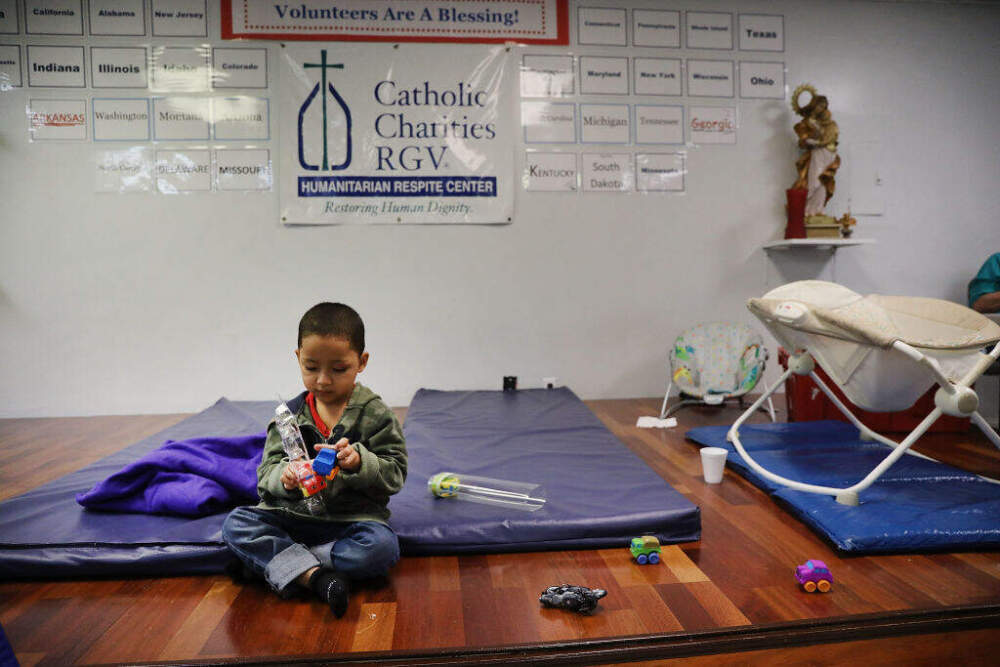
They arrived at the Catholic Charities respite center in McAllen, Texas exhausted and disoriented, still shaking off the cold from what everyone called "the freezer," the processing facility in the Rio Grande Valley where Immigration and Customs Enforcement kept the air conditioning turned so low that families huddled together for warmth under metallic blankets. Local volunteers handed out hot food, clean clothing, and something harder to quantify: the message that someone cared what happened to them. This was not charity. It was not protest. It was simply what needed to be done. I was there as a volunteer with Catholic Charities, with whom I've traveled to our southern border five times.
Before a society agrees it is in crisis, something quieter usually happens first. People begin adjusting their daily routines in small, practical ways. Not marches. Not manifestos. Just decisions made in classrooms, kitchens, libraries, nursing homes and church halls. When formal systems become unreliable or morally compromised, people do not wait for consensus about how to change them. They adapt.
This adaptation is visible today in contemporary forms of mutual aid. Neighbors organize. Faith communities keep their doors open late because people need a safe place to go. Advocacy networks form to help families navigate opaque bureaucracies, connect vulnerable people with legal and medical advocates, and surface patterns of harm that regulators miss.
Charity assumes stability: someone has resources, someone else lacks them, and the broader system still works. Mutual aid emerges when that assumption collapses; when people recognize that the system itself has become part of the problem. It is grounded in reciprocity, proximity and urgency. Mutual aid is less about generosity than sustaining.
The migrant response in McAllen, Texas, during the 2010s offers a clear example. As families were released from federal custody with little support, volunteers and faith-based organizations stepped in to meet immediate needs. Catholic Charities' Humanitarian Respite Center became a hub not because of faith, but necessity. In the South Texas heat, with buses unloading exhausted families, local residents organized food, clothing, medical care and travel assistance. The work was practical, repetitive and emotionally demanding. At the national level, debates about borders and legality dragged on. Locally, those questions felt beside the point. People acted because delay meant harm.
Charity assumes stability: someone has resources, someone else lacks them, and the broader system still works. Mutual aid emerges when that assumption collapses
Dignity Alliance in Massachusetts emerged from the same logic, though in a different context. During the COVID-19 pandemic, as older adults and people with disabilities faced neglect and preventable deaths, and systems designed more for extraction than care, advocates did not wait for comprehensive reform. They coordinated, through phone calls, shared documents, emails and rapid-response coordination, creating parallel structures of protection when official ones failed.
It is not dramatic. It is necessary. What starts as helping one person avoid displacement or neglect becomes an effort to name and confront the systems producing that harm.
Historically, this mutual aid is how resistance forms before it is recognized. Informal networks precede formal movements. Shared experience precedes organization. Ordinary people become witnesses long before they become activists. Mutual aid often creates the moral infrastructure for more visible forms of dissent.
At our southern border, for example, Sister Norma Pimentel’s work centers on the daily logistics of care—shelter, food, medical support and dignity for migrants with nowhere else to turn — not protest or political theater.
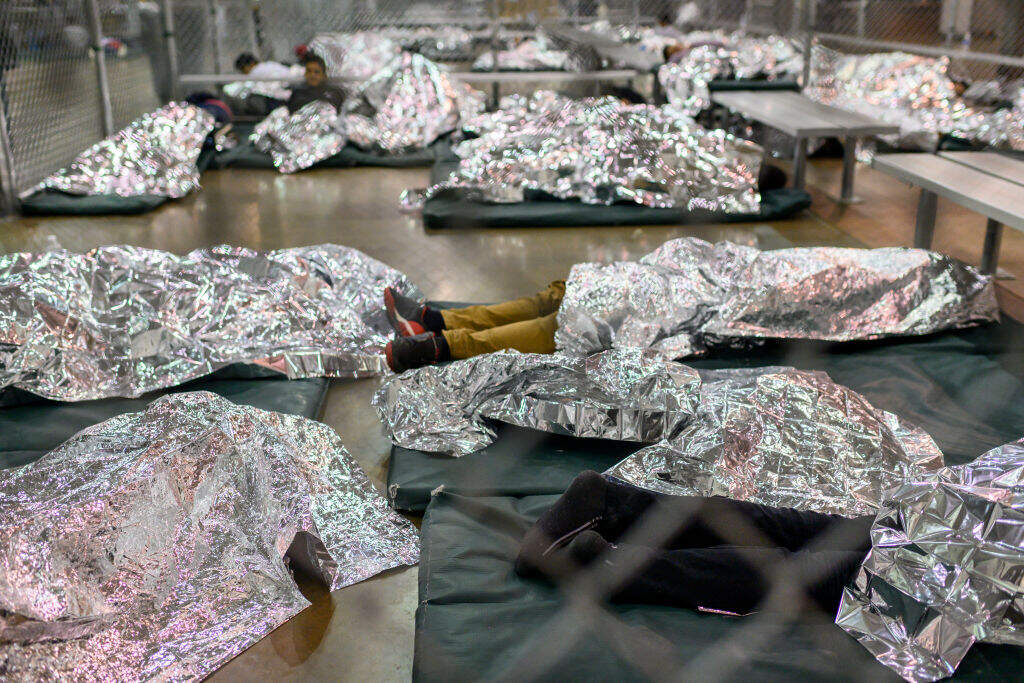
We’re seeing similar kinds of care work now in Minneapolis as community members confront ICE by doing things like delivering groceries to families in hiding. These networks — which rarely announce themselves — form the infrastructure that makes any sustained moral or political response possible. Participants see themselves as neighbors, not political actors.
The spread of this kind of coordination is itself a signal. When people rely more on one another — than on official systems for protection — something has already shifted. Trust has eroded. Predictability has vanished. Parallel structures emerge. They challenge authority directly and compensate for its failure.
Mass demonstrations often attract attention from the media and the public, overshadowing the quieter, ongoing work that sustains movements. While marches and rallies grab headlines, essential behind-the-scenes work continues without pause. (When spectacle consumes all the oxygen, this kind of care work risks being rendered invisible — and under-resourced.)
Mutual aid often creates the moral infrastructure for more visible forms of dissent.
There is a risk that mass mobilization becomes the only form of resistance that is recognized or valued, while the daily acts of protection and care remain invisible. This matters not only for historical accuracy, but for sustainability. The people doing the work that provides an infrastructure of care need resources, recognition and relief. The most effective movements have always combined both: the visible moments that demand public attention and the invisible networks that sustain people through long struggles.
When mutual aid becomes routine across different contexts at borders, in nursing homes and in immigrant communities, it suggests that trust in formal systems is eroding. People are preparing for unpredictability. They are building parallel structures of care because existing ones feel insufficient or unsafe.
By the time a society publicly admits it is in crisis, much of the moral work has already begun. It has been done quietly, by people who refused to look away and be complicit. The respite center where I served in McAllen and the Dignity Alliance in Massachusetts exist in that early, often invisible phase. Its significance lies not only in what it opposes, but in what it quietly builds: a network of concern, help, assistance, accountability and shared responsibility that insists dignity cannot be deferred.
This work will continue, unnoticed, unnamed, undeterred. Resistance is not only what gets filmed. It's what gets done, long before history names it.