Support WBUR
Cog's Weekly Newsletter
My mom never had a driver's license. I'm better for it
Editor's Note: This essay appeared in Cognoscenti's newsletter of ideas and opinions, delivered weekly on Sundays. To become a subscriber, sign up here.
I wouldn’t have been a public transportation kid if my mother could drive. My mom was born with a vision disorder called achromatopsia. People with this rare syndrome have very poor vision, extreme light sensitivity, and trouble perceiving colors. There is no cure for it, but my mom hasn’t let achromatopsia stop her from leading a very full and very independent life. She went out of state to attend college, got a teaching certificate and worked at the Seattle World’s Fair. But driving was out of the question.
Eventually, she landed in Europe, which she called a “public transportation dream.” She got a job in Germany and met my dad. But within a year of getting married, my dad left for Vietnam and my mom returned to the U.S.
My dad had a driver’s license, and did what he could. (I remember many a family outing to the grocery store on a Friday night.) But he was an Army officer, who did two tours of duty in Vietnam and served with the United Nations in the Middle East. When he was stateside, he worked long hours and traveled a lot.
We lived in 19 (!) different places. And wherever we were, my mom had to figure out how to transport herself and the four of us kids.
We walked a lot and sometimes rode bikes to doctor’s appointments, the stores, the pool. But my mom’s favorite assignments were the ones to towns and cities with good public transportation, the places where a person with a vision problem had no problem getting around.
When we lived in Wethersfield, Connecticut, during the ‘70s, we’d take the bus to see a matinee at Hartford Stage or an exhibit at the Wadsworth Atheneum. When my dad was transferred to a small military base in Queens, New York, in the 1980s, my mom could take the local bus to her job at a children’s hospital. And on the weekends, she could pay $3.50 to take the express bus to Manhattan, just for fun.
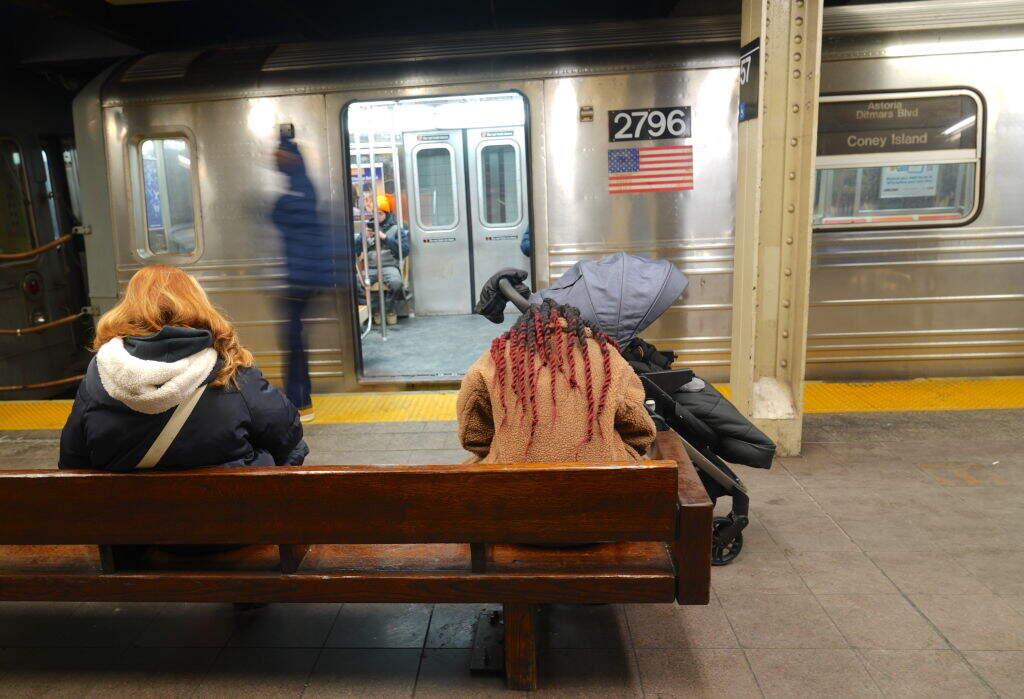
The New York years are the years I remember best — and most fondly. I was a little overwhelmed when we first arrived in the city. But because I hadn’t been chauffeured around in cars as a child, I wasn’t fazed by subways, buses or the Long Island Rail Road. I often took the Q13 bus to the Q31 to get to school. And after school on Thursdays, I took the 7 train to Manhattan for German lessons. On the weekends, my friends and I took the LIRR to the Village in the hopes of meeting NYU boys in Washington Square Park.
Forty-ish years later, I don’t use public transportation as often. I was reminded of that when I edited Rich Barlow’s essay about zero-fare buses this week. I’m an empty nester who works remotely. There’s no office to report to, no kids to schlep around. When I do have to drive somewhere, I plug the address into my GPS and choose the fastest route to get from point A to point B, always optimizing for efficiency. But I wonder what I’m missing out on.
I called my mom this week to discuss it with her. I wondered if I was romanticizing all the hours we spend waiting on buses, sitting on trains, trying to make a transfer.
“No,” she said. “I feel that way, too. Public transit showed me the world. I saw segregation and poverty up close. I overheard beautiful conversations. I got lost in deep thought. I got lost in silly thoughts.”
Our chat reminded me of all the times we fell asleep on the bus ride home from Manhattan, our feet propped on our shopping bags, our heads resting on our winter coats; all the times I made phone calls from the payphone on the platform at the Flushing-Main St. subway station; the time, in 1986, that I skipped school and hopped on the 7 train to see the Mets honored with a ticker-tape parade. (Sorry to bring up bad memories, Red Sox fans.)
My mom’s inability to drive me around gave me an age-appropriate freedom I couldn’t have enjoyed buckled up in the backseat of a station wagon. I paid my own fare, I dealt with friendly and unfriendly strangers, I got lost and figured it out.
I can’t imagine how hard it was to mother four busy kids without a driver’s license or car, but I’m so grateful I was along for the ride.