Support WBUR
Commentary
Old North Church is a ‘microcosm of America as an unfinished work’
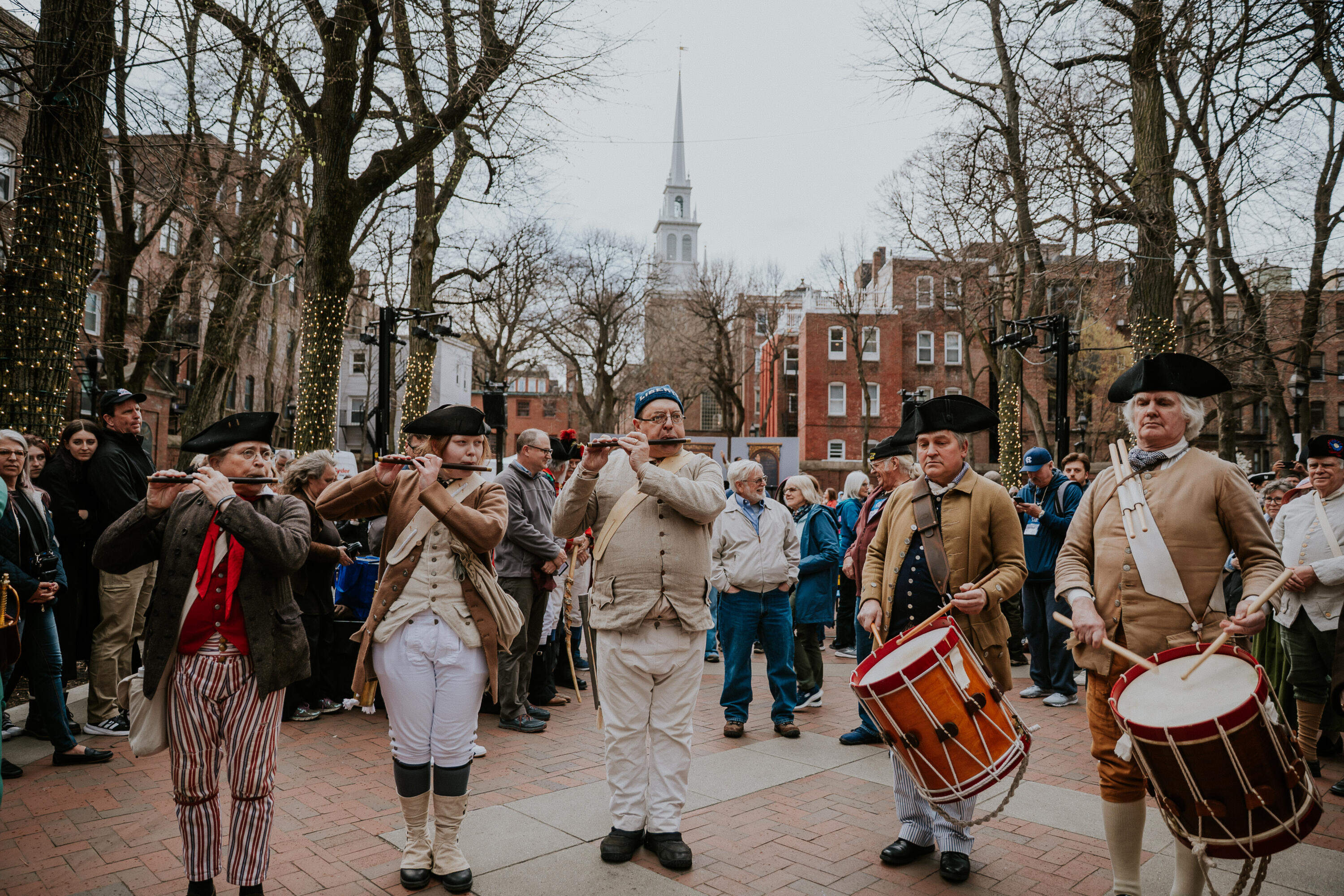
John Adams once presented his wife Abigail with a list of her flaws in writing. It included her lack of skill at games of cards, her refusal to learn how to sing and her bad posture (he jested that this was the result of reading and thinking too much). A generous take on Adams’ letter is that he was equally romantic and pragmatic; that he believed love includes honesty and the hope that we might become better versions of ourselves.
Later, also in a letter, Abigail famously asked John to “remember the ladies,” sent to him as he was meeting with other Founding Fathers in Philadelphia. Due to flaws of his own, he did not. Abigail’s love for John offered him grace and forgiveness, which historians have showed burned bright throughout their marriage.
As spring arrives ever-so-slowly in Boston, I’m reflecting on the love I have for my country — for the values rooted in its founding and the potential that still lies ahead. But just like the love of great romances, patriotism is complex. It can be proud and tender, yet demanding and critical. It requires us to confront what’s before us; to be unwilling to look away. As the United States approaches the 250th anniversary of its founding, I am committing to a brand of patriotism that demands growth.
Old North Church is most known for the events of April 18, 1775, immortalized in Henry Wadsworth Longfellow’s famous poem “Paul Revere’s Ride,” which was actually published in 1861, by The Atlantic, on the eve of the Civil War. You may know the story Longfellow relays in his verse: Two lights were briefly hung in the steeple of Old North Church to warn that the British Regulars were crossing the Charles River to Cambridge, with the intention of marching to Concord to seize stockpiled weapons and arrest John Hancock and Samuel Adams. “One if by land, two if by sea,” as the saying goes.
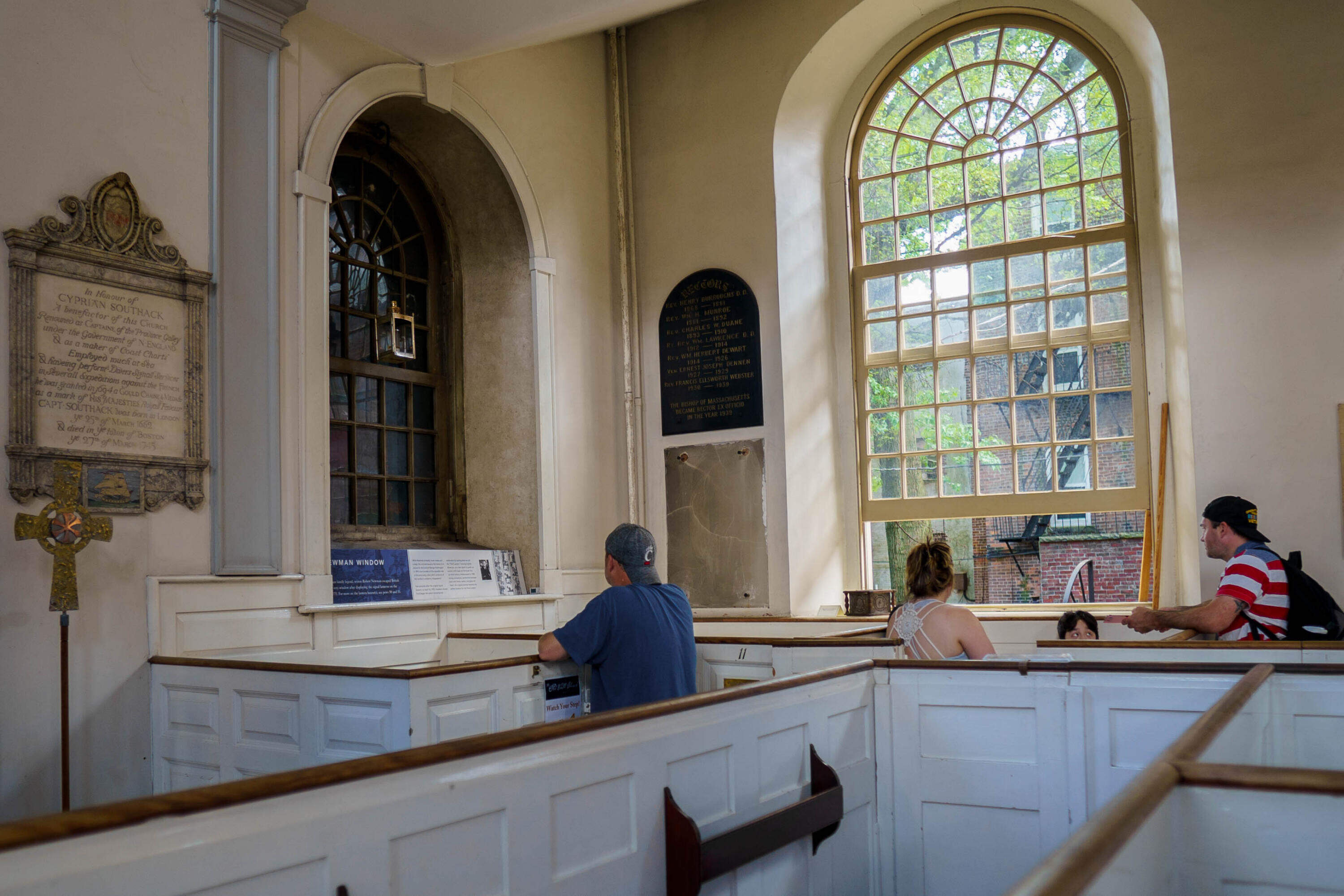
Most people honor Old North Church for the role it played in a story about three patriots who risked everything to create a nation governed “by and for” the people. But it’s more than that. It is a microcosm of America as an unfinished work: An icon of liberty funded in part by slavery; a symbol of democracy, yet a sanctuary where people worshiped according to social hierarchy; a 303-year-old community set in a neighborhood where successive waves of immigrants have come to pursue the American dream.
One of those immigrants, from France, was Apollos Rivoire, Paul Revere’s father. Today, we remember Revere as a great hero, but his backstory is relatable to many of us. He was the son of an immigrant silversmith, a working-class artisan who learned multiple trades to support his family, a messenger who helped Boston stay connected to the other colonies during a period of occupation and censorship, and someone who cared deeply for his community.
In his iconic poem, Longfellow was reminding his fellow countrymen that their ancestors had united against a common foe and won, against all odds. He was writing about April 1775, a time nearly a century before his own, when tension, uncertainty and fear consumed Boston residents. The city was under military occupation: 1 in 5 people were British soldiers. The port was closed, stripping people of their livelihoods. Division over the best path forward pitted families, friends, and neighbors against each other. Things felt bleak and uncertain.
As we approach this semi-quincentennial year, it is tempting to treat history as something settled — to celebrate triumphs without reckoning with costs. But Old North’s story resists that comfort. The lanterns did not light the path toward swift victory and a unified nation. They called for courage, community and hope.
Democracy still demands those things of us. It requires passionate debate and strategic compromise. It requires vigilance, civic participation and a willingness to stand beside neighbors with whom we may disagree. Above all, it requires the stubborn belief that liberty and justice for all are not relics of the past, but obligations of the present.
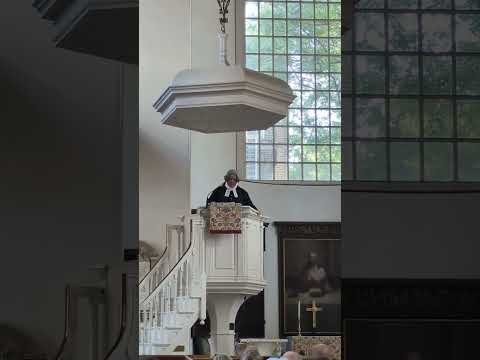
July 4 is my favorite day of the year at Old North. The annual festivities include spirited readings of the Declaration of Independence throughout the day. Visitors gather in pews and alternate between “fies” and “huzzahs” as the list of grievances — many now all too familiar — is read. I know that not everybody in the room agrees on what “liberty and justice for all” looks like today, but for a few moments, I’m reminded that our nation’s guiding principles still hold the power to light the path forward.
To love our country at this moment is not to excuse its failures, but to insist on its full potential. It is to refuse indifference. It is to believe that community and inclusion — not fear and exclusion — are what ultimately allow a nation to endure.
In this milestone year, I invite visitors and neighbors to walk Boston’s Freedom Trail, visit a historic site, and reflect on what those two lantern lights still ask of us. What are we willing to take risks for? What, and who, are we willing to protect? And how will we show our love — not just in words, but in action — for the country we are still becoming.