Support WBUR
Commentary
What wartime communication can sound like
When the United States and Iran announced a fragile two-week ceasefire, via social media — our president’s preferred mode of sharing news — I thought about a very different kind of wartime communication. This piece focuses on that topic generally, rather than weighing the complexities of the current U.S.-Iran conflict.
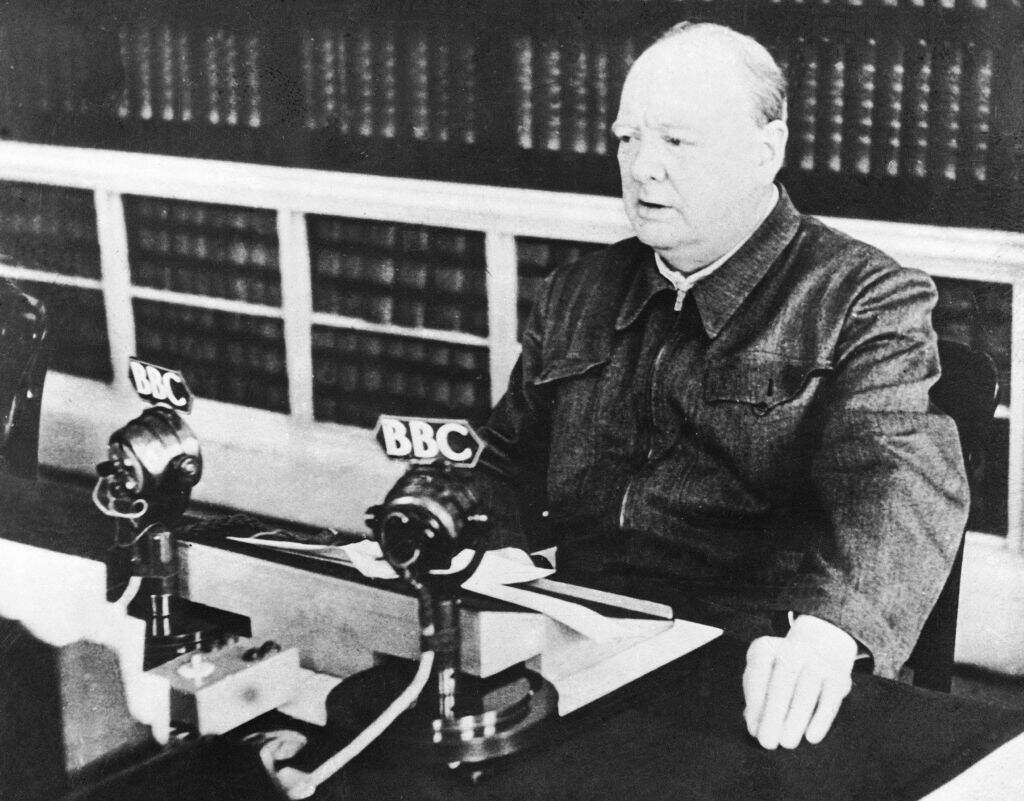
While serving as president and CEO of The Museum of Television & Radio (now The Paley Center for Media), I spent many hours in its archive listening to Edward R. Murrow's wartime broadcasts from London. Murrow arrived in Britain in 1937 as a young CBS radio director. Within three years, standing on the rooftop of Broadcasting House during the Blitz, he would become the voice through which Americans first understood what it meant for a democracy to be at war. What Murrow documented was not just the bombs falling on London, but something equally consequential: How Winston Churchill used the English language to prepare a nation for sacrifice.
Murrow's most famous observation about Churchill remains the most precise assessment of rhetorical leadership ever delivered by a journalist. Churchill, he said, "mobilized the English language and sent it into battle." That single sentence captures something essential about what wartime communication demands, and what it looks like when a leader meets that demand.
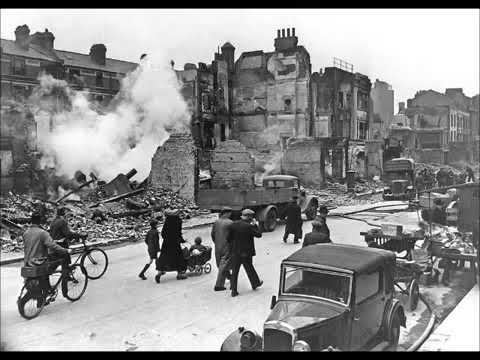
Consider what "mobilized" means in this context. Churchill did not merely talk about the war. He explained its logic. He laid out its costs. He told the British people they would face blood, toil, tears and sweat — not swift victory and painless triumph. When he described fighting on the beaches, in the fields, in the streets, and in the hills, he was not delivering a slogan. He was issuing a comprehensive strategic briefing in the form of poetry. Every citizen who heard those words understood what was being asked of them, why, and for how long.
Murrow grasped something else that matters enormously for our own moment. Churchill's power as a communicator rested not on bravado, but on a radical commitment to honesty about difficulty. He respected his audience's intelligence enough to explain the strategic reasoning behind sacrifice. He told them things would get worse before they got better. And because he leveled with them, they trusted him enough to endure.
The radio made this relationship between the leader and the public uniquely intimate. Churchill's voice entered living rooms (although television was available commercially, it was not widespread until after World War II). The medium's power to reach millions simultaneously was also, as Murrow understood, its power to mislead them or to squander a moment that called for gravity and clarity.
We know what it sounds like when a leader treats the decision to use military force as something that demands sustained, honest explanation — not just to announce objectives but to articulate costs, acknowledge uncertainties, and tell the public what happens if the strategy needs to change. President Franklin D. Roosevelt did this in his fireside chats, explaining the mechanics of war production with the patience of a gifted teacher. Churchill did it every time he spoke into a BBC microphone.

When a nation sends its service members into harm's way, the gravity of the moment imposes its own demands on language. Wartime communication is not a branding exercise. It is not a press conference or a social media post. It is the most consequential act of public explanation a leader will ever perform, because the stakes are measured in lives.
The past seven weeks have tested this principle. The war's objectives have shifted repeatedly. The two-week ceasefire between Iran and the United States, set to expire on Wednesday (April 22), was preceded not by a presidential address to the nation but by a social media post warning that "a whole civilization will die tonight." The American public, whose sons and daughters have been placed in harm's way and whose economy has absorbed the shock of oil prices more than doubling during the conflict, deserves more than a fragile truce. It deserves clear, somber truthful explanation.
Murrow believed that broadcasting's highest purpose was illumination — helping citizens see clearly enough to govern themselves. Churchill believed the same thing about political speech. Neither man thought the public needed to be shielded from hard truths or rallied with empty superlatives. They believed the opposite: that a free people, given honest information delivered with both precision and moral seriousness, would rise to meet whatever was asked of them.
The tools available to any president today, which include television, streaming and digital platforms, give a wartime leader more ways to reach citizens than Churchill or Murrow could have imagined. The question has never been whether the technology exists. The question is whether a leader believes the public deserves the full weight of the truth, delivered with the discipline and respect for the audience that the moment demands. As the ceasefire comes to a close, and the potential resumption of hostilities looms, the evidence of what serious wartime communication sounds like is still right here, available online every day, waiting to be heard again.