Support WBUR
Essay
Growing up in Brazil, language told my family’s story
My mother’s tongue was long and acrobatic. She could curl it up like a wrapped piece of presunto, or she could stick it out and make it curl backward, so it touched the tip of her nose. My sisters and I were jealous. No matter how much we tried, we could not make our tongues stretch like that. We thought she had an unfair advantage, with her long Spanish nose.
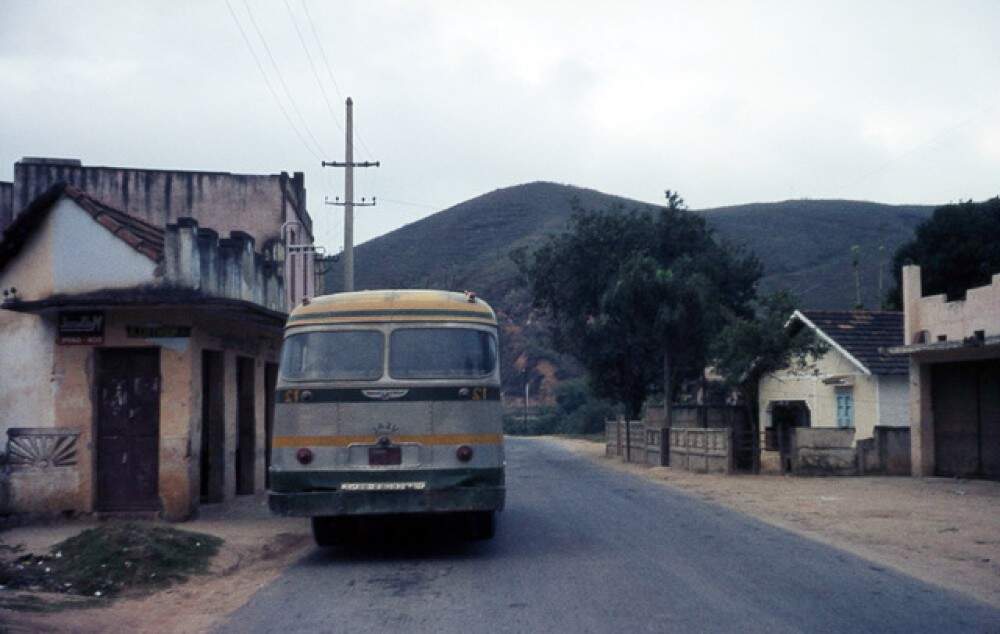
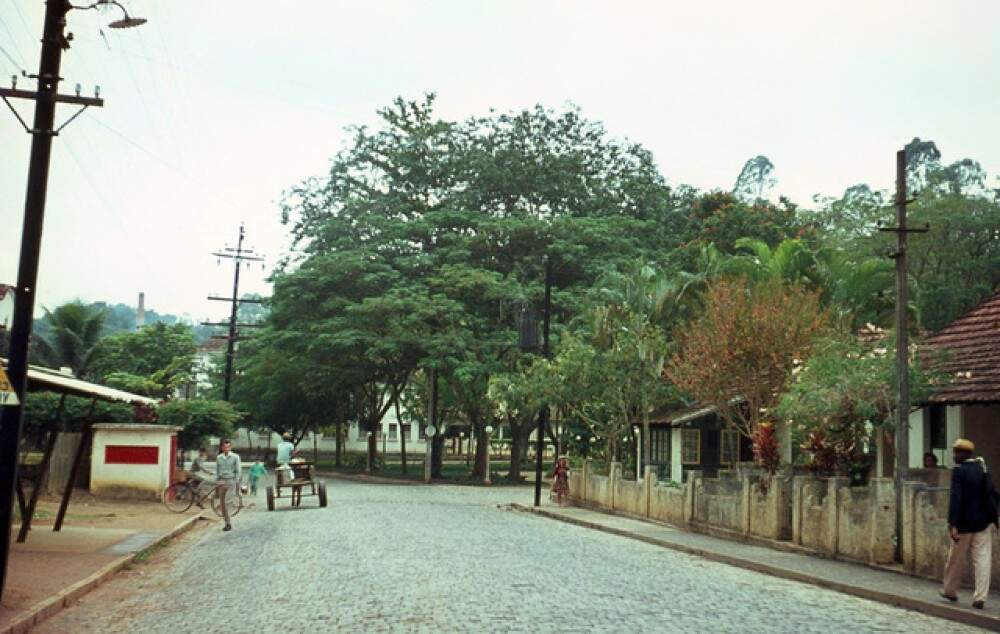
We were a family of polyglots. I can’t be sure about my mother tongue, but I imagine it was Catalan. My mother’s language. A language that was banned in Spain for 36 years. We lived in Brazil, so Portuguese swam around us like air. It was everyone’s language, except my father’s. His was English. We lived in a small rural village, and my father stood out in so many ways. His white skin that freckled and burned. His accent. He was fluent in Portuguese but could never shake that English accent. We were embarrassed by him.
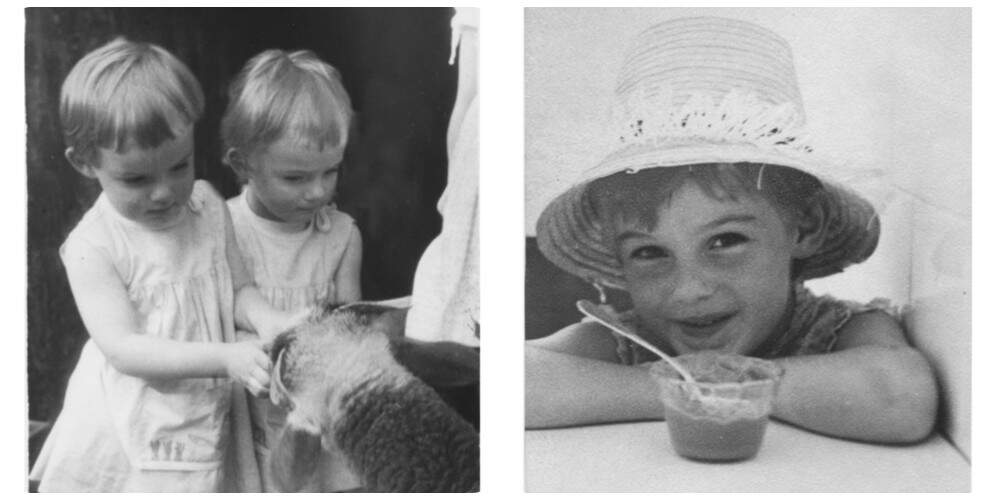
Everything changed when I was 6 years old, and we went on a trip to visit my father’s family. All three of us children refused to speak English. We knew how to. Perhaps we were homesick, or just rebelling against the pressure of expectations, the way children do. When we returned to Brazil, my father declared that only English would be spoken at home. English didn’t come naturally: So began the resistance. We slid into Portuguese the minute my father was out of earshot. My mother colluded. She was tired of having my father correct her pronunciation.
In English, my mother’s tongue turned V’s into B’s. She said “berry late,” instead of “very late.” She said “shit” instead of “sheet”, and invented words, like “tengerous,” a mix of terrifying and dangerous. I feel guilty that we sometimes joined my father in making fun of her.
Neither of my parents had finished high school. My father could read, but my mother was illiterate. He taught her how to write her signature; it was painful to watch her struggle with it. She’d hold the pen in the air and practice a few strokes before landing the nib and signing. Sometimes she’d trace over parts of letters, trying to correct their shape.
In college I discovered creative writing. Carver, Cheever, Updike. I wanted to write like them, but it didn’t seem possible. My stories were so different. It took me years to notice how I undervalued Portuguese and Spanish, associating them with my illiterate mother.
Slang carries so much weight. It is our intimate, teasing shorthand.
I graduated in 1984, the same year “The House on Mango Street” was published. Cisneros’ stories reminded me of my life growing up in Brazil. Then came Jamaica Kinkaid’s “Annie John,” a novel about the interior world of a young girl, about simple things, washing clothes, sweeping — and complicated at the same time, the expectations and threats of the mother, messages about the wider world.
Perhaps I did have subject matter and something to say, after all. I began to write. But then there was the problem of language. I wrote fast passages in Portuguese and English, whichever seemed to emerge. I followed the story, the feeling. But to share my writing with others, I had to translate. Dialogue was particularly difficult. I heard it in Portuguese — the humor, the jokes, the double entendres. So much was lost in translation.
Slang carries so much weight. It is our intimate, teasing shorthand. In my novel, I struggled with whether to translate: “tirar o cavalinho da chuva,” an expression which means “don’t count on it” or “don’t hold your breath.” But neither of those English phrases capture the rural world of my 12-year-old character. The image of leaving a little horse in the rain echoes the main theme of the book, the grief of a family sending their disabled child to live in an institution. In the end, I chose to keep it without translating.
That tension about language continued, even after having sold my novel. One of my editors suggested taking out all the Portuguese words. She said that because my novel is in first-person present-tense, and we are inside the characters head, it should all be in one language: English. So I began to take out the Portuguese words, but the narrator’s voice didn’t sound true. The Portuguese words had a beat, a rhythm, and removing them had changed it.
I requested a meeting with my editors and arrived with examples, ready to bolster my case. Without realizing it, I was preparing for a fight. At age 6 I did not have a say, and our home became ENGLISH ONLY. To my surprise, my editors were fine with keeping the Portuguese words. It had merely been a suggestion, not a demand. It was up to me, as the author, to navigate the language(s) and find the best way to tell this story.
But the experience of removing the words stayed with me. There was an acute grief to imagining my novel without Portuguese. Language (any language) is always an approximation, an attempt to translate experience and communicate it. Without any Portuguese at all, my story seemed distant, a blurry photograph of a photograph.
There is a particular grief to being a bilingual writer, having access to words and worlds that cannot be easily shared. But it is also a gift. The expanded range of possibilities, the ability to use words in an idiosyncratic fresh way. To stretch their meaning.
Which brings me back to my mother’s tongue. I no longer see my mother’s invented word, “tengerous,” as a mistake. It is a creative solution, a neologism. Having more than one language in your head, on your lips and at your fingertips makes you flexible, sharpens your ear and lengthens your reach. Until one day, you may even touch your nose.