Support WBUR
Opinion
How RFK Jr.'s false claims about the COVID-19 vaccine hurt people with autoimmune diseases
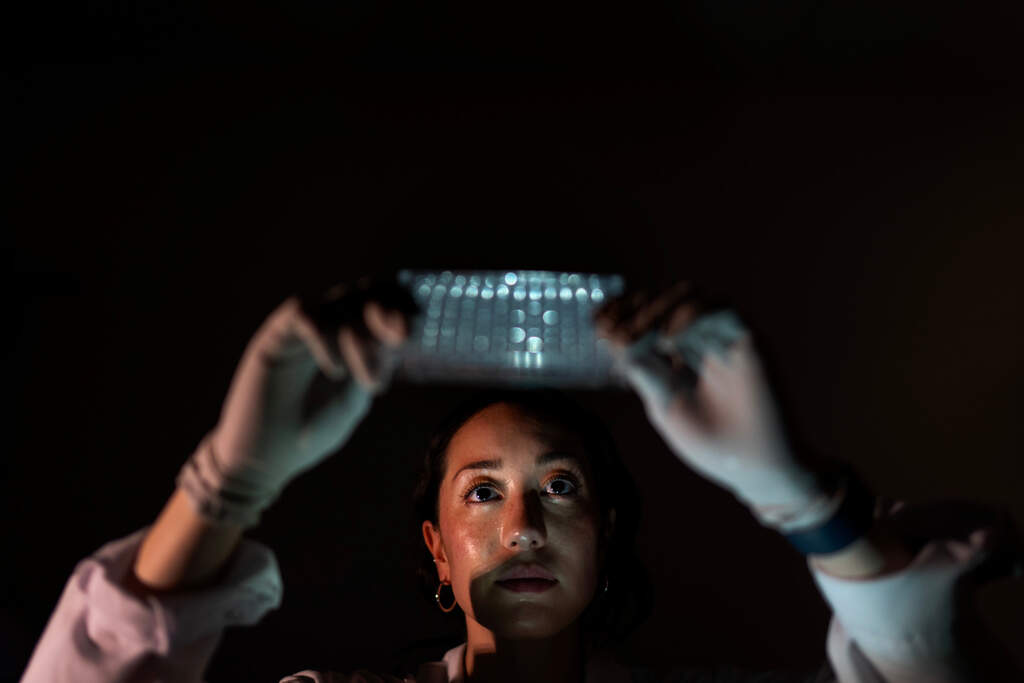
For more than two decades, I’ve lived with two autoimmune diseases: multiple sclerosis (MS) and autoimmune thyroiditis. And I’m not alone. A recent study by the Mayo Clinic estimated that about 15 million Americans (around 4.6% of the population) have at least one or more autoimmune disease.
When symptoms like crushing weakness, shattering pain and nocturnal body jerks began just after my 21st birthday, my life was altered permanently. Without a fully functioning immune system, each time I venture into populated spaces, I risk contracting an infectious disease that my body doesn’t have the strength to fight off. Every day, I worry about my children bringing home a virus from school that could send me to the hospital. And each time I receive my MS infusion, I worry about the increased risk of cancer that comes with it. The discovery of new treatment options that don’t suppress the immune system would allow me to live without these fears.
In 2020 — after three years of immunosuppression — when I learned of mRNA vaccine research for MS, I was relieved. At that point, I was living through the pandemic on a B-cell-depleting medication, rendering me high-risk for COVID-19. My husband, a physician, treated patients for the novel virus, while my children and I lived in a bubble. The mRNA research gave me hope.
Medications using mRNA technology would treat MS with an injection intended to treat autoimmunity without suppressing the entire immune system. For people like me who rely on medication to function, mRNA treatments would mean no longer living in fear of getting sick, eliminating the need for precautions like masking in public.
But in August 2025, the Department of Health and Human Services (HHS), led by Robert F. Kennedy Jr., announced “a coordinated wind-down” of mRNA research and collaborations. While some mRNA research for MS has continued, the funding cuts — and instructions to remove references to mRNA technology in grant applications — will no doubt impact the ability to carry out these studies.
Kennedy falsely maintains that COVID-19 vaccines — which use mRNA technology — cause widespread and serious harm. His skepticism led him to halt all mRNA research despite its promise for treating autoimmune diseases and other conditions.
In 2020 — after three years of immunosuppression — when I learned of mRNA vaccine research for MS, I was relieved. ... The mRNA research gave me hope.
On top of that, the U.S. government funded fewer grants for medical research last year. New data released by the National Institute of Health (NIH) revealed the damage from those cuts and the results are staggering. “Across all areas, the NIH went from funding roughly 5,000 new research grants in 2024 to just 3,900 in 2025,” Vox reported. At least 160 clinical trials — including those for chronic diseases — were terminated.
In July of 2025, the White House Office of Management and Budget required the NIH to start paying the full cost of grants up front instead of paying year by year, as they had always done. This means they’re having to make tough choices when choosing which grants to fund rather than running many studies concurrently. “These budget manipulations are deeply deceptive and disruptive. Valuable research will be lost this year and, likely, into the future because of these shenanigans," said Jeremy Berg, biochemist at the University of Pittsburgh and former NIH institute director.
But lack of new grants was only one issue that resulted from the government’s cuts. The Trump administration also prematurely terminated 1,500 existing grants over the last year. These cuts affected 160 active clinical trials. Philippe Aghion, the economist who shared last year’s Nobel Prize in economics, says that increased competition to receive grants can halt innovation rather than fuel it.
These changes have also forced researchers to terminate their work and limit the training of new researchers. Some are leaving the field altogether, creating a void of specialized researchers. The period of accelerated innovation the U.S. once enjoyed has slowed, and the effects will impact scientific research and the medical field for years to come.
In 2025, federal funding for the Multiple Sclerosis Research Program (MSRP), which had been established by Congress in 2009, was eliminated. But after an intense advocacy campaign, Congress restored $15 million in funding for 2026. This back-and-forth leaves patients and researchers in a state of uncertainty. And even temporary cuts have a significant, long-term impact on research: It often takes several years to recover from a single year of disruption.
Rheumatologist Maximilian Konig, who spearheads the Johns Hopkins Cellular Program for Autoimmunity, fears American physicians and patients are facing the dawn of a dark age fueled by the federal government’s budget cuts to medical research. With autoimmune diseases on the rise, Konig worries these cuts come at a crucial time. This, on top of the fact that diagnosing autoimmune disease can take years, is very discouraging.
Having searched furiously for a diagnosis for 13 years — and now having lived on an immunosuppressant for nine years — I know firsthand how deeply this research can impact lives. While I was undiagnosed, my body grew weaker until walking was nearly impossible. Ocrevus, the MS medication I’ve been on for the last eight years, calmed my symptoms. But it comes with risks, including a rare and fatal brain infection called progressive multifocal leukoencephalopathy and an increased risk of cancer.
I still hope to one day treat this disease without these potential dangers, but only research can make that happen.