Support WBUR
Essay
What musical chairs can teach us about democracy
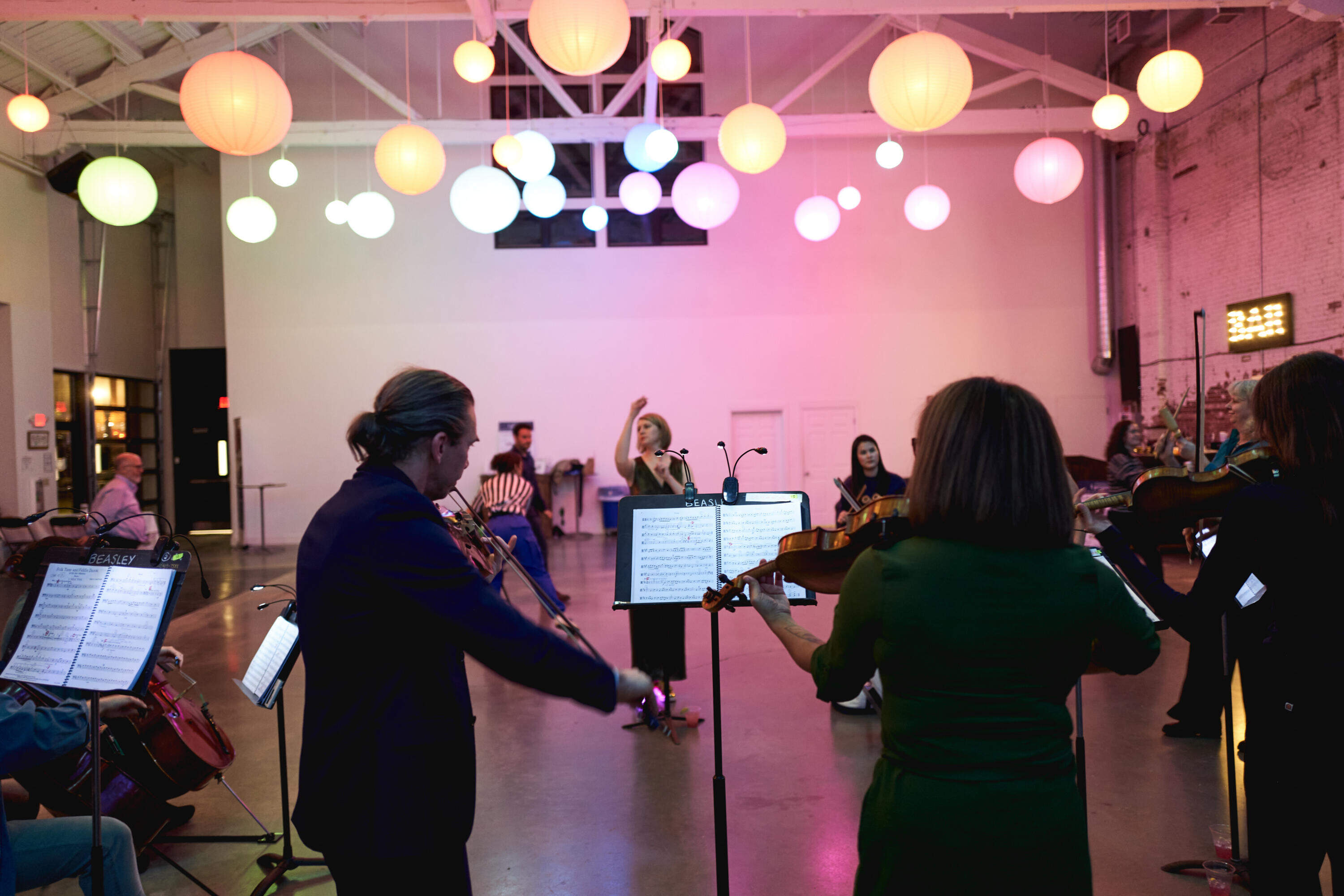
The orchestra I conducted was playing Tchaikovsky. Adults between the ages of 21 and 65 — some in blue jeans, some in sequins, most holding a brightly colored cocktail in a plastic cup — were walking in an orderly circle. We were in an industrial warehouse turned bar and gathering space. Some grooved to the music. Some stared with intense focus at the chair directly in front of them, now beside them, now behind them. All of them were listening, deeply.
Then the music stopped, and the real fun began.
This was Musical Chairs, produced by my performing arts company, Classical Uprising and Kate Garmey of The JoyFire Project. It was a tournament-style game of musical chairs with a live string orchestra and a bar. (This event was for adults.) The venue had cool lighting and cooler people: married couples and empty nesters, 20-somethings and boomers.
We created this event because we believe, with some urgency, that adults are not having enough fun. I see it in my own life — in the way a packed calendar can coexist with a deep, quiet loneliness. In the way we confuse being busy with being alive.
The data backs this up. Ellen Cushing reported in The Atlantic that only 4.1% of Americans attended or hosted a social event on an average weekend. Derek Thompson documented a 50% decline in communal gatherings over two decades. And Rhaina Cohen argued that adults have quietly abandoned the unstructured play that makes connection real. Meanwhile, science journalist Catherine Price, in her book “The Power of Fun,” documents that in the last decade there has been a large increase in rates of depression, anxiety, loneliness, boredom, and languishing — what she calls feeling "a little bit dead inside." We are living through a period that narrows our emotional lives.

I love classical music but find the traditional concert experience absurd; it’s why I founded Classical Uprising. If you are genuinely moved by music, why must you sit perfectly still? The concert hall, it turns out, is a fairly recent invention — and that’s not how most of this music was meant to be heard. Music is meant to be woven into the social fabric of our lives, paired with food, drink, conversation, and community. The JoyFire team does something similar. They use creativity, play and nature as tools for personal resilience and community cohesion — not as add-ons, but as the thing itself. What we share is a conviction that when people make something together, something civic happens.
Midway through the game, I noticed Laurie. Graying hair, cashmere sweater, ballet flats — I'd guess she was in her 60s. What caught me wasn't her elegant appearance, but who had landed in her lap: a tattoo-covered, androgynous hipster half her age. Laurie had clearly won the chair. Both were laughing uproariously.
It was a small moment. But watching player after player get eliminated, I started to see that musical chairs isn't just good for our mental wellness — it is practice for democracy. To be clear: I did not design Musical Chairs as a civics exercise. I created it because adults need to be silly. And yet, Tchaikovsky and tequila had us practicing citizenship in folding chairs.
It sounds ridiculous. It isn’t.
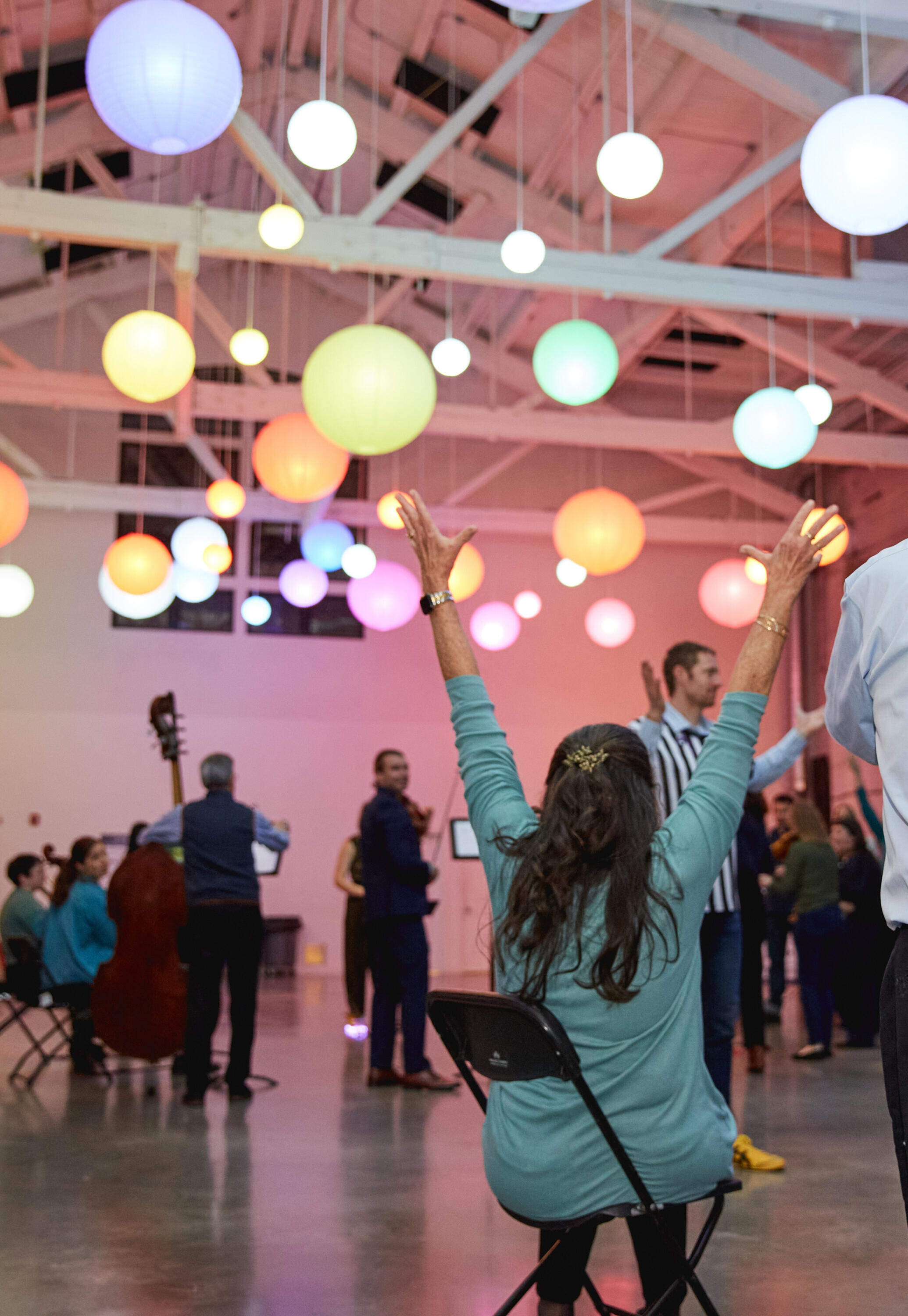
Civic life is typically described in the language of duty: voting, attending meetings, organizing around crises. These things matter. But healthy communities are not built through obligation alone. They are sustained through shared joy — and shared joy has a skill set. When people sing together, dance together, or scramble for a folding chair together, they rehearse the fundamentals of democratic life: listening, negotiating, trusting the stranger beside them. Musical Chairs requires all of that. So does a functioning republic.
Communal art — festivals, choirs, public installations — have existed in every culture throughout human history because they create spaces where strangers become neighbors, and where people remember that they are part of something larger than themselves.
Authoritarian systems would rather we stay home, stay silent and stay separate — because they understand what exhaustion makes us forget: joy builds bonds, and bonds build courage.
The underground ballrooms and parties during the AIDS epidemic empowered the LGBTQ+ community; it insisted on their humanity in the face of a government and society that denied it. The freedom songs of the Civil Rights Movement carried people through terror, just as enslaved people of the American South sang to communicate, resist and survive. The underground music scene in Poland helped sustain solidarity through martial law. Joy has always been how people under pressure remind themselves — and each other — that they are still alive. Building an infrastructure of joy is another form of that resistance — not a substitute for action, but a sustainer of it.
I see this in my own work. At Classical Uprising events, I watch people walk in guarded and leave loose. I watch strangers linger after concerts, reluctant to return to the world outside. And I watched it happen in real time at Musical Chairs, when the hipster landed on Laurie’s lap.
Back to our game, we were down to the final chair: woman with a buzz cut versus balding man who looked like he'd never done anything this ridiculous in his life. The room had transformed. People who had arrived alone were laughing with people they'd never met.
It was just a game. It was also exactly what so many of us need right now: a room full of people choosing to be in it together, choosing delight over division, if only for two hours on a Saturday night in Portland, Maine.
A democracy is only as strong as the bonds between its people. Joy is infrastructure. The chairs are waiting.