Support WBUR
Cog's Weekly Newsletter
How young people become radicalized
Editor’s note: A version of this interview appeared in Cog’s weekly Sunday newsletter. To become a subscriber, sign up here.
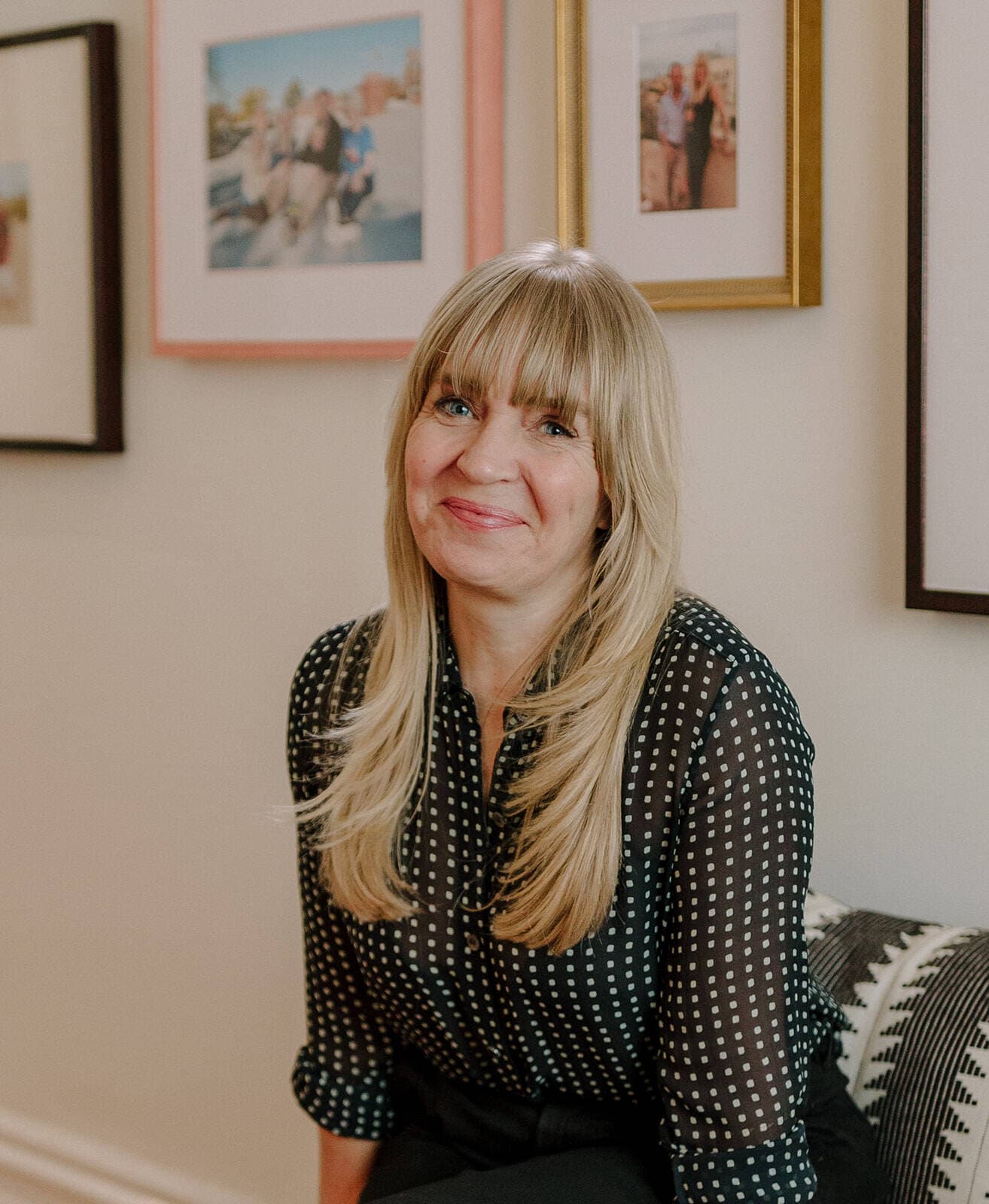
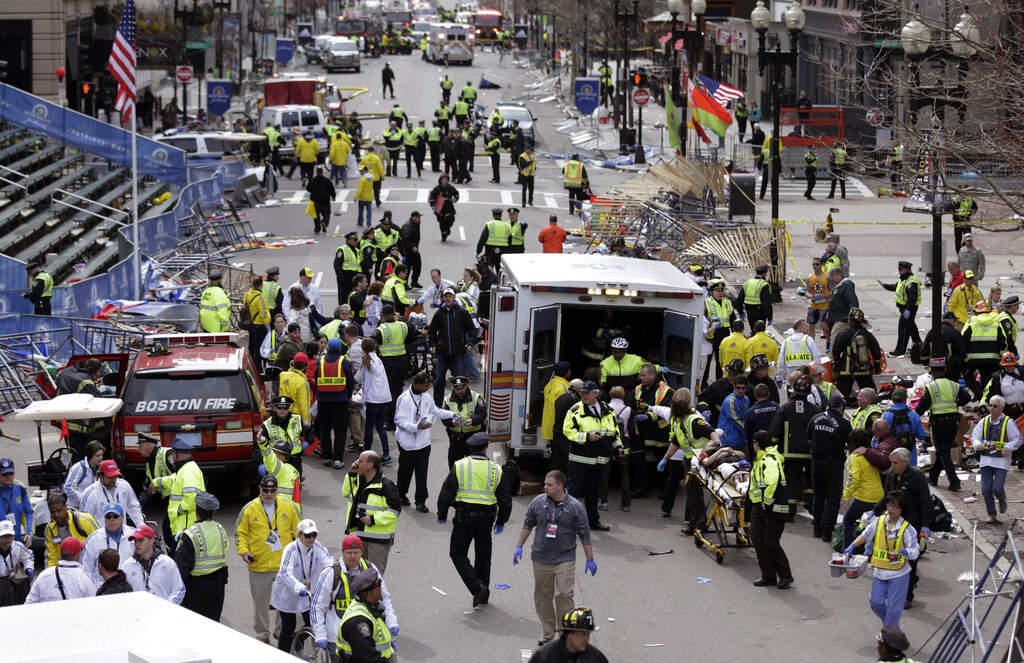
When you see a headline about someone else’s child committing an act of violent extremism, it’s hard to imagine how that happens. When you talk to Myrieme Nadri-Churchill, executive director of Parents for Peace, it’s a lot easier to understand. Nadri-Churchill was born in Casablanca, Morocco, and grew up with a Black Muslim father and a white Christian mother. As a multi-racial kid, she was the target of hate from both communities and never felt like she truly belonged in either one. Many years later, Nadri-Churchill was watching the Boston Marathon with her children and friends when the bombing occurred in 2013 and was in Paris two years later when Charlie Hebdo was attacked. Nadri-Churchill, a psychotherapist, became “obsessed” with the question of why people hate.
She co-founded Parents for Peace with Melvin Bledsoe of Memphis, whose son Carlos Bledsoe became radicalized, traveled to Yemen, and then came back to America and opened fire on a U.S. military recruitment office. He killed one man and wounded another, and is now serving multiple life sentences in prison.
Nadri-Churchill spent a year visiting Carlos Bledsoe in a maximum-security prison and interviewing him to help her understand how young people become radicalized. “We cannot fix what we don’t understand,” she explained. “We have to study extremism.”
Parents for Peace started as a support group for parents with children who had joined terrorist groups, often abroad. Nadri-Churchill launched the nonprofit’s helpline in 2016. As far as she knows, it’s the nation’s only confidential helpline for families struggling with the radicalization of a loved one. Today, the nonprofit helps radicalized people “step back from the brink of extremism.”
Parents for Peace now includes first responders who man the helpline and intervention team of eight licensed psychologists and social workers, who handle dozens of active cases at once. Nadri-Churchill herself has led hundreds of interventions with families and individuals across the extremist ideology spectrum.
Nadri-Churchill sees extremism as a public health issue and suggests we treat it like the HIV/AIDS crisis of the ‘80s. She believes we should all have our eyes on middle school, where kids who are curious about the difference between good and evil latch onto simplistic narratives. “Our society promotes and glamorizes a culture of victimhood, rather than empowerment and resilience,” she explained. “So certain kids seek out a victim identity to get attention and validation.”
I spoke with Nadri-Churchill to better understand how and why young people become radicalized, and what we can do to stop them before it’s too late.
This conversation has been edited for length and clarity. — KNC
Kate Neale Cooper: You’ve drawn parallels between extremism and drug addiction. Tell me more.
Myrieme Nadri-Churchill: “Extremism and hate are a drug of choice. The reason we say this is that time and time again, we see young people use it as a coping mechanism.
“We see how closely extremism mirrors addiction. The brain's reward system, the same dopamine pathway involved in substance use, also lights up in response to grievance and the anticipation of revenge. Ideology offers something these “addicts” feel they need: a sense of belonging, a sense of order, an explanation for their pain, someone to blame and a feeling of importance or mission. That's a powerful pull, and over time it can become compulsive in the same way substance use does. It's why we don't approach this as a debate about beliefs. We approach it the way addiction specialists do: meeting people where they are and working with their own motivation to change.”
KNC: So it’s not about political beliefs?
MNC: “What unites all of these terrorists isn’t ideology; it’s grievance. Whether you’re talking about young people who join ISIS or become a neo-Nazi or go to the far, far left, they come from all across the ideological spectrum, but the bottom line is they all have a grievance — sometimes real, sometimes perceived. Which, by the way, is reassuring, because we’re not dealing with a whole bunch of problems. We’re always dealing with the same thing.”
KNC: What are the risk factors for extremism?
MNC: “We don't work from a profile, and we're deliberate about that. We focus on the behaviors and conditions that put someone at risk. What we see is a convergence of three things: an individual carrying unmet needs, a social environment that validates grievance and exposure to recruiters or content offering a story that explains the pain. Some people actively seek out extremist groups. Many others drift into them, and the ideology comes later. The thread that runs through every case is moral outrage at a perceived injustice and an ideology that says violence is a legitimate response that will make things better. That’s the opening recruiters work in.
“In my experience, there are some risk factors: trauma or mental health strain, social isolation or identity crises, reinforcing peer groups, especially online; and broader grievances like perceived injustice or discrimination. There are some Gen Z-specific accelerants, too, things that speed up radicalization — intense social media use, niche subcultures and algorithmic echo chambers.
"A lack of social connection plays a very important role here. Kids who struggle to fit in or are isolated build these grievances. Having been bullied is a huge factor. Many kids who are susceptible to extremism feel like they don’t belong or they don’t feel important enough or powerful enough.”
KNC: Robert Pape warns that too many Americans are willing to look the other way when it comes to extremism and political violence. What do you think?
MNC: “I want to believe that many of us can choose not to look the other way. People who practice nuance, question their echo chambers and are willing to listen across differences are far less likely to accept political violence.
“Political violence grows one person at a time, out of personal grievance, and radicalization is always tailored to the individual, even when it looks like a mass movement. People are looking for validation, for someone to support their grievance, justify their scapegoat and tell them violence is deserved.
“Once that happens, critical thinking disappears and dehumanization becomes easier. What worries me most is how normalized it has become to judge and label people who think or vote differently from us. That rigidity teaches our children that the other is something to attack instead of to understand or be curious about.”
The thread that runs through every case is moral outrage at a perceived injustice and an ideology that says violence is a legitimate response that will make things better.
KNC: Tell me about your hotline and the people who call it. How have the calls you get at your hotline changed in recent years?
MNC: “We run a confidential helpline that I describe as a non-political, nonjudgmental first step for family members, parents, partners, siblings, worried about a loved one’s rapid shift toward extremist beliefs or risky behavior. Callers want safety planning, de-escalation coaching and referrals.
“Over the past several years, the nature of the calls has become more urgent and increasingly shaped by major geopolitical and social events. Following October 7, 2023, we saw a marked increase in anti-Jewish hate across the cases we handle and more broadly in society. In 2025, 70% of our helpline cases contained anti-Jewish components. These cases spanned the ideological spectrum, from far-right white nationalist networks to jihadist groups and far-left movements. That underscores the role antisemitism can play as a common organizing grievance across otherwise very different forms of extremism.
“More recently, we have seen a much younger population that is involved in a form of nihilism called 764 or The Com, a network driven by nihilistic, sadistic extremism, seeking to destroy societal norms through the exploitation and trauma of youth. Again and again, the families who come to us describe a pattern that should alarm every pediatrician, school counselor and parent in this country. 764 doesn’t have an ideology as clear as white supremacy or Islamism. But the end result is violence — violence to others and self-violence. It’s a public health crisis.”
KNC: You refer to the “dynamics of radicalization.” Can you explain that more?
MNC: “When I refer to the ‘dynamics of radicalization,’ I mean the gradual process through which someone can become drawn toward extremist beliefs or harmful ideologies. It’s rarely sudden. Radicalization is a process: someone’s grievance or victimhood identity search leads to exposure — often online — bonding with like-minded peers, repeated reinforcement of a moralized narrative and then adoption of norms that can justify violence.
“Antisemitic conspiracies are especially dangerous in this dynamic because they offer a simple scapegoat that binds disparate grievances together. That accelerates moral disengagement and group cohesion.
“The story of Calla Walsh, a 21-year-old from Cambridge, Massachusetts, is an important one. She had been active and successful in local political circles. By many accounts, she showed early promise as a community leader. She worked with Sen. Ed Markey and was even lauded in the New York Times and on NPR. That matters because it reminds us that radicalization doesn’t only affect isolated or marginalized individuals. It can also draw in talented, civically engaged young people who are searching for purpose, influence and belonging.
“Her story shows how the very qualities that make someone an effective organizer — conviction, charisma and commitment — can, under certain conditions, be redirected toward rigid or absolutist narratives.”
KNC: You believe that extremism is preventable. How do we prevent it?
MNC: “We treat it as a public health problem, which means working upstream, reducing the conditions that put people at risk and strengthening what protects them. In practice, prevention happens through the people already around someone: a parent, a sibling, a partner, a teacher, a faith leader — basically what we call 'an intimate bystander.' Those people are our frontline, and most of them don't know what to do with what they're seeing. Our helpline exists for them, and we train the professionals they turn to — law enforcement, mental health providers, school staff, first responders — to recognize warning signs early and respond with care rather than rupture.
“We need to ask ourselves why some young people become vulnerable to radicalization.
“Have we reduced complex issues into simplistic labels like ‘oppressed’ and ‘oppressor’ without leaving room for nuance, critical thinking and dialogue? And are we doing enough to help young people focus on what they share in common rather than defining themselves through division and difference?
“What are they searching for that they aren’t finding in our schools, communities or culture?”
Editor’s note: If you are worried about someone struggling with extremism, call the Parents For Peace helpline at 1-844-497-3223.