Support WBUR
Essay
Love, loss and what I wear now
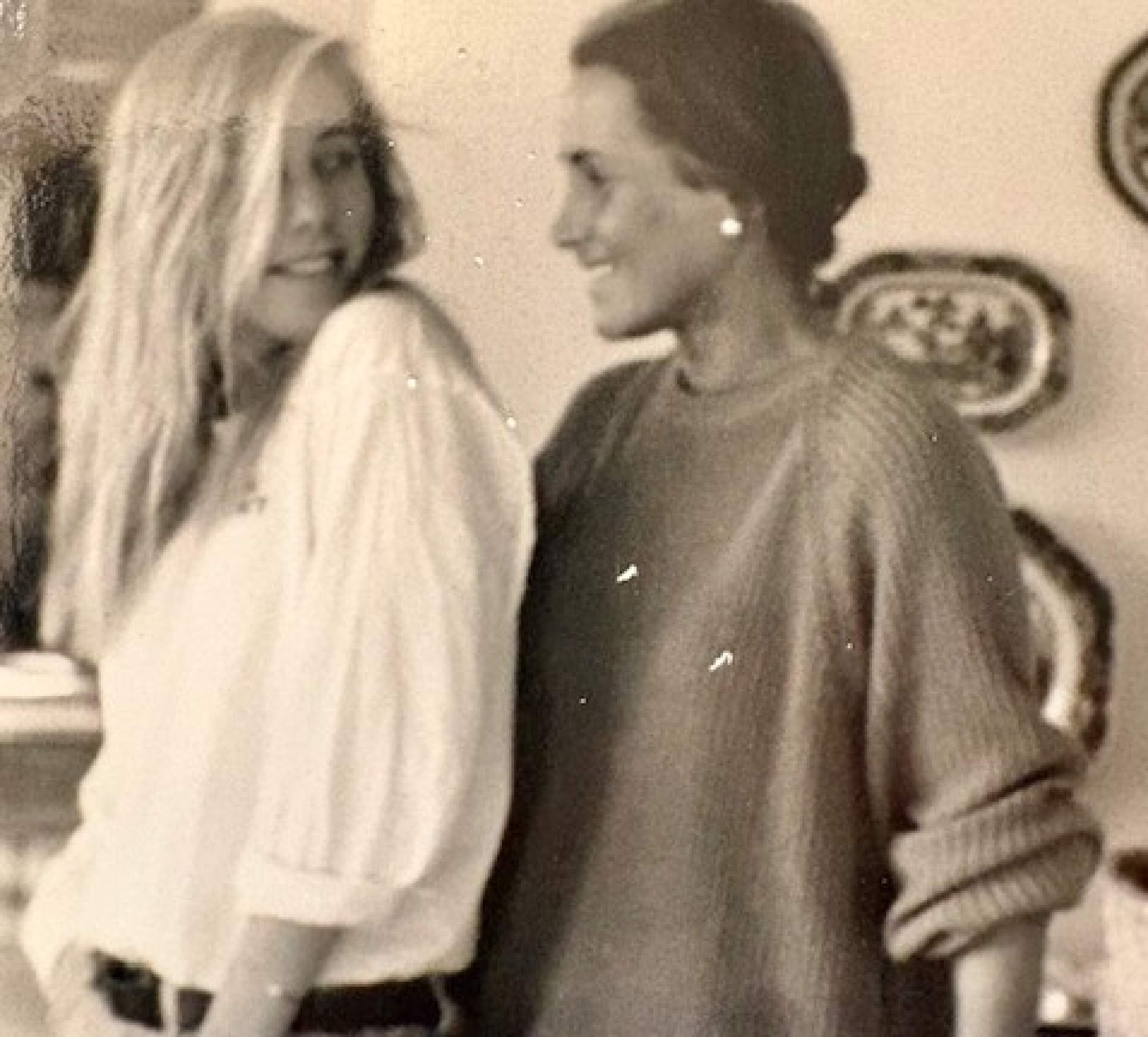
When I was a child, shopping with my mother was an event — limited budget, big goals. She favored classics: navy blue skirts, blouses impractical for playground adventures. I’d dutifully try them on, and the saleslady and my mother would smile. Adorable.
I felt anything but.
There were words from my mother’s friends: tomboy, rough and tumble. I knew this pained my mother, who was elegant, fashionable, beautiful. Those were words spoken about her, ones which became part of her identity. Shopping was, for my mother, a chance to reinvent. Well-cut dresses, a British riding outfit, a linen suit — all a perfect disguise for a Jewish girl raised in a working class mill town.
I favored jeans and t-shirts. When my mother bought me a skirt (floral, three-tiered Laura Ashley), I thanked her. Not for the fashion, but because I didn’t mind the idea of being a flowy poet, pondering life, which I often was. I’d pair it with a sweatshirt from the neighbor boy I met for dog walks, the two of us kissing awkwardly with the leashes tangled around us. I liked kissing him. I also liked kissing a girl from school who made me mix tapes with hand-drawn covers. I played the tapes over and over. I roughed up the sweatshirt neck.
“So you’re like a ripped sweatshirt on top and flower skirt on the bottom,” someone said between classes. That summed it up. I was a flip-book of style, but also of sexuality. That was the part I couldn’t talk about.
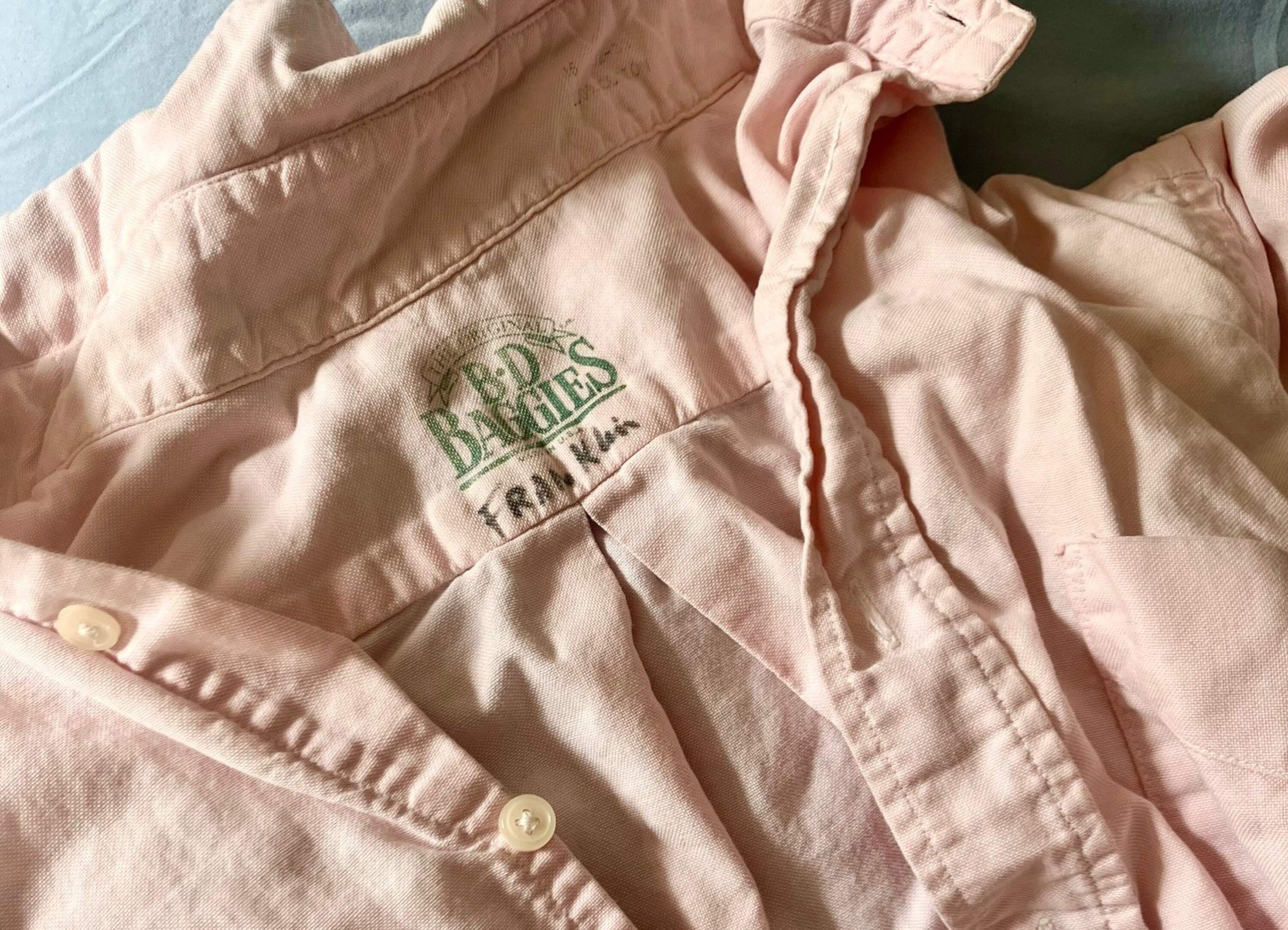
In ninth grade I wanted a BD Baggies button-down: expensive, oversized. It came in a cotton laundry bag. They were cool. They were also for men. I saved money from babysitting jobs, then my mother watched me pick it out. I held the blue one. “Are you sure?” my mother asked. I looked at her perfectly made up face, and swapped the shirt for the pink version. “Let me get it for you,” she said.
Almost 40 years later, going through my closet trying to figure out something to wear for my book tour this year, I found the shirt again. In it, I saw my name in my mother's handwriting. “So no one takes it,” she’d said. “That way, it won’t get lost.” But while the shirt did not get lost over all that time, parts of me did.
I felt such comfort in seeing my name in my mother’s handwriting, knowing the care she took in labeling an article which went against everything she’d envisioned for my appearance. Because it wasn’t just the BD Baggies shirt; it was my teenage wardrobe which consisted mainly of button-downs pilfered from my grandfather’s work castoffs, one of his ties. I spent weekends thrifting for men’s silk pajama pants from the 1950s, tapering them by hand and wearing them as trousers. We didn’t have a name for all of this. No one asked if this meant more than clothing.
I grew up with the tantalizing prospect of freedom being offered under what I later understood to be the pain and privilege of passing. My mother was raised in a working class town with a father who had a sixth grade education and a successful scrap metal business that did well enough to buy a car wash, inhabiting the American dream. Only, the dream came with shame. My mother, sent away from her mill town to high school in Boston, learned quickly to straighten her coarse Jewish hair, to lose her heavy Boston accent, to dress like the old money WASPs around her. She excelled at blending.
And when I was born — blonde hair, blue-eyed — my mother was thrilled. “So easy for her to pass as not Jewish,” said her best friend. It was even easier to pass as straight, wearing clothing my mother picked. Until it wasn’t.
[W]hile the shirt did not get lost over all that time, parts of me did.
Even at seven years old, I’d wanted to run shirtless like my brothers and their friends in the backyard, cried when I was pulled inside, made to put my shirt back on. I railed against seersucker dresses, Peter Pan collars. All I wanted to do was wear pants.
It was physically and emotionally painful when, starting a new school, my mother told me to put on a dress. “But it’s blue!” she said, as though that would make it better. Looking back, this was her trying, a foothold I clung to later when she visited me at Oxford where I was at university. We met for lunch. I wore a crisp white shirt, men’s trousers the color of strong tea and two-tone lace-up brogues. We hugged, and she smelled as she always did — delicious, comforting, feminine. “Well,” she said, giving me a long look, “Don’t you look manly.”
My mother’s desperation for assimilation, her striving for acceptance, created in me a discrepancy between who I was and how I thought I ought to appear. So when I hooked up with boys and then men, dated them, I would talk about it. And when I did the same with girls and then women, I didn’t. My mother hadn’t only passed down her ability to blend. She’d passed along her cloak of shame; a very heavy one to shed. I never came out, I never stayed in.
I just stood in the dressing room doorway of queerness and didn’t fit in either space.
Even at my LGBTQ-friendly college, my identity was unclear. A good friend — queer herself — took one look at me and nodded. She knew. Another close friend, out and in a serious relationship, assumed me to be straight. Never asked, I never told. After college, when I tried to be open with the same friend, using female pronouns for a relationship I’d had, my friend didn’t want to hear it. I wasn’t queer enough in her eyes. Just as I wasn’t really Jewish. Wasn’t really anything. That’s the danger of blending. Hiding in plain sight doesn’t only fool the viewer. It punishes the hider.
But then, for my 21st birthday party, my mother told me to get something special. I chose a men’s tuxedo. My mother looked at me. “You look wonderful,” she’d said, hugging me. “A mother knows,” she whispered.
Do I wish she’d been louder with her acceptance? Yes. I also recognize her discomfort, the fear she held for me. Her worry that standing out — as a Jewish person, as queer in my own way — would make my life harder. And sometimes it did. Still, right there, on the dance floor, perhaps driven by the freedom of being in a tux — in front of my brothers and all my friends, I made out with a woman. I tried to talk in action rather than words, but this was in the age of lipstick lesbians, girls kissing girls to titillate onlookers. I understood: If I wanted to be known, I would have to talk.
And I did. Bit by bit. Working as a chef on boats, doing construction one winter, teaching and then graduate school, I relaxed into clothing that felt like me — jeans, t-shirts, jackets, boots, and I began telling friends I trusted about my dating history. Mostly, the world didn’t end. A couple friendships did, and, at a job I liked, the boss said their conservative views meant I wasn’t the best fit.
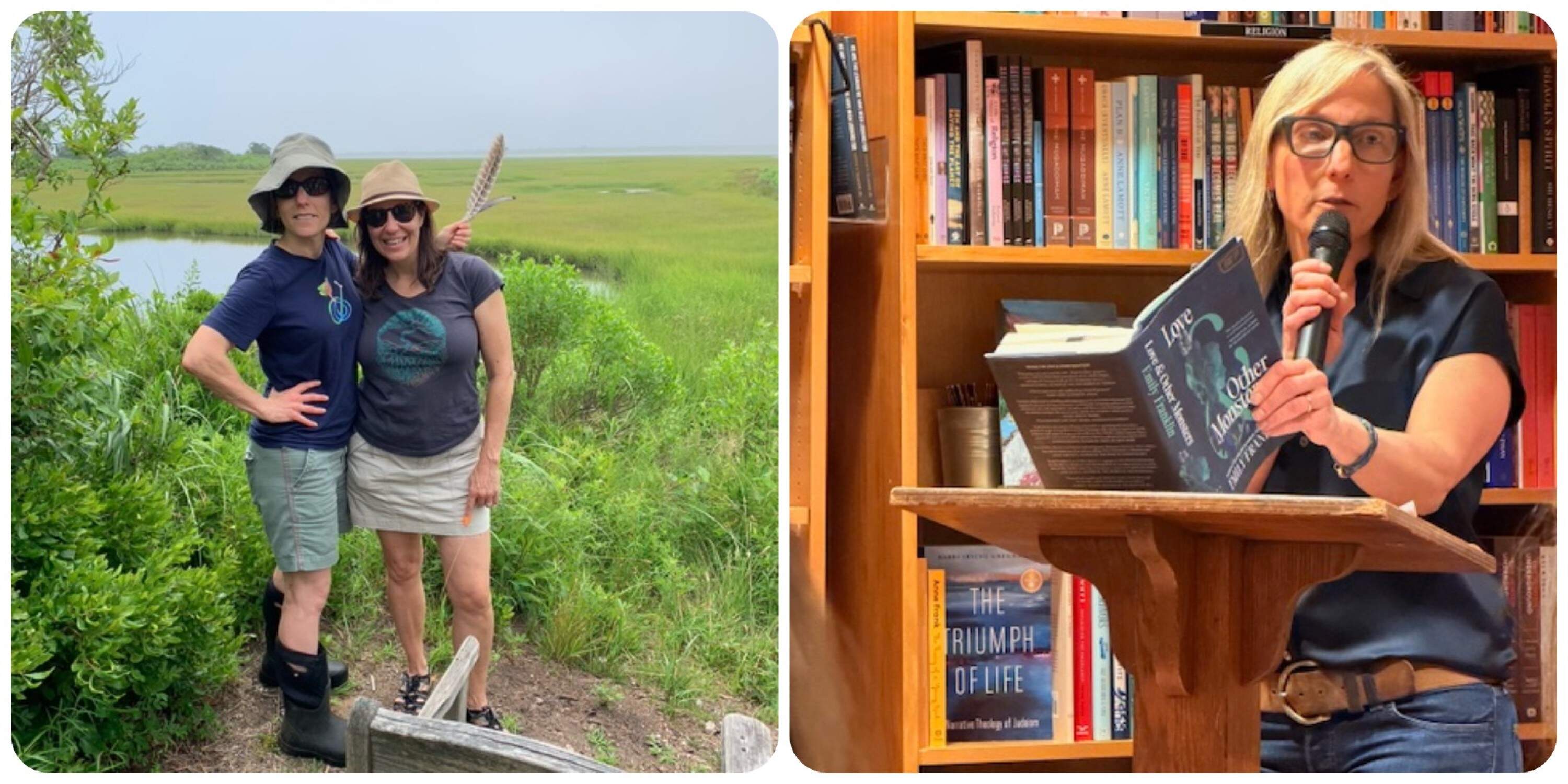
Years passed, I got married (to a man), and had four kids. Busy balancing writing with the messy years of parenting young children, I gave little thought to my clothing, but when I had to go to New York for publishing meetings or events, the old clothing crisis ensued. Everything had spit-up on it, or was just old. I’d call my mother, and we’d find something under duress — a pair of dress pants and a simple top. Over the years, shopping became enjoyable because we laughed, sometimes getting stuck in clothing in the dressing room and having to rescue each other. Sometimes she’d find me something I liked, a simple blazer. “You’ll wear it with everything,” she said, delighting in articles that would stand the test of time.
A few years ago, when my literary agent and his husband threw a party for me, I wore a dress, regretting it as soon as I arrived — not because I stood out, but because I blended right in. Just as my mother would have wanted. But just as quickly, I could hear her voice, “Next time, wear what you want.” I thought of how she wrote my name in the shirt I wanted all those years ago, even when it wasn’t what she wanted for me.
All along, my mother wanted me to blend because she felt it was safer. She’s not wrong. She also wanted others to accept me. The key, of course, was in finding acceptance with myself. I’m still happily married to a man. I’m still happily queer.
The time has once again come for me to shop for my book tour, only this time, my mother can’t come with me. In the end stages of Alzheimer’s, I won’t have her to laugh with in the dressing room, won’t see a quick flick of “sweetie, no” when I emerge in something unflattering, won’t see her smile when I emerge confident. I won’t have her to hold my hand as we leave the store.
I’ll be wearing a suit and button-down, or jeans, a blazer and button-down with boots, chosen with help and love by my daughter. I started using the pink button-down my mother bought me all those years ago as a painting smock — a new hobby — which I know my mother would be proud of me for trying. Over time, my painting will probably result in so many colorful smears on the shirt, it would be easy to lose track of the original piece of clothing underneath. I won’t forget.