Support WBUR
Cog's Weekly Ideas Newsletter
The World Cup is for you, too. Really
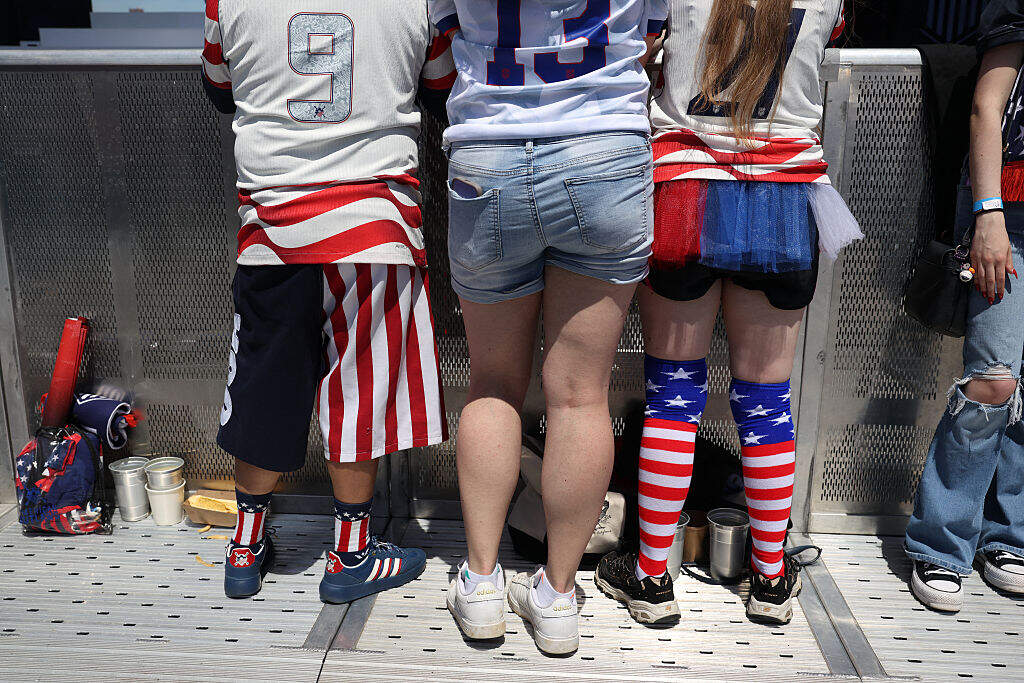
Editor's note: This essay appeared in Cognoscenti's newsletter of ideas and opinions, delivered weekly on Sundays. To become a subscriber, sign up here.
We’re less than a week out from the first match of the 2026 World Cup: 48 teams, 104 games, 1,248 players, 16 host cities across the U.S., Mexico and Canada.
Surely some of you are soccer superfans — eagerly awaiting the first match (Mexico vs. South Africa) this Thursday, or the first U.S. match versus Paraguay on Friday night. Maybe you’re planning to watch the games at Boston’s FIFA Fan Festival. Maybe you’ve even secured tickets to one of the seven matches scheduled at Gillette Stadium in Foxborough — “Boston Stadium” in FIFA parlance.
But it’s also entirely possible that you are like my mom: You don’t give a hoot about soccer (or sports, generally) and could care less about the beautiful game touching down in North America.
To you I say: Give it a chance. I think it’s possible to enjoy the five-week spectacle, happening on our continent for the first time in over 30 years, even if you know nothing about the game.
This week, I interviewed the owners of two bars, both in Boston’s Jamaica Plain, about their plans for the soccer frenzy to come. Are they expecting more day drinking and nacho-eating in June? Sure. But they also see it as an opportunity to celebrate humanity, writ large.
Jason Waddleton is a Scotsman, transplanted to Boston from a small town near Aberdeen, on Scotland’s northwest coast. Waddleton’s called Boston home for 27 years, give or take. And in 2010, he opened what was and remains the city’s only Scottish bar, The Haven, where they serve burgers and pizza, but also haggis, Scotch eggs, whiskey (of course) and several other Scottish delicacies. It’s safe to think of The Haven as a Scottish outpost in a sea of Boston’s Irish pubs and Italian trattorias.
This is a big deal because 2026 is the first time in 28 years that Scotland has qualified to play in the World Cup, and two of their three group stage games are in Boston. It means the Tartan Army — legions of Scotland’s rowdy fans — will soon arrive to support their side.
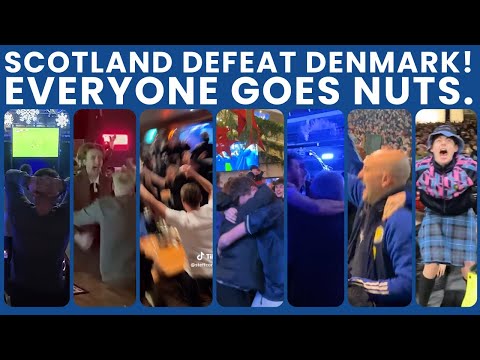
“We are going to be slammed,” Waddleton told me. To accommodate the fans, he’s planned a family-friendly festival with live music, food trucks, games, a bagpiper (“over from Inverness” for 10 days) and giant screens to watch the games.
Waddleton has attended two World Cups, one in France (in 1998) and another in Russia (in 2018). The joyful collection of people and cultures he saw mingling in Moscow’s Red Square — Russians, beside a group of Danish fans, surrounded by a Senegalese drum circle — is inspiration for The Haven’s events this year. ”It’ll be a big party,” he said. “I'm looking forward to an interesting mix of cultures – that being the case here with Haitian people, Scottish people, obviously people from JP and Boston ... all in this big parking lot at The Haven and with music going and blue flares.”
A day later, I spoke to Liz Nicol, the owner and brewer-in-chief of the Drawdown Brewery, also in JP. It’s the only queer, lesbian-owned brewery in Boston, and it’s dedicated to showing women’s sports.
Drawdown takes its name from Nicol’s first profession, as a civil engineer. The term, she explained, comes from hydrology: “ drawdown time is the amount of time groundwater infiltrates into a basin, it’s also coincidentally how you get beer out of a keg.” Nicol started writing the business plan for Drawdown in 2016, after traveling to Europe for a big international soccer tournament. She was enchanted by the beer gardens of Düsseldorf, and made it her mission to create a similar environment at home. The brewery finally opened its doors at the end of 2023. During the World Cup, they’ll have at least seven beers on tap, in addition to a hard seltzer and non-alcoholic options (including a to-die-for rootbeer).
For one glorious month, Pride and the World Cup will collide in Drawdown’s taproom, which suits Nicol just fine. “Sports and beer are uniters of communities,” she said. “They both bring out a commonality amongst people, who might not find commonality with otherwise.”
According to Nicol, the low-scoring nature of soccer games is actually what makes watching so great. It makes it that more exciting when there finally is a goal. There’s also the creative magic inherent in the flow of the game — not just set plays, like in American football and basketball.
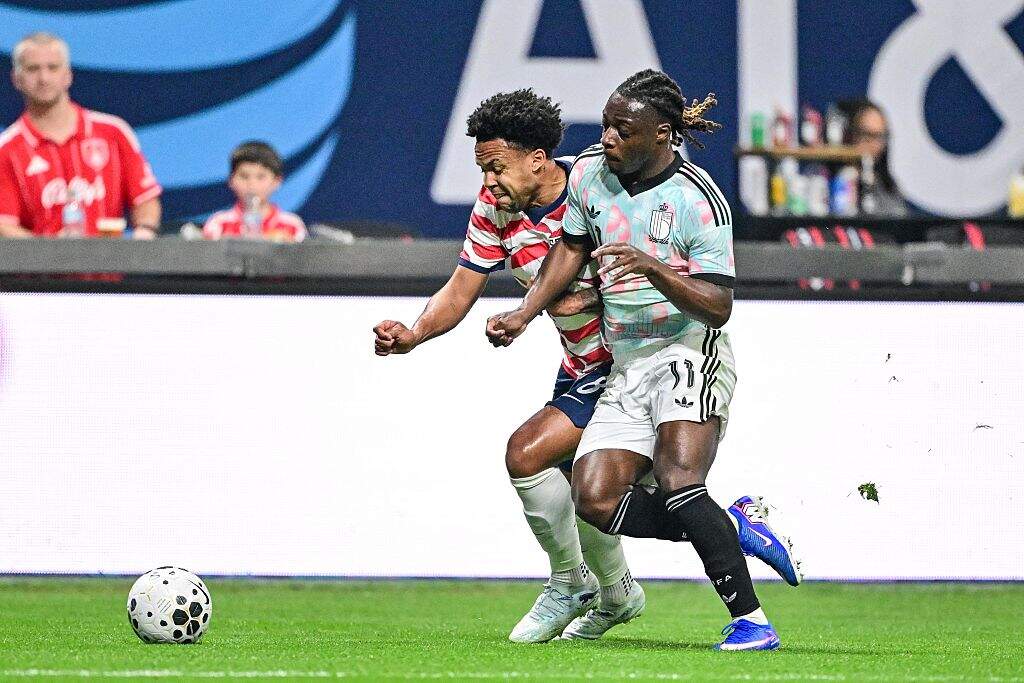
Barring a bizarre sequence of events (or an act of God), the U.S. will not win this year’s World Cup. This, according to Waddleton, doesn’t matter. Scotland is 43rd in FIFA’s world rankings, and there’s a very good chance they won’t make it out of initial group play. But they’ll get three games on the world stage (and that’s more than other big soccer countries like Italy and Ireland can say — they didn’t even qualify for the tournament). “ It's about the occasion. It's about representing,” Waddleton said. “It's three massive parties. It's three Super Bowls for Scotland.” And if we can all adjust our attitudes a smidge, for the U.S. too.
I love sports — and I’m excited for the distraction and excitement of the World Cup. But for you non-fans (hi, Mom) consider this:
It’s fun to watch other people be excited, to live and die by the outcome of games. This is a fantastic people-watching opportunity.
It’s fun to have an excuse to drink beer in the morning — or to be around happy people drinking beer in the morning.
It’s fun to feel like you’re part of something bigger — in this case the biggest sporting event on the planet.
It’s fun to learn something new. Bookmark this soccer glossary from my colleague Berto Scalese and make a watch plan.
Maybe I’ll see you out there. Hope so.
Subscribe to Cog's weekly newsletter. Essays on friendship, love, loss, parenting, politics and more, from Boston's NPR.