Support WBUR
Commentary
What the Ebola crisis tells us about Trump's 'America First' approach to global health
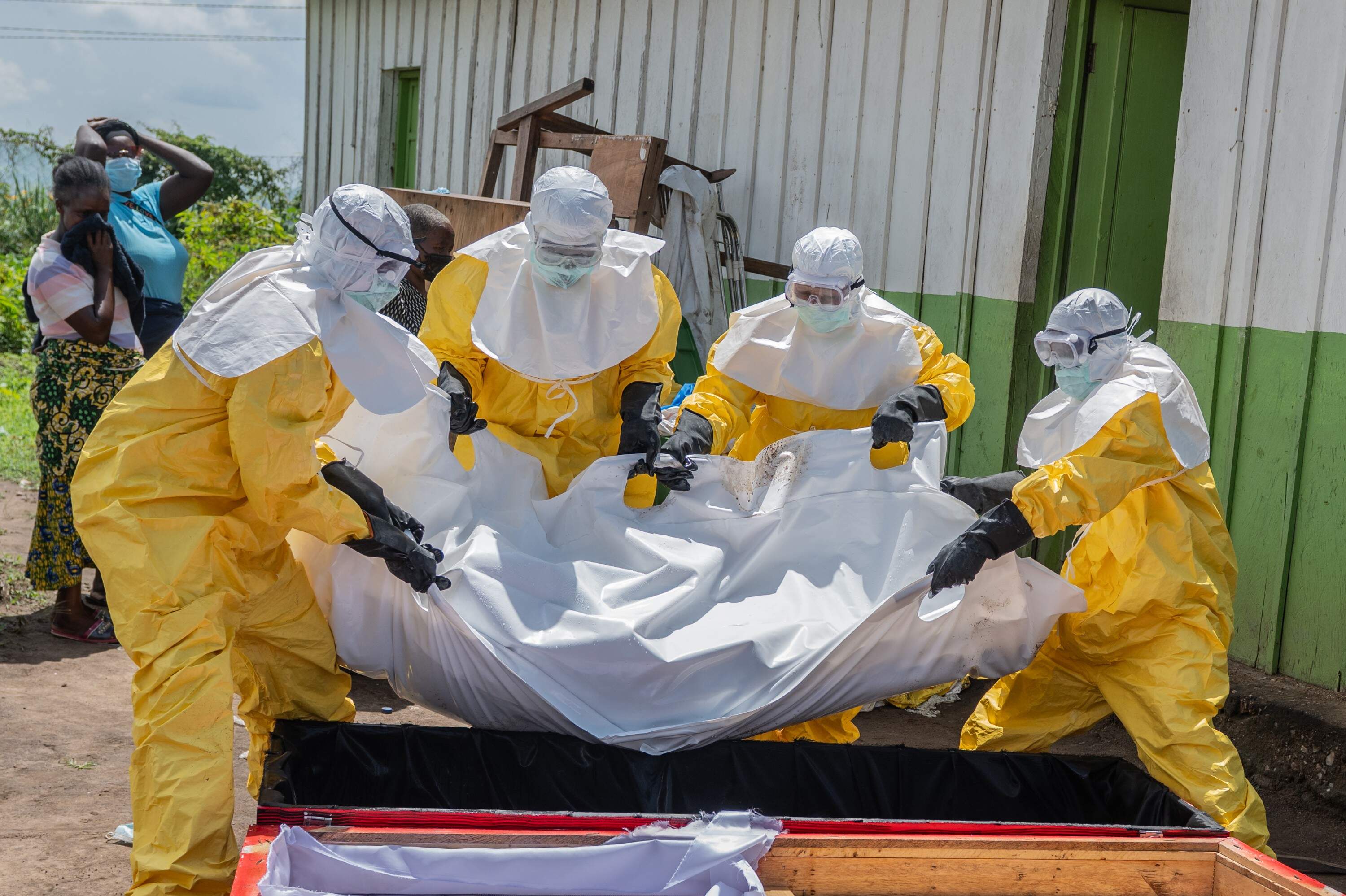
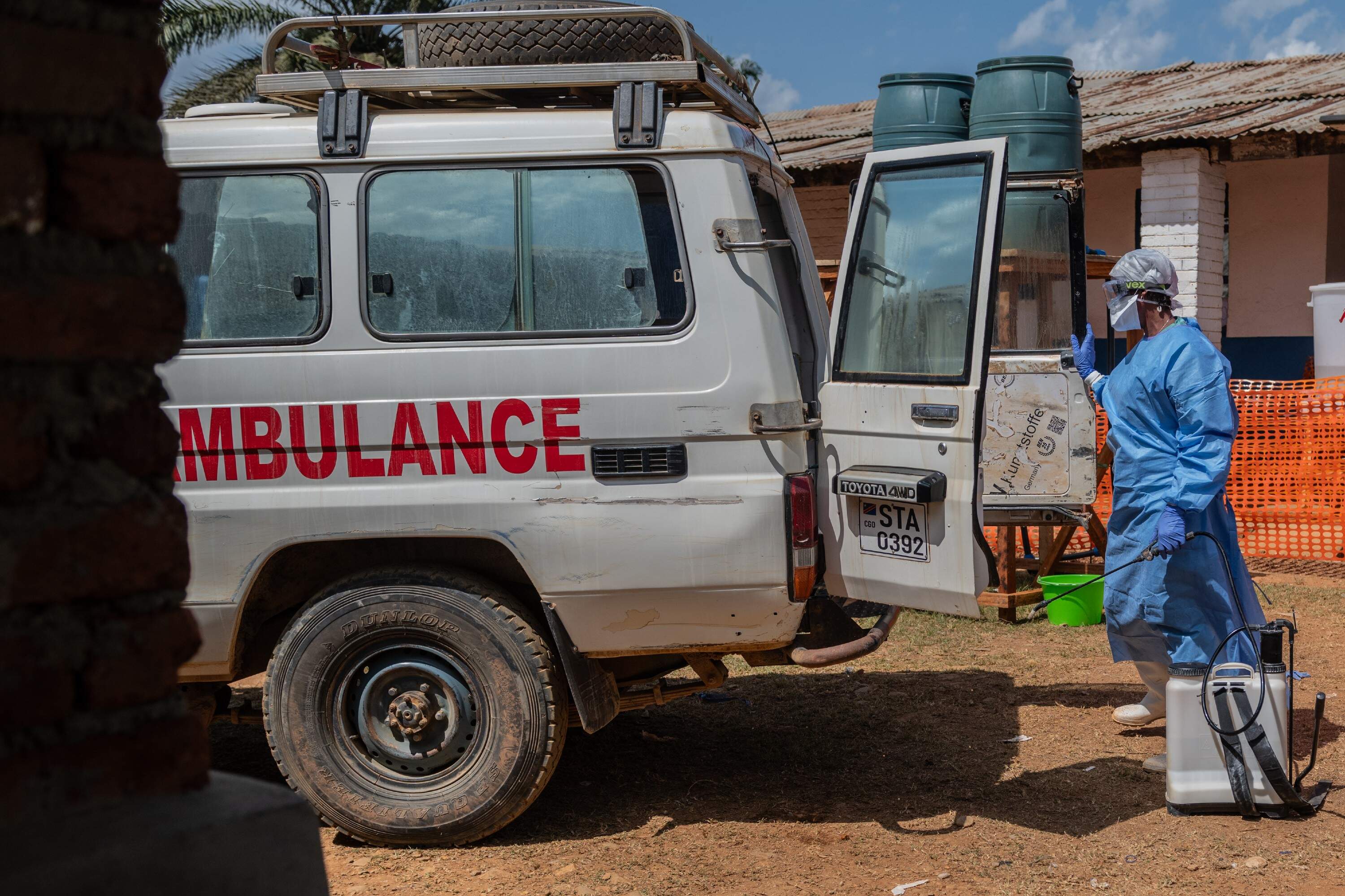
The first time I watched an epidemic up close, I learned a quiet truth that no policy memo can capture: outbreaks are won or lost in unglamorous places. The cold chain that keeps a vaccine viable through a power cut. The lab technician who confirms one case before it becomes 10. The logistics officer who finds a four-wheel drive vehicle when the only road in has washed out.
My work in international development has carried me across three continents over the past decade or so. And in the crises I did see up close, one pattern held: the United States kept showing up in those unglamorous places.
I saw it during COVID-19, when the world relearned how fast a virus crosses a border; in Gambia, after contaminated cough syrup killed dozens of children; in Zimbabwe, when cholera outran the water trucks. In each case, USAID was not just a logo on a banner, but a partner — frontline, hands-on, working shoulder to shoulder with international organizations and local health ministries to contain threats before they spread. And not just health threats: When a 2015 earthquake flattened parts of my own country (Nepal) and killed nearly 9,000 people, American and international responders — USAID's disaster teams among them — helped pull survivors from the rubble. I've seen this system from both sides — working alongside it, and watching it arrive when my people needed it.
That partnership is now gone. And we are watching, in real time, what its absence costs.
Since mid-May, an Ebola outbreak caused by the rare Bundibugyo strain — one for which there is no approved vaccine or treatment — has torn through the eastern Democratic Republic of the Congo (DRC). The WHO declared it a public health emergency of international concern. Within weeks, it had already become, by some counts, the third-largest Ebola outbreak ever recorded, with cases slipping across the border into Uganda. The WHO's director-general put it plainly: responders are “playing catch-up.”
In an outbreak, catch-up is a damning word. It means the virus had a head start. It means somewhere, early on, the system that was supposed to catch it, didn't.
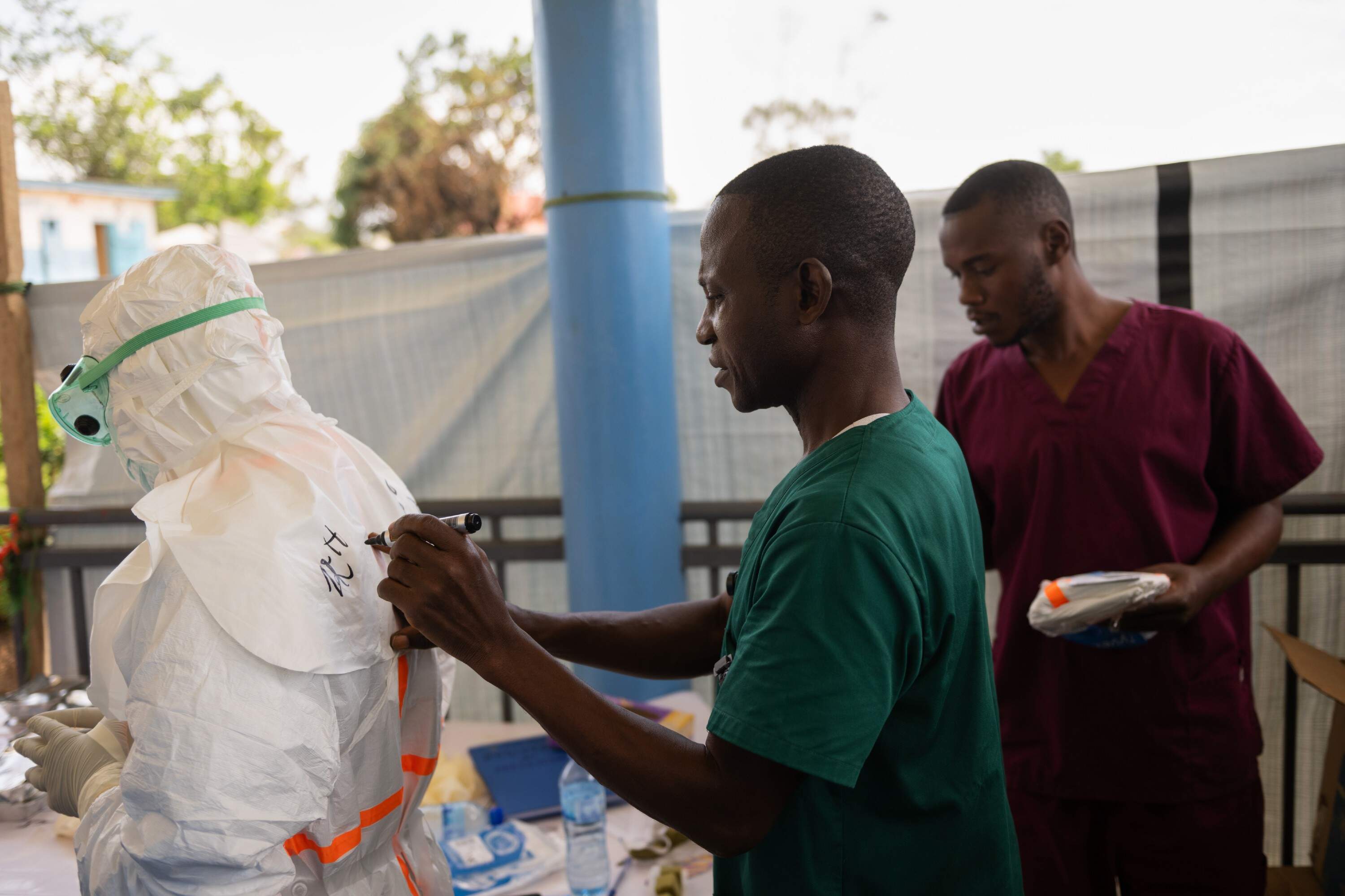
The aid workers on the ground with whom I’ve spoken point to a clear reason. U.S. funding cutbacks and layoffs — a four-pronged retreat that withdrew American money from the WHO, dissolved USAID, trimmed the CDC and pared back direct health aid to the countries now at the center of the epidemic — hampered the world's ability to respond. Tom Frieden, who ran the CDC during the catastrophic 2014 Ebola outbreak in West Africa, described the combined effect as a "1-2-3 punch” to global health architecture. When the administration gutted USAID and walked away from the WHO last year, the Trump administration’s argument was tidy: This was, in part, a fiscal choice. America first: Stop subsidizing the rest of the world's health and bring the money home. It was a clean line, and clean lines sell.
But here’s the thing: It wasn’t a clean break. The U.S. is now working with the same partners again.
Take, for example, Gavi, the vaccine alliance that helps poorer countries buy and deliver immunizations — and maintains emergency stockpiles for diseases like Ebola and cholera. Last year, the administration canceled a $1 billion grant it had pledged to Gavi, with the health secretary accusing the organization of neglecting vaccine safety and the State Department calling the funding inconsistent with our national interest. The message was that Gavi wasn't worth American dollars. Then, this month, Secretary of State Marco Rubio told senators the United States would “reengage” — that the State Department was moving to release the money it had withheld.
Don't get me wrong. I am glad the money is flowing again. I have never once wished for less American funding in global health.
My objection is narrower, and harder to dodge: if these partners are worth engaging now — on any terms — they were worth funding then. The return is the confession. Coming back, even with strings attached, admits the value was always there. The cuts were premature, and we may all pay for them.
The reversal on funding for Gavi is just one example. Reinstating partial funding to PEPFAR and to fight Ebola in the DRC are two more. The pattern repeats — pull the critical funding, declare a victory for the taxpayer, then quietly come back when the consequences arrive at your own front door. Except the consequences of public health don't wait politely for the U-turn. A surveillance officer laid off in 2025 is not putting his life on hold in the hopes of being rehired in 2026. The labs that shut down can’t reopen anytime soon. Abandon the commitment and you trade away your early warning system. You'll hear about the next outbreak when everyone else does — too late to shape the response.
The Trump administration rolled out the America First Global Health Strategy late last year to replace the architecture it had just dismantled. Its deepest flaw, the thing that worries me most, is that it has quietly converted global health from a collective, multilateral effort into a patchwork of bilateral deals — one country, one memorandum of understanding, one negotiated set of terms at a time. It treats global health as a transaction, not what it is: a shared defense that protects America by protecting everyone else.
Worse, some of those deals come with strings. The terms have been described as “overwhelmingly transactional.” Zambia was pressed to open its mineral wealth to American access in return for health assistance. Zimbabwe and Ghana have pushed back on agreements that would require them to hand over biological samples and health data with no guarantee they'd ever benefit from the resulting vaccines or treatments.
You cannot run a global health effort like a trade deal — because a virus is not a counterparty. It does not negotiate. It does not honor a memorandum of understanding. It does not pause at the border between Ituri and North Kivu (two provinces in the DRC), or between the DRC and Uganda, to make sure the paperwork is in order.
That is the entire reason a coordinated, always-on global health system exists in the first place — not as charity, but as a fire alarm wired to every house on the street, including ours. The DRC funded, until recently, more than 70% of its humanitarian work with American support precisely because a stray ember in a remote province has, again and again, landed far away, becoming everyone's emergency.
The first real test of an America First approach to a fast-moving virus is happening right now, and the early results show a pathogen running several weeks ahead of the people chasing it.
The tragedy isn't only that we walked away. It's that we cut first and reconsidered later — and a virus grants no one the luxury of operating in that order.