Support WBUR
Hidden Levels Ep. 2: Stick It to 'Em
Up, Up, Down, Down, Left, Right, Left, Right, B, A... Start. It's one of the most famous video game cheat codes, and it's easiest to execute using a piece of gaming interface technology so fundamental that it has remained largely unchanged for decades: the joystick. But the joystick didn't start as part of a console or arcade system. In fact, its basic design predates video gaming by generations and is grounded in aviation.
The Wright brothers' first successful flight required full-body engagement. Then, in 1907, French pioneer Robert Esnault-Pelterie patented the idea of a single stick to control both the up/down and right/left movement of a plane, presaging the modern game controller as we know it.
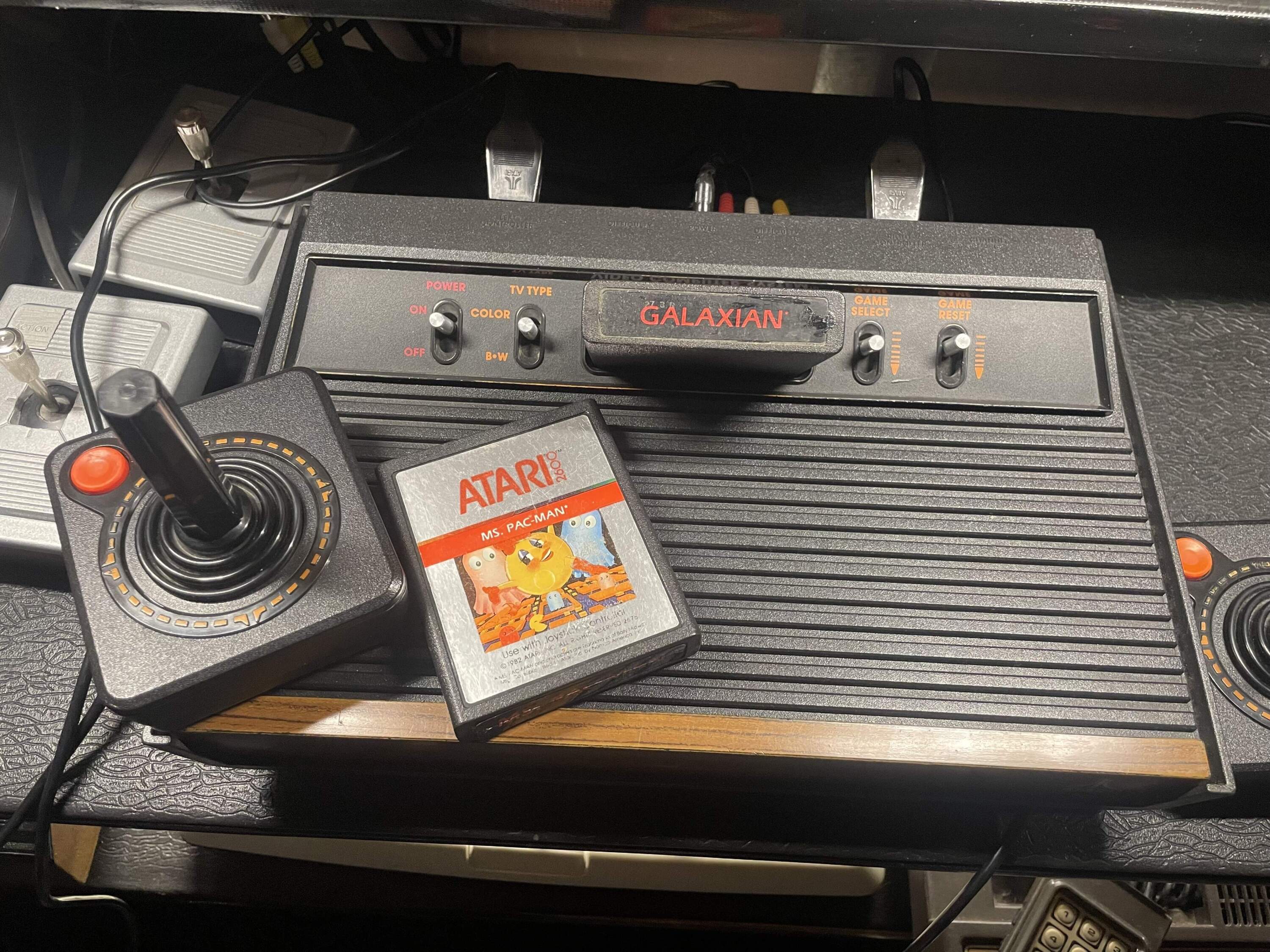
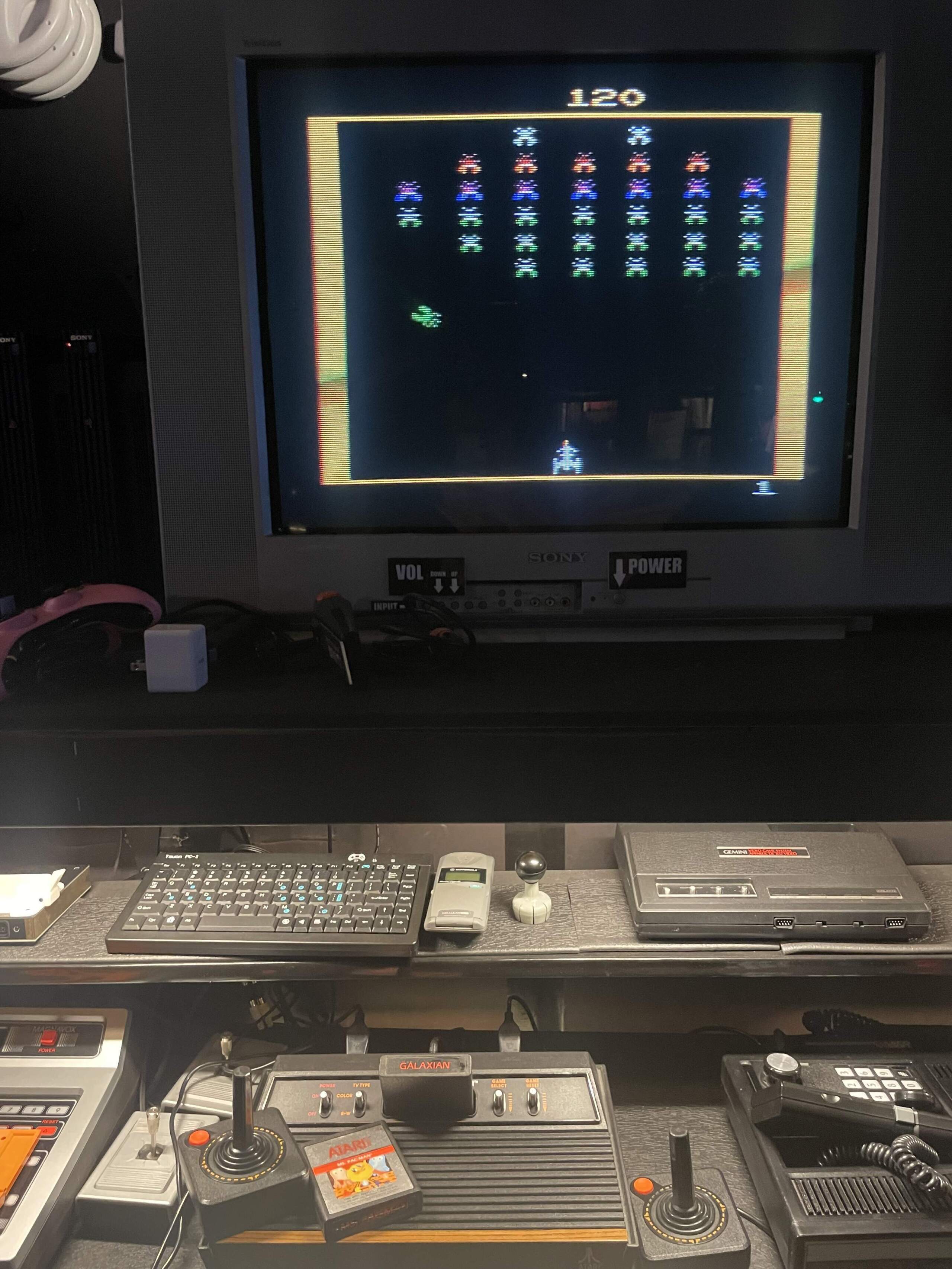
It would be 70 years before this pragmatic design leapt into recreational, everyday culture. The video game joystick came to prominence with the Atari VCS in 1977 — better known today as the Atari 2600. The intuitive design made it feel like a seamless extension of the player's will. The joystick has what engineers call "perceived affordance": you see a joystick, and you instinctively know how to use it.
In the 1990s, a smaller, less-rigid joystick hit the market: the thumbstick, as seen on the Nintendo 64 controller. As 2D game worlds gave way to 3D ones with games like GoldenEye 007, the more responsive, more precise thumbstick began to change the game. It was followed by the dual-thumbstick controller, pioneered by the Sony PlayStation in 1997, which allowed players to separate "looking" (aiming with one stick) from "going" (moving your avatar with the other). This dual-stick design proved to be an optimal interface and remains the industry standard today.
Now, this refined, dual-thumbstick interface has jumped back out of the realm of recreation to be used for consequential, real-world tasks in the military and in medicine. The U.S. military, for example, utilizes ruggedized video game controllers, and even actual Xbox controllers, to operate high-precision systems like unmanned drones, turrets, and bomb-finding vehicles. In military contexts, intuitive usability is bolstered by the familiarity that younger generations of troops already have with controllers.
Similar interfaces are also being adopted in medicine for delicate procedures, like endoscopy and bronchoscopy, where their design is leveraged for precise control over remote instruments.
At the same time, gaming interfaces have started to trend in new and different directions. There are some more immersive interfaces, to be sure. But in a lot of cases, touchscreens have increasingly taken the place of physical controllers, flattening our interactions and removing us further from that direct and tactile feeling of virtual control.
Credits:
This episode was produced by Amory Sivertson and edited by Meg Cramer. Mix and sound design by Emily Jankowski. Additional mixing by Martín Gonzalez. Music Composition by Paul Vaitkus. Our theme music was composed by Swan Real and Paul Vaitkus. Fact-checking by Lara Bullens.
Special thanks to guests David O'Grady, Jeff Bujak, Jared Keller, Mikko Heinonin, and Niklas Nylund. Thanks also to Amory’s Mario Kart opponents Phillip Soucy, Kelly O'Connell, and Mike Moschetto, and to Henry Lowood for sharing his expertise and tipping Amory off to "The Joy of Sticks" exhibition.
The Managing Producer for "Hidden Levels" is Chris Berube. The series was created by Ben Brock Johnson. "Hidden Levels" is a production of 99% Invisible and WBUR's Endless Thread.