Support WBUR
Texas Supreme Court blocks special abortion case
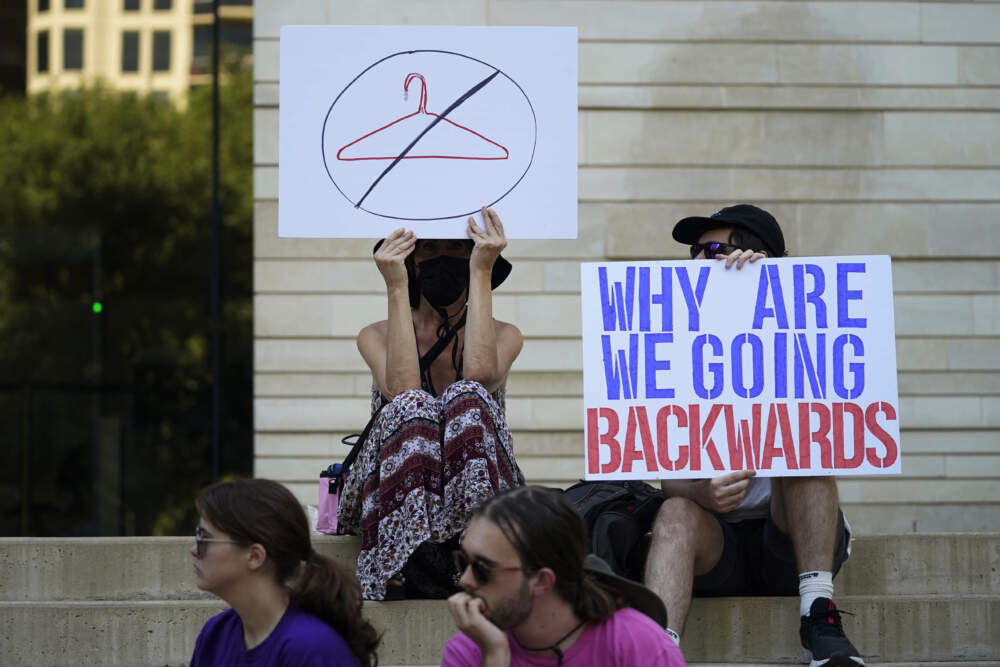
When Kate Cox’s fetus was diagnosed with a condition that is almost always fatal, she sued her home state of Texas for an emergency abortion. A state judge ruled that she could terminate her pregnancy because continuing it pregnancy could have harmed Cox’s health and fertility.
But the Texas Supreme Court placed that decision on hold. The Supreme Court ultimately ruled against her, upholding the state’s near-total abortion ban. It’s not the first instance of an emergency abortion being denied in Texas.
“Texas is really focused on making it as difficult as possible for someone to be able to terminate a pregnancy,” says Kimberly Mutcherson, a professor at Rutgers Law School.
5 questions with Kimberly Mutcherson
What are the exceptions to Texas’s near-total abortion ban that would allow someone to terminate a pregnancy?
“You have to have to specifically say that this is life-threatening. You have to specifically say that you are making this diagnosis under your reasonable medical judgment. You have to specifically say what the risks are.
“If you don't do that, then they say the exception can't apply.”
Why didn’t Cox’s case fall under that statute, according to the ruling?
“The language of the statute is very specific. It requires that the physician has to say, in her reasonable medical judgment, that there is a life-threatening physical condition — It's very clear that it has to be a physical condition — that's aggravated by or caused by or is arising from the pregnancy. And it places the pregnant person at risk of death or it poses a serious risk of substantial impairment of a major bodily function unless the person gets an abortion.
“What the Texas Supreme Court says is the language that was used both by … the physician and by the judge [of the lower court] doesn't track the language of the statute.
“It doesn't use that sort of magic language.”
Have there been any abortions in Texas after the overturning of Roe v. Wade?
“There have been abortions in Texas post-Dobbs.
“The legislature didn't do a very good job of helping people understand just how broad or narrow the exception is. So one of the other things that the Supreme Court did that hopefully will be useful for physicians and for pregnant patients in Texas is they said it doesn't require imminence. So it doesn't have to be, you know, you're right at death's door before you can get that abortion.
“They also said that it doesn't require a court order. So all of those things should put physicians in a better position in determining whether there's a medical exception.”
If the exception doesn’t require a court order to perform an abortion, how do patients and physicians end up in court?
“You come to court because you don't trust, right? You don't trust Ken Paxton, the state attorney general.
“You don't trust how the medical exemption is going to be interpreted. If you do end up in criminal court and you're facing losing your medical license or going to prison for decades, you want to be pretty sure that you're not gonna be successfully prosecuted.
“So the Texas Supreme Court says you don't need to get a court order, but if you want to really be safe, going to court and getting a court order is what you would do.”
What are the implications for hospitals and physicians going forward after the Kate Cox case?
“I think it's very clear that Ken Paxton, his preference is for not a single abortion to happen in the state of Texas. It's really important also to remember here that even though we've talked a lot about the fetal anomaly and that's why this discussion about abortion started, that is that in and of itself is not a reason to have an abortion in Texas.
“It doesn't matter if you're gonna have psychological harm. Doesn't matter if you have mental health issues. It doesn't matter if you're going to spend 20 weeks of your pregnancy carrying a fetus you know is not gonna survive. None of that matters. It has to be that you have a life-threatening physical condition.”
James Perkins Mastromarino produced and edited this interview for broadcast with Catherine Welch. Grace Griffin adapted it for the web.
This segment aired on December 12, 2023.