Support WBUR
Massive swarms of dragonflies create buzz in Rhode Island
Beachgoers in Westerly, Rhode Island, were subject to a scene that looked straight out of Alfred Hitchcock’s “The Birds”: Thousands of dragonflies descended on the beach, flying in from the water and swarming for about five minutes.
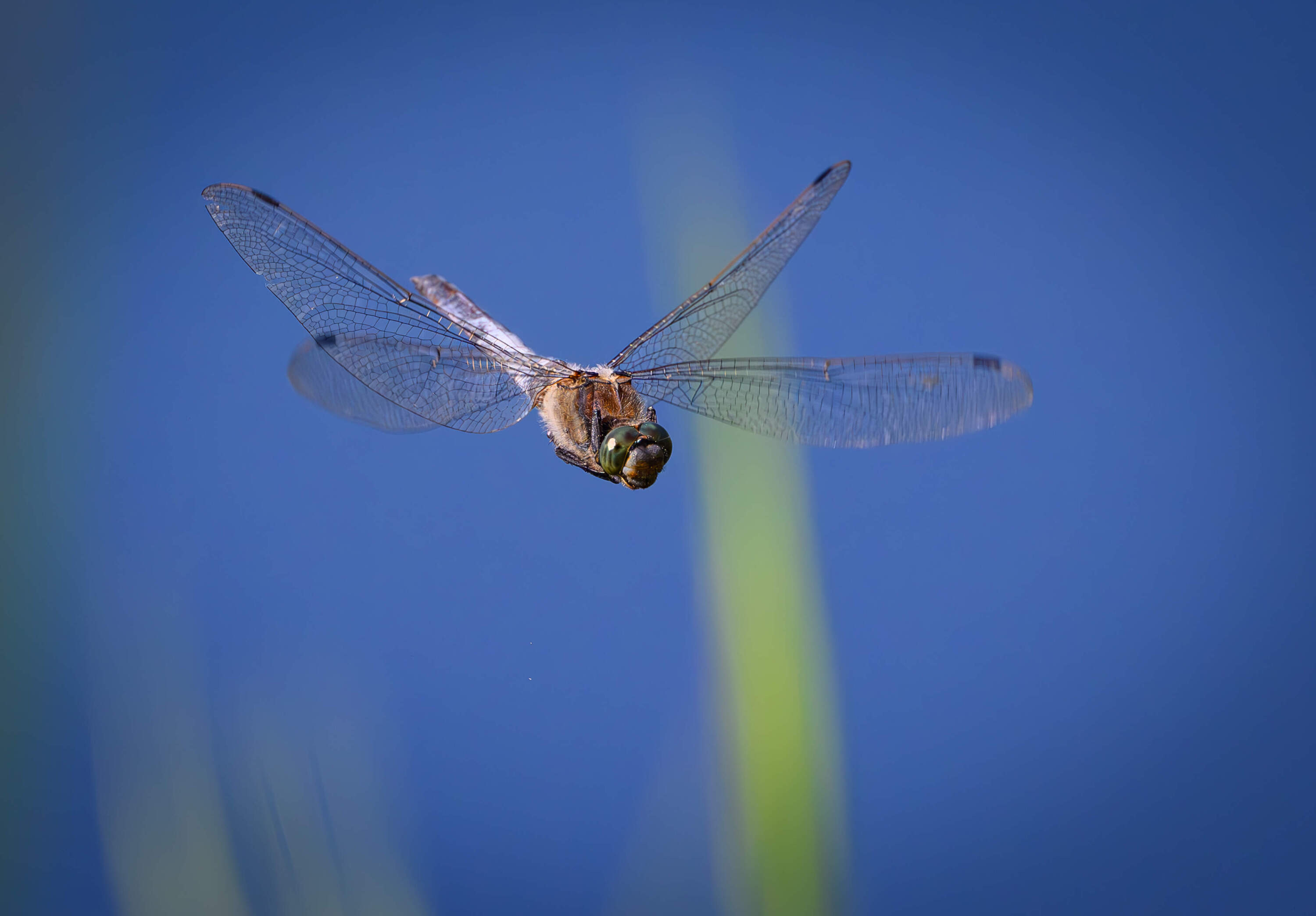
Social media videos show the insects moving together in the same direction. They’re medium in size, mostly the blue dasher species of dragonfly.
Virginia Brown, author of "Dragonflies and Damselflies of Rhode Island,” says that dragonflies are highly mobile creatures. Their typical migratory patterns start later in the summer, from mid to late August to September. But how did they end up in Rhode Island in July?
“Because there were so many of this blue dasher, it's possible that they're in a cycle of high population density,” Brown says. “When population densities are high and there's not enough resources for everybody, they're known to move in search of new habitats.”
Additionally, Brown says that surface waters may be drying up due to low rainfall levels, another potential cause for the migration. While they don’t bite or sting, some beachgoers were startled by the massive movement of the bugs. But swarms aren’t unusual, Brown says.
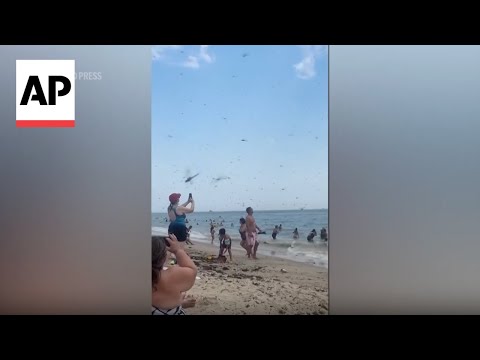
However, normally when dragonflies migrate, it’s a few hundred at a time flying by over several hours. Usually, adult dragonflies fly around ponds and other aquatic areas searching for a mate.
“[Dragonflies] live most of their life in the water as an egg and then they emerge as an adult,” Brown says. “The reason for the adult stage in many insects is to reproduce.”
Dragonflies have been on Earth for 300 million years, Brown says. They used to be the size of crows, but otherwise are roughly the same behaviorally and physically today as they were back then.
“They witnessed both the evolution and the extinction of lots of other animals, including dinosaurs,” Brown says.
Additionally, dragonflies are beneficial to their environment. They eat other insects including mosquitos and other biting flies. They’re generalists, eating whatever they can catch. Plus, they’re extremely effective predators, catching roughly 95% of their prey.
“They are also really good indicators of ecosystem health because they are aquatic, as the larval stage is aquatic,” Brown says. “That's the longest stage of their life, and they may be in the larval stage for a matter of months or even several years before they emerge to fly around.”
Karyn Miller-Medzon produced and edited this interview for broadcast with Micaela Rodriguez. Grace Griffin adapted it for the web.
This segment aired on July 31, 2024.