Support WBUR
In 'Soft Power' musical, playwright David Henry Hwang tackles racism, U.S.-China relations
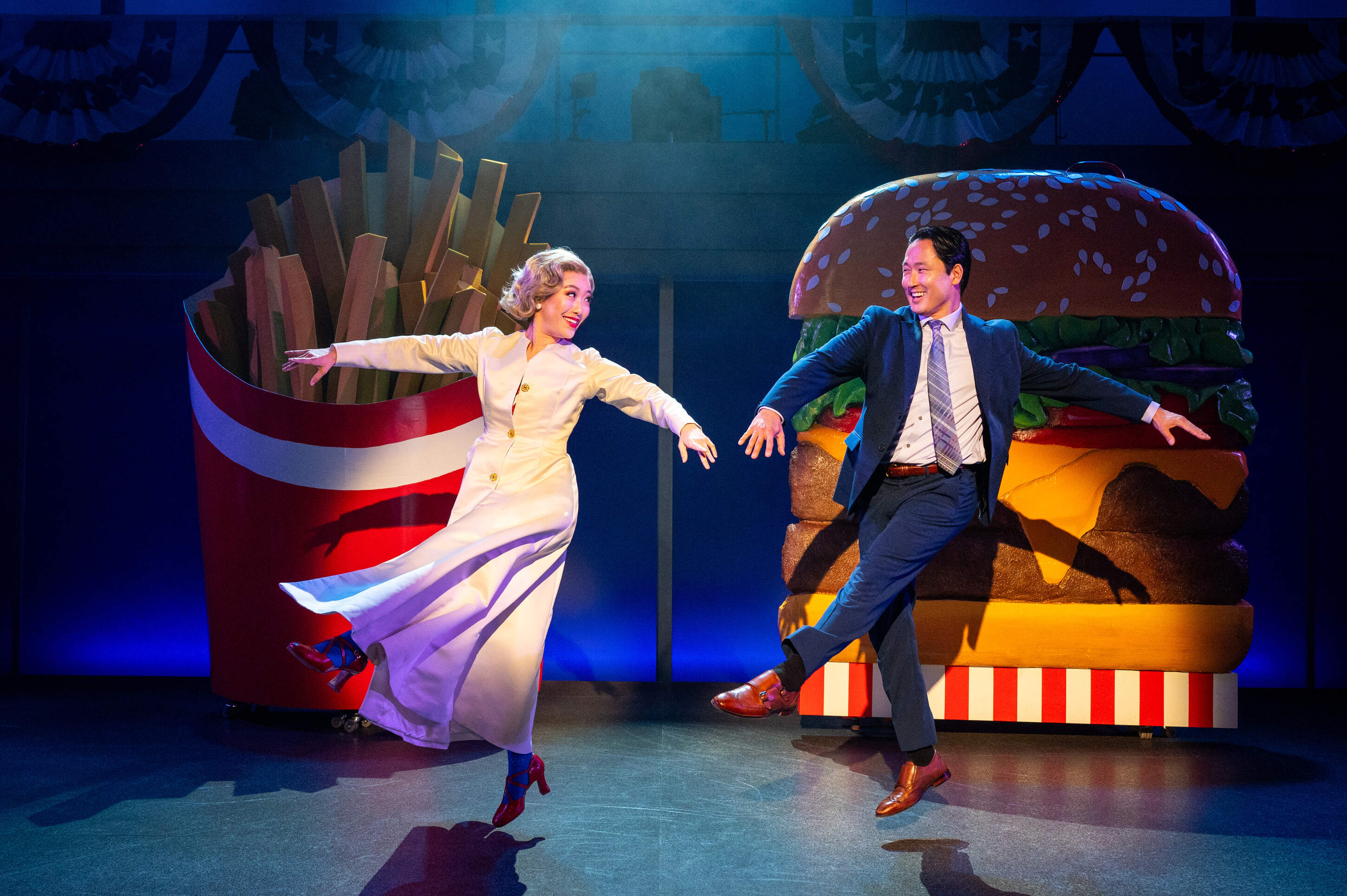
A singing, tap-dancing Hillary Clinton. A bright-eyed Broadway producer from mainland China. A Chinese American playwright stabbed in the neck in a random hate crime.
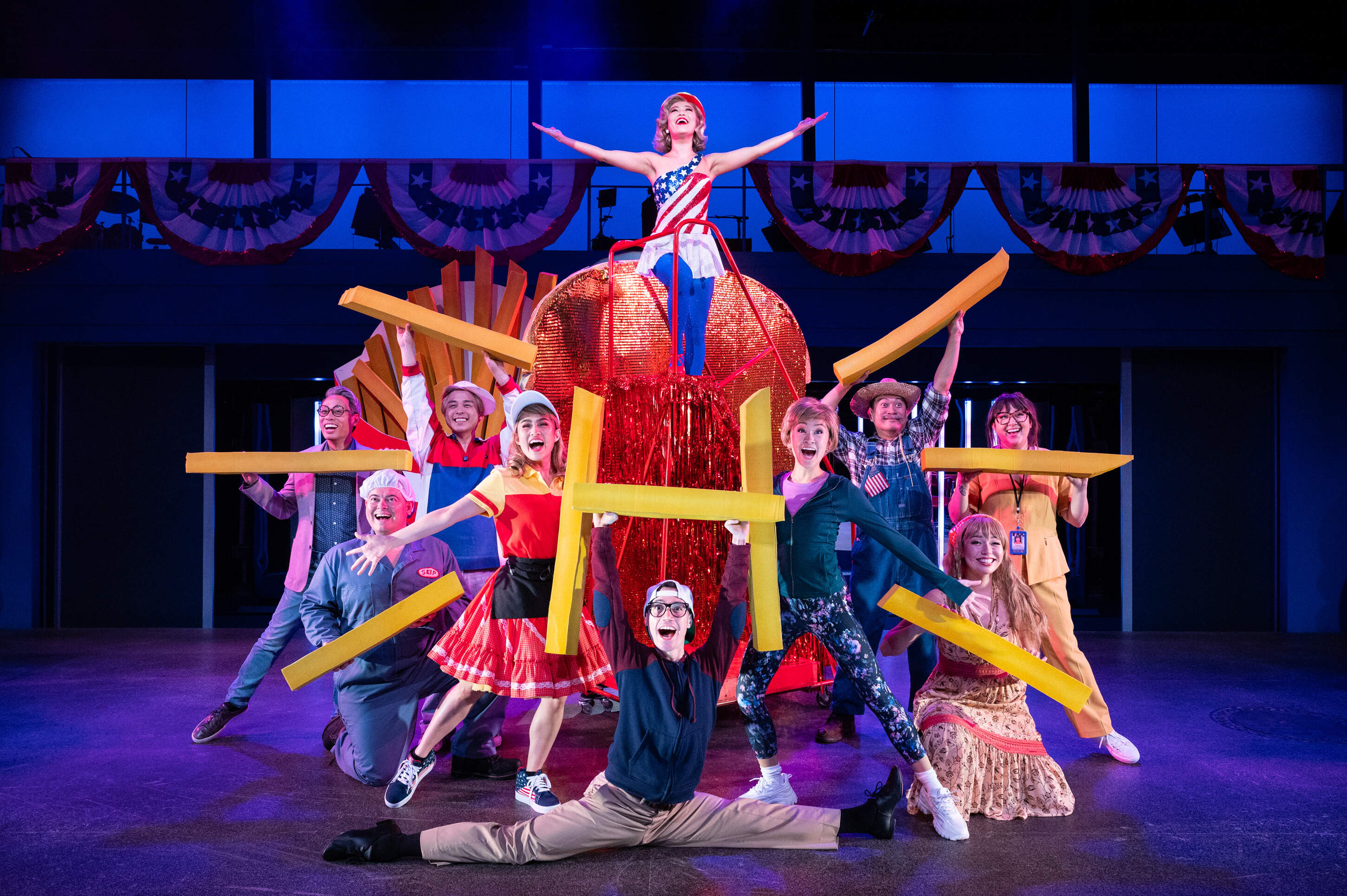
"Soft Power" is a gonzo musical about Anti-Asian racism, U.S.-China relations, and the chaos of American democracy.
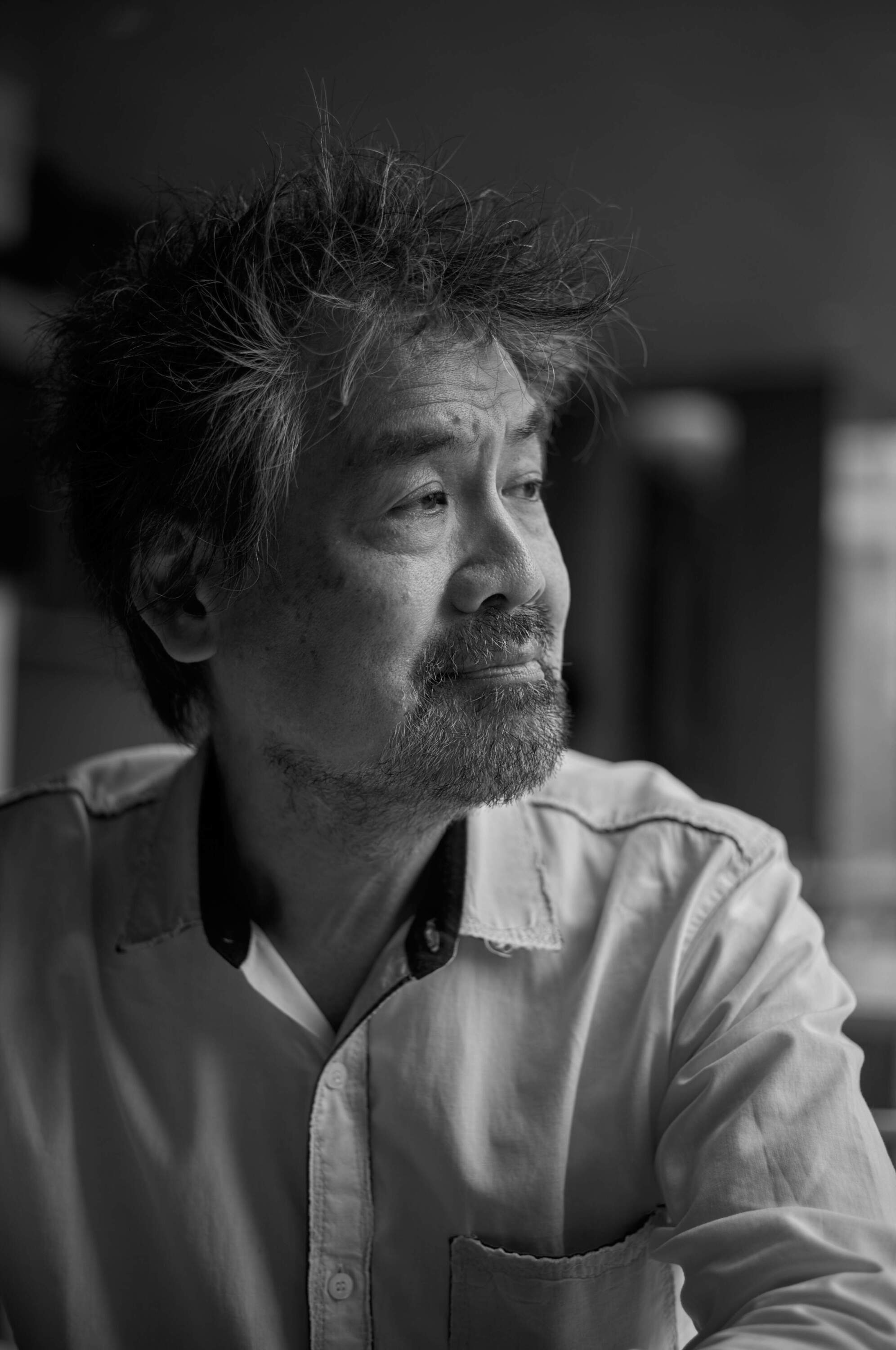
We sit down with co-creator David Henry Hwang, author of acclaimed plays "M. Butterfly" and "Yellowface," about how he wrote himself and his political anxieties into "Soft Power." A new version of the musical, composed by the Tony-award-winning Jeanine Tesori, is now playing in the Washington D.C. region with an all-Asian cast.
5 questions for David Henry Hwang
You have said that the idea for this show came from watching “The King and I,” which is about a white British woman going to Thailand. We’ve had these Western portrayals of Asia. White people playing Asians: Charlie Chan, Fu Manchu, Miss Saigon. How did you try to flip the lens?
“So I thought I'd like to try to write a reverse ‘King and I,’ in which the original idea, which was actually started before the 2016 election, was that we would have a Chinese national who would come to America and help President Hillary Clinton to solve the problem of gun violence. And we did a reading of that version on the day of the 2016 election and the day after I talked to my composer Jeanine Tesori and director Leigh Silverman. And I said, okay, I think that's going to be bad for the country, but it could be good for the musical.”
The musical gets surreal pretty quickly. It’s about a playwright thinking about how to write this story. And then he gets stabbed in a moment of anti-Asian violence in America. That actually happened to you, didn't it?
“Yes, which is one of the reasons there's an autobiographical character named after me, ‘DHH,’ in the show, because the musical starts with David having been hired by a Chinese producer to sort of create a musical, which is a reverse ‘The King and I’ where Westerners appreciate the beauty of China. David’s struggling with this, he can't write it and gets stabbed in the neck, which is what happened to me years ago. I was stabbed in the neck on my block around 9 p.m. by an assailant who was never apprehended, who severed my vertebral artery. I lost about a third of my blood. A city official, David Kim, who represents Queens, said it was a hate crime. So it was before the spike in anti-Asian hate crimes that happened during the pandemic. But I'm sort of, you know, OG version of that.
“When I was writing it earlier on, I found myself just writing about my stabbing and I thought, ‘Oh, this is never going to get in the show.’ But as you say, it becomes the sort of principal plot device because the David character is struggling with the show and when he passes out after the stabbing, he has this fever dream and that. Jeanine Tesori always said it's a little like ‘The Wizard of Oz.’ Then he is able to see this musical that represents both Chinese and American points of view about democracy.”
In “Soft Power” you have an Asian actress playing a white woman, Hillary Clinton, pantsuit and all. The show is also absurd and farcical. What are you trying to say about our elections here?
“We've been through this very tumultuous period, and we continue to be in an almost fever dream-like reality. I mean, if you look at just what has happened in the last two months in our electoral life in this country. And so, you know, the Chinese point of view is why do people have to vote? It just creates chaos. And I think it's worth noting that the actress who plays Hillary, Grace Yoo, who is amazing, as you say, that when we did this show, an earlier version of this show in Los Angeles and New York before the pandemic, it was an all Asian cast, but with one wonderful white actress playing Hillary. And we've to say, yes, this version to go with an all Asian cast. And I think it works beautifully. When you get to the end of the show and the autobiographical character is talking about a stage full of faces that look like mine and an Asian-American lens looking at our country, it felt right to actually have a completely Asian cast and made sense that since David, the David character falls into this fever dream after he stabbed, that he might imagine a cast of all Asian faces. All faces like his struggling with this issue.”
You first wrote this play in 2016 but you’ve now updated it. One thing that is so current is the role of technology and surveillance. You nod to that in perhaps the most absurd moment in the musical. This is when the theater producer from mainland China tries to bridge divides with America by suggesting some good old government repression. Where where did that come from?
“That actually is new to this version. One of the things I felt was that, when I talked earlier about the complexity of watching ‘The King and I’ and feeling uncomfortable with the content, but seduced by the beauty of the delivery system. That moment in ‘Soft Power’ really captures that contradiction. And it felt right to me that an American administration that leans towards authoritarianism might be interested in the degree to which China has been successful in suppressing protests.”
How has this project changed how you think about being Asian-American in this country at this moment?
“Well, one of the things that has changed from the time that we originally presented the show pre-pandemic is this spike in anti-Asian racism, hate attacks that has taken place in the interim. And for me, it reinforces the perennial fact throughout American history that whenever there is a conflict between the U.S. and any Asian country, Asian Americans get caught in the middle because we are continually considered to be perpetual foreigners. And that notion has been strengthened and reinforced by what has happened during the pandemic. A general audience is more receptive to this notion that anti-Asian racism still exists — that therefore, the Asian-American strategy by some, of being the ‘model minority,’ doesn't work, that hasn't kept us safe. And therefore, the only way to combat racism is by actually resisting it and organizing and speaking up and not being so ‘modelly.’ ”
This segment aired on September 6, 2024.