Support WBUR
How companies like Temu and Shein exploit a little-known trade loophole — and why it's dangerous
Have you seen those ads popping up for really cheap stuff by companies like Temu?
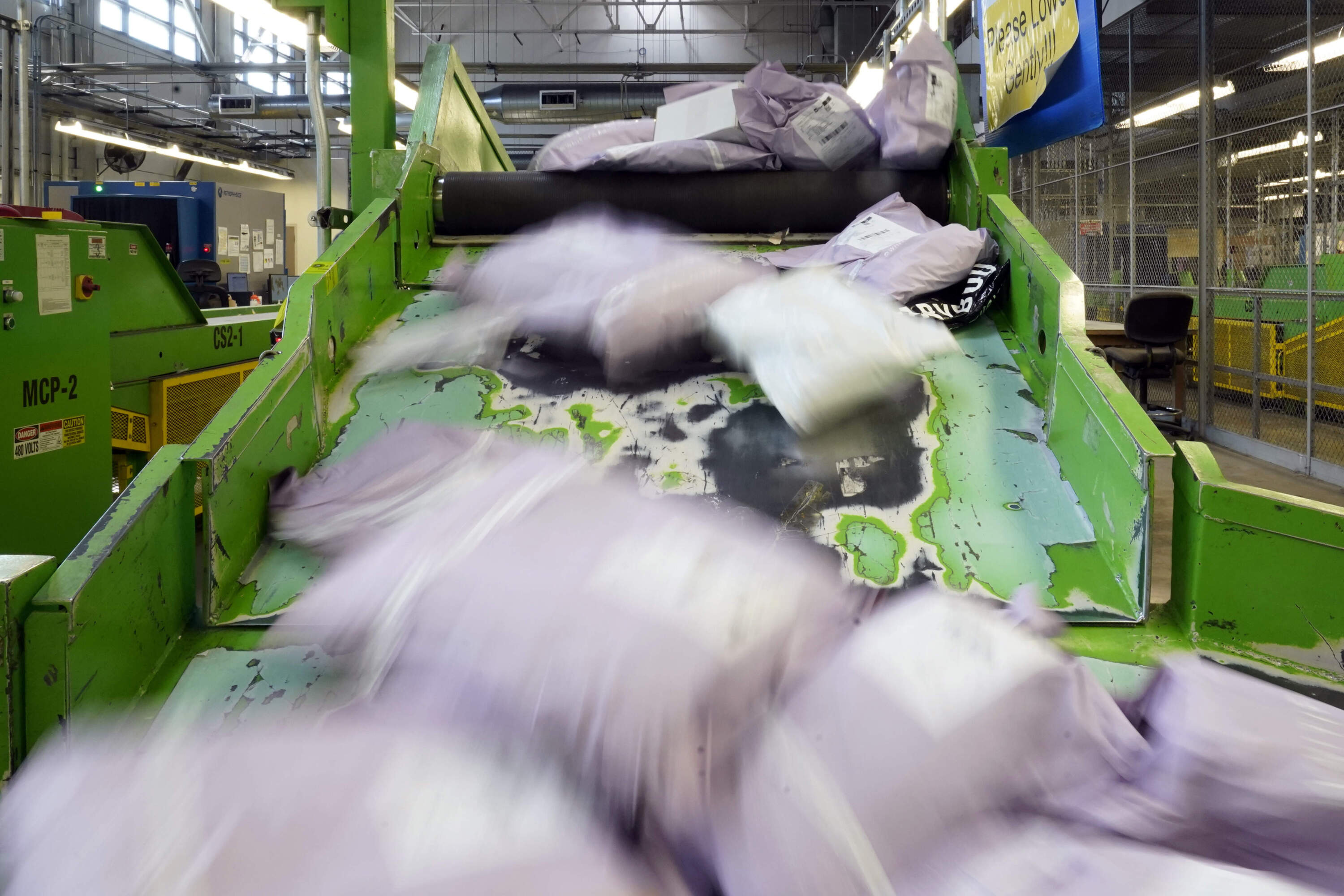
Well, it turns out the extremely cheap goods sold on these kinds of websites and shipped right to our doors are coming into the country without inspection. It's a damaging trade loophole that a group of House Democrats, led by Rep. Rosa DeLauro, are calling on President Biden to close.
The de minimis trade provision allows shipments valued under $800 to enter the country duty-free and without customs inspections.
“The full scale and scope of de minimis exploitation is still not fully known,” DeLauro said, “but we have clear evidence that it is leading to dangerous substances entering the country, undercutting the competitiveness of many American industries while enabling human rights abuses abroad.”
De minimis started as a program in the 1930s aimed at allowing travelers to easily declare a certain amount of goods without filling out the full customs import forms or paying duties, says Lori Wallach, director of the Rethink Trade program at the American Economic Liberties Project.
“It was for tourists coming home or it's someone's grandma in Canada sends them a sweater or low-value gifts,” Wallach says. “What ended up happening is that this 1930s law, and in 1994, regulations implementing it hit the e-commerce era in a way that companies like Temu and Shein have been created for the sole purpose of exploiting a rule that allows effectively the person buying the stuff to be counted is what is called the importer of record.”
Now, one importer — an individual customer — can bring in goods valued up to $800 without duties, taxes or inspection, she says.
“The stuff is coming in at such a volume, it skips the bans on forced labor. Fentanyl slips in in the packages,” Wallach says. “There are now 4 million of these packages coming in every day. Yet, the Temus, the Sheins, they never hit the $800-a-day limit because you and I are the importer, they're not. Even though they're selling this stuff.”
6 questions with Lori Wallach
Why would they ship fentanyl to me and not just what I ordered?
“With the fentanyl, there are two subsets of problems. Actual fentanyl and precursor chemicals are being slipped in by drug smugglers who are ordering the stuff from China and or are coordinating with people in China to smuggle it.
“But also, people are buying pills online from not dark websites. They think that they're getting the same muscle relaxer for their thrown-out back that they've been paying more for at a U.S. pharmacy. And, in fact, instead of it being a legitimate pill, it's something that is laced with fentanyl. Because it's not professionally made, and they're crushing up fentanyl to put into baking soda, if it's not properly crushed, a large chunk ends up in a pill, and that's when people get killed.
“They're not trying to kill their customers. It's in someone's kitchen that they're grinding up extremely dangerous drugs and selling to you.”
But how then would customs know if one pill has crushed up fentanyl and another pill doesn't?
“Under normal import rules, you are required to list what's called the tariff line, the tariff code, a number that lets you know what the thing is. And if you list that, and in a port, it says tariff code that's medicine, the Food and Drug Administration then asks for that stuff to be pulled out. And they check, ‘Hey, do we know where this is from? Is that a company we allow to even import medicine?’ And if it's anything vaguely fishy, they test it.
“But under de minimis, none of it's inspected. And in fact, you don't even need to list the number of what it is. You can write whatever you think you want to write, and it comes in untouched. It's just flat-out illegal, but when there are four million of these de minimis packages a day coming in, the flood is so intense that nothing is getting inspected.
“But then second, there's all kinds of dangerous stuff. So fake bicycle helmets is in part how four or five years ago I started paying attention to this. I was speaking at a hearing, congressional hearing, [they] wanted a trade expert about how this works practically. Next to me was someone from one of the really well-known and respected bicycle companies talking about their safety helmets, which are top-rated. And the guy pulled out a helmet, it looked exactly like my helmet of that brand. He steps on it at the hearing and it turns into dust. It was a fake, exactly made to look like theirs, but it was sold for like $40 less online on a website that looked like theirs.
“Along with that have been children's goods that are full of toxins, have been clothing with residues coming from Shein that are toxic. To say nothing of all the stuff that isn't getting caught, like, we have a ban on forced labor goods. But you can't really catch the stuff that's made of forced labor goods, of Uyghur forced labor from concentration camps, when you've got 4 million packages a day just zooming through and none of it comes through regular ports, it comes in at express delivery hubs. So FedEx, DHL, UPS, where maybe there are two or three customs folks, not an entire crew of inspectors who are trained, not just to look for the illegal and trade violating stuff.
“But in a big port, you have someone from the Food and Drug Administration to be checking for unsafe food and medicines. You have someone from Fish and Wildlife to look for endangered species goods. You have someone from [the Bureau of Alcohol, Tobacco, Firearms and Explosives] to look for illegal guns. You have someone from the Labor Department, et cetera, et cetera. And none of that's present.”
How does this loophole hurt workers, manufacturers and unions?
“The way our laws work is goods cannot be imported if they're made with forced labor. Or goods that are made cheating with subsidies or bad labor conditions face tariffs.
“But under de minimis, U.S. workers and companies get swamped by imports that would otherwise never get into this country. But in de minimis, all this stuff can come in. And their workers, thousands of them, are losing their jobs out of sheer unfairness.”
So you're calling on the Biden administration to close this loophole, how?
“Congress granted to a U.S. president expansive authority to decide what types of goods can come in through this loophole. And so this very day, President Biden could declare that no more commercially sold goods can come in. So, that de minimis goes back to being what we use as tourists coming back and for gifts that someone sends us from overseas.
“This would bring down the volume enormously to a point where what is coming in could be inspected.”
And that would mean, say you went to Temu's website to buy something, it's just going to take longer to get to you because it has to then be inspected?
“It would mean that these imports would come into regular ports under the U.S. federal laws that require a lot more information about what's being brought in and that require certain levels of inspection so that it would be a little bit slower but it would come in in a way that doesn't cheat U.S. workers and U.S. companies or create a demand for terrible conditions in other countries where our clothes and other goods are being made.”
We've heard former President Donald Trump say he plans to put tariffs on everything if elected. Would that take care of this problem?
“So President Trump has said that he would close this loophole, but he's promised a lot of things in the past and hasn't followed through.
“These members of Congress in their letter are saying to President Biden, ‘Hey, whoever's president has the authority to do this. Can you please do this today before one more family loses someone to fentanyl-laced medicines that slip in uncaught in the tsunami of de minimus packages? Can you please stop this before one more textile plant goes under? 19 of them have gone under just this year, and these are the plants that pivoted to make the masks and the surgical drapes during COVID. They're going under because they can't possibly compete.”
Thomas Danielian produced and edited this interview for broadcast with Mark Navin. Allison Hagan adapted it for the web.
This segment aired on October 15, 2024.