Support WBUR
After nearly 20 years of planning, New Mexico powerline set to electrify the West with wind power
Editor's note: This segment was rebroadcasted on Dec. 27, 2024. Find that audio here.
The SunZia wind farm and transmission line has been dubbed the largest renewable infrastructure project in American history.
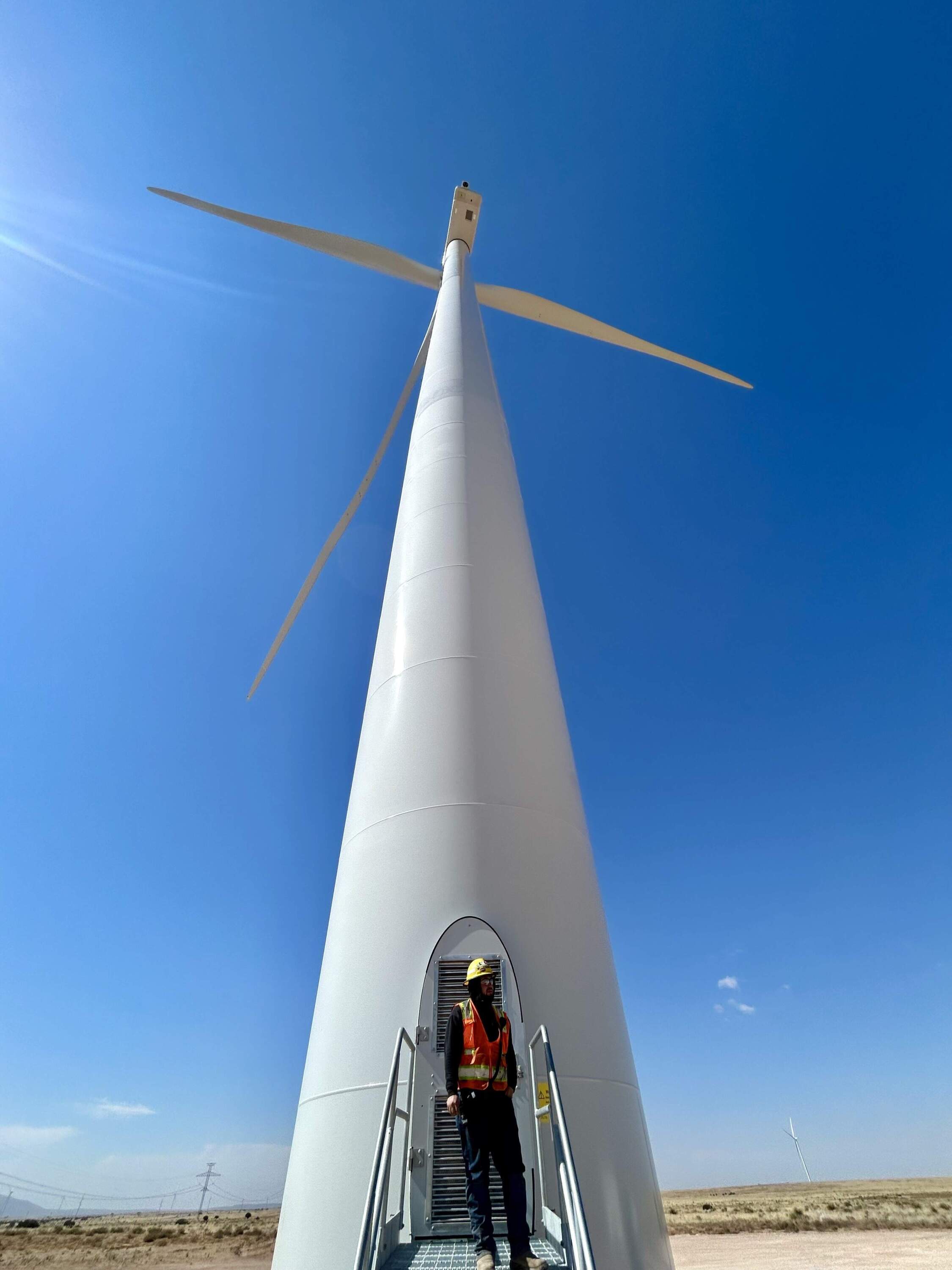
But when you’re standing at the base of a wind turbine, “large” seems like an understatement.
“It’s a long ways to the top,” says Scott Belle, a construction manager for Pattern Energy, who is dwarfed by the 98-meter machine that towers above him.
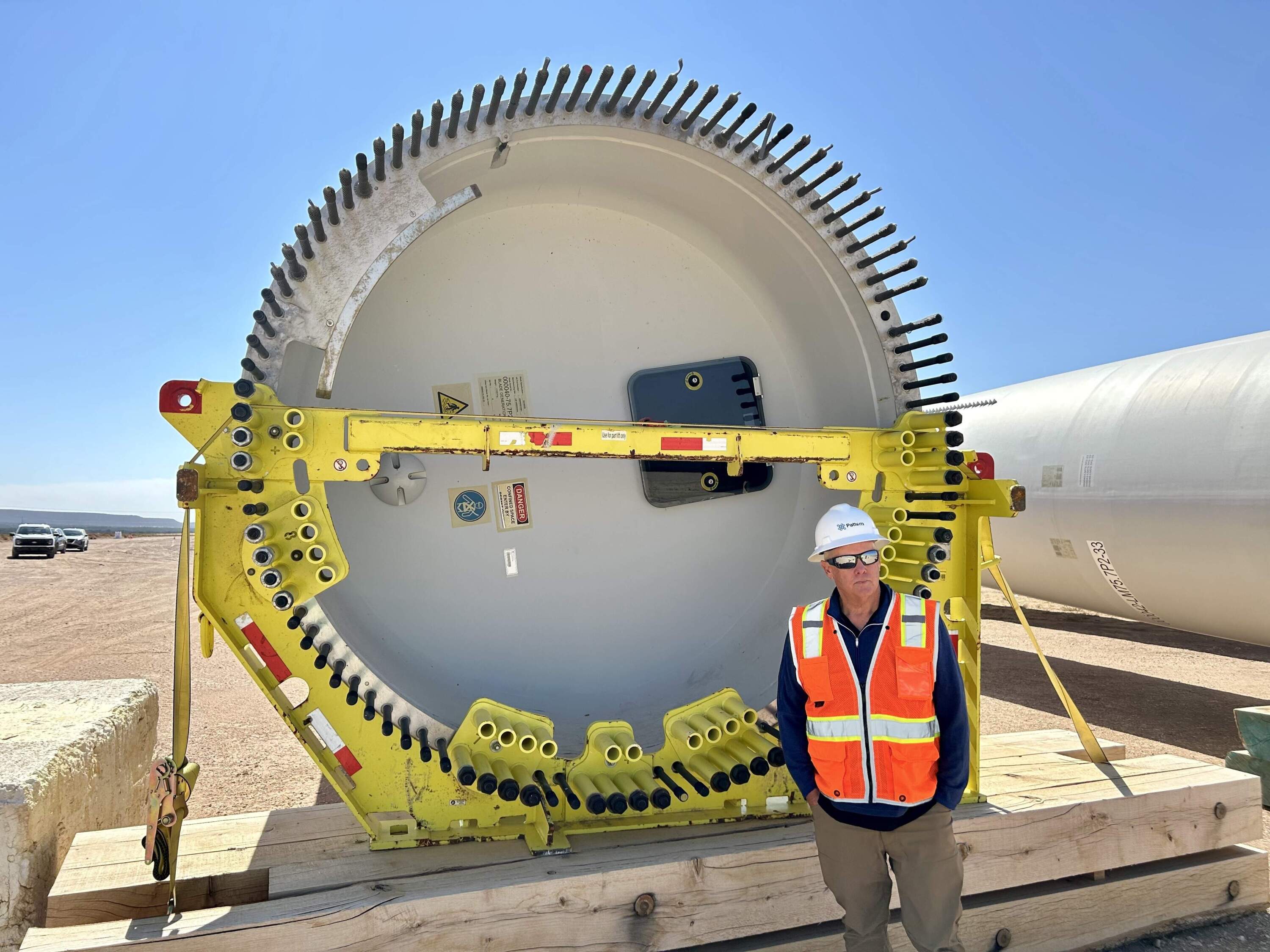
One day soon, more than 900 turbines will stand up in the high desert of central New Mexico.
The scale of the project is enormous. It will take two hours to drive from one end of the wind farm to the other. The blades on every turbine are longer than a typical commercial jet, more than 75 meters. Eventually, the project will create enough power for 3 million homes.
“When the switch is flipped, we will move three and a half gigawatts of wind,” says Hunter Armistead, CEO of Pattern Energy, a company that builds wind and solar projects in North America. “That's more energy than generated by the Hoover Dam.”
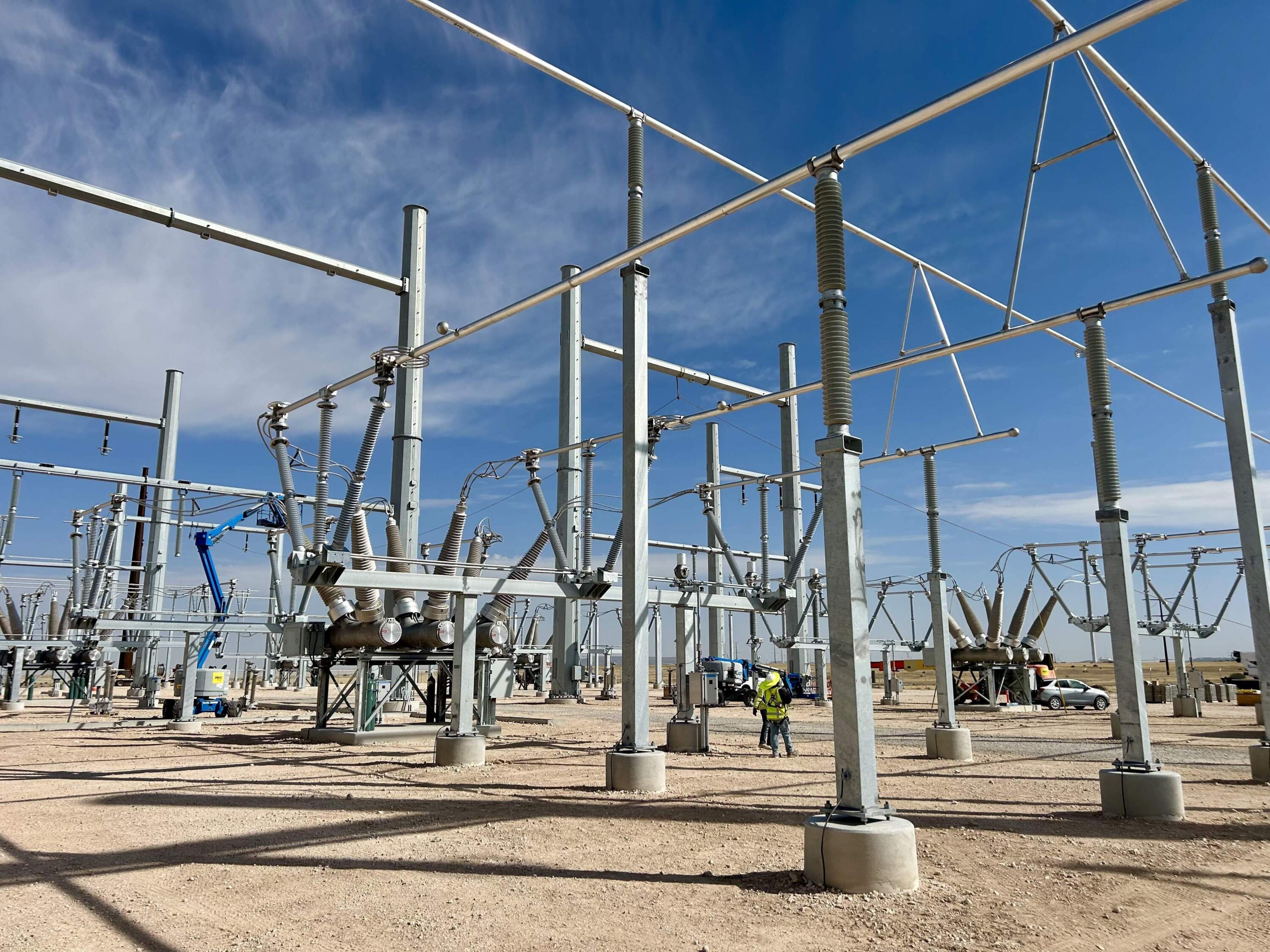
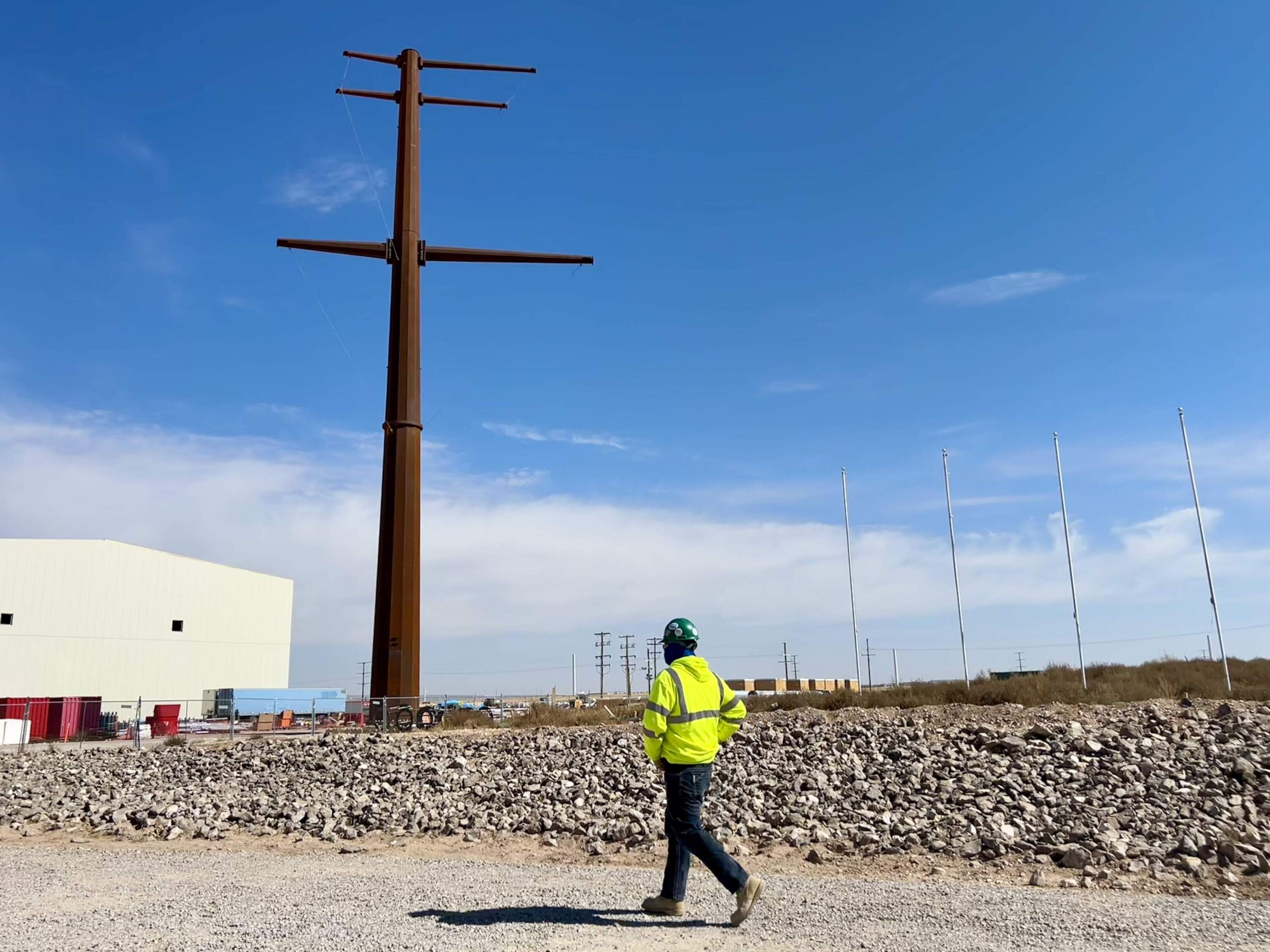
SunZia will cost $11 billion to build, and it includes a lot more than wind turbines. A new 550-mile transmission line will carry the electricity to Phoenix and cities in California.
“We’re taking it from a remote area that has a beautiful wind resource and transferring it to an area that has high demand for the product we’re creating,” Armistead says.
This project has been in development since 2006. The iPhone hadn’t come out yet. Taylor Swift had just released her first album.
There are lots of reasons why it took so long.
Getting permission from different states and landowners takes time. Developers had to work with the Department of Defense to reroute the transmission towers that passed near the White Sands Missile Range. Environmental groups had concerns, and $11 billion is a lot of money to raise.
Building powerlines ‘takes too long’
Executing a project like this is difficult, but also essential, according to transmission experts.
Big western cities are hungry for new power sources. When the transmission line is operational, wind power from New Mexico will arrive in Phoenix just as solar panels are going dark for the night.
“With the growth that we're seeing in data centers and new industrial loads, we literally can't build it fast enough to keep up,” said Amanda Ormond, director of the Western Grid Group. “We do have to move faster.”
According to the Department of Energy, the rise of artificial intelligence, new data centers and the electrification of the U.S. economy will spike demand for power by 15% to 20% in the next decade.
The federal government predicts the U.S. will have to double — or triple — transmission-line capacity by 2050 to meet demand. That could require up to 10,000 miles of new powerlines added to the grid every year for a decade.
A bipartisan bill pending in Congress would speed up the permitting process for energy infrastructure projects, even those powered by fossil fuels. Some of its supporters say it’s a long shot this close to an election.
Meanwhile, Ormond says it often takes at least a decade to finish a transmission line and individual utilities cannot easily build them across state lines. She compared the SunZia project to the development of a shopping mall:A private company builds it and then looks for a big anchor tenant to rent the space.
“One of the reasons that SunZia exists is because building transmission that goes between different states has become so impossible that it created an opportunity for merchant developers — or private capital — to put infrastructure in place that the utilities can't get done,” she says.
Through the Inflation Reduction Act and the infrastructure law passed in 2021, the Biden administration is spending billions to upgrade the grid and streamline new powerlines.
It’s part of the government’s plan to produce 100% clean energy by 2035.
“Can we meet zero-carbon goals without transmission? Probably not.” Ormond says. “But where? When, how much? That's the question.”
Resistance in the San Pedro Valley
The question of “where” to put the powerline has been a nagging problem.
In September, a few reporters got a birds-eye view of the San Pedro Valley in southeastern Arizona, where SunZia transmission towers are starting to bloom from the desert floor.
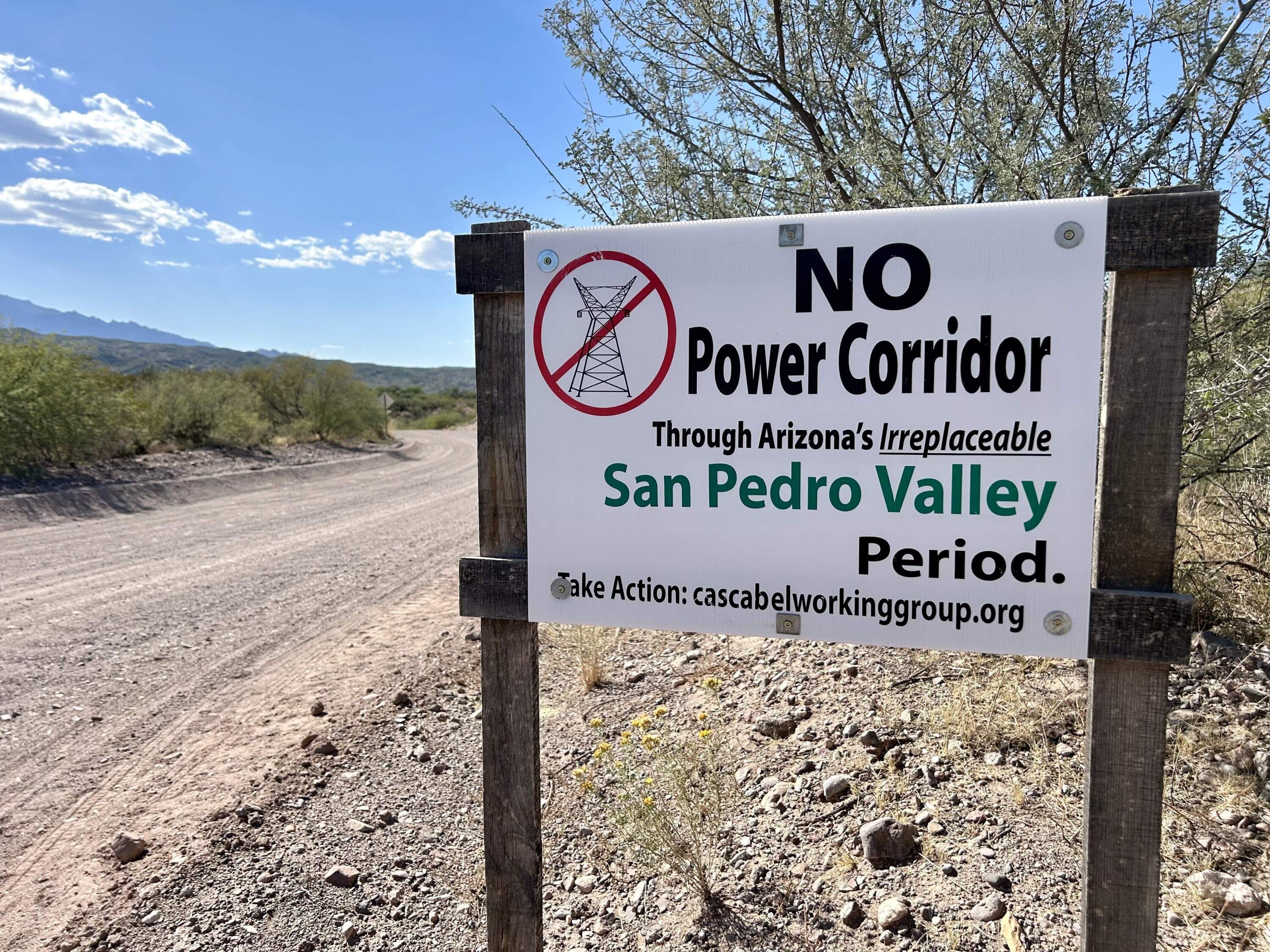
Archeology Southwest, a group dedicated to preserving historical sites, organized the flight. This year, the group joined local tribes in a lawsuit against the federal government to oppose the powerline.
The San Pedro Valley is home to one of the most endangered waterways in the country. The parched San Pedro River weaves north from the Mexican border through the lush Sonoran Desert.
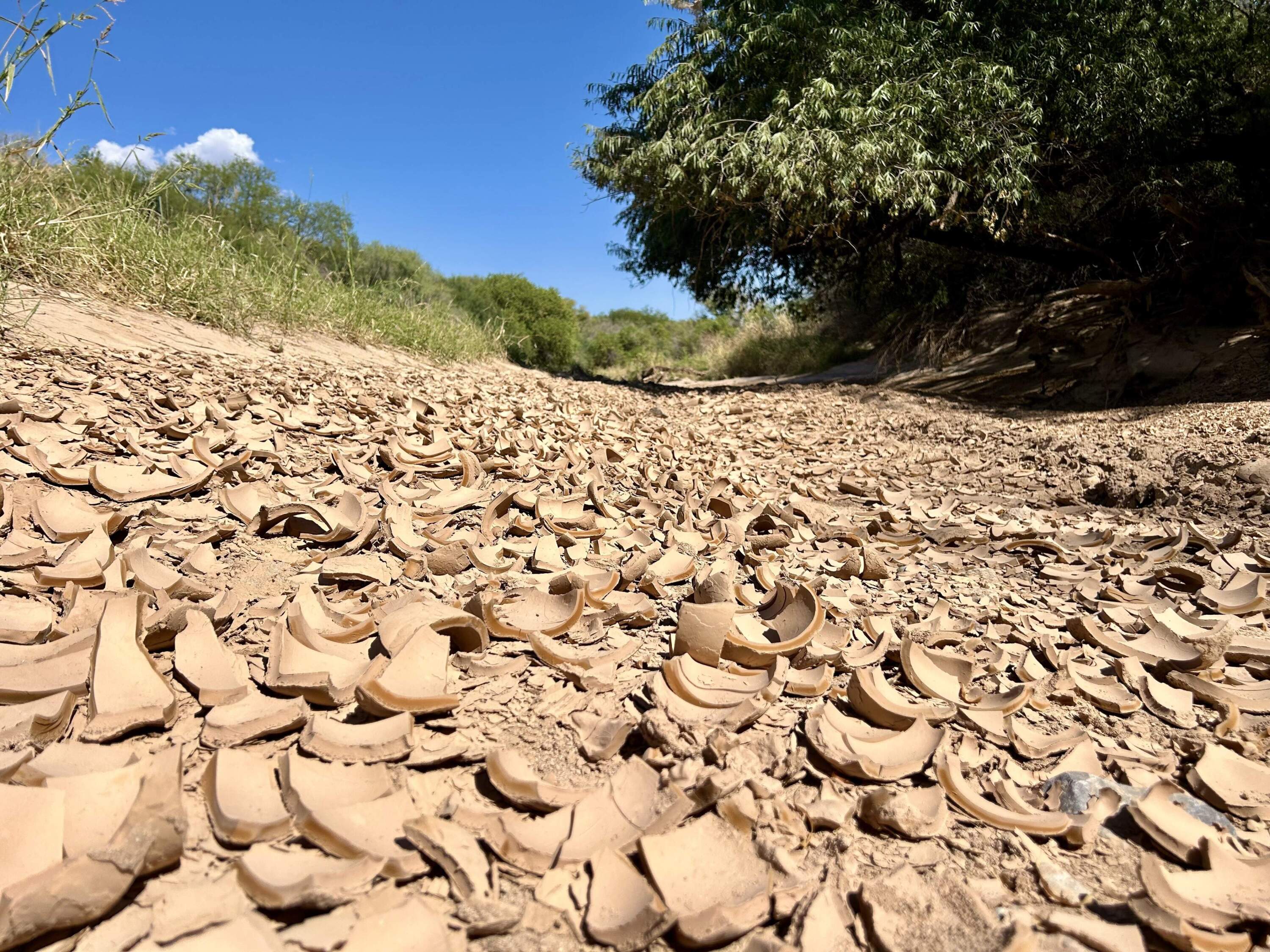
It’s been home to indigenous people for more than 12,000 years. Look closely, and the stone foundations of ancient houses are still visible. Shards of pottery are scattered on the ground as if someone had just dropped them yesterday.
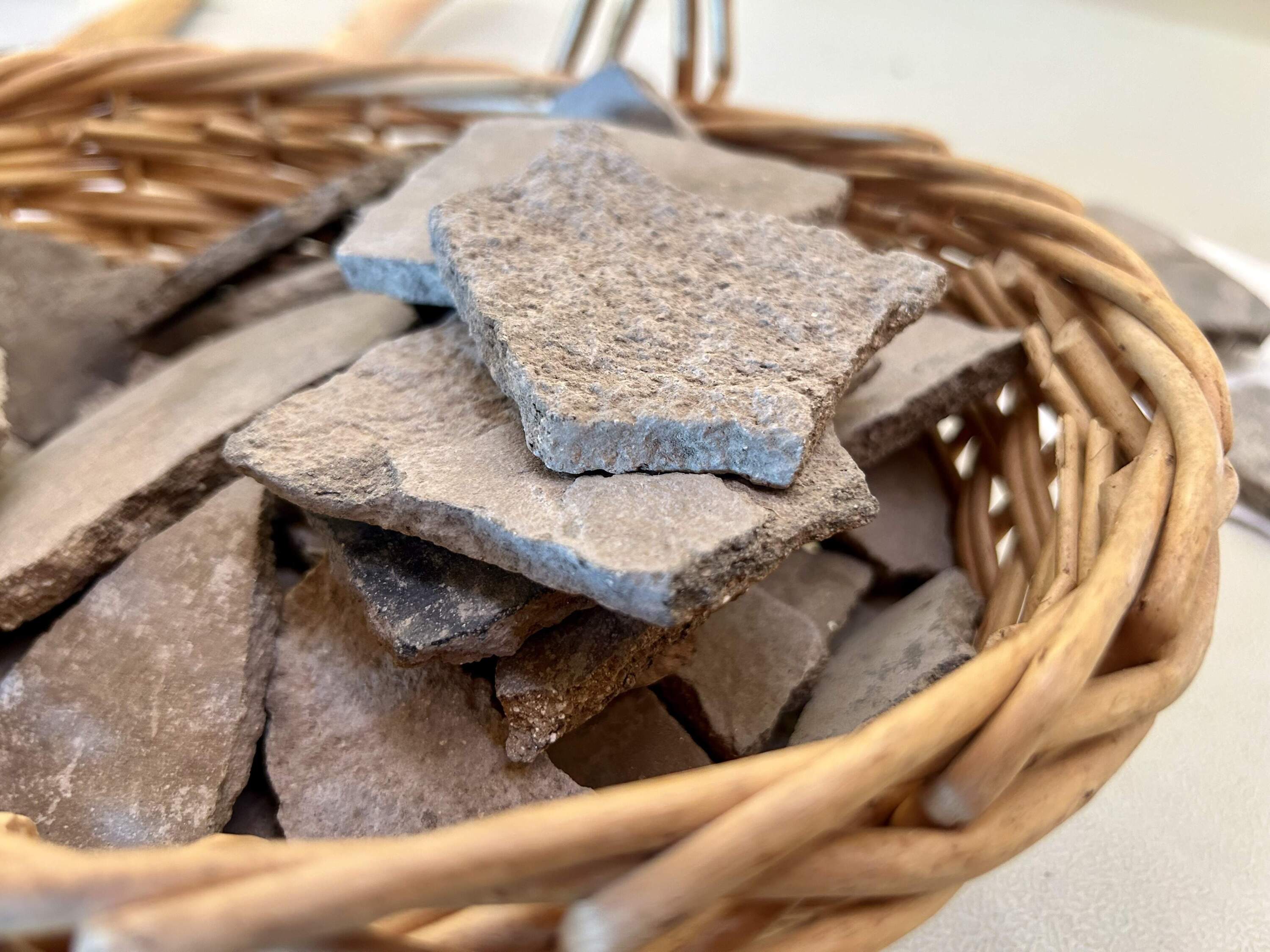
“Just a light brush with heavy equipment would destroy all the things that you can see here in a moment,” says archeologist Bill Doelle. “It's extremely fragile.”
The ancestors of the modern Tohono O'odham people thrived near the banks of the San Pedro River. Samuel Fayuant, the tribe’s cultural affairs specialist, says the site was a bountiful place for trading between tribes, “like paradise, back in the day.”
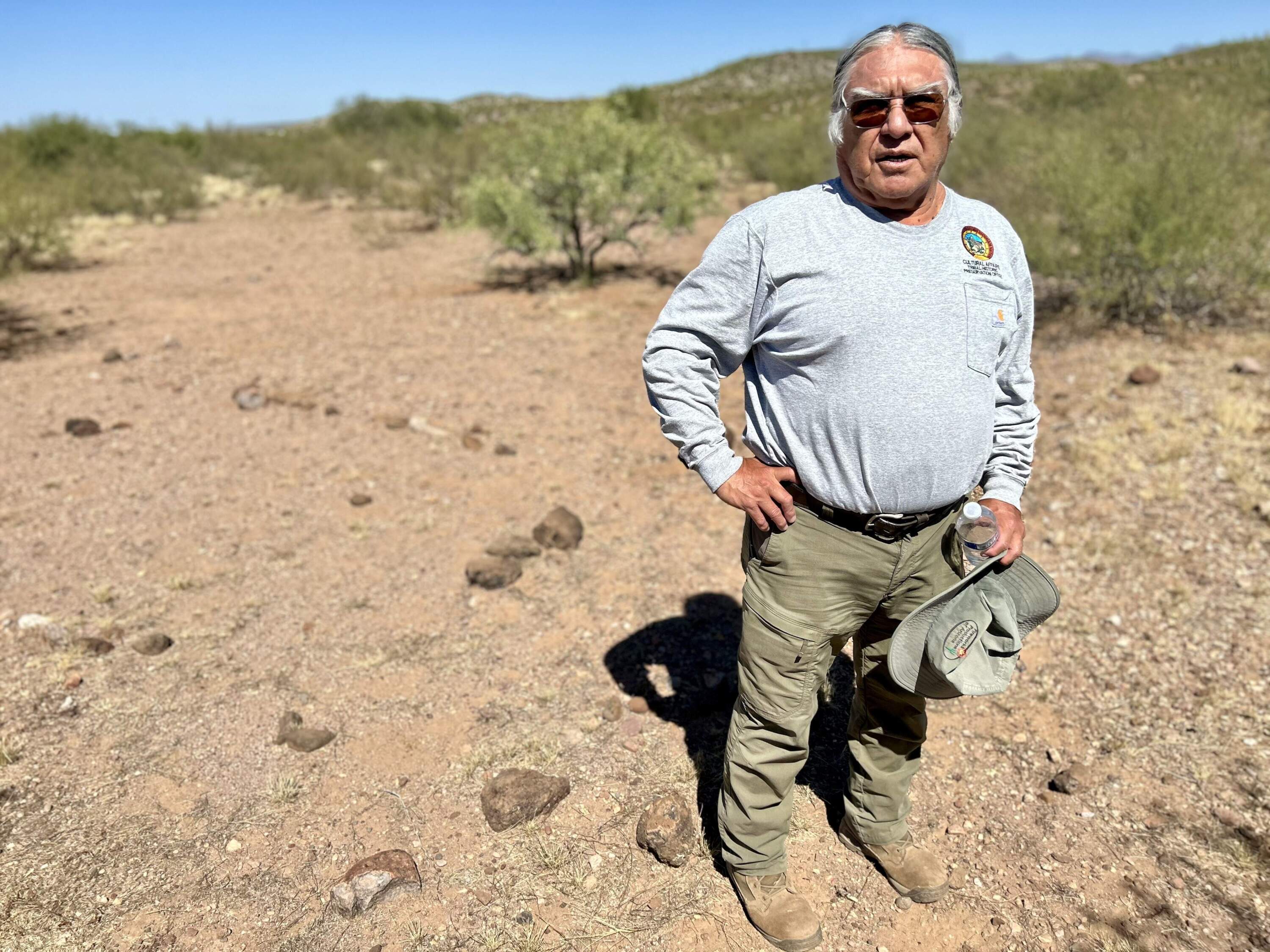
But on a recent afternoon, Fayaunt could see helicopters ferrying supplies to the site of a new transmission tower.
“We’ve protested, and seems like they don’t listen,” he says.
The lawsuit says federal land managers should not have approved a route through the San Pedro Valley without a detailed study of the region’s cultural and historic value.
A judge rejected the lawsuit.
Meanwhile, Archaeology Southwest’s Skylar Begay — a member of the Navajo Nation — says it’s not that tribes are against clean-energy projects. It's that there are places where they shouldn't happen.
“We have dealt with the legacy of uranium and coal and traditional energy development for so long that we are afraid that it's going to happen again and it's going to be greenwashed in the name of fighting the climate crisis,” Begay says.
Balancing green energy with conservation
Audubon Southwest, a group dedicated to protecting birds and their habitat, was initially opposed to the project, too. The initial route cut through an area where 30,000 sandhill cranes spent the winter near the Rio Grande, says director Jonathan Hayes.
But he added that over the years, developers listened to their concerns.
Pattern promised to install technology to keep birds away from powerlines. They agreed to use helicopters during construction to reduce the number of new roads. Today, Audubon supports the line.
Two-thirds of bird species will be vulnerable to extinction by the end of the century if climate change goes unchecked, Hayes says.
“We reject the notion that this is a zero-sum game between renewable energy buildout and habitat conservation,” he says. “We can do both.”
Pattern executive Cary Kottler says the company has tried to account for these issues. They will replant 15,000 saguaros in Arizona, he says, and keep local monitors on site to make sure construction doesn’t disrupt any ancient archeology sites.
“We spent many years looking at all the different routing alternatives that would best minimize environmental impact to the project,” Kottler said. “In fact, one of the major reasons you build projects like this is to provide environmental benefit. That's the point of it in the first place.”
This segment aired on October 30, 2024.