Support WBUR
How abortion ballot measures played out across U.S.
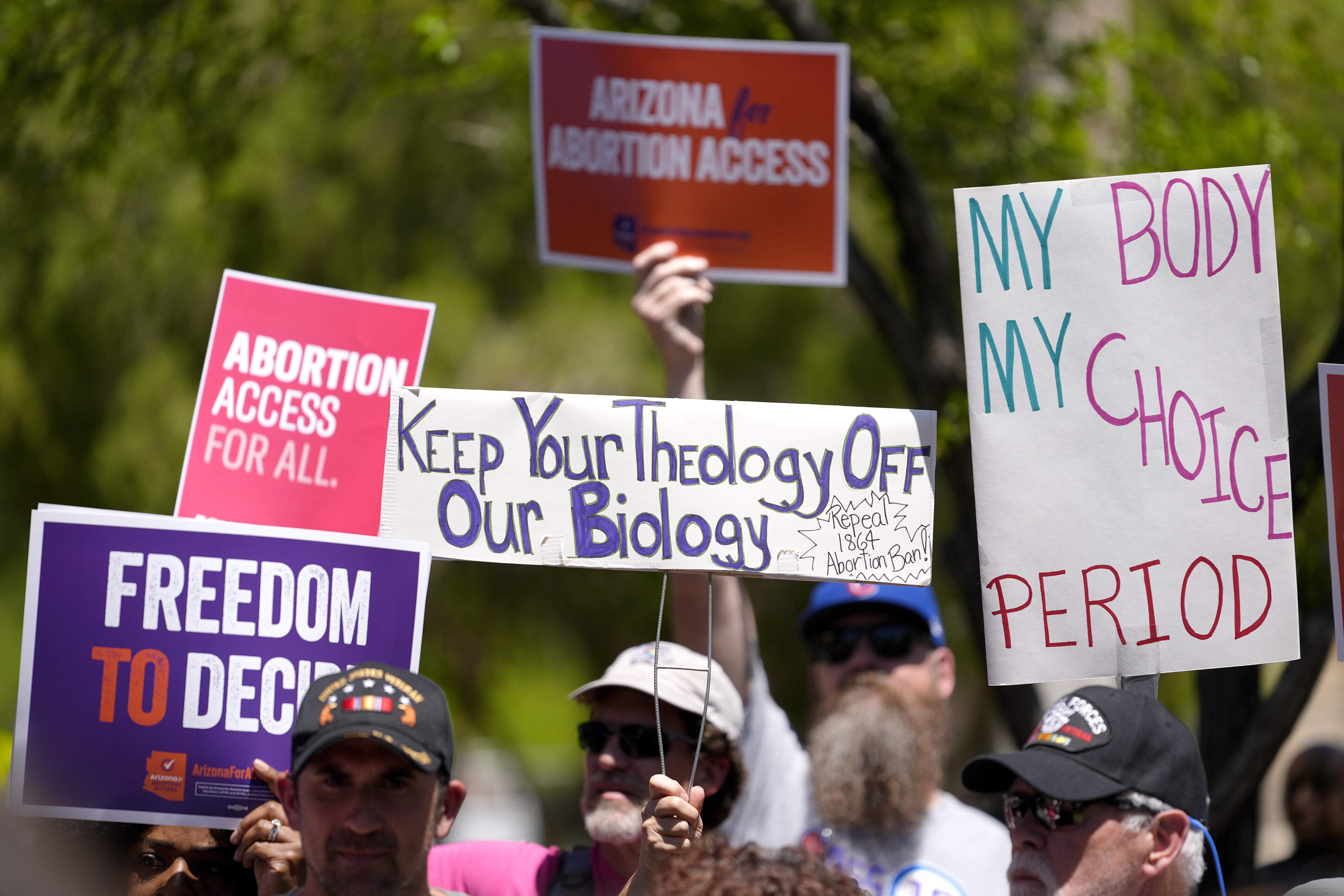
Voters across the U.S. weighed in on abortion this Election Day though state ballot measures.
Measures to enshrine abortion access passed in seven states: Colorado, Maryland, New York, Nevada, Arizona, Missouri and Montana. Florida, however, was not one of them. A ballot initiative there was the first to fail since the Supreme Court overturned Roe v. Wade in 2022.
Florida requires 60% of the vote to pass any ballot measure, which is a high bar compared to other state requirements. The abortion measure only garnered 57%. As a result, the six-week abortion ban in Florida will remain in place.
Shefali Luthra, who reports on reproductive health for The 19th, says that Florida Gov. Ron DeSantis’ staunch opposition to the ballot measure may have impacted its inability to pass.
“The folks campaigning in Florida were very clear-eyed from the beginning. They knew that this was going to be a very uphill fight,” Luthra says. “Not only were they trying to win this super-majority approval in a very large, very expansive state to campaign in, but they were coming up against a state government that was very strongly in opposition to the ballot measure.”
3 questions with Shefali Luthra
Missouri has a strict abortion ban on the books, but voters there passed a measure to create an abortion right in the state constitution. What does that mean?
“The implications this could have are quite tremendous. Missouri has a history of being one of the most restrictive states on abortion in the country. In the year before Roe was overturned, only 150 abortions took place in the entire state because so few providers were left.
“What we know is that it will take a long time. It will take a lot of litigation and a lot of effort by abortion providers in the state to build back an infrastructure where abortion can really, meaningfully be available in practice as well as in right.
“What this does show us is that abortion is it's cross-partisan. And a lot of people in Missouri and in Florida came out in support of abortion who otherwise voted Republican. And that's something that the folks who work on these measures are very aware of, and they know it is the only way, that they can bring these measures to succeed.”
In Nevada, abortion was already legal up to 24 weeks of pregnancy. Voters approved additional protections. What are those?
“They approved a constitutional amendment that would add the abortion rights guarantee into their state constitution as well.
“In Nevada, actually, they have to approve this measure in two consecutive election cycles, so it will be back on the ballot the next time Nevada votes. But this is part of the strategy that we are seeing, even in blue states where abortion is protected because people believe that having a constitutional right is simply more secure than a law protecting abortion because laws can be repealed when the government changes. But changing the constitution, that requires a lot more effort.”
What are the implications for anti-abortion groups going forward?
“It's going to be very complicated and very messy, but it is clear that having a Trump White House jeopardizes abortion rights more than a Harris White House would have. Donald Trump has a lot of allies and a lot of former advisors who support restrictions on abortion on a national level, including more restrictions on medication for abortion.
“What we have seen is anti-abortion activists, they are very excited about this opportunity. They see the ability to push for policy that could lead to national restrictions that Trump might be open to and that they know they would not have had a chance to with a Harris presidency.”
Gabrielle Healy produced and edited this interview for broadcast with Catherine Welch. Grace Griffin adapted it for the web.
This segment aired on November 6, 2024.