Support WBUR
How to cope with seasonal depression
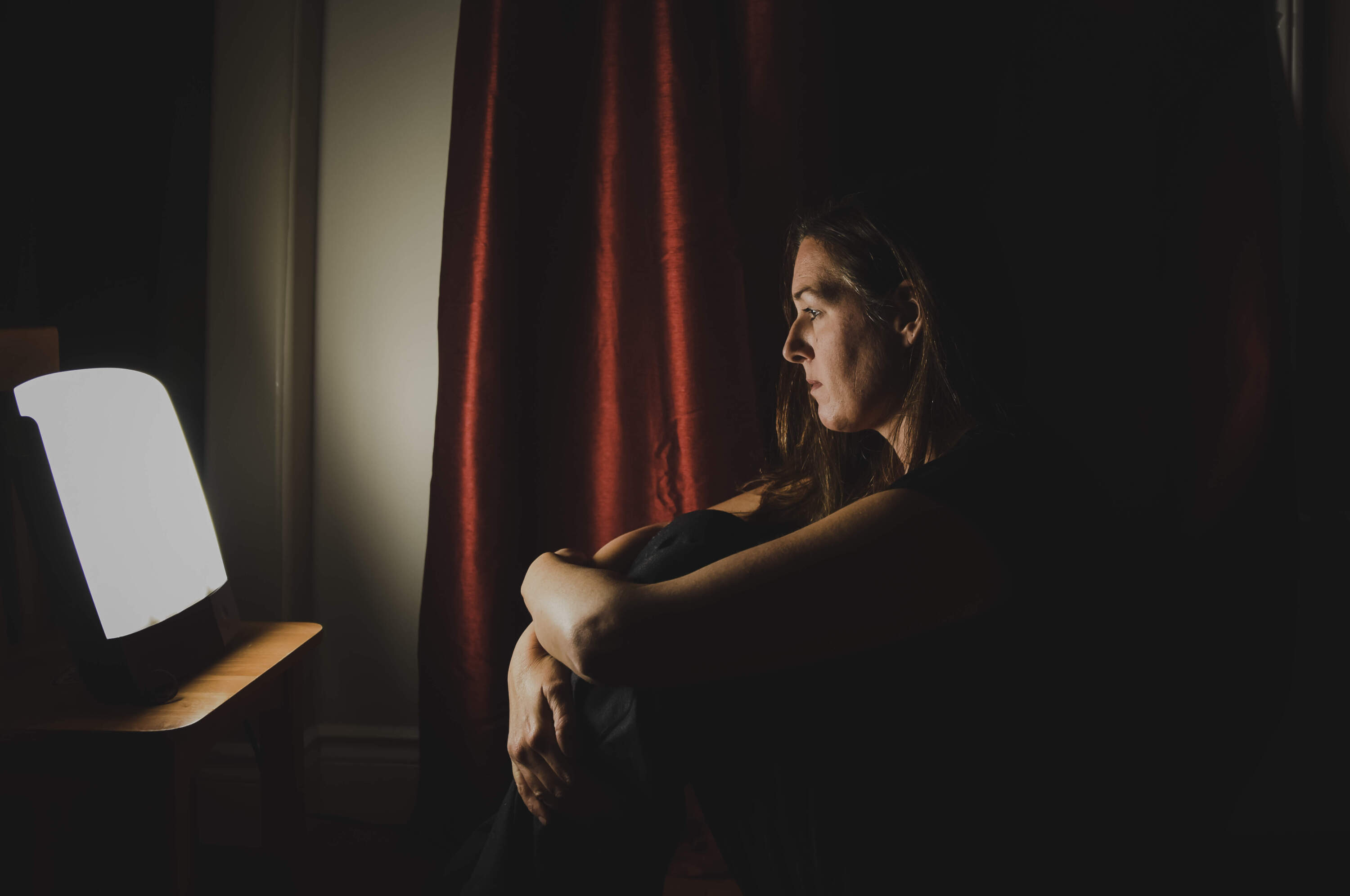
For many of us, this time of year may bring the winter blues.
Shorter, darker days and cold nights can make many people feel depressed in the winter.
People who experience winter depression are often suffering from seasonal affective disorder or SAD. Estimates show that millions of Americans suffer from SAD, about 5% to 10% of adults.
People are diagnosed with SAD when they experience an episode of major depression at the same time every year, says Dr. Ruth Benca, chair of psychiatry and behavioral medicine at the Wake Forest University School of Medicine.
“Most seasonal affective disorder occurs in the fall and winter, so we call it winter depression or the winter blues, and it can persist for up to four to five months,” she says. “It's usually worse in January and February, but it usually starts a bit earlier and tends to remit in the spring.”
5 questions with Dr. Ruth Benca
What are the symptoms of seasonal affective disorder?
“The actual disorder involves a lot of symptoms of depression, including depressed mood, lack of interest or pleasure in activities that are usually enjoyable, feelings of worthlessness and guilt and even suicidal ideation in some individuals.
“One of the differences though in in winter depression or seasonal affective disorder is that there are what we call atypical symptoms that also occur, and that includes increased appetite, carbohydrate craving, and often weight gain. And also increased sleep, reports of increased sleepiness and fatigue, often with a kind of a delayed pattern where people become sort of night owls and have trouble getting to sleep and then can't get up and going in the morning.”
Who is more susceptible to developing SAD?
“Certainly, there is an increased prevalence of seasonal changes in general in people who live at more extreme latitudes, so people who live in more northern parts of the world probably have higher rates of seasonal affective disorder. Women are much more susceptible to SAD than men, and younger people often have worse symptoms than older individuals.”
What’s the role of light in developing SAD?
“As humans, we're very visual creatures, and we think light is for seeing and it is, but light has a lot of different effects on the brain that go beyond just vision, and so we know that light is important for setting rhythms, so we have a daily circadian rhythm that is set by the light-dark cycle. We have seasonal rhythms that are set by the duration of the day length that also affect a lot of our physiology and behavior.
“And light also has some very immediate and direct effects on our brain function. Bright light improves our alertness. It can impact our mood and it also suppresses melatonin, which is a hormone of darkness, which obviously we will secrete more of in the winter when the nights are longer than in the summer.”
How does light therapy work to treat SAD?
“I think the strongest evidence for treating seasonal affective disorder is to improve light exposure and the usual recommendation is to use a therapeutic light box, preferably in the morning, for at least half an hour. And these therapeutic light boxes generally will emit up to 10,000 lux, which is pretty bright light. Indoor lighting is often less than 1,000 lux even when it's pretty bright.
“And so this light, particularly in the morning, helps to sort of set that circadian rhythm and also increase the amount of light exposure during the day, which tends to mitigate some of the symptoms. And in some individuals, if they start using the light boxes as the days start shortening, may prevent the occurrence of an episode.”
How does sleep play a role in SAD?
“I think setting a regular waking time that you try not to stray from on the weekends because if you have days where you sleep in late, it's harder to go to bed earlier and then it just kind of compounds the situation. So try to have a regular waking time, try to be active in the morning, expose yourself to bright light.”
This segment aired on February 6, 2025.