Support WBUR
Head of Center for Victims of Torture says USAID cuts leave thousands suffering without support
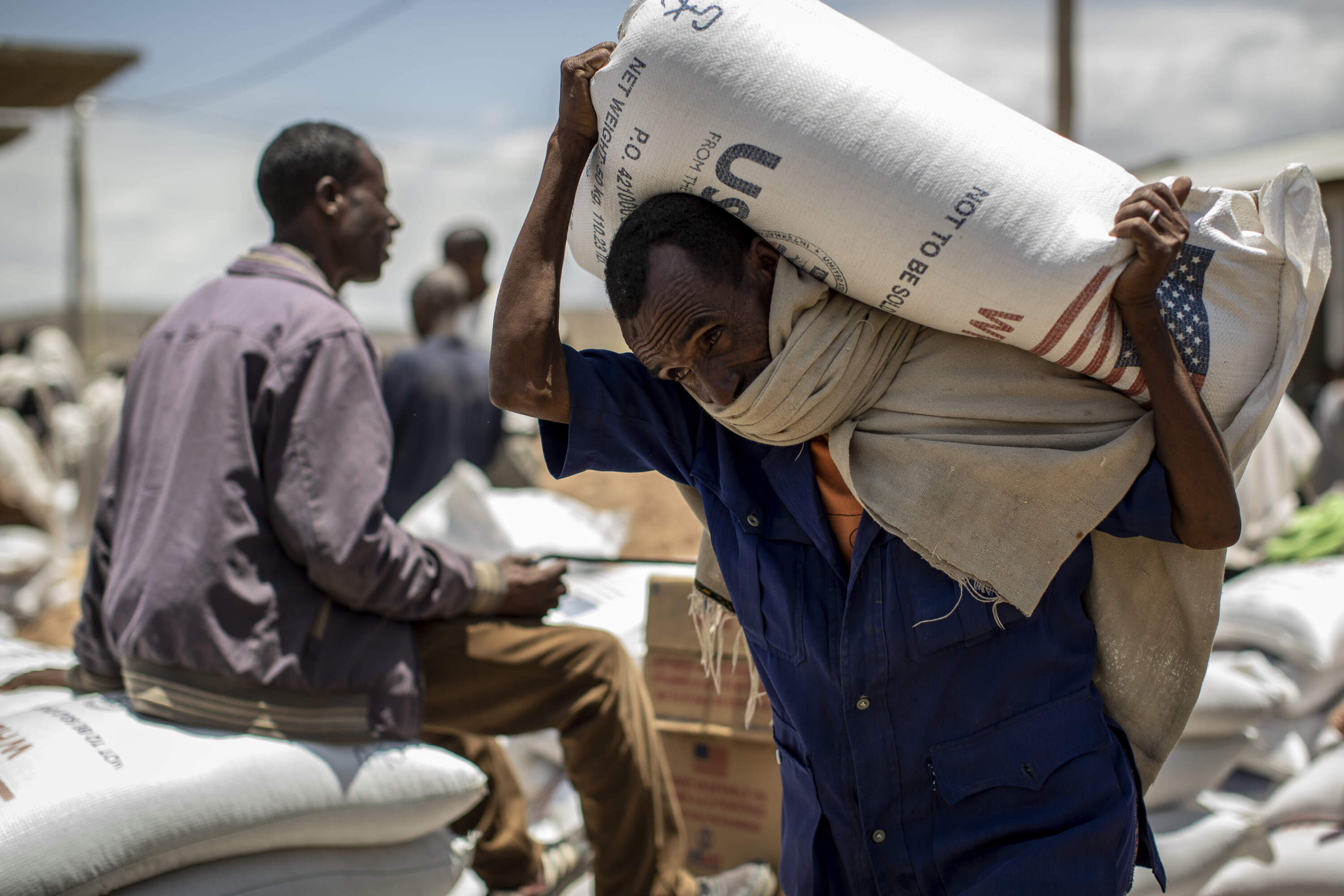
Before President Trump took office in January, Ethiopia was the largest recipient of U.S. aid in sub-Saharan Africa. The aid went toward food, water, job creation, hospitals, literacy and mental health and more for Ethiopians and millions of refugees who fled to the country to escape regional conflicts. Ethiopia has long been considered the United States’ main ally on the Horn of Africa.
Now, most of that aid has stopped after the Trump administration gutted USAID, the agency that provided humanitarian assistance to organizations that work in more than 100 countries.
The loss of funding means shuttering all nine Center for Victims of Torture clinics in the region. The clinics served 11,000 people a year, primarily those displaced from conflicts including those in Eritrea, Darfur and Tigray. Clients arrived at CVT clinics suffering from profound trauma including sexual violence, torture, starvation and profound loss.
Medhanye Alem, director of CVT, says he’s still in disbelief.
Alem says that the primary service the clinics provided was trauma rehabilitation with specialized mental health counseling services to address depression, anxiety, post-traumatic stress disorder and physical symptoms brought on by patients’ experiences.
“We know trauma can become embedded in the body and can cripple people,” he says. “Back pain, headache, pelvic floor complications — especially for those who have experienced sexual violence — they have profound pain.”
Alem says that to address those issues, clients were provided trauma-informed physiotherapy “so that they are able to gain control over their body.”
Without the clinics, he says, clients will have no access to counseling.
When asked what he would say to those who agree with Trump and his billionaire adviser Elon Musk that aid money is better used at home, Alem answered that the American people have long been generous supporters of the Center for Victims of Torture programs, providing funding since 2012.
And while he says the programs help innocent victims regain dignity and a sense of self, he stresses that there are tangible effects as well. People who heal can then “take care of their children and function in the community,” he says.
People who are not treated, by contrast, “will continue to suffer. Their children will continue to suffer. The community as a whole will continue to suffer,” he says.
In addition, Alem says, the work he and his colleagues did prevented these formerly displaced people from crossing new borders to seek refuge.
The closure of the clinics has also hit hard for counselors and staff who came to work on a recent Monday morning only to find that work suspension letters had been sent over the weekend.
“I can sense the disbelief,” Alem says of those moments when his staff got the news. “I also heard from many of my colleagues about moral distress. They all have dependents. We work in a country where the inflation rate is also very high economically.”
But in addition to the personal impacts, the staff worries about the clients.
“Counseling services and trauma-informed physiotherapy that we provide at CVT, it takes months,” he says. “And since the stop-work order came in the middle of a counseling phase, staff couldn’t provide what he calls “ethical closure.”
“Meaning that after we built safety without clients, by the time they were able to process their trauma, you have opened a wound,” he says.
But his team was not given time to “dress the wound,” he says. “There was no room [for] us to say goodbye to our clients.”
This segment aired on February 26, 2025.