Support WBUR
Columbia University student fled the U.S. after her student visa was revoked and ICE came knocking
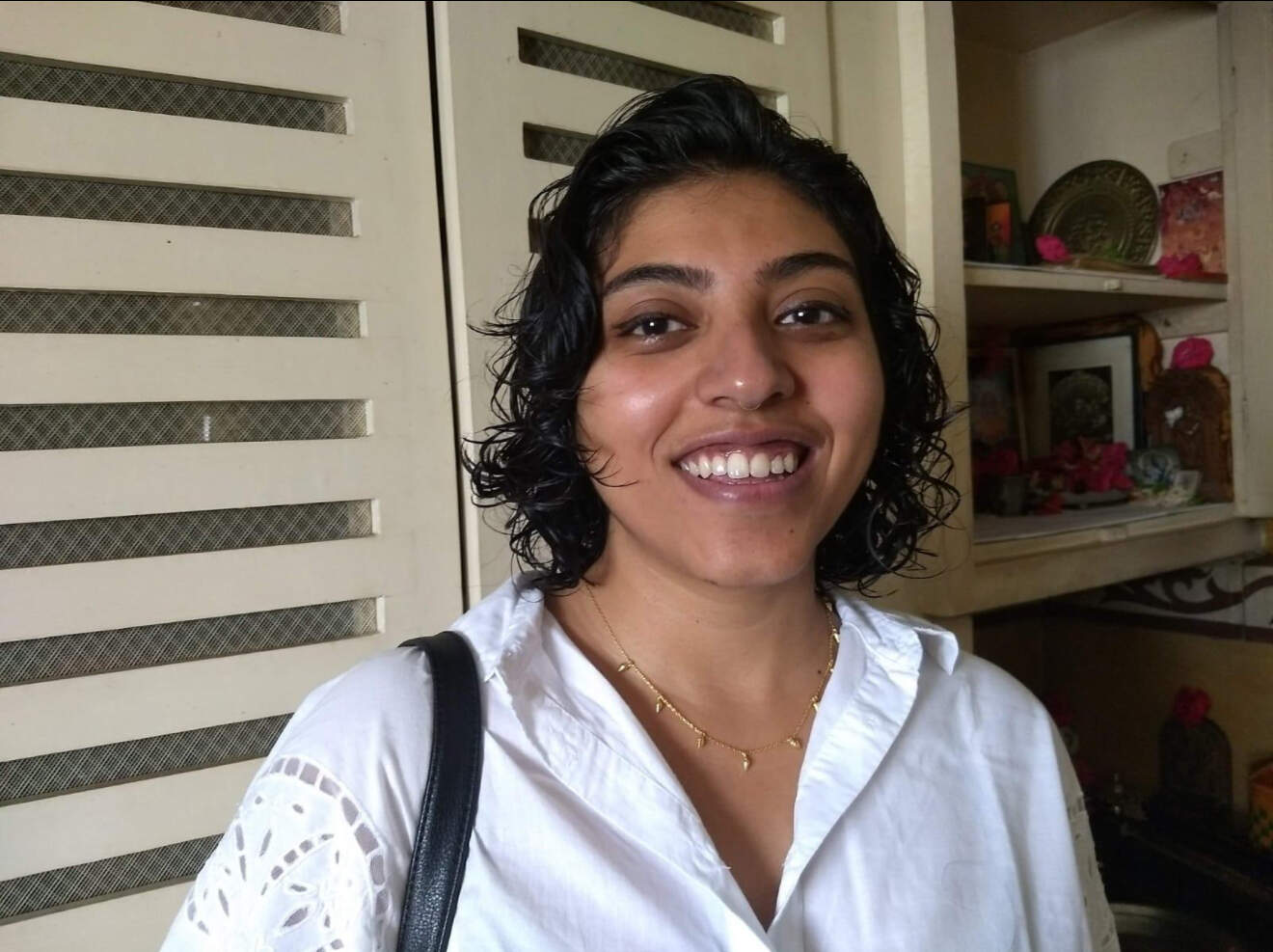
A Columbia University doctoral student said she fled to Canada last week after the Trump administration revoked her visa.
Ranjani Srinivasan, a 37-year-old architect from India, was set to finish a doctoral program in urban planning in May, when, she said, the U.S. Department of Homeland Security accused her of advocating for “violence and terrorism."
Shortly after her legal status was terminated, Columbia withdrew her enrollment from the university. Here & Now has reached out to school officials for comment.
Srinivasan is one of several students DHS officials targeted as part of President Trump's crackdown on foreign nationals who participated in pro-Palestinian demonstrations on college campuses.
She was among hundreds arrested on Columbia University’s campus during the protests over the war in Gaza last spring.
Srinivasan claims her arrest was a mistake, saying she was wading through a crowd of protesters while traveling home when police detained her and charged her with obstructing traffic and failure to disperse. Both charges were dismissed.
However, when Srinivasan applied for her visa renewal form last year, she didn't disclose the summons, believing it wouldn’t matter since her arrest didn’t result in any convictions.
“If I made a mistake, I would have liked a chance to set the record straight. I never meant to mislead the government in any way,” Srinivasan said. “I'm completely transparent, and I have a perfect immigration record otherwise.”
The State Department does hold the discretion to revoke student visas due to convictions or arrests.
Uncertain of what the future holds and whether she’ll be allowed to graduate, Srinivasan left the United States for Canada.
“It's really very scary,” Srinivasan said. “I think there's a feeling that your visa could be revoked for even the simplest political speech, and the whole point of an American university is to have debate and nuance about ideas to contest them freely. I think there's a general fear of doing that now.”
4 questions with Ranjani Srinivasan
How did you react when you learned your visa was revoked?
“I thought it was spam. There are very few details in this email. It was from the consulate from the city that I live in, and it just said some information had come to light that made me ineligible for the visa or might make me ineligible for a visa, which really didn't tell me anything at all.
"But as the situation sort of devolved, I became extremely scared.
What happened after ICE agents knocked on your door?
“The first time they knocked on my door was Friday, [March 7]. I was actually on the phone with the international students office, and the advisor there was telling me that, ‘I'm fine, don't worry about the visa revocation. It sometimes happens, you still have legal status in this country.’ And at that point, ICE was actually knocking at my door. And after that, they returned twice at different points. …
“I did not answer the door. My roommate did, and I'm grateful to her for that. She asked them to identify themselves repeatedly, and they refused. They said they were police. Second, they said they were a supervisor. And eventually, she was able to get them to admit that they were from immigration.”
Why did you choose to leave the U.S. and flee to Canada, instead of making your case in court?
“Even though my visa was revoked on Friday [March 7], I still had legal status. Though ICE was pursuing me, I was still a fully enrolled student in Columbia and I was legally in the U.S. But on Sunday [March 9], without explanation, Columbia withdrew my enrollment and jeopardized my legal status. I'm not too sure, why because I have no disciplinary record — I have a perfect GPA. …
“I have done nothing wrong and that made me more vulnerable legally. So I was actually scared. With the general climate of fear on campus and students feeling fearful, I just thought that it was better to remain in compliance and leave for Canada rather than overstay my visa in any way, shape or form.”
How do you respond to the DHS accusations that the pro-Palestinian demonstrations you took part in sympathized with Hamas?
“They were generally protests that just meant walking around and saying that the cycle of violence should stop and basically objecting to the murder of civilians, which, I think, is pretty common for people to feel strongly about. …
“I'm not a terrorist sympathizer. I'm not pro-Hamas. And I think it's really dangerous to label any free speech that somebody disagrees with, or any sort of peaceful objection to global issues, as terrorism. I think it just creates a climate of fear where people are scared to share their opinions.”
This interview has been lightly edited for clarity. Hafsa Quraishi produced and edited this interview for broadcast with Michael Scotto. Quraishi also adapted it for the web.
This article was originally published on March 17, 2025.
This segment aired on March 17, 2025.