Support WBUR
Former Trump official ‘dumbfounded’ national security team disclosed war plans on Signal
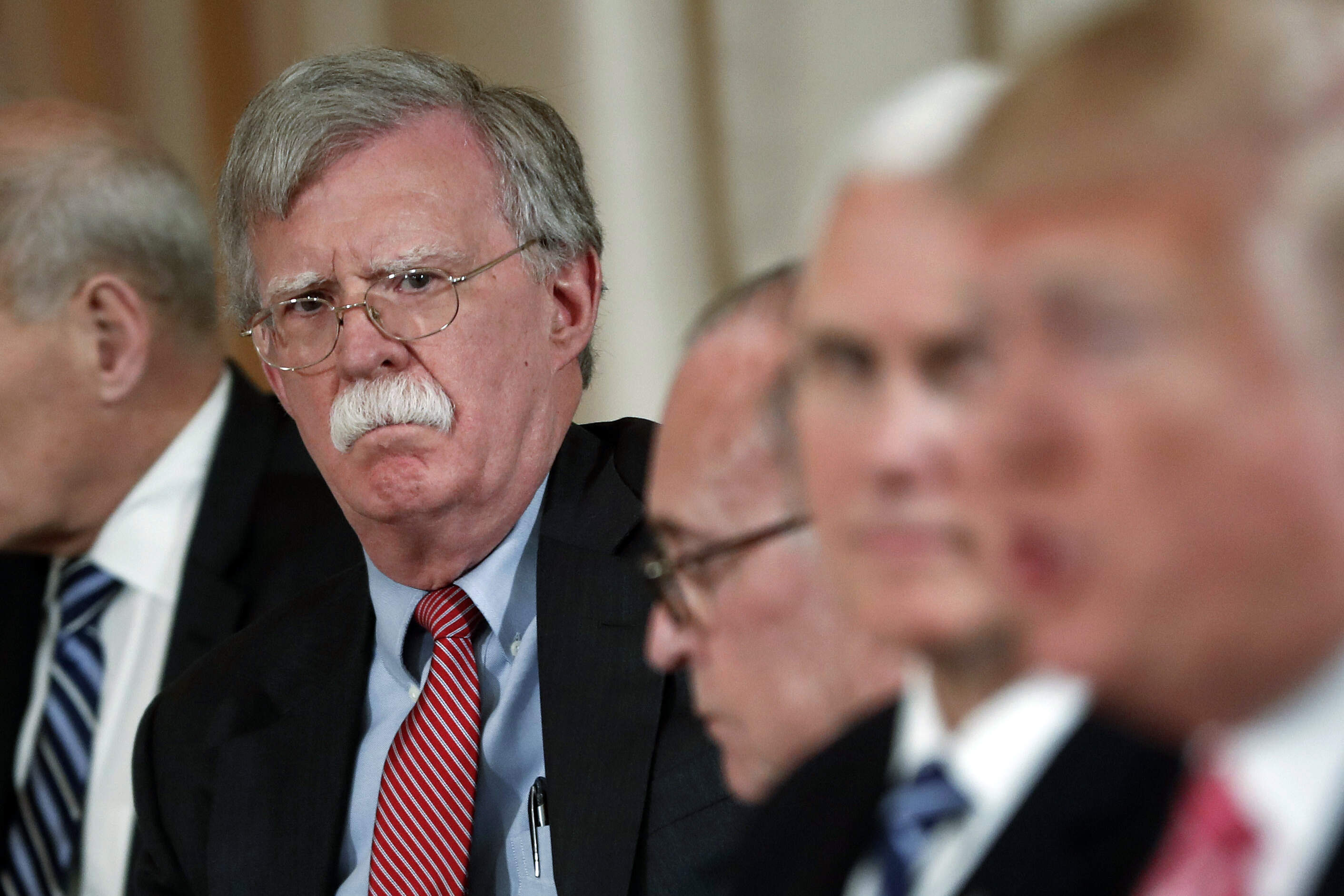
A former national security adviser during President Trump’s first term says he’s “dumbfounded” that top national security officials used the encrypted messaging platform Signal to discuss plans to strike the Houthis in Yemen.
“It's inconceivable to me that people would not use the classified channels that the government has spent so much time and effort and money over decades trying to make as uncompromisable as they can,” John Bolton, who has become a critic of Trump, told Here & Now. “And whether it's secure videos, secure telephones, secure text or email kinds of things, the channels are there. It's not like they don't exist. Why would you ever not use them?”
In a report that published on Monday, The Atlantic’s editor-in-chief Jeffrey Goldberg revealed that he was included in a group chat with national security officials, including Defense Secretary Pete Hegseth and Vice President JD Vance.
President Trump called the disclosure of the plans a “glitch” that “turned out not to be a serious one.”
4 questions with John Bolton
What are your concerns about officials not using secure channels?
“We don't know. People talk about Signal as if it's really highly encrypted and very safe. I mean, who knows who owns Signal, who knows who has backdoors into it, who knows anything about it? And the idea that somehow some commercial vehicle is as good as the secure facilities that the U.S. government is painstakingly put together just doesn't wash. And who knows what vehicles that the participants in this group used. Did they use their personal cell phones, their personal computers?
"The whole thing is just so unexplainable to me that it's hard to grasp why any of these people at some point, up to including the vice president of the United States, didn't say, 'By the way, why are we on Signal instead of doing a civits,' a secure video telecommunication system, capability that most of those people, if not all of them, have on their desktops?"
What do you think of the specific details of the strike being discussed in the chats?
“If that's accurate, that shows why the material is classified, and [national intelligence director] Tulsi Gabbard testified just this morning there was no classified information on it. I can tell you that that's the kind of thing that in the pre-publication review of my book that kind of information was taken out and you know whether you think it was classified or not, that's an example of why you should use the classified systems, why in fact there's room for a group chat in National Security Council deliberations: It's called the Situation Room where everybody sits down together. Some people appear via civits if they're in a remote location. But during that discussion you range from unclassified to highly classified to low levels of classification. You can have a completely free, wide-ranging discussion without fear that it's going to be compromised."
NPR is reporting that the Department of Defense sent out a Pentagon-wide email just last week warning about the vulnerability of using this app Signal. Is there a possibility these top-level officials didn't know about this vulnerability?
“I've been honored to be in the government on a number of occasions, so I've heard the briefing countless times. It is impossible for me to believe that before Tulsi Gabbard, the director of national intelligence, began her duties after she was sworn in, that she wasn't given the same briefing that the lowest-level clerk is given. Be careful of the secure information that you're the classified information you're given. Keep it secure. Use government provided channels.
"It's just inconceivable that she walked into that office just as if she were walking into an office in a commercial real estate company. These are things that are absolutely basic and that enlisted personnel in the services would know by rote memory that they're not supposed to do wrong. Yet these are cabinet-level people in our government, and yet not one of them ever said, ‘Why are we on Signal?’ "
What's the risk here?
"Well, in the case of this particular chat, it could have compromised the operation in Yemen. It could have cost the lives of American service members."
This interview has been edited for clarity.
Editor's note: Katherine Maher, the CEO of NPR, is chair of the board of the Signal Foundation.
Jill Ryan produced and edited this interview for broadcast with Michael Scotto. Scotto and Allison Hagan adapted it for the web.
This segment aired on March 25, 2025.