Support WBUR
How an Iranian journalist imprisoned by the regime in 2014 sees the U.S.-Israel attacks
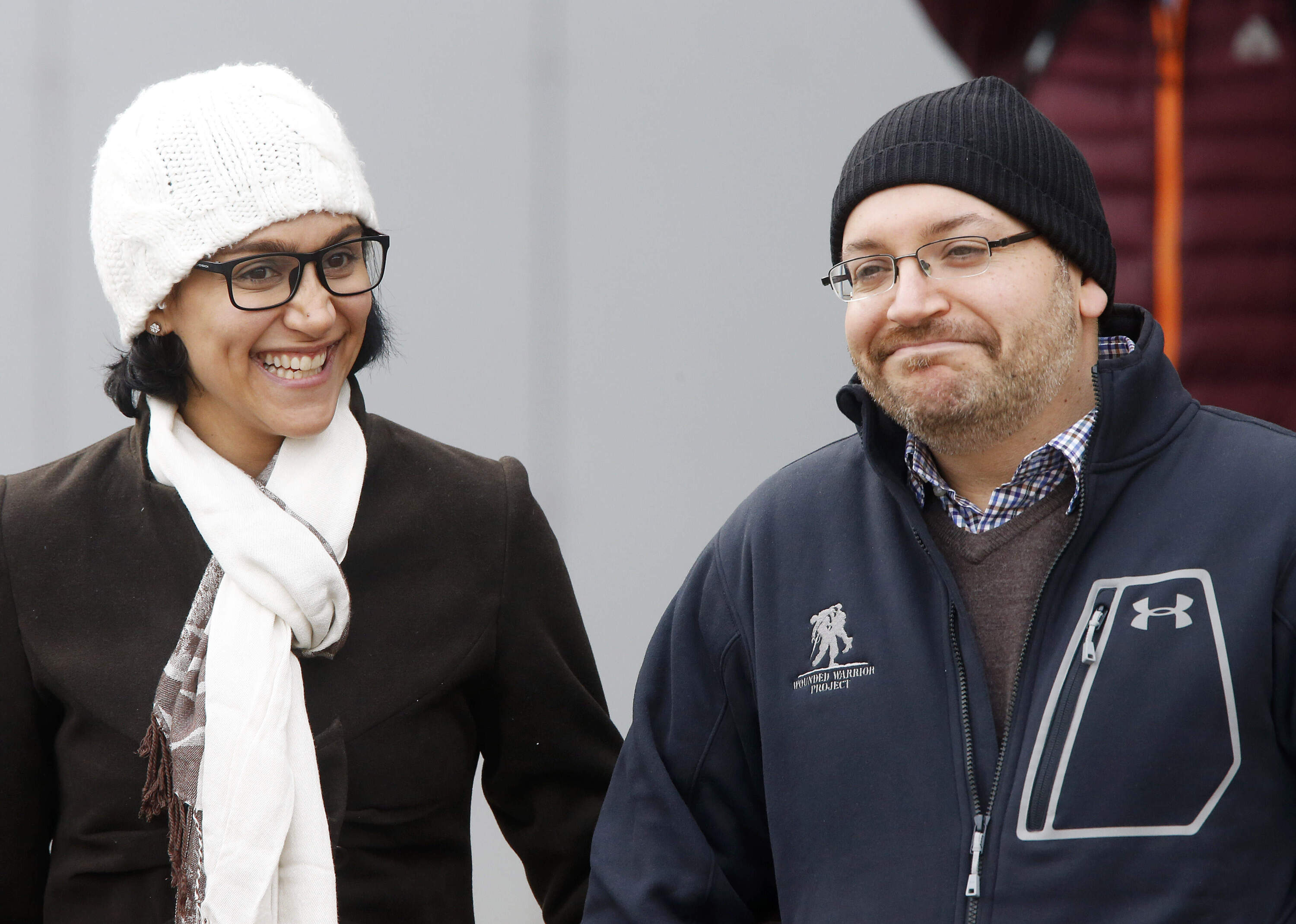
A former Iranian prisoner says the relief she feels over the death of Iran's Supreme Leader Ayatollah Ali Khamenei is being overshadowed by fear of what comes next.
Yeganeh Rezaian and her husband, Jason Rezaian, were journalists when they were wrongfully imprisoned in Iran more than ten years ago. She was released after more than two months; he was held for 544 days.
"I am very happy to see that a dictator was eliminated from my country, from torturing my people in many different ways, from economic to literal physical in the hands of him and then by the orders of him," Yeganeh Rezaian said in an interview with Here & Now's Indira Lakshmanan. "But unfortunately, that happiness is completely overshadowed by the realities on the ground and what the people are going through."
4 questions with Yeganeh Rezaian
What are you hearing from your parents, your family members, your friends who are still inside Iran? What is the mood like there?
"There were some videos and short footage of people quickly celebrating, but unfortunately, their celebrations were immediately faced by security forces coming back to the streets and trying to shoot at people. Since then, I was told by friends and family that people are receiving these messages on their phones, threatening them that they should not appear in the streets or gather anywhere in groups to have any forms of gathering, let alone celebrations. And that will immediately be met by arrests and prosecution."
What about your communication with your own family? What are your concerns for their safety?
“It's very difficult. Once the government shut down the internet and even landlines or cell phones, often I lose touch with my family members for days. But you asked something in your previous question about what's the mood. People are, despite that short celebration and happiness due to the elimination of the supreme leader, panicked, frightened, very worried.
"I was chatting with a couple of my friends who live in the same neighborhood that I was born and raised in, and they told me they could not sleep for two nights in a row because just the sound of explosions – and this is in north west of Tehran – were extremely unbearable and the family members were just holding onto each other and shaking. The people want freedom, but this is absolutely inhumane and unfair to the same people who have been stripped of their freedoms by this regime for many years. They have settled in the streets, many, many checkpoints, checking on people, coming and going, again in the streets of Tehran and other cities.
"What I hope the Western or the international community sees that this war is not going to provide any immediate freedom to the people.
"And I am only on the side of the people because I am one of them, and they are the ones who are paying the price, despite putting a brave face out, hoping that this will lead to their freedom. And all I'm worried about is that what if it does not translate to freedom? What if this won't put an end to this regime? The arrests are continuing. The political prisoners, including several dual citizens and foreigners, are in a really bad position at Evin Prison. There are reports saying that the guards have left prisons in multiple locations, including Evin prison, and prisoners are left with only water and like dry bread. There is nobody to hear them. There is nobody to help them if their prison is shot by a missile, to help and open the door for these prisoners. Satellite connections have been jammed."
I can hear in your voice your concern for everyone in Iran, for all of the civilians who are living under a repressive regime. What are your worries about your family's safety?
"Well, like every other Iranian inside and outside the country, I'm worried about my family as well. I'm worried about my sister who is paralyzed and does not even have feet to run away if a bomb lands on her. Despite the elimination of the supreme leader, this not a regime that won't fold today."
A lot of observers are bringing up the Iraq war. Do you worry that history might repeat itself with more violence and more cost on the ground to the people of Iran if the U.S. goes even further in pursuing regime change there, along with its partners in Israel?
"Yes, I am extremely worried about that. President Trump seems to be confused in his remarks about who he thinks would be the transitional leader or any next leader. There is so much chaos on the ground and even here within the US government, so much on clarity. And while there it will take time for everyone to come to one clear senses about what the Plan B is. The Iranian people on the ground are paying the price with their blood."
Jill Ryan produced and edited this interview for broadcast with Micaela Rodriguez. Michael Scotto adapted it for the web.
This segment aired on March 4, 2026.