Support WBUR
Inside the country's oldest still-operating museum
Editor's Note: This is an excerpt from WBUR's arts newsletter, the ARTery. If you like what you read and want it in your inbox, sign up here.
New England’s history reaches back centuries, something we’re increasingly reminded of as Massachusetts gears up for Revolution 250. Events across the state are commemorating everything from Paul Revere’s 1775 ride to the Battles of Concord and Lexington.
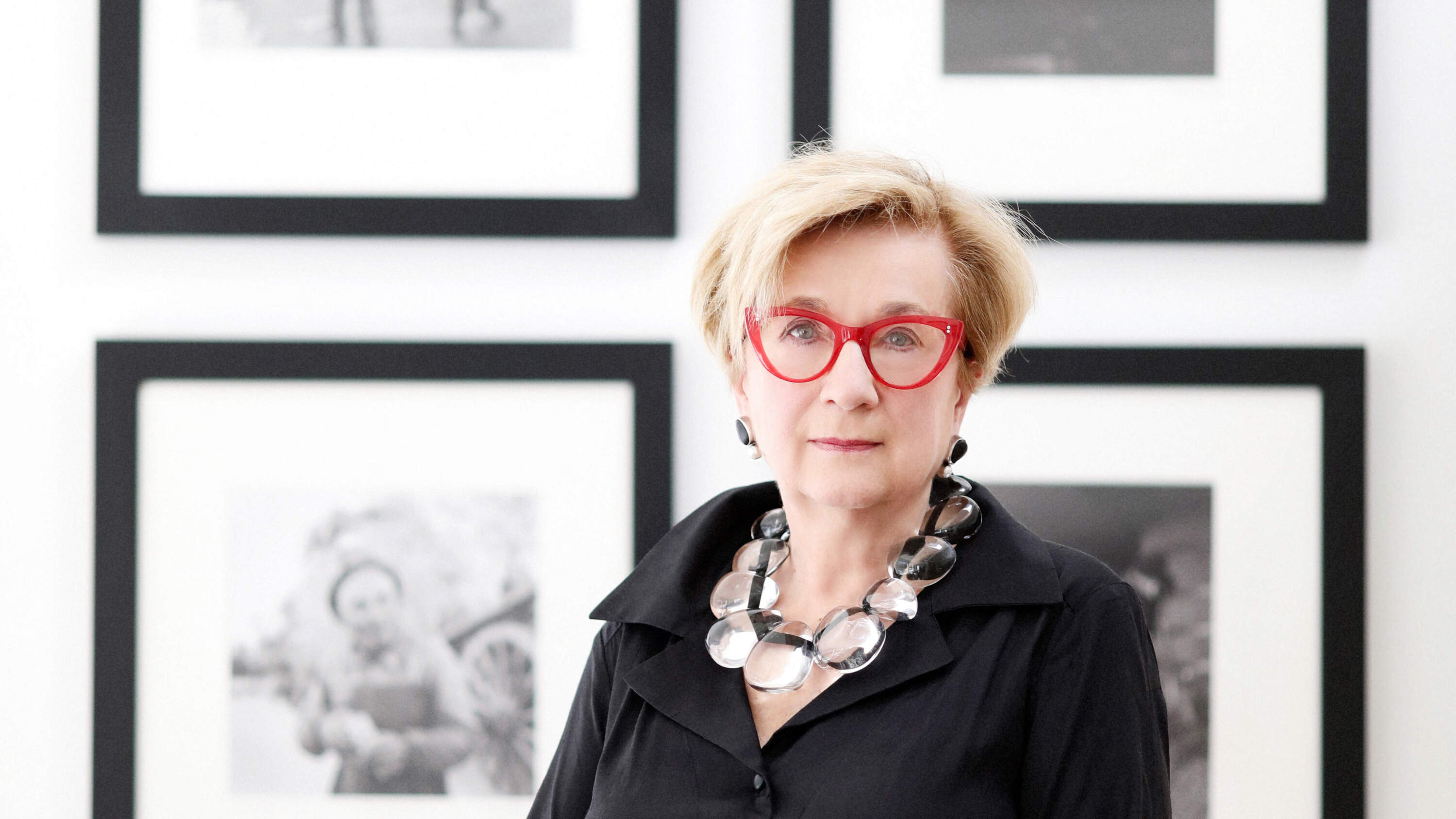
By the end of that century, as ship captains sailed the globe, the East India Marine Society in Salem displayed objects from around the world. This collection became the foundation of what we now know as the Peabody Essex Museum, the oldest continuously operating museum in the U.S. Lynda Roscoe Hartigan directs PEM, where she first began working two decades ago. Despite helming a museum that dates to 1799, Hartigan is forward-thinking about the role museums play in contemporary life.
“The future of museums hinges on how you build audiences. It’s a big question for museums of any kind,” Hartigan said. She acknowledges that many people perceive museums to be aloof institutions, but that they must offer something relevant to all visitors.
“The challenge — and the opportunity — is to be realistic about whether a museum can really do a little bit of something for everybody,” she said. I spoke with her about how she is seeking ways the museum can enhance daily life, spark curiosity and draw people together. We also talked about financial challenges as many arts organizations are losing federal funding, and Hartigan’s approach to inclusivity.
This interview has been edited for length and clarity.
How have museums changed over the course of your career?
Art museums have generally come to recognize how important it is to be accessible to as many people as possible. I just don't mean physical accessibility, but emotional and experiential accessibility. Really stressing why art and creativity are a meaningful part of peoples’ lives is something that art museums have done more and more of to really create a sense of community.
What do you want a visitor to experience at the Peabody Essex Museum?
The word “experience” is the keyword. Coming to an art museum may imply to people that they are primarily going to be looking at things. But at PEM, we consider experience as kind of a 360 thing — how is it that we can be multisensory? How is it that we can strike emotional chords in people? How is it that we can encourage people to feel opened up to the possibility of curiosity?
You have talked about the notion of a human-centered museum. What does that mean?
Human beings are inherently creative. Now that may not produce art or literature or theater, but creativity is really about thinking through how to achieve something. It's problem-solving. Inherently museums need to be human-centered because creativity is a form of communication. First and foremost we believe in really focusing on qualitative excellence, and the unexpected, so that it can be curiosity-arousing.
PEM has a collection of more than 1 million objects. What do visitors gravitate toward?
A thread of consistent appeal is the fact that so much of our collection is three-dimensional objects, so in some respects, they are immediately more tangible to people. Oftentimes, while they are designed beautifully in terms of technique and materials, they fulfill a functional need in people's lives, so it's not just about being decorative.
We do combine the past and the present, so we're not a collection of just really old things. We have very contemporary works and people like that comparison or contrast because it brings it more into their time and space.
Is there an object in the collection you’re drawn to?
I have multiple favorites. I better say that — but the object that most surprised me and moved me when I first came to PEM is a very large-scale, wood-carved figure we call Kū. It’s a very abbreviated form of a much longer Hawaiian name for the god that this figure embodies. To encounter something that a particular culture actually considers a living force is a very different way of thinking about what art is in an art museum.
Given the recent changes in Washington, are you concerned about funding for the museum?
We've been fortunate over the years to indeed receive federal funding, but it has not been a principal source of funding for us. So we are in a better position than some organizations.
It’s also a fraught moment for diversity and even championing under-represented voices.
This is where the teeth in the sincerity of focusing on the human-centered becomes very important to us. It is very much tied to our mission that we will celebrate creativity as a nourishing force in people’s lives. Museums can, I believe, give people hope and refuge and joy. But also opportunities to question. So it's got to be that kind of combination of experiences.
PEM is opening a new gallery devoted to Korean art in May.
It's a big deal for us. I went to Seoul for the first time this past fall. I was just really so impressed and inspired by the palpable energy that this culture represents. The gallery will emphasize late 19th and early 20th-century Korean art, because that's the strength of the collection, but we are also incorporating contemporary Korean art so the people understand that the creativity of Korea is a fascinating continuum.
You are the author of a book about artist Joseph Cornell. I find his work so interesting for the way in which he incorporated so many elements — each piece is its own world. Do you see aesthetic parallels between his work and the objects that you have at PEM? Does his work still inform your thinking in some way?
Cornell had this wonderful statement about how important it was for people to embrace the arts, humanities and sciences, as part of the daily “warp and woof” of life — that was his phrasing, a very textile-based reference. He had a mind and an inclination to combine things in really unexpected ways to inspire curiosity and an appreciation of creativity. When I came to PEM, it was like, “Oh I'm in a big Cornell box, look at all the possibilities, look at all of the combinations that can happen.” We do try to encourage the cross-cultural, and the shared points of humanity and the unexpected.