Support WBUR
Listen, my children, and you shall hear what actually happened with Paul Revere
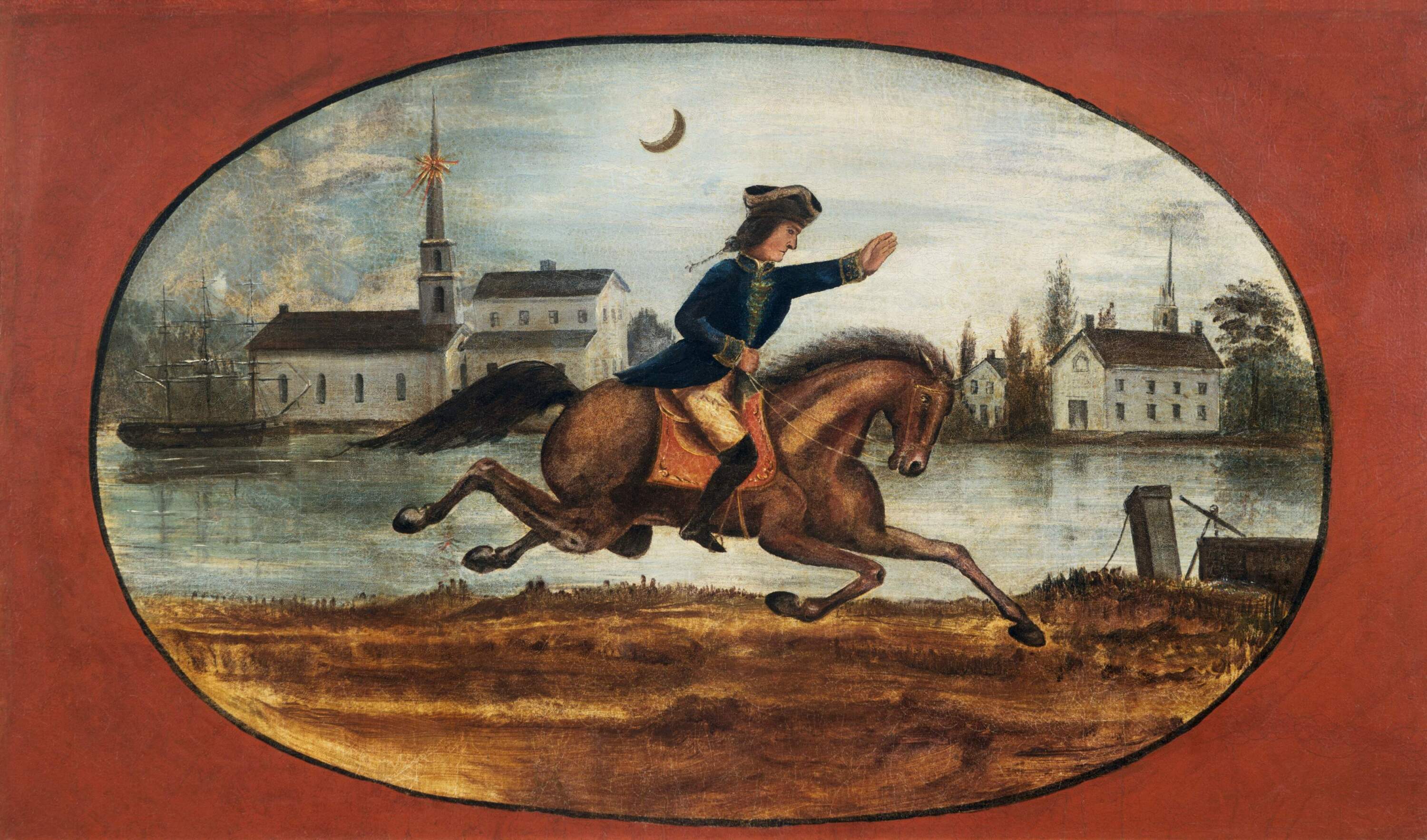
On April 18, 1775, Paul Revere raced through the Massachusetts countryside on horseback to warn patriot leaders that British soldiers were on the march. A lot of us learned about the revolutionary sprint through Henry Wadsworth Longfellow’s iconic poem that begins, “Listen, my children, and you shall hear, of the midnight ride of Paul Revere.”
On this 250th anniversary, historic sites around Boston are bringing Revere’s real ride to life. But they’ll also be setting the record straight.
Staff at the Paul Revere House in the North End are ready for an onslaught of tourists this weekend, and executive director Nina Zannieri gives a lot of credit to Longfellow’s poem. “I kiddingly say that we don't have to have a marketing department because Henry's done it for us,” she said, “and we don't have to pay him a salary, which is really super.”
On Friday evening, historical interpreter Michael LePage will don boots with spurs, a watch coat and tricorn hat for a reenactment. He portrays Revere at his historic home and has been a fan of Longfellow’s ballad since he was a kid. His mother read the poem to him before bedtime during the bicentennial, “and despite historical inaccuracies, it stirs the blood.”
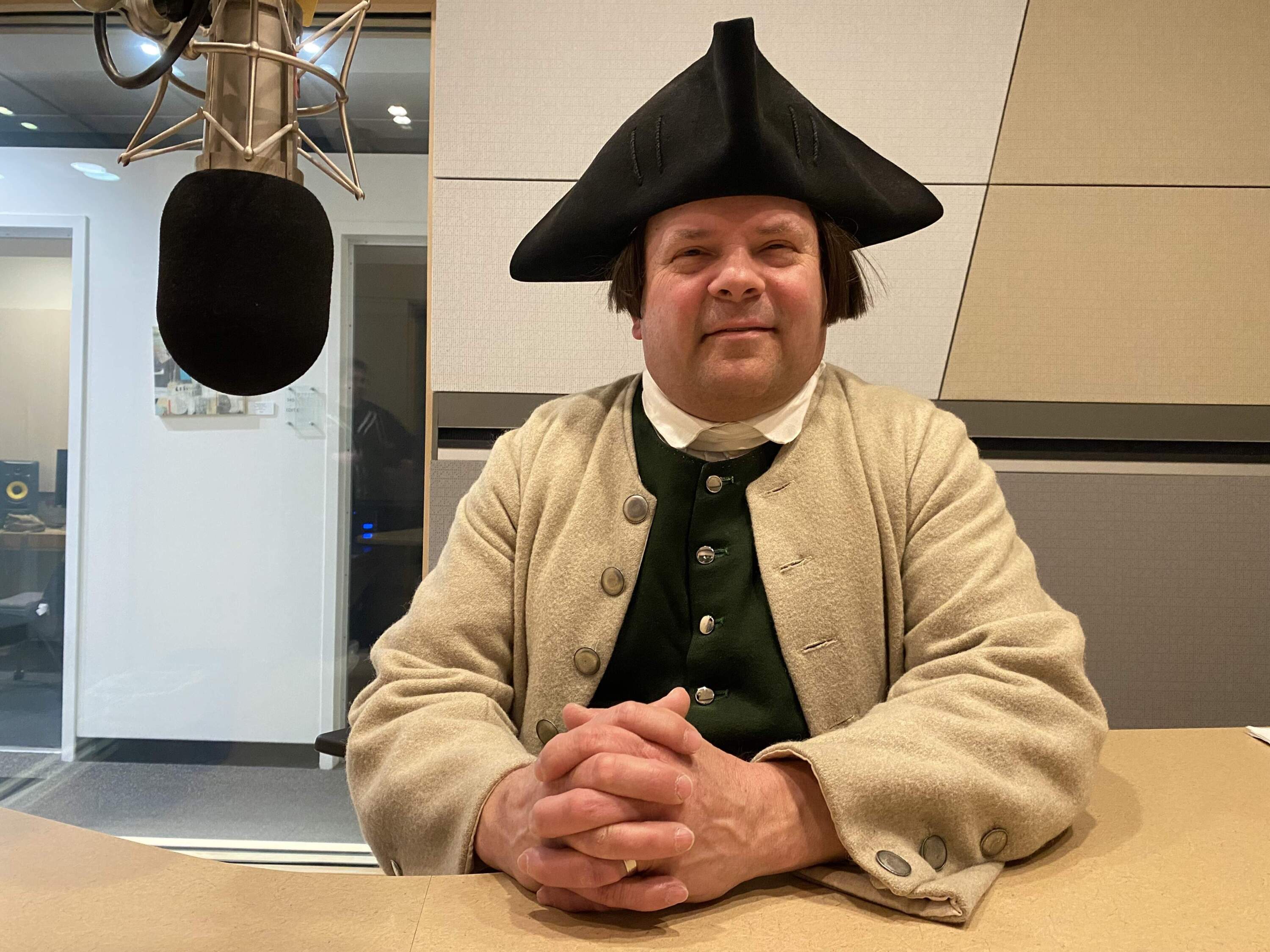
LePage said reading its words helps him get into character. “If the British march, By land or sea from the town to-night, Hang a lantern aloft in the belfry arch, Of the North Church tower as a signal light."
A few of the flubs are highlighted in a permanent exhibition at the Paul Revere House. Zannieri pointed to the line about the plan to hang warning lanterns at the Old North Church: “One, if by land, and two if by sea; And I on the other shore shall be.”
“Revere, in an account that he wrote later, actually says, ‘two if by water,’ and then ‘one if by land,’" she clarified. "And so that iconic phrase that everyone connects to Revere is not entirely accurate.”
Reconciling the poem with facts from the past is a daily occurrence at the museum. “This is the part where literature and history come together,” Zannieri said. She isn’t alone in educating the public about the truths and fictions.
“The actual story is fantastic,” Nikki Stewart noted. She’s executive director of the nonprofit Old North Illuminated and said people come to the venerable church to learn more about the lantern story. “I think the biggest misconception is that the lantern signal is to Revere instead of from Revere — and we can directly attribute that to Longfellow and his poem.” Stewart added that a lot of visitors wrongly think Revere himself hung the lanterns, but we can’t blame Longfellow for their confusion.
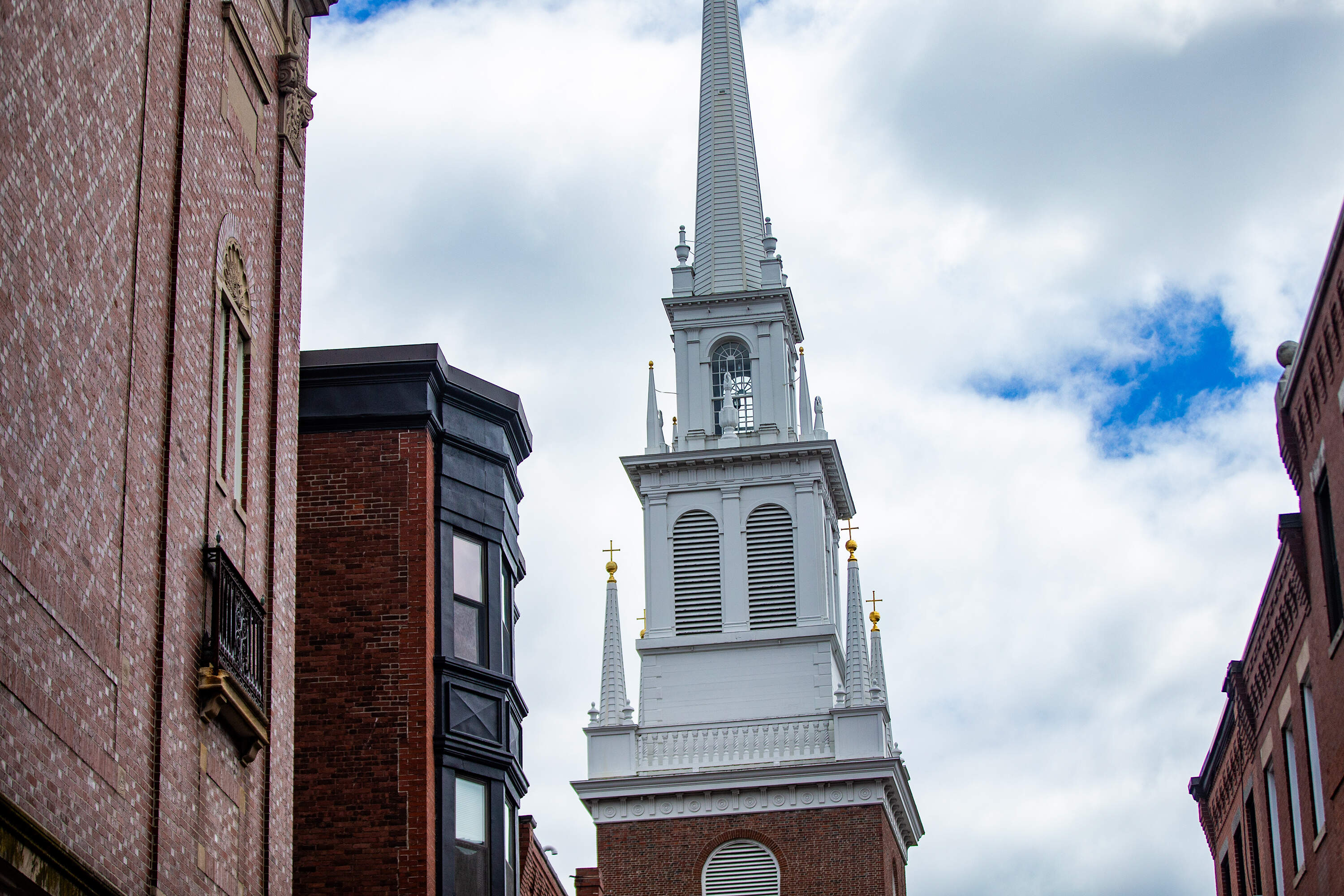
In reality, a doctor and spymaster named Joseph Warren summoned Revere, a silversmith and trusted express messenger, to ride on April 18 after receiving intelligence about British military movement. They knew soldiers were deploying by boat — so there were no “ifs” about that, either. Then, Revere arranged for the two warning lights to be displayed in the church's steeple. “It’s really hard to imagine doing it in the dark,” Stewart said, “while you're carrying a lantern and really afraid.”
Podcaster Jake Sconyers — who’s married to Stewart — led me up the steeple’s dizzying sets of stairs. “Every flight gets narrower and steeper,” he advised, “so take your time, use your hands, catch your breath.”
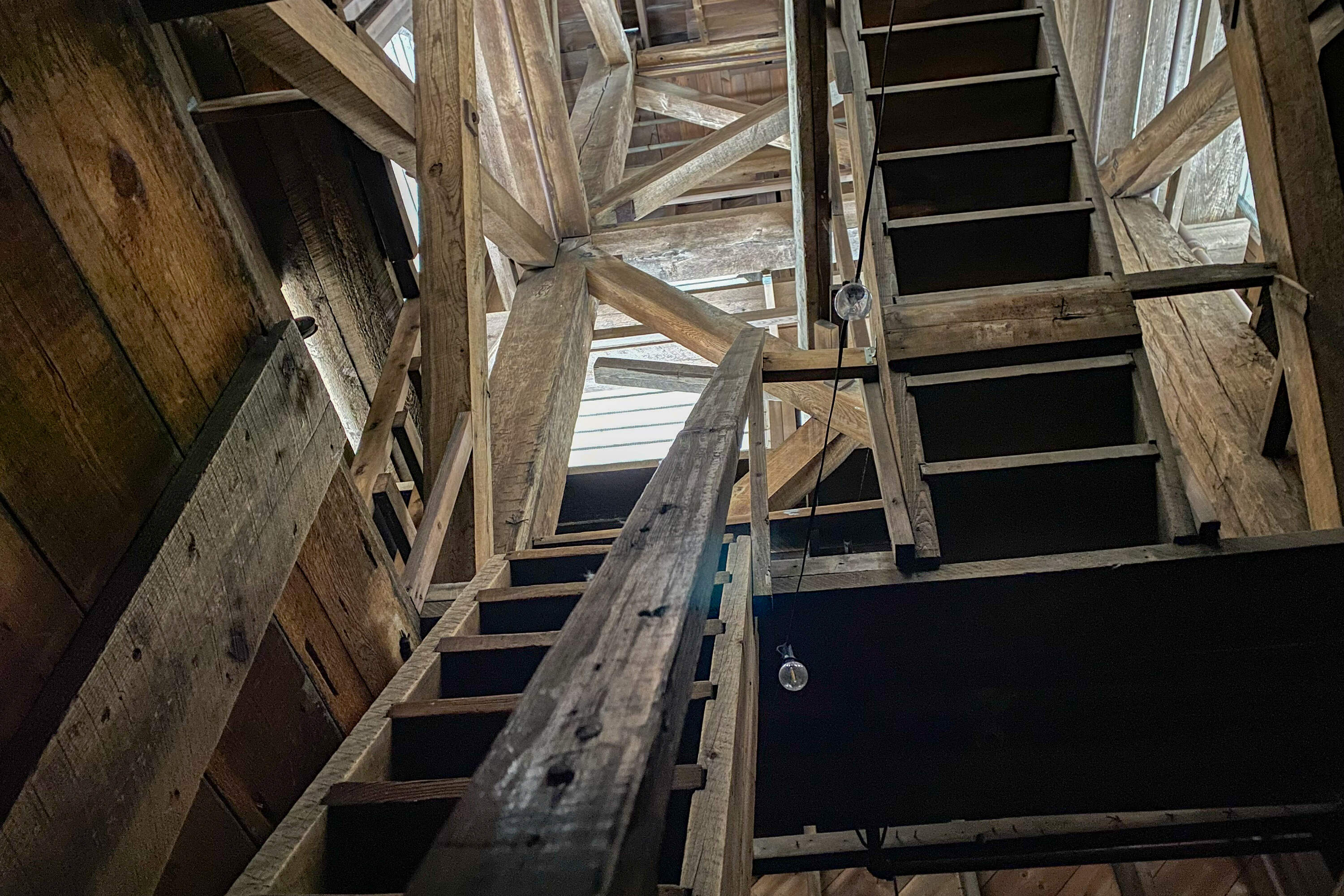
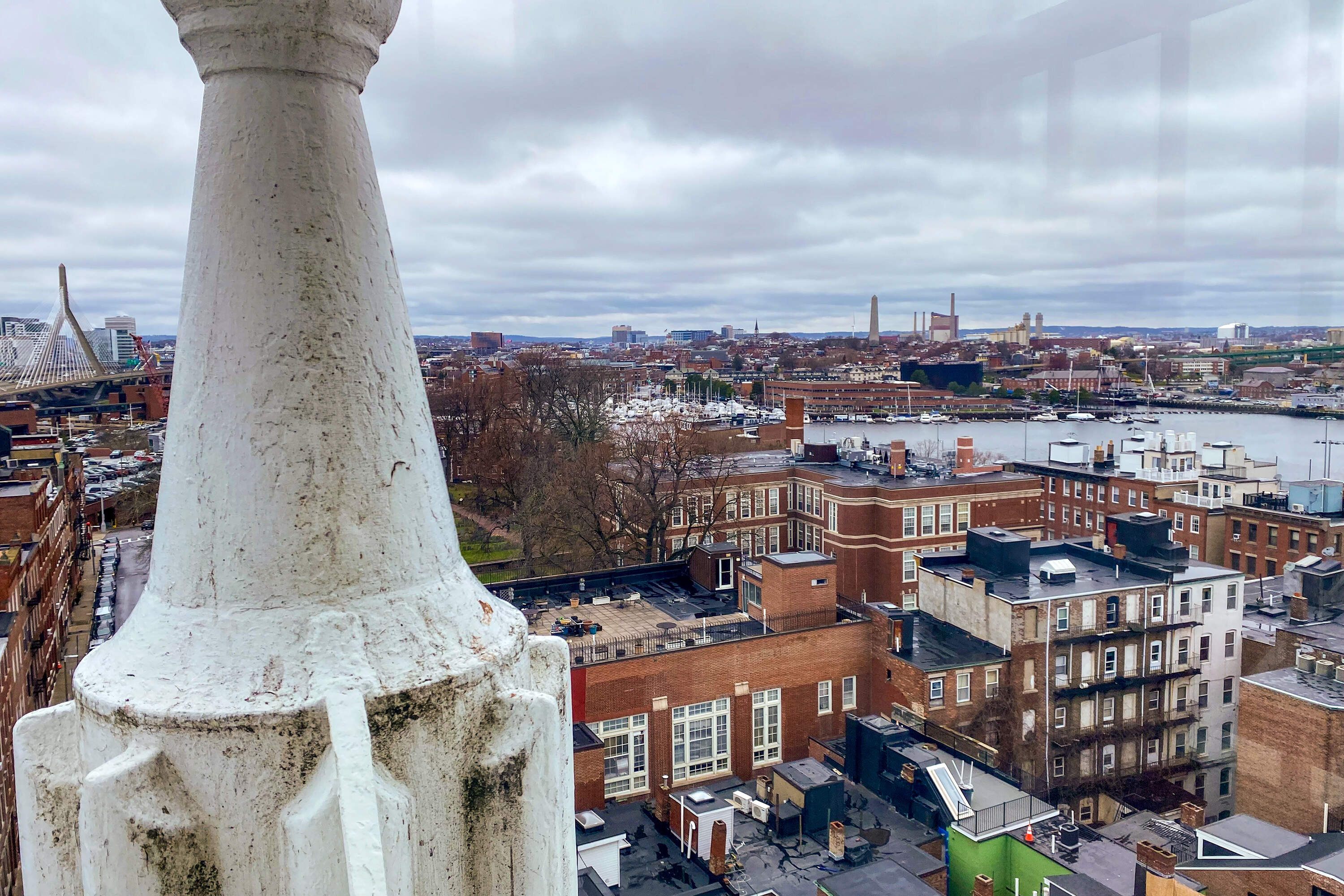
Sconyers hosts “Hub History” and has clambered to the top before. “We’re higher than Beacon Hill, we’re higher than Bunker Hill, we’re higher than Copps Hill,” he explained once we gained our footing on the lookout platform. “This is the vantage point for colonial Boston.”
In his latest episode, Sconyers compares Revere’s written accounts (that are held by the Massachusetts Historical Society) to Longfellow’s ballad. The poet and Revere mention “a friend” making the climb, but Sconyers said it’s believed church sexton Robert Newman and sea captain John Pulling braved the risky act of treason. He also acknowledged Longfellow wasn’t a historian — he was an artist. “Longfellow took a lot of liberties, but even the parts that you know are fictional are inspiring.”
So, what drove Longfellow to create his action-packed poem? “Most of the mistakes are an effort to pare it down to just one man riding through the night, shouting his cry of alarm to a country that needed to be woken up,” Jeff Lantos explained. The author and 5th-grade teacher dissected the verse in his playful, myth-busting book, “Why Longfellow Lied.” Lantos said the artist reimagined a mythic Revolutionary War hero to inspire the abolitionist cause in 1861 on the eve of the Civil War. The lyrically entertaining poem was a hit after it was published, and made Revere a posthumous lone legend, 86 years after his ride.
“And also, of course, the other big mistake is 'It was two by the village clock, When he came to the bridge in Concord Town,'” Lantos added with a laugh. “Well, Revere never made it to Concord. That's a big miss by Longfellow, considering that was his mission to get to Concord. He was arrested by a British patrol and de-horsed.”
The guy who did make it to Concord was Dr. Samuel Prescott. Boston College professor and prolific historian Heather Cox Richardson shared how he joined the alarm squad after leaving a lady friend’s house in the wee hours of April 19. “So these are not these great heroes sprung from the head of Zeus,” she said. “These are ordinary people who are trying to do the right thing, and that to me is a message for the ages."
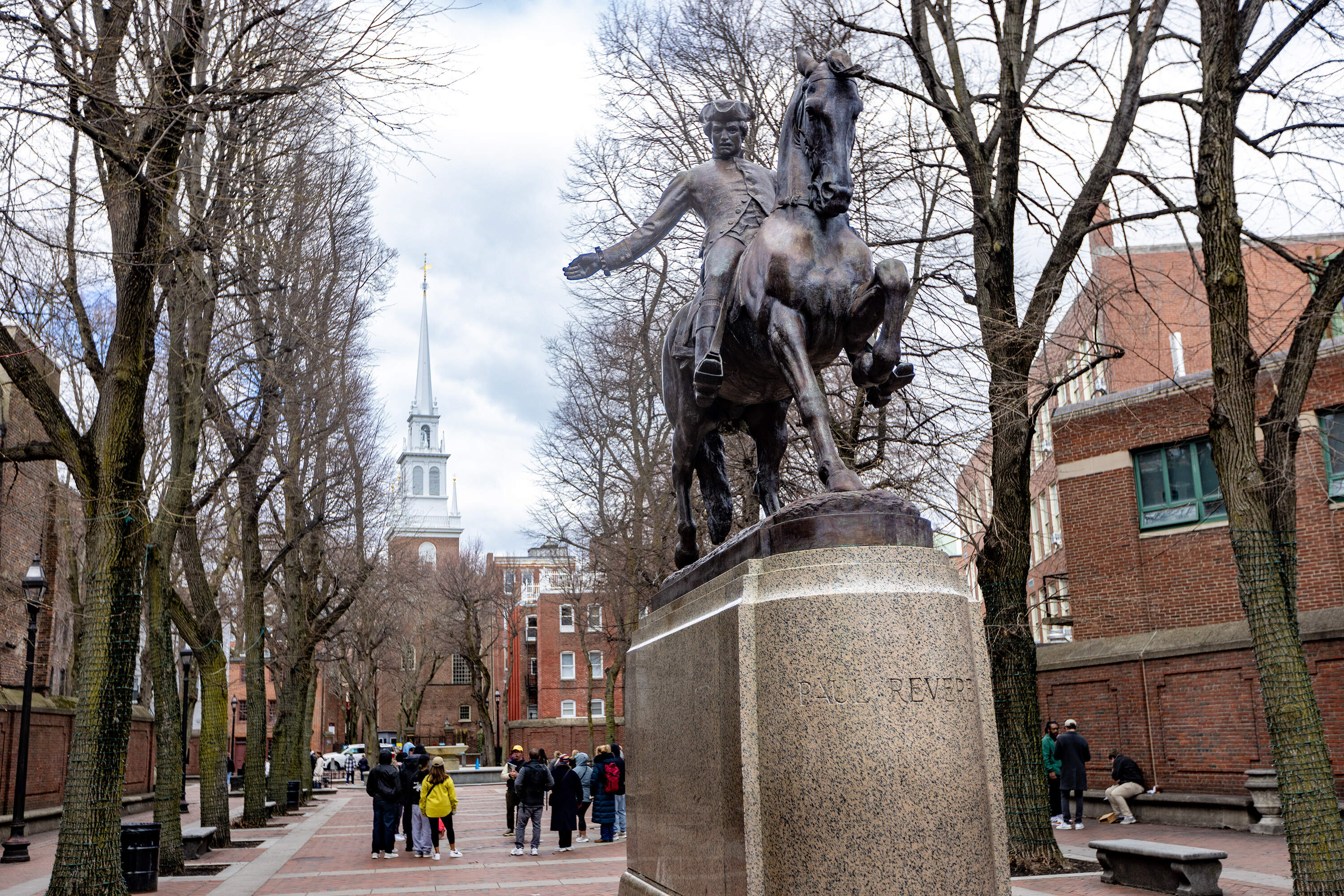
The historian isn’t bothered by Longfellow’s romantic vision of a singular great hero from the past, but hopes more people are inspired to learn about the vast network of spies, sympathizers and messengers that made colonial resistance a reality, including another rider named William Dawes. Richardson jokes with her students that the reason we know about Revere is because his name rhymes with “hear.”
“And if Longfellow had chosen to write, ‘Listen, my children, I'll give you cause to remember William Dawes,’ everybody would remember William Dawes instead,” she said. “Prescott, I guess, is out of luck.”
Richardson will help celebrate the collective efforts that paved the road to the American Revolution Friday night at the Old North Church’s “Lantern Service." The reenactment of Paul Revere's ride kicks off at his historic home at 5:30 p.m.