Support WBUR
Boston's Morning Newsletter
Pride events across the country have lost major sponsors this year. Why not in Boston?
Editor's Note: This is an excerpt from WBUR's daily morning newsletter, WBUR Today. If you like what you read and want it in your inbox, sign up here.
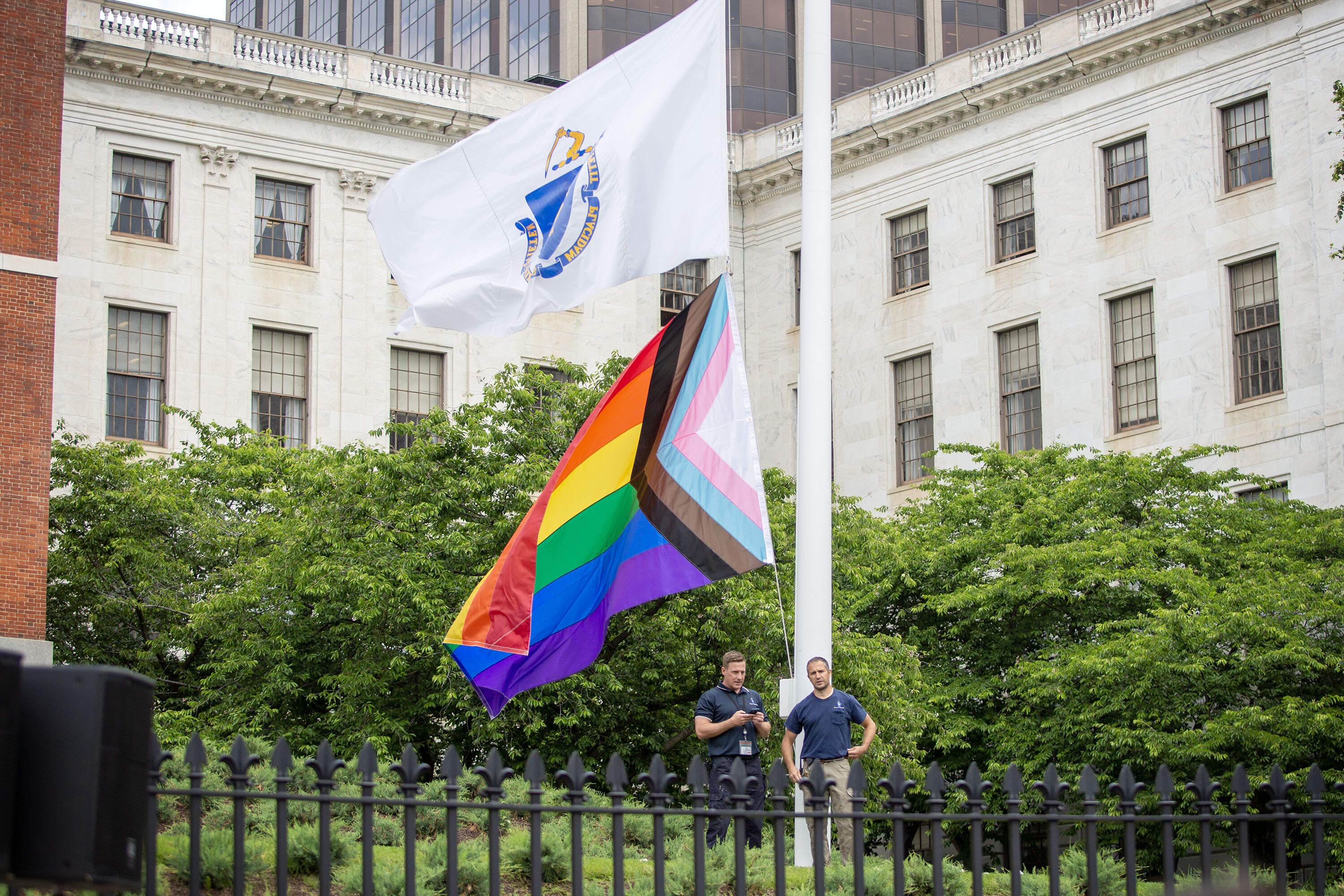
Pride Month is here, and Boston is gearing up for a month of events celebrating the LGBTQ+ community. The public festivities kick off today with a pride flag raising and celebration at Boston City Hall hosted by Mayor Michelle Wu.
Parade preparations: Boston's Pride for the People Parade is also returning this month — with most of the same corporate sponsors, according to organizers. It's a stark contrast from parades in other cities that have seen major corporate sponsors like Mastercard, Pepsi and Deloitte drop out due to political pressure and economic uncertainty under the Trump administration. As Axios first reported, the corporate retreat from supporting Pride events has spanned from the country's largest parades like in New York City and Washington, D.C. to smaller cities like Columbus and Richmond. Gary Daffin, a member of Boston Pride for the People's leadership team, says it may have to do with how Boston selects its sponsors.
- What's the difference? When Boston Pride for the People took over the parade in 2023, it instituted a new vetting process for sponsors, according to Daffin. "We look at whether they have supported anti-LGBTQ or anti-abortion issues or candidates, and we don't take sponsorships from those folks," he told WBUR's Rachell Sanchez-Smith. "A lot of the people that we've heard have backed out of other Prides — we haven't taken money from them, anyway." Daffin also said most of their sponsors are local. "They are a little bit more committed perhaps than people who just broadly sponsor Prides across the country," he said. According to The Boston Globe, some of the big returning sponsors include Delta Air Lines, the Boston Foundation, Beth Israel Lahey Health, Eastern Bank, Eversource and National Grid.
- Why it matters: The annual parade and festival costs a lot of money to put on — around $650,000 to $700,000, according to Daffin. And other parades that lost sponsors have said they may need to scale back their festivities as a result. " We were concerned at the beginning of the Pride season that some companies might pull out because of what's happening at the national level, with anti-DEI and anti-trans policy initiatives," Daffin said. But he said "we're almost at the same place we were last year."
- This year, Boston Pride for the People faced challenges attracting new sponsors, which Daffin suggested was due to the economic uncertainty's impact on the small- and medium-sized businesses they target. But the event also raises money from fees paid by organizations and individuals that march in the parade. Daffin said they have " as many registrations as ever."
- What to know: The parade is scheduled for Saturday, June 14 at 11 a.m. in Back Bay. It's followed by a festival on Boston Common. If you're planning to spectate, organizers suggest taking the Orange Line to Back Bay station or the Green Line to Arlington or Boylston.
Hold your breath: Smoke and smog affect the quality of the air we breathe — and according to a new study from MIT, climate change may make it harder to curb this pollution. WBUR's Vivian La reports that MIT researchers used computer models to predict how air pollution will develop in the Eastern United States over the next few decades. Here's what they found.
- Nitrous oxide, a greenhouse gas, is one of the main contributors to smog. As temperatures rise, the soil releases even more nitrous oxide, making smog accumulation harder to control. To counter this effect, Noelle Selin, an MIT professor and co-author of the study, said officials have to push through and protect policies that reduce air pollution. "What we're doing to the atmosphere has impacts and it's important not to roll these back," she added.
Sorry, renters and wannabe homebuyers: Housing production in Massachusetts fell to a 10-year low in the first quarter of this year, according to real estate firm Colliers. The report found it's been harder to develop multi-housing units due to higher interest rates, climbing construction costs and uncertainty over tariffs.
- Though the state has recently authorized billions of dollars in borrowing to spur housing construction, Colliers vice president Kendin Carr told WBUR that Boston has already fallen behind similar sized places with housing shortages, like Austin, Texas (where rents have actually been dropping). "They have [had] the capacity to build for the last five years thousands and thousands of more units than we built in the Greater Boston area and that just goes to show the administrative red tape and labor costs that are in the Boston market really hindered development here," Carr said.
P.S. — The Sumner Tunnel will be closed tonight so crews can install new overhead signs. Traffic will be detoured from 11 p.m. to 5 a.m. Tuesday, so drivers should expect delays overnight. (But on the bright side, the Mass. Pike is fully reopened!)