Support WBUR
The art of bearing witness
Editor's note: This story is an excerpt from WBUR's weekly arts and culture newsletter, The ARTery. If you like what you read and want it in your inbox, sign up here.
What does it mean to make political art? Artists, academics and critics have long debated this question. How should it be judged? Is it enough for the artist to simply bear witness? Is the work’s power rooted in its ability to stir up feeling, or should it do more? Does the presence of political art inside large institutions — very much tied up with the interests of the wealthy — compromise its intentions? Is it even reasonable to expect art to be a tool for political change?
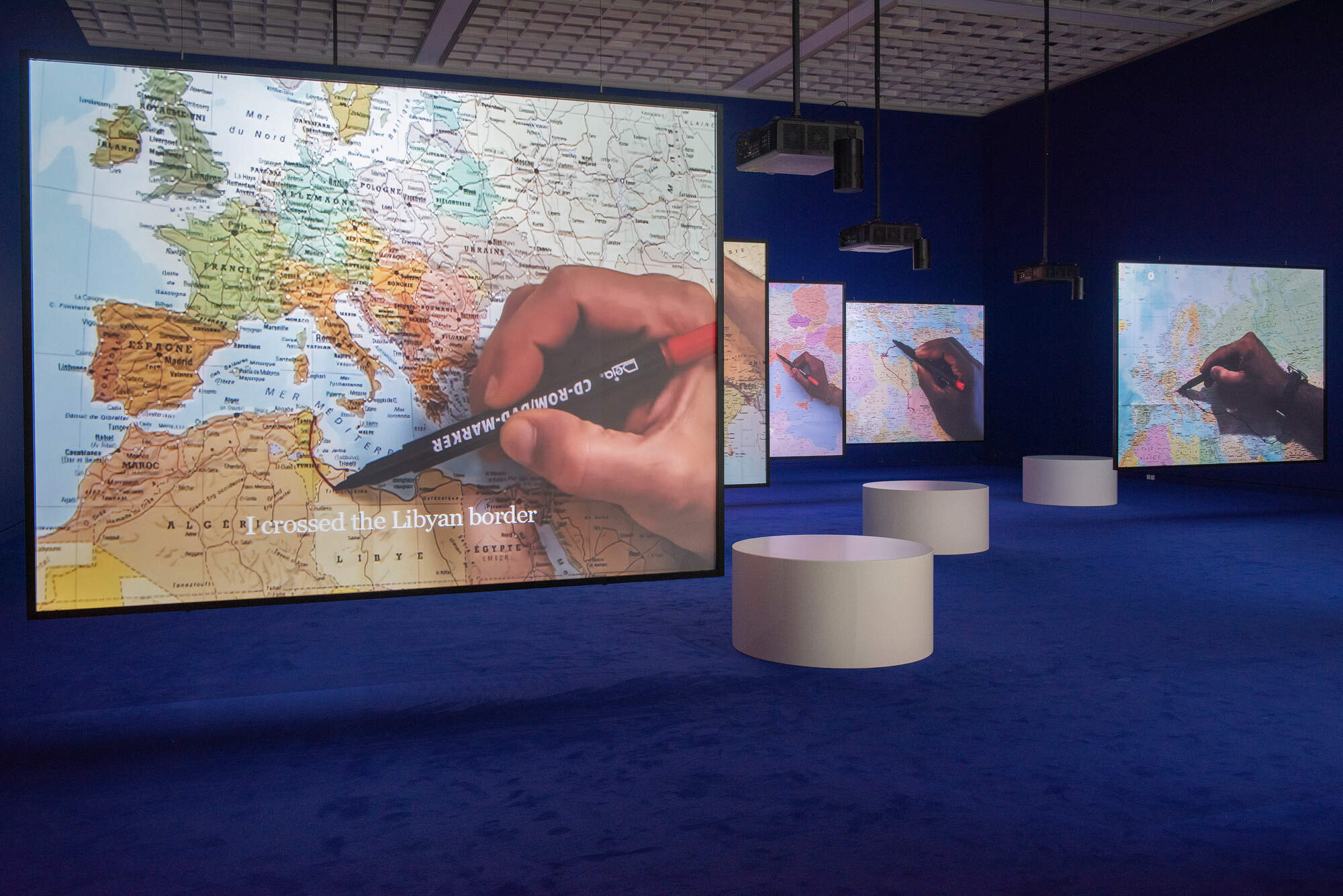
Last week, I found myself stunned by a piece of political art. It was at the Louisiana Museum of Modern Art outside Copenhagen, Denmark, where I was on vacation. (Not to brag.) The museum recently acquired “The Mapping Journey Project,” a video installation by the Moroccan-French artist Bouchra Khalili. Before it came to the Louisiana, the piece appeared as part of the main exhibition at the 2024 Venice Biennale.
I observed “The Mapping Journey Project” from a balcony overlooking a large gallery space where eight video monitors were suspended. Each displayed a map of the world, and in each, a hand holding a pen marked a long, circuitous path undertaken in search of a better life. The people drawing these routes narrated their real-life stories of statelessness and migration, their voices piped in from speakers overhead. I found myself transfixed even at a distance, just reading the subtitles from my position on the balcony.
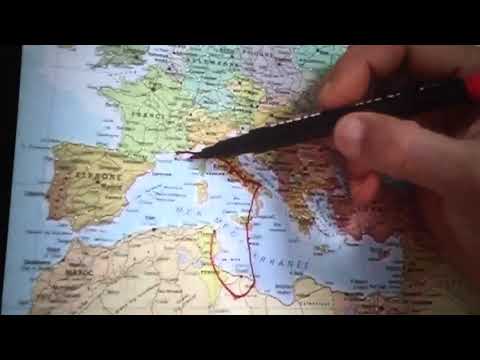
At first glance, the disembodied hands felt impersonal, harder to map onto flesh-and-blood human beings. But that quickly gave way to a feeling of identification with the storytellers, whose perspective you were forced to share. This made it harder to make assumptions about who the migrants were, and easier to imagine that the journey they were describing had been yours. The people in the videos detailed harrowing passages over mountains and across seas. They recalled getting ripped off by people promising to help them. They described getting arrested and beaten by local police. They remembered arriving in towns, ready to work, and not being able to find any work. They said, many times, that they just wanted to work. They wondered if they would ever see their loved ones again.
“The Mapping Journey Project” asked nothing explicit of its viewers. It simply asked them to inhabit another person’s experience for a time. I left the exhibition feeling chilled and somber, grateful and a little ashamed of all that I had been granted at birth and had hardly given a second thought — an education, the opportunity to work, citizenship. I left the museum and walked the streets of Copenhagen, free of fear and want, safe in the knowledge that I would soon board a plane and fly back to a place I could always call home.