Support WBUR
Winslow Homer's rarely seen watercolors
Editor's note: This story is an excerpt from WBUR's weekly arts and culture newsletter, The ARTery. If you like what you read and want it in your inbox, sign up here.
For the first time in nearly half a century, a trove of vibrant watercolors is on display at the Museum of Fine Arts, Boston. The new exhibition “Of Light and Air: Winslow Homer in Watercolor” celebrates the 19th-century artist’s mastery of the medium, but also his deep connections to the museum, Boston and New England.
The show kicks off with an iconic work. “You may have seen ‘Blue Boat’ before,” co-curator Christina Michelon said. “It’s the fourth floor of the parking garage, it’s throughout the gift shop, it’s reproduced numerous times in books — but have you really seen 'Blue Boat?'"
Last on view in 2010, the original watercolor is rarely on display. “It is — like all of Homer's watercolors and watercolor in general — very, very light sensitive,” Michelon explained. “And we can only exhibit it periodically.”
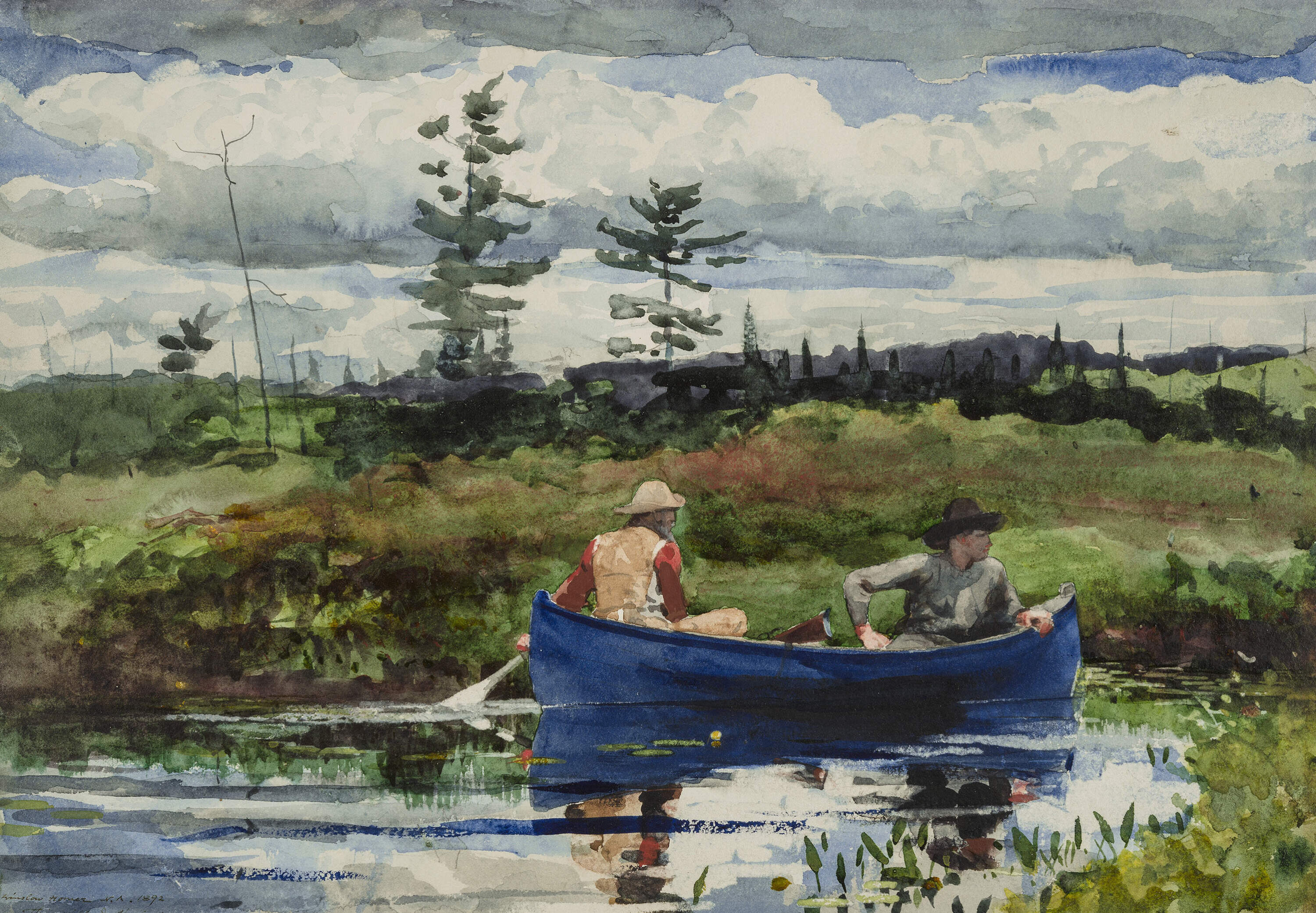
"The Blue Boat" depicts two hunters paddling through a stream in a marshy landscape beneath a cloudy, blue sky. Michelon said she and co-curator Ethan Lasser wanted to start with it not only because it’s recognizable, “but also because it represents Homer at the peak of his work in watercolor. He is deploying everything he's learned after a couple decades of studying all the techniques in this medium.”
Homer used a wet brush and a dry brush. He applied washes and spattered watercolors. “He's kind of pulling out all the stops to create this tranquil scene,” Michelon said.
He managed to achieve dynamism in a single blue line that Michelon called “audacious.” It’s a favorite for Homer fans. “He has it running across the bottom of the composition, and it's meant to evoke the reflection of this vibrant blue boat on the surface of this gently disturbed body of water.”
Nearly 50 of Homer’s rarely-seen watercolors grace the gallery walls. The MFA stewards the largest collection of them in the world, in part, because he was a Boston boy.
“He had a network here, he had a lot of fans here,” Michelon said, “and collectors that were acquiring his watercolors gifted or bequeathed them to the museum.”
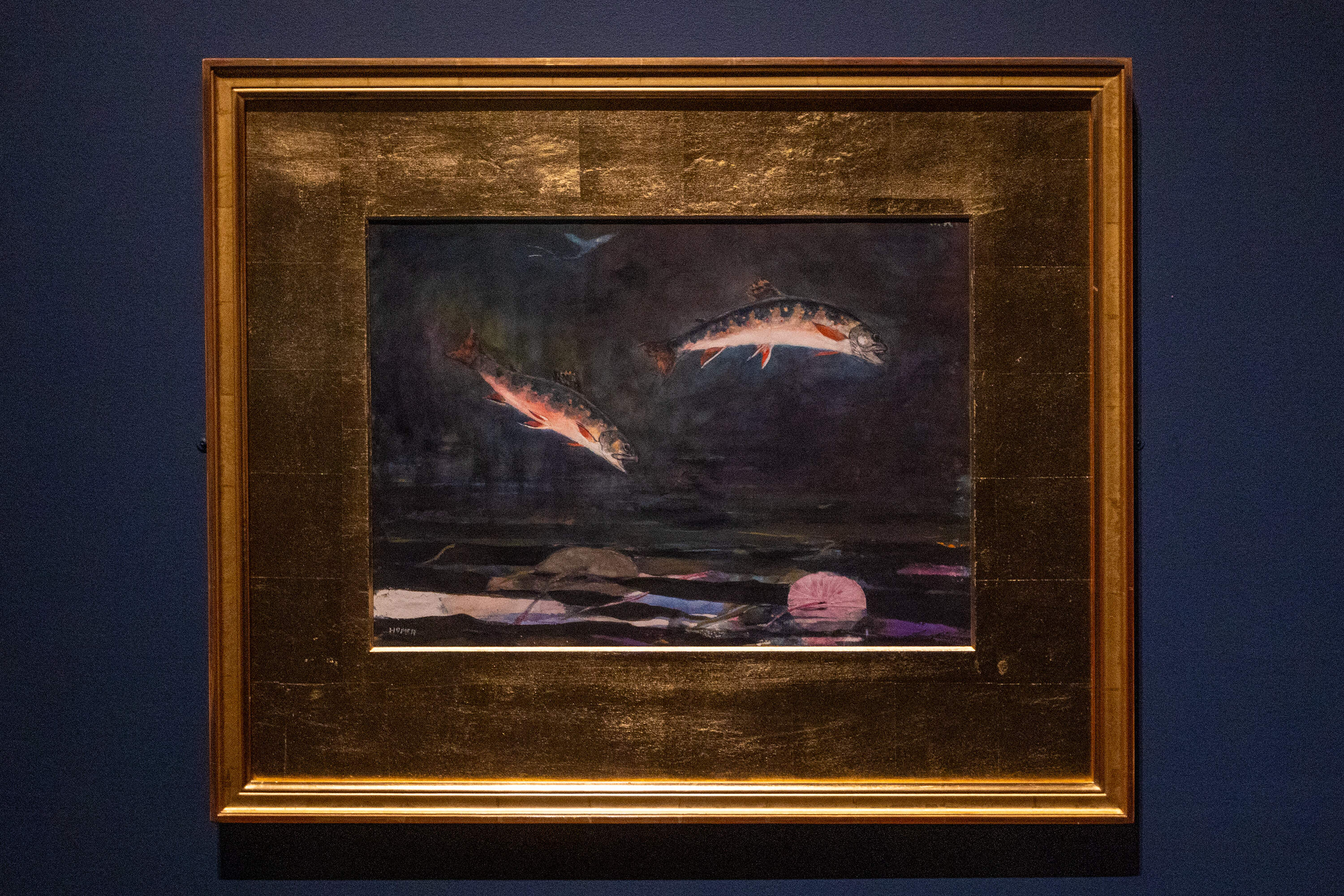
The MFA was also the first museum to purchase one of Homer’s watercolors. “Leaping Trout,” painted in 1889, features a luminous, ethereal fish. It came to the MFA in 1899.
Through the museum’s collection and Homer’s work in other mediums, this exhibition traces his trajectory to becoming America’s preeminent watercolorist.
“We think about Homer as this upstart artist — born in Boston, raised in Cambridge,” Michelon said, “he trains as a lithography apprentice at Bufford’s Lithography, which was in Beacon Hill.”
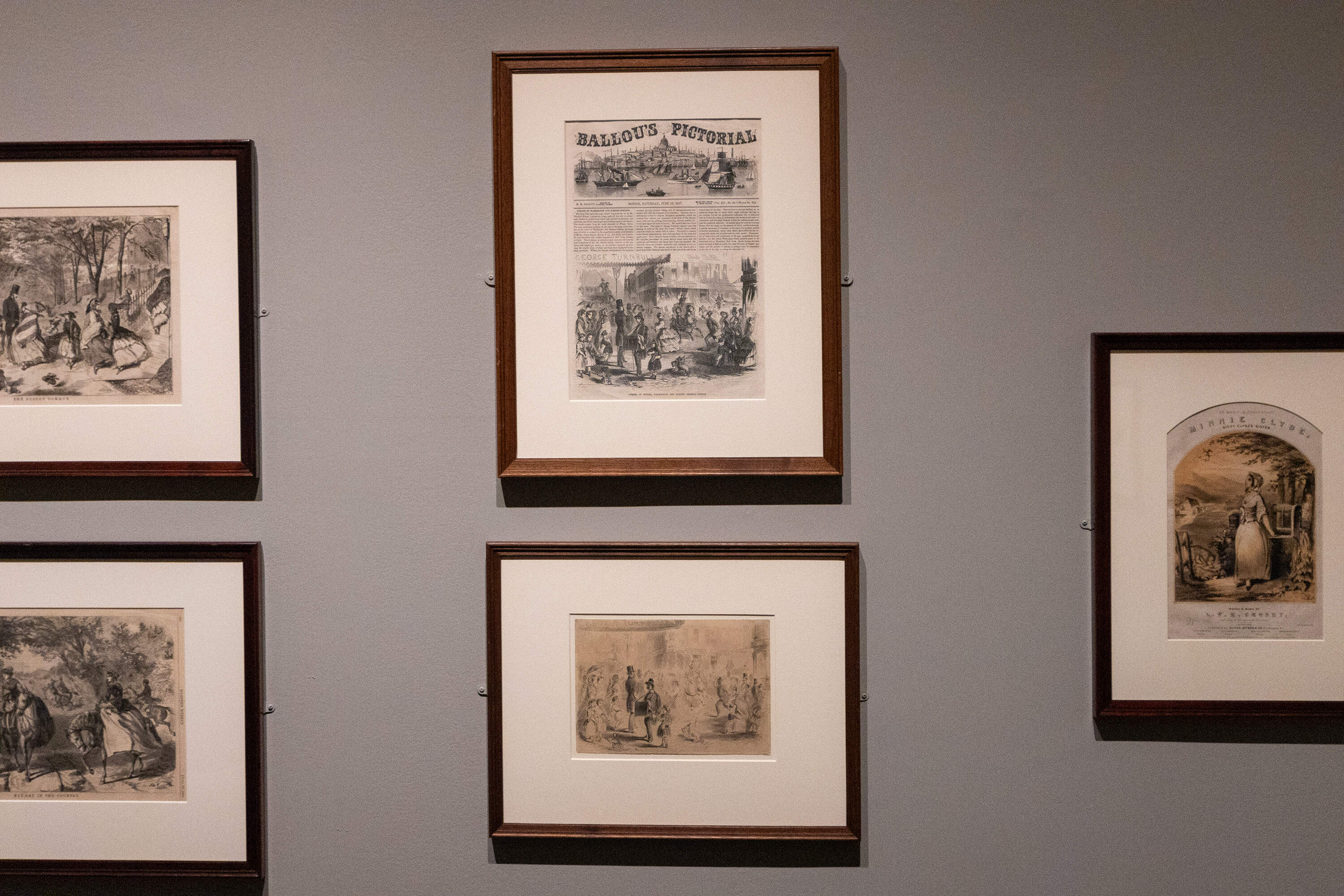
As a teen there, Homer honed his understanding of composition and design, skills that would serve him well as a painter. He moved on to illustrate for periodicals, including Ballou’s Pictorial in Boston and Harper’s Weekly in New York City. That publication sent him to document the front lines of the Civil War in the 1860s.
For a time, Homer lived, illustrated and also painted in New York. But Michelon said he would return to see his family at their home in Belmont. “He would stay with them often for holidays, Fourth of July, Thanksgiving.”
Michelon said Homer’s mother played a foundational role in his pursuit of watercolors. “She was likely the one that maybe put the brush in his hand to begin with.”
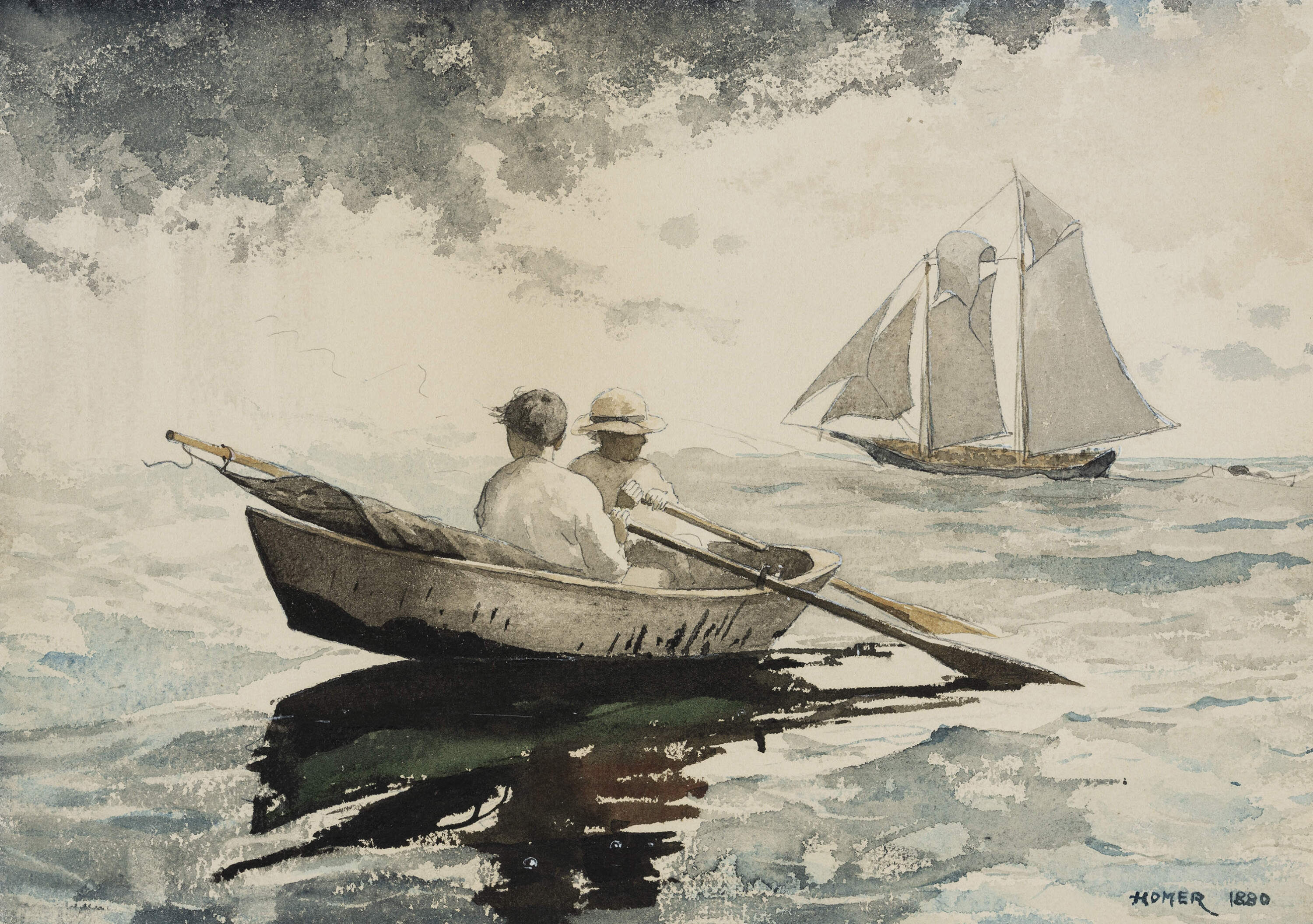
Growing up in the Boston area, Homer was never far from the ocean. The exhibition illustrates how he developed his watercolor practice in Manchester-by-the-Sea and Gloucester, a 19th-century painters’ summer mecca. Michelon said Homer made evocative, incredibly realistic-looking coastal images there, like his 1880 work titled “Two Boys Rowing.”
“This is really him beginning to experiment with how a vessel reflects on water and what light does when it hits water,” she said.
Homer eventually settled in Prouts Neck, Maine, where his family had a house. He set up his own studio there in 1884. Life on the sea — and the drama of the ocean — evolved into dominant themes in his late career.
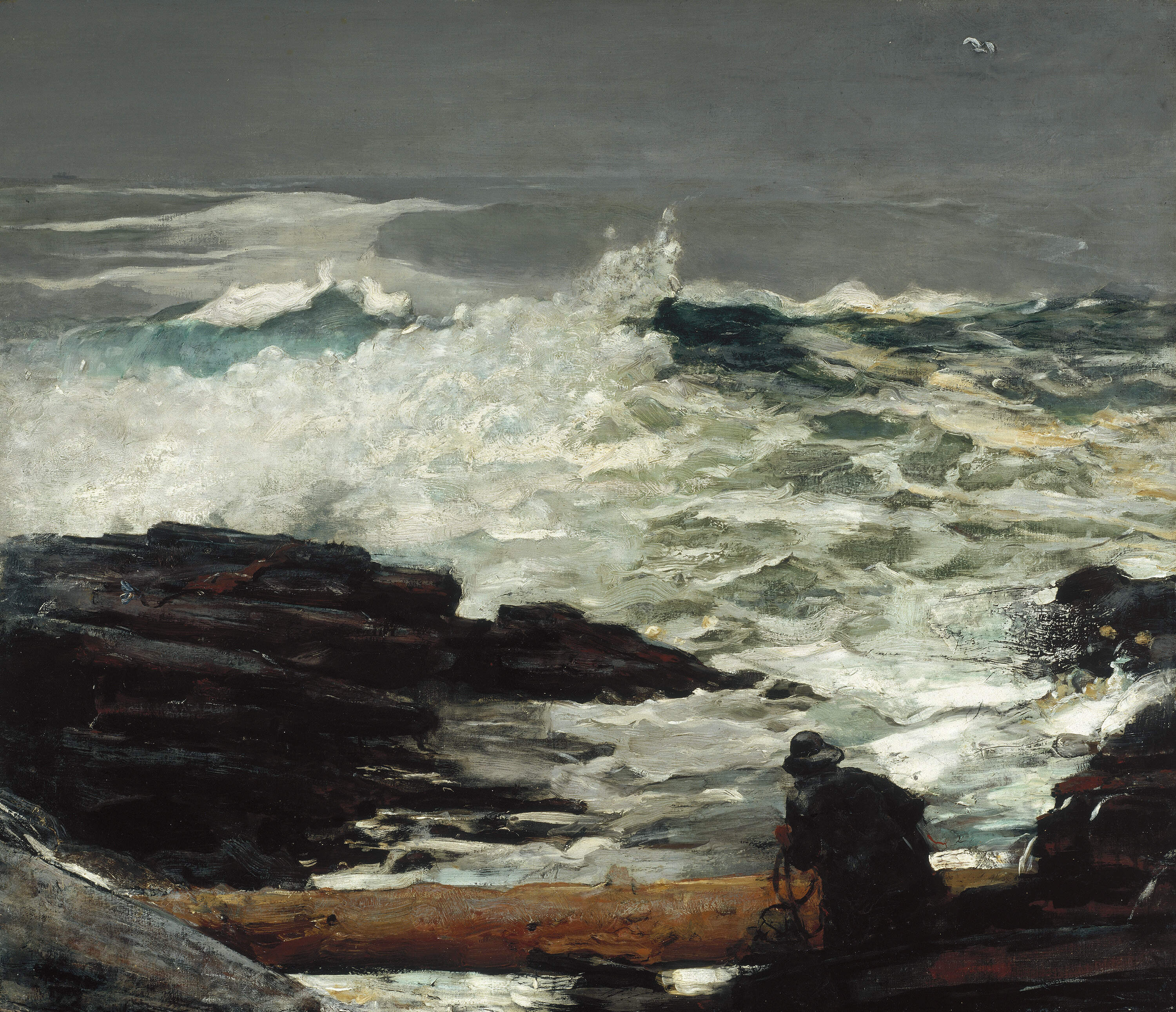
Homer’s last painting, “Driftwood,” ends the MFA’s show. He made it with oil, but Michelon said you can find a lot of his watercolor techniques if you look closely at this painting. Homer completed it in 1909, sent it to his dealers, and it sold the same day. But Michelon said the lifelong artist knew watercolor would become his legacy. “He said to a friend, probably late in his career, that you will see in the future I will live by my watercolors.”
Winslow Homer died in Maine in 1910, but he’s buried at Cambridge’s Mount Auburn Cemetery. His spirit lives on through the MFA’s collection and now a once-in-a-lifetime exhibition that runs through Jan. 19.