Support WBUR
An attorney fighting the Trump administration on TPS for Haitians on the latest ruling
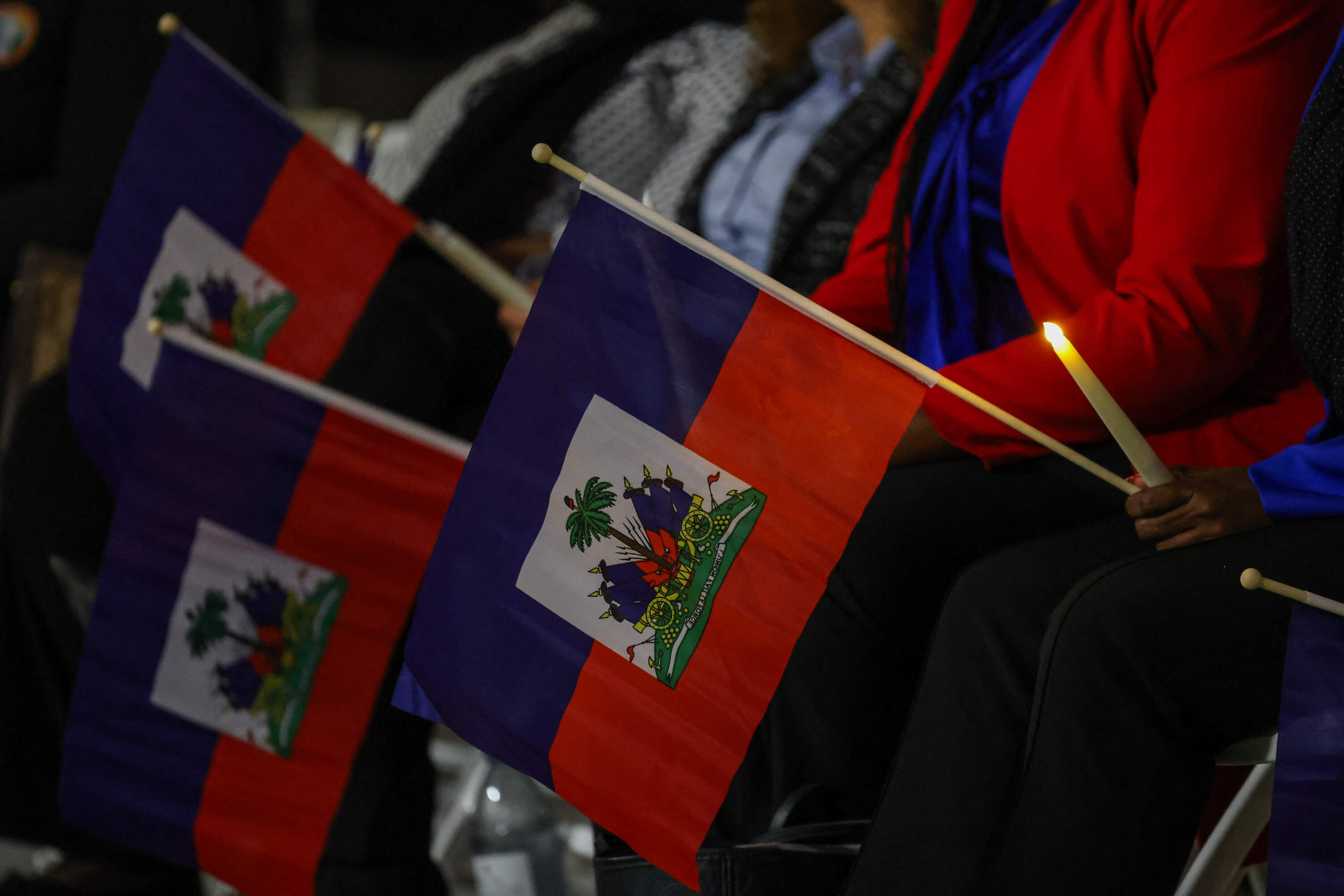
A lawsuit challenging the Trump administration’s termination of a legal status for Haitians is likely to succeed on its merits, a federal judge in Washington D.C. said Monday. U.S. District Judge Ana Reyes prolonged Temporary Protected Status for more than 300,000 Haitians, allowing them to live and work in the U.S. while the litigation proceeds.
Calling the ruling "lawless activism," Department of Homeland Security spokesperson Tricia McLaughlin wrote on social media platform X: "Temporary means temporary and the final word will not be from an activist judge legislating from the bench."
The Trump administration has indicated it’s prepared to appeal the ruling all the way to the Supreme Court. It's had some success there on the issue: In October, the high court used its emergency docket to allow the Trump administration to immediately terminate TPS for Venezuelans, though the termination was ultimately postponed by a lower court.
WBUR interviewed Andrew Tauber, a lawyer representing the Haitians who brought the suit Miot v. Trump. He also represents the plaintiffs in Haitian Evangelical Clergy Association v. Trump, a separate case challenging the TPS termination.
The interview is lightly edited for brevity and clarity.
What’s your reaction to Judge Ana Reyes’s ruling on Monday?
"I think it is a strong opinion. The court was clearly engaged with both the law and the facts, and it is clear based on the facts that the Trump administration violated both statutory and constitutional law. The court clearly understood and pointed to the evidence that we had presented, relied on what is in the government’s own administrative record, and rightly came to the conclusion that the decision to terminate Haiti’s TPS designation was not the product of a good-faith, fact-based review of the conditions in Haiti, but instead a predetermined outcome motivated by racial animus."
What does this mean for Haitians who have TPS?
"The decision simply postpones the effective date of the termination, pending resolution on the merits. How long that will take is uncertain. As long as Monday’s postponement stands, Haiti’s TPS designation will continue in force.
"There seems to be confusion about whether Haitians can continue to work. The order was absolutely clear that Haitian TPS holders’ work authorization continues in effect."
In your case, you argued that the government didn’t properly assess conditions in Haiti in deciding to terminate TPS, and Judge Reyes seems to agree.
"I think we’re all hopeful that conditions will ultimately improve in Haiti and that it will be safe for Haitians to return to their homeland. But it’s important to realize that when Congress established Temporary Protected Status, it made extensions of TPS designations the default."
Even if you ultimately prevail here, there’s nothing stopping the administration from ending TPS for Haitians again.
"If the current termination is set aside, the government would have to go back and renew the statutorily mandated periodic review process. Conditions in Haiti are desperate, and I don’t think there’s any realistic chance they will improve in the immediate future. Any good-faith, evidence-based review of conditions would lead an honest decision-maker to conclude that Haitians cannot safely return and that the TPS designation should be extended.
"This is the fourth attempt by the Trump administration to terminate Haiti’s TPS designation. If it chooses to make a fifth attempt, we will fight that."
The Reyes ruling cites a brief email exchange between the Department of Homeland Security and the State Department indicating that “State believes there would be no foreign policy concerns” with changing Haiti’s TPS status. Is that the extent of DHS’s required consultation with “appropriate agencies” that took place?
"The government has stated on the record that the entirety of the consultation was a one-line email from DHS and a one-line response from the State Department, which did not address conditions in Haiti at all. That is truly shocking, particularly in light of Secretary of State Rubio’s own statements about the crisis in Haiti and the State Department’s highest-level travel advisory warning people not to travel there. The State Department says it’s too dangerous to go to Haiti, yet the Secretary of Homeland Security stated it’s safe to return. Those positions don’t add up."
The Trump administration has signaled that it plans to appeal to the Supreme Court.
"Based on recent practice, the government is likely to first ask the district court judge to stay the effect of her ruling. If that’s denied, it could go to the D.C. Circuit Court of Appeals, and then potentially to the Supreme Court."
So theoretically, there could be a decision upending Haitians’ TPS status in a matter of weeks — or the case could proceed for another year?
"Yes, that’s correct. The case has to play out. The only question is whether the termination is postponed until the end of that process."
What are the prospects that this stay could be stayed by a higher court such as the Supreme Court?
"It's reading tea leaves. I won't hazard a guess because it's just an unknown."