Support WBUR
How to make coffee like a pro
Editor's note: This story is an excerpt from WBUR's weekly arts and culture newsletter, The ARTery. If you like what you read and want it in your inbox, sign up here.
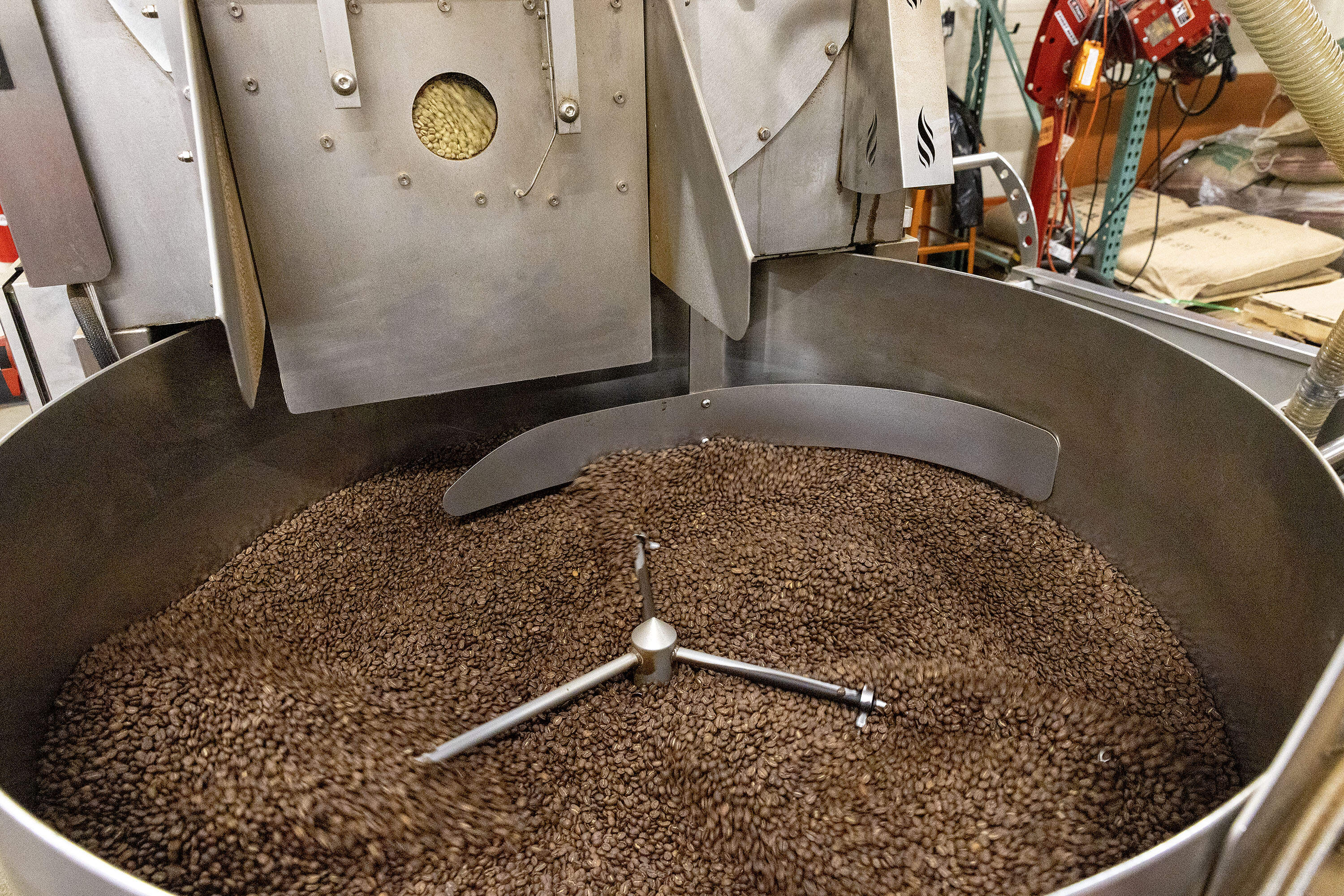
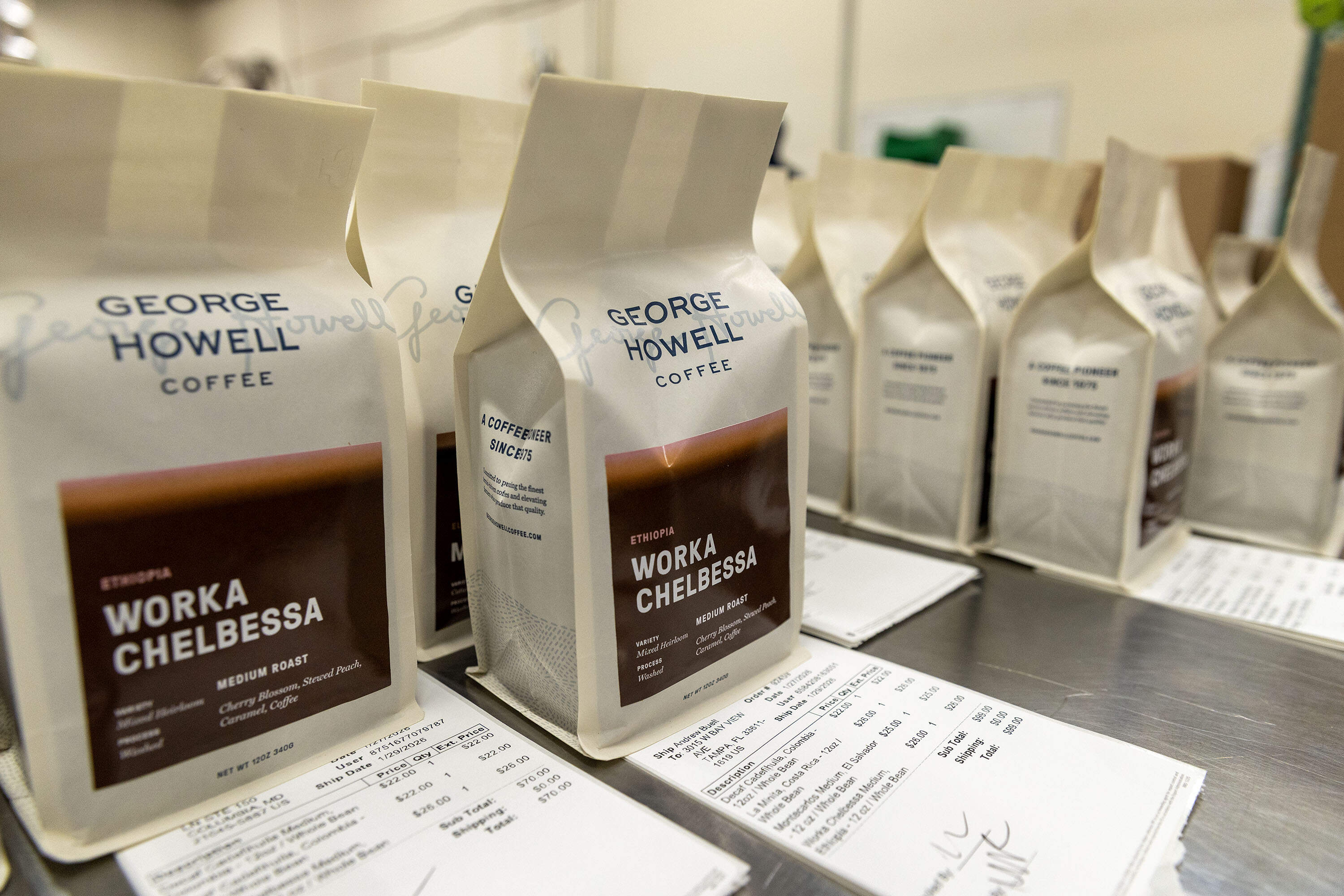
Two weeks ago, photographer Robin Lubbock and I took a trip to the George Howell Coffee roastery in Acton for a story about the company’s founder and his long legacy in the coffee world. We had a grand old time. Robin bopped around the warehouse taking pictures, and I tasted at least seven different coffees. (According to recent research, this may actually have been good for me.) On the drive home, caffeinated and buzzing, Robin started to spiral. Should he be buying different beans? Should he give up on his home French press? Had he been doing coffee all wrong?
Encounters with coffee connoisseurs can have this effect. The people at George Howell were kind and approachable, happy to entertain even my most boneheaded questions without a whiff of judgment. But I came away with a new appreciation for the depths of my own ignorance. One of the most daunting questions — for both Robin and me — was whether, and how, to change our home coffee setups.
So, I called Jenny Howell to get her advice. Howell is the vice president of George Howell Coffee and the daughter of its founder, the eponymous George. She had a lot of great ideas, some of which surprised me. For coffee professionals like Howell, splurging for the best ingredients and the fanciest gadgets is almost always worth the time and expense. For the rest of us, it’s more complicated. Maybe it’s not in your budget to buy the most premium beans. Maybe you don’t have time in the morning to labor meditatively over the perfect pour-over. Maybe you’ve never heard of a pour-over — and that’s okay. When you understand what goes into a great cup of coffee, it’s easier to make educated decisions about how to invest your time and money. I’ve designed the following home coffee guide with this in mind. Take from it what you want, toss the rest, and enjoy the fruity tasting notes of your labors.

Selecting your beans
TL;DR: Single origin, local roasters, light roasts, taste it black
The most important ingredient in your coffee is… coffee. Maybe this sounds obvious. But it’s easy to overlook when you’ve fallen down a rabbit hole of burr grinders and Chemex coffee makers. Better gadgets will get you nowhere without quality ingredients. If you’re going to pick one thing to spend more money on, this is it.
Look for beans that are single origin, meaning from one farm rather than a blend. Beans roasted locally and in smaller batches will be fresher and higher quality. If you’ve been drinking dark roast, I highly recommend trying some light and medium roasts. A light roast will expose more of the coffee’s natural flavor – those enigmatic tasting notes you may have noticed on specialty coffee bags, like “chocolate” and “peach.” Beware: once you’ve developed a taste for light roast coffee, you may find that dark roasts taste burned. This will probably ruin Starbucks for you forever.
Greater Boston is home to some excellent local roasters, including Gracenote, Broadsheet, Barismo, Newbery Street and George Howell. National brands like Intelligentsia, Blue Bottle and Stumptown have excellent reputations. A typical single-origin specialty coffee will run you about $25 a bag, though all of these roasters offer blends that are cheaper. If you like variety and surprises, consider purchasing a coffee subscription like Trade or Bean Box to get a sense for what’s out there.
How do you even know what kind of coffee you like? Developing your palate takes time and patience. If you’re like me, and you prefer milk in your coffee, try tasting it black first. Howell recommends you remain attentive to the coffee’s changing flavor as it cools. “ I think it's essential for people to taste coffee from hot to cold,” she said. “ When you taste coffee hot, you're getting a lot of roast notes. And then, as it cools down to about 120 -130 degrees Fahrenheit, that's when the coffee opens up.”
Grinding your beans
TL;DR: Buy whole beans, a scale and a burr grinder – or buy and grind at your local cafe
The most important rule of beans: buy them whole and grind them yourself. And yes, you should probably invest in a little scale to weigh the beans, as silly as that sounds. Good coffee is all about ratios, and many brewing guides specify the coffee and water amounts in grams. (More on this later.)
The real expense is the grinder. A burr grinder, which crushes the beans between two abrasive surfaces for a very even grind, is the gold standard. It’s also expensive, with the oft-recommended Baratza brand starting at $150 a pop.
Howell surprised me with a couple of tips. The first was that whole beans taste best a few days after the roast date, which is usually written somewhere on the bag. You want fresh beans, but not too fresh. According to Howell, freshly roasted beans need three to five days to release some of the carbon dioxide that builds up during the roasting process.
Her second point was about the grinder type: under no circumstances should you grind your coffee beans with a handheld blade grinder, also known as a spice grinder, because it produces such an uneven grind. “ I actually would strongly say that it would be better to get your coffee pre-ground at the cafe,” rather than use a spice grinder, Howell told me. To review: you should definitely be grinding your own beans, unless you have the wrong kind of grinder, in which case you should absolutely not be grinding your own beans.
Brewing your beans
TL;DR: Save time with a high-quality automatic brewer, save money with a hands-on method. The golden brewing ratio is 1:16
About that coffee-to-water ratio I mentioned earlier. Howell said it should be 1:16, meaning one gram of coffee for every 16 grams of water. Time to break out that scale!
And as for the brewing method, here we are presented with a classic choice between convenience and cost.
An automatic brewer is the simplest method: just load it up, set it, and forget it. But Howell cautions against using a run-of-the-mill Mr. Coffee. Many machines fail to heat the water up to the necessary temperature, around 200 degrees Fahrenheit. “ If your temperature's not hot enough, it's not going to extract the coffee properly. So you're not going to get all those flavors,” Howell explains. She also pays attention to the spray head, which is the mechanism that releases hot water onto the grounds. “ A lot of the time, you'll see that these spray heads are only spraying directly into one spot on your coffee grounds, so you're only extracting part of your brew, which is going to give you a thin, under-extracted cup,” Howell said. A good coffee machine will distribute the water evenly throughout. She recommends brands like Bonavita and OXO, or Ratio if you want to splurge.
Of course, you may not be ready to drop hundreds of dollars on an automatic coffee maker. A pour-over is a favored method among coffee fanatics, and the gear is simple and affordable. (Howell recommends a Chemex if you want to invest a bit more.) But pour-overs are notoriously finicky. The method involves a simple cone with a filter that you fill with grounds and place on top of a coffee cup. Then, you gently and evenly pour hot water over the grounds, wait for it to soak through, and repeat several times. Some brew guides recommend you place the pour-over on a scale so that you can precisely calibrate the amount of water in each pour.
I use an Aeropress and a French press at home. These are both affordable options that produce very tasty coffee, and you can walk away from them while the coffee steeps (although the Aeropress only requires a minute or two). As with the pour-over, precision in the brewing process will improve results. I recommend starting with the product’s brew guide, though it can be interesting to see what other sources suggest. George Howell has a nice roundup of brew guides on its website.
Storing your beans
TL;DR: Freeze them!
Howell recommends you keep your bags of whole beans in the freezer. This was news to me! Freezing helps lock in the flavor. And it costs you nothing.
Congratulations! If you made it all the way through this guide, then it’s time for a cup of coffee.