Support WBUR
Digging into the archives and connecting to the past
Editor's note: This story is an excerpt from WBUR's weekly arts and culture newsletter, The ARTery. If you like what you read and want it in your inbox, sign up here.
For many of my stories, I tend to focus on Black art and history in Boston. That means I’m often at different archives across the city.
It’s about as glamorous as it sounds (i.e., there’s nothing glamorous about it). But for me, spending hours sifting through old documents and photos is one of my favorite ways to spend the day. And sometimes you come across something surprising or special, like I did during my recent visit to Northeastern University’s Archives and Special Collections for a story on Boston’s African American Master Artist In Residency Program, or AAMARP.
Founded in 1977 by Roxbury artist Dana Chandler Jr., AAMARP is one of the few long-running residency programs for Black artists in the country. It’s the focus of a new exhibition at Boston's Institute of Contemporary Art, “Say It Loud: AAMARP, 1977 to Now.”
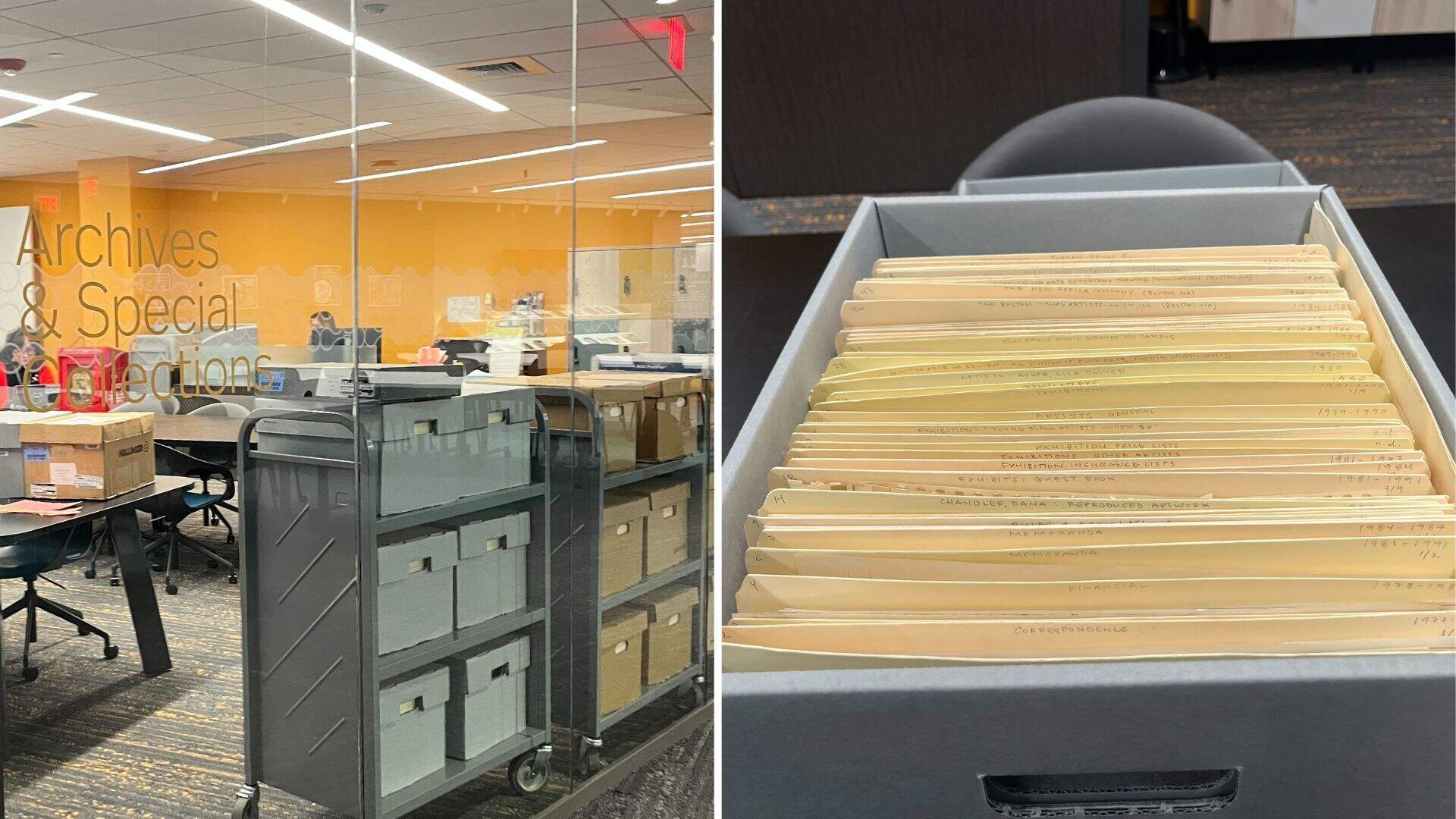
Physical archives are usually tied to institutions, including universities, libraries, museums, historic societies and even churches. Navigating these spaces can be intimidating and confusing. Sometimes it’s hard to know where to even get started. After coming up with a research question or topic, one of the tools I use to help narrow down a location when I’m looking for specific materials is ArchiveGrid. This online database compiles and pulls up archives that have items related to your query. This was how I knew where to find AAMARP records.
Northeastern’s archives are special. They have lots of materials on Black and brown life in Boston sourced from local individuals and organizations, including nonprofit Freedom House and civil rights activist Phyllis Ryan. It was no surprise that they had a large box of AAMARP ephemera, from meeting minutes to exhibition flyers to old letters.
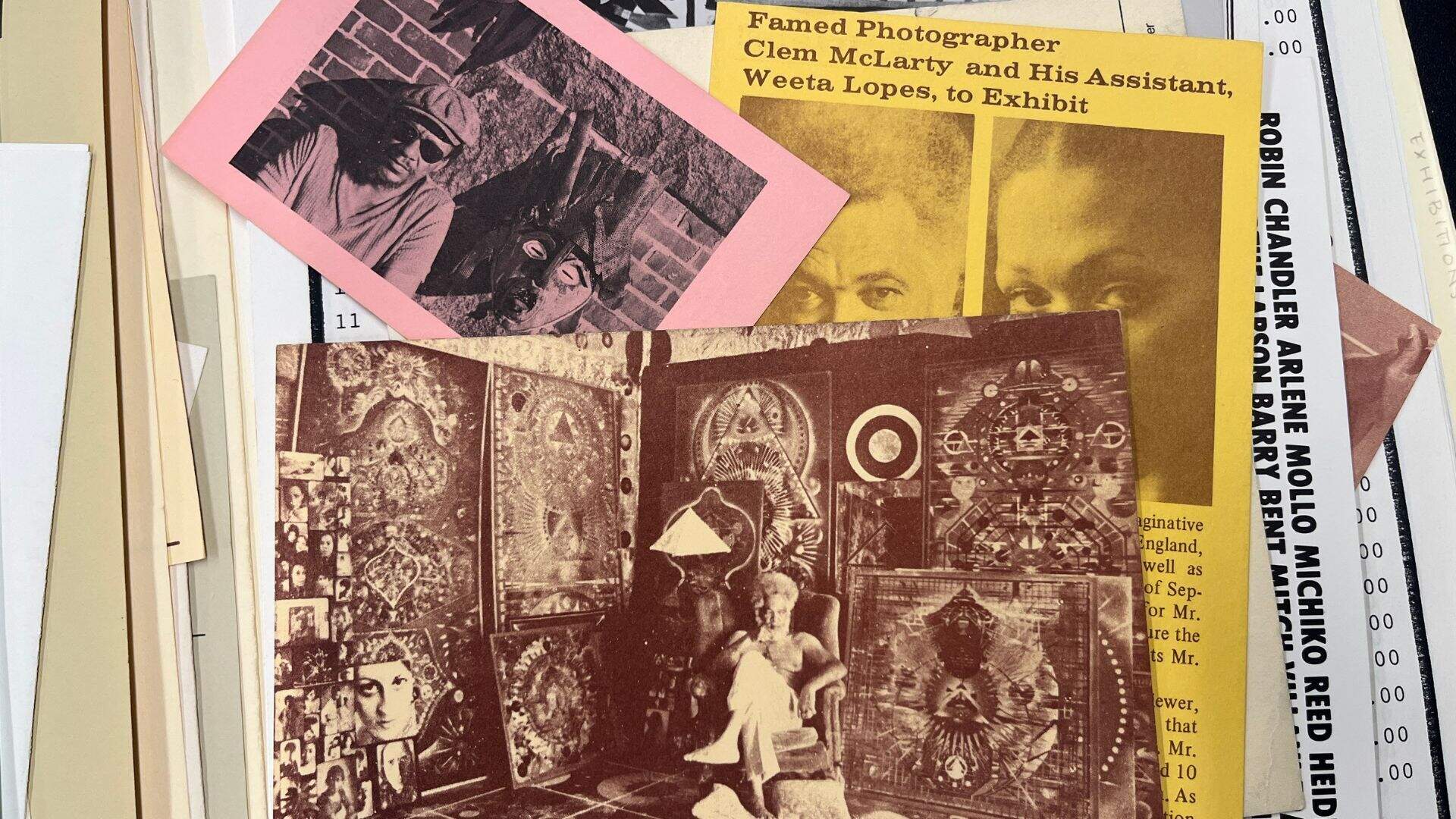
Setting up at the archive is like settling into a cozy chair with a good book. I sat down at the table and started shuffling through the box, which is subdivided into folders organized by category, topic or year. It’s common practice to use an empty manila folder or index card of some sort to mark where you’ve taken the folder out of the box so that you can return it to its exact spot. Same thing goes for the materials inside the actual folder.
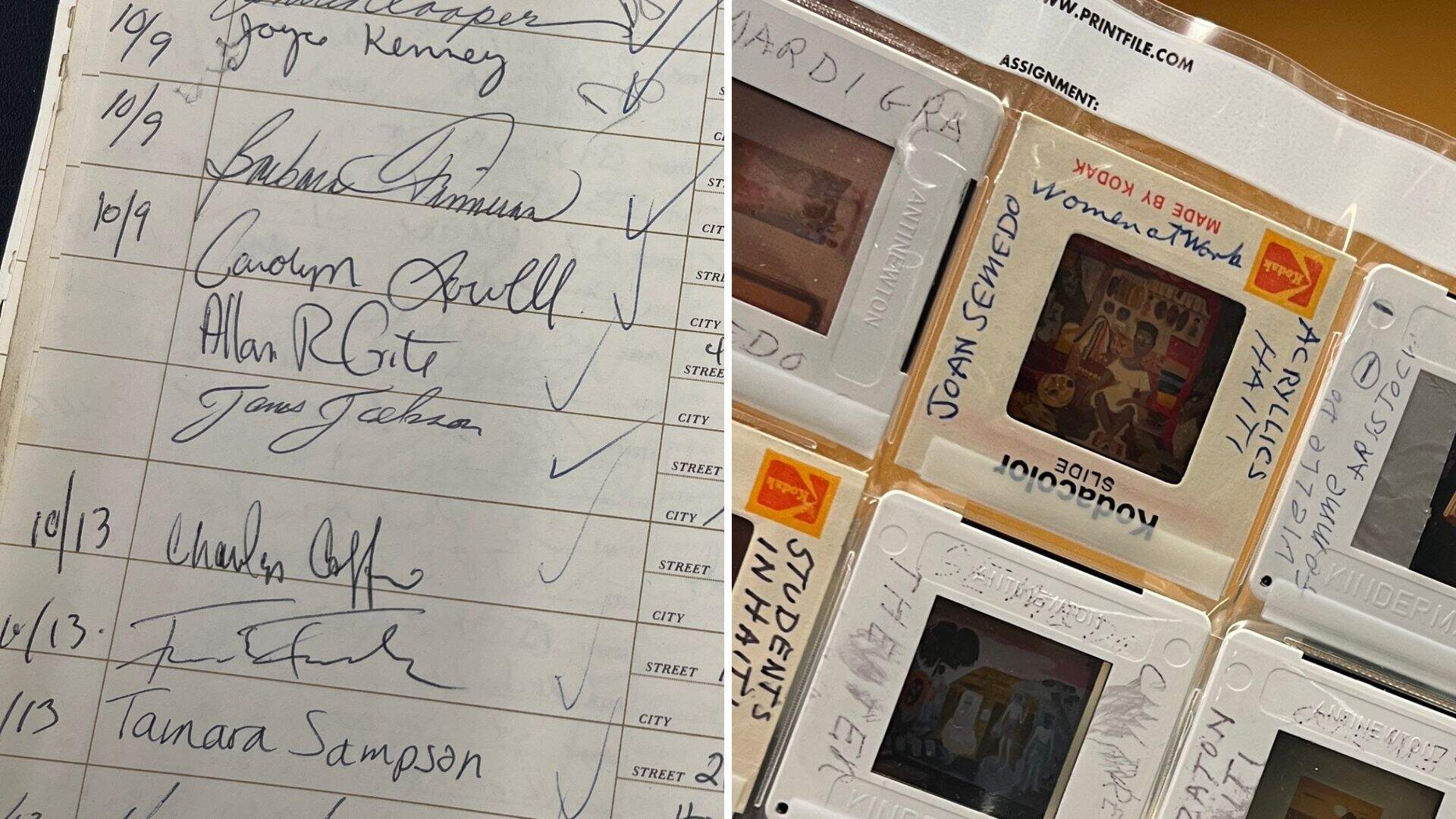
One of the folders contained sign-in lists of AAMARP visitors in the late 1980s. As I scanned the list, I came across a signature I knew well: Allan Rohan Crite. I spent over a year producing a three-part series on Crite that was published in the fall. It was a little serendipitous to stumble upon his name amid the countless pages in the AAMARP archive. Susan Thompson, whom I’ve interviewed multiple times, was also heavily featured in AAMARP’s archive. It made me happy to see her artistic life captured during the 1980s and ‘90s.
Finding old Kodak Kodacolor slides was perhaps the highlight of my archive trip. Found with other items from the '80s, the slides were taken by Roxbury-raised artist Joan Semedo, who was affiliated with AAMARP. During this time, Haiti seems to have been a big focus in her paintings. Holding the slides up to the light, I looked at these cool little snapshots into the past, including one of students in Haiti.
There’s a whole folder in the AAMARP archive dedicated to Semedo, but little came up when I searched her name online. Through an obituary that I suspected was hers, I got the name of a daughter. I was able to find her email and reached out to confirm the materials in the archive belonged to the person listed in the obituary. Semedo’s daughter responded and confirmed that the slides and other ephemera did indeed belong to her mother, who died in 2020.
According to Semedo’s obituary, she helped establish Negro History Month in Cambridge in 1968 and Black History Month in Brockton in 1983, and assisted in the formation of a national arts and sciences program for women in Trinidad and Tobago. Her work was also featured internationally for four decades as part of the U.S. Department of State’s Art in Embassies program.
Moments like these remind me of why I love archival work so much. Our past and present are intimately intertwined, and archives contain the evidence. We can learn a lot from these intersections if we allow ourselves to be curious about the past.