Support WBUR
Mass. close to reaching 'no kill' animal shelter status
Massachusetts is on the cusp of a big milestone in animal welfare.
It’s close to being what some advocates refer to as a "no-kill" state. That’s when at least 90% of animals in shelters get adopted.
Scott Giacoppo helps shelters get to that point. He heads national shelter outreach programs for Best Friends Animal Society. Giacoppo says if just 300 more dogs and cats are adopted this year in Massachusetts, it’ll reach the goal. Only four states —New Hampshire, Vermont, Rhode Island and Delaware — have achieved "no kill" status so far.
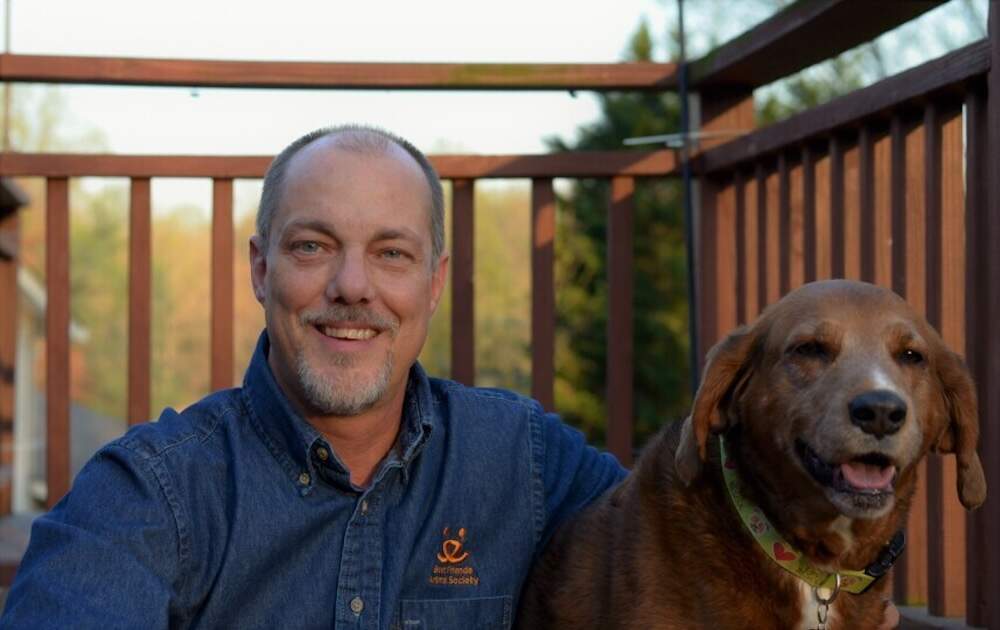
Giocoppo lives in Arkansas now, but he’s from Massachusetts. He traces his passion for helping shelter animals to his time working at the Massachusetts Society for the Prevention of Cruelty to Animals in Boston more than 30 years ago. He spoke with WBUR's All Things Considered host Lisa Mullins.
Interview Highlights
On having to euthanize animals in shelters:
Scott Giacoppo: "I started work at the MSPCA in the early 90s, and we didn't look at animal sheltering in the same way that we do today. We would just take animals in all the time, without question. And to adopt an animal, it was pretty difficult. You had to jump through hoops to adopt an animal back then. We had this multiple-page application that someone had to fill out, which included questions about their personal finances. If you owned a home, we had to prove that you owned a home with a copy of your mortgage statement. Or we had to get a copy of your lease saying you were allowed pets.
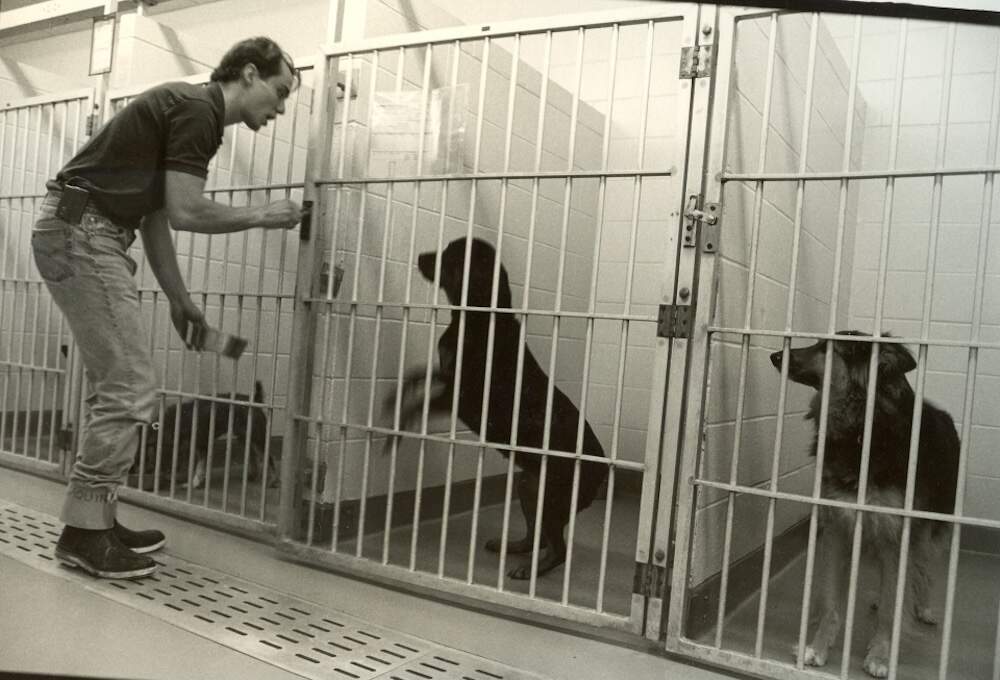
"And a lot of people were like, 'Forget it.' And they went to a pet shop. And as a result of that, a lot of animals were euthanized. I mean, most days, I would have to sit in that euthanasia room, taking the lives of animals for a good part of the morning, just to make space for the day."
On what has changed since then:
"Nowadays, it's more conversational … a nonjudgmental, conversational-style adoption. We want to make sure that [people are] ready to bring a new pet into the home, the lifestyles match. And our goal is to keep those animals in the home. A shelter's really no place for an animal. ... Obviously we don't want any animal dying in a shelter because they don't have space.
"And when someone calls up and says, ‘Hey, I can't take care of my pet anymore,’ the first response is, ‘Oh my gosh, I'm really sorry to hear that. How can we help?’ And oftentimes it's a financial hurdle that they have to overcome, where the [shelter] agencies will provide pet food. Oftentimes it's a medical issue, where we might be able to provide basic medical care or sterilization. I couldn't tell you how many times I've taken in cats in the Boston shelter — cats and dogs — because [the owner said,] ‘She keeps getting pregnant.’ Nowadays, that doesn't happen as much, because we have so many services for low- and no-cost sterilization."
On whether Best Friends, when it develops its benchmarks, considers that some animals aren't adoptable due to severe medical and behavioral issues — a factor that makes some advocates not like the term "no kill."
"Absolutely… and that's because data shows that about 90% of the animals coming into the shelters are actually adoptable. They're healthy family pets that just ended up in the shelter, whereas that 10% are the ones that are behaviorally unsound to put back into the community. They pose a public safety threat, or they're so sick that they can't be rehabilitated through medical means."
On what's preventing all shelters from reaching the 90% adoption goal:
"I'll be honest with you — I can't answer that question. I know that we’re working with numerous shelters in Massachusetts. There’s great progress being made every day by some really dedicated, committed, really smart people in Massachusetts making it happen and getting to that number. ... Sometimes it's a matter of helping them tweak a program, or they just started a program that needs to advance even further."
On how some people don't want to adopt from shelters because shelter animals are presumed to have problems or be inferior to pets from breeders:
"I think there is, to a degree, still that stigma. But I think that some of the work that's being done really, really breaks down that stereotype. And, for instance, we used to — when we posted pictures or promoted animals for adoption — [show] that animal sitting in a cage.
"Nowadays, it's more likely that you see a video of the animal playing out in a yard and sitting on a couch, because that's the reality. The reality is that these pets are great, and showing them in that light and not trying to scare people or make people feel bad about the animals that, 'Oh, I feel so bad, I have to get down and adopt them.' Those days are gone. Nowadays, it's, 'I look at this dog and I can picture that dog in my yard, on my couch,' you know? That's the key to adoption."
This segment aired on March 4, 2026.