Support WBUR
Boston's Saturday Morning Newsletter
What drought conditions in Mass. mean for spring gardening
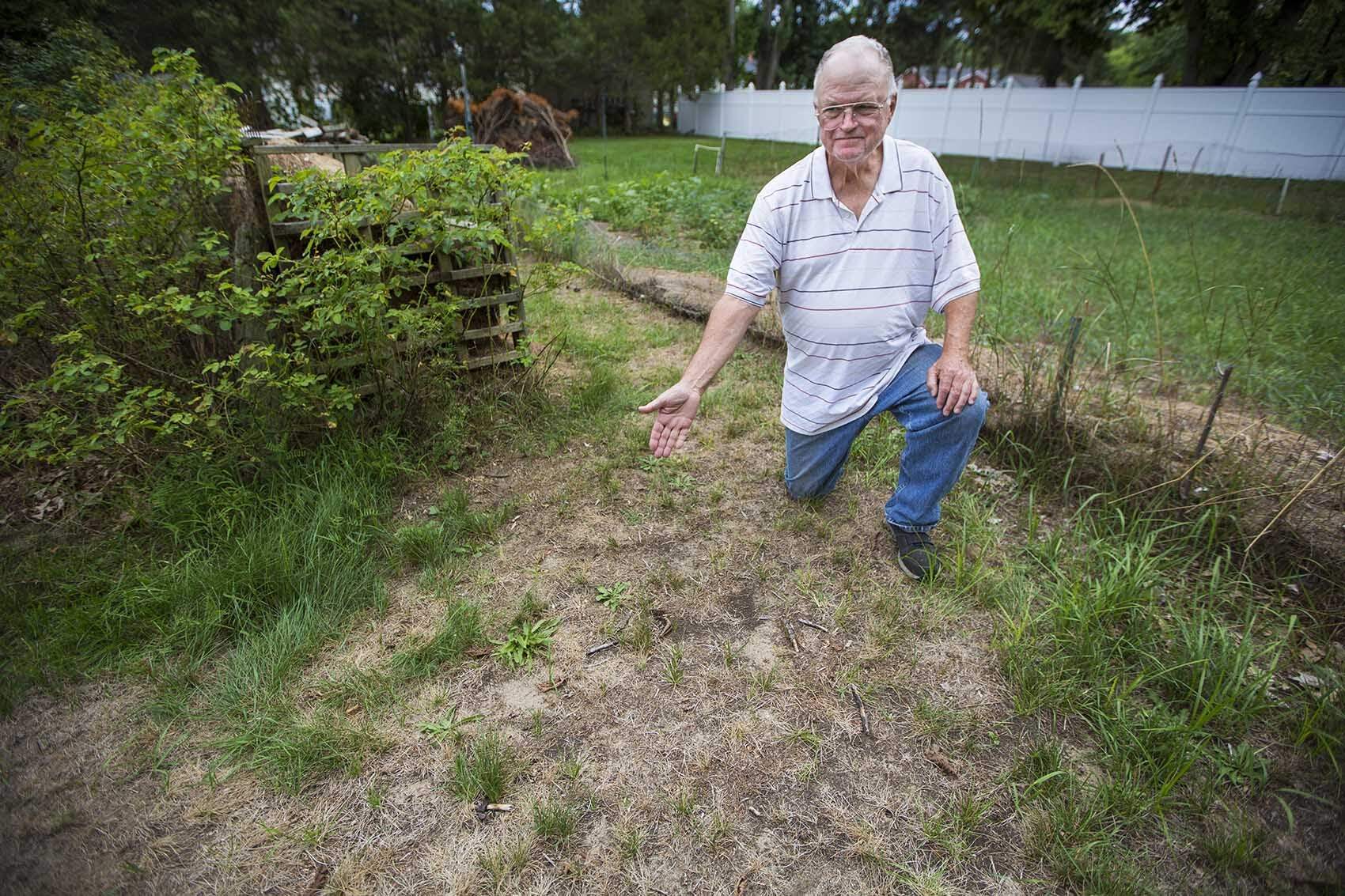
Editor's Note: This is an excerpt from WBUR's Saturday morning newsletter, The Weekender. If you like what you read and want it in your inbox, sign up here.
Spring planting season has arrived — right in the middle of a statewide drought.
Despite the recent rain and historic snowstorms this winter, all of Massachusetts (save for Martha’s Vineyard) is experiencing drought conditions right now. According to the most recent state data, northeastern and central Massachusetts are in a “Level 3” critical drought, leading to outdoor water use restrictions in communities as big as Worcester.
This state of dryness is nothing new, according to Vandana Rao, director of water policy for the state’s Executive Office of Energy and Environmental Affairs. Rao says most of the state has been contending with some level of drought since 2024.
Rao, who is also the co-chair of the Massachusetts Drought Task Force, does expect some regional improvements when the group releases its March data in the coming days, due to the recent rain, warmer temperatures and snow melt. But regular droughts are expected to play an increasingly big role in New England’s future due to climate change.
So, what does all this mean for your garden?
While it may not be optimal, Rao says gardening and landscaping during a drought is possible. “ I think it's just a switch in our mindset in terms of what we are thinking as the ‘perfect lawn’ versus, ‘conditions are tough now because we're not getting enough water,’ ” she said.
I spoke to Rao to learn more about gardening in a drought. She shared a few tips on what to plant and how to water your garden when conditions don’t allow for heavy water usage.
Here’s our conversation, lightly edited for clarity:
Hanna Ali: Did the snow we received this winter help at all with the drought?
Vandana Rao: “Any kind of precipitation helps, but I guess the answer is more layered than that — how much snow we got, what is the temperature in the air at the time that that snow came down, how much moisture does that snow really have?
“If the temperatures are really low, then the moisture content in that snow isn't very much. So although it may feel like, ‘Oh, we have three feet outside,’ the equivalent of three feet in terms of water equivalent — if you melt that down —was about two and a half inches. So not a whole lot.
“Also, at that time of the year when there was a lot of snow, our ground was frozen because it was the thick of winter for us. So it's not as if that moisture or that water was getting into the ground or was even melting because the temperatures were below freezing.
“Now, of course, it's a different story. Because the temperatures have gone up since that time, most of the snow has melted. Our ground is also thawing, so all of that snow melt didn't make its way only into our storm drain, it has also made its way into the ground, has made its way into local streams and ponds and other water bodies. We're starting to see that collection of water as we monitor water in all these different water bodies. We're certainly seeing them go up.”
HA: What does that mean for the plants, vegetables or fruits growing in our gardens?
VR: “ So it's a little hard to say how long this drought will last, right? How much rainfall will we get over the summer? How high are the temperatures going to be? Because [high temperatures] means more of that water gets evaporated back into the atmosphere, and not that much is available for plants and other uses. The temperature has a big role to play in what happens to the water.
“However, having said that, we are in a Level 2 or a Level 3 drought. So as we are looking to put in new plantings outside, for example, or even taking care of what we have, we just need to keep in mind that these droughts will have an impact on how much water we may have available for watering. Because if these conditions remain at the levels they are, or get worse, there will be restrictions on outdoor watering.”
HA: So, what should gardeners doing their spring planting know about planting or watering during a statewide drought?
VR: “We want to make sure that we are planting things that take less water. Plant drought-tolerant species, plant native plants that will withstand these types of low precipitation periods.
“You can also choose where to plant in your landscape, so that the soil is not drying out quickly. And you can do plants that are specific to that soil type and the sunshade ratio. If you need to irrigate — usually the amount of water we get from rainfall is enough — but if you need to irrigate, have spot treatments, have drip irrigation. There are ways in which you can use water outdoors that's much more conservative. If there's a way for you to collect the rainfall in rain barrels in your yard, rather than using potable water that comes from your taps, that is another way to continue to maintain a landscape while using captured rainwater to water your plants.
“Then, check on the timing of watering. People seem to think that you have to water every day, every other day. You don't really. Plants do just fine with less frequent watering. I don't put any water on my outdoor landscape and it does just fine. And during a drought, yes, there are some patches of brown and it looks a little drier, but that's the way everything is in the landscape, not just my yard. So I just let it go, and it comes back up when it starts to rain.”
P.S.— Interested in planting a garden with native species, but not sure where to start? Rao says look no further than the state’s native plant palette. “There are other people who put together palettes that you can use, or you can create one yourself,” she said, adding that native planting “is something we're starting to see more and more people embrace.”