Support WBUR
Jean Appolon throws open the doors to Haitian dance in Roxbury
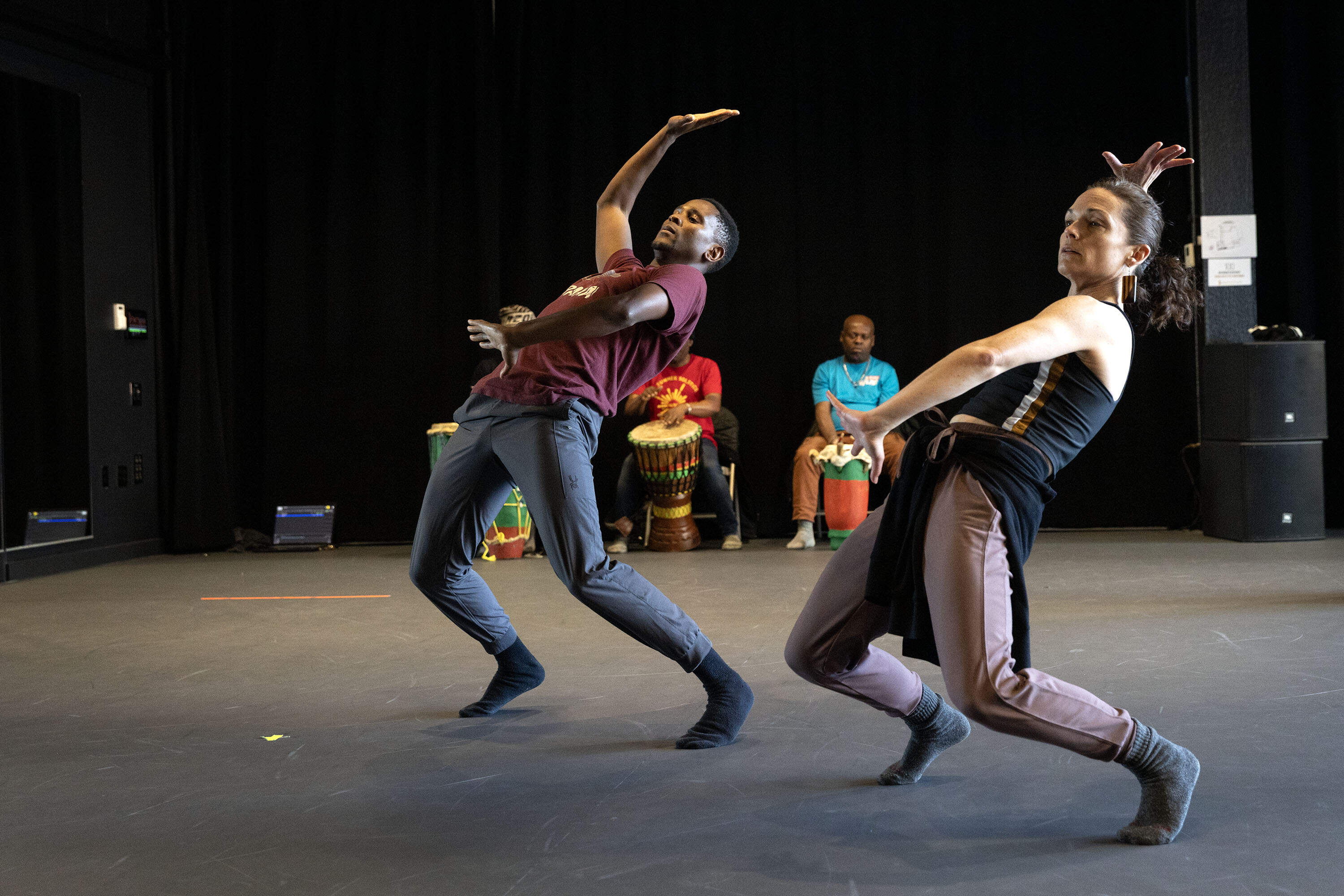
It’s pretty easy to spot Jean Appolon Expressions Dance Center in Nubian Square by the number of people stopping to stare through a large glass window. They’re looking at the dancers inside, who move sinuously on bare feet to the beat of drums.
Founder Jean Appolon likes to keep the window open during rehearsals for this very reason. It’s an invitation of sorts.
“I think people have always been asking to have a dance studio in the neighborhood,” said Appolon. “Sometimes people even knock on the door and ask to come in and watch.”
The Jean Appolon Expressions Dance Center opened in late January. Its location in the historic and predominantly Black and brown neighborhood of Roxbury is a bonus for the organization, which has been teaching and performing Haitian folkloric dance for the past 30 years.
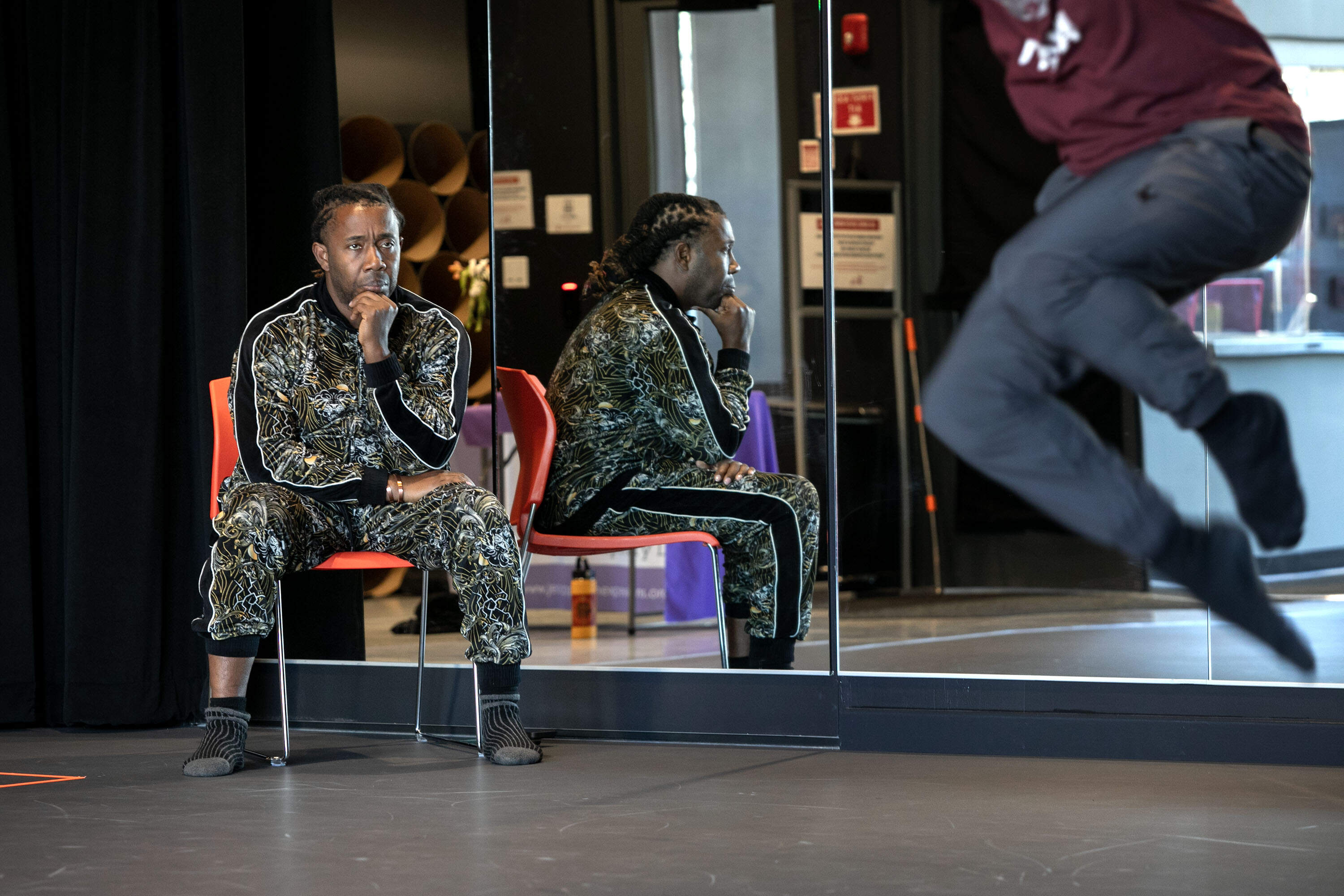
“It’s a more central location for a lot of our Haitian community members,” said Meg McGrath, executive director. “A lot of our community partners and the schools that we work with are here. So it's a really good fit for our first home.”
The space features dark walls and a wood floor. It’s easily rearrangeable, which makes it perfect for the many different programs Jean Appolon Expressions leads. Future plans include installing project equipment and theatrical lighting.
The center is a dream come true for Appolon, who left Haiti and came to Massachusetts in 1993. Before immigrating, Appolon studied folkloric dance under Viviane Gauthier, who ran a school in Port-Au-Prince. For him, dance is more than just a hobby — it’s a necessity.
“ Movement does a lot. It's just like food in your body,” Appolon said. “And when we talk about folkloric dance, it's like eating your traditional food that is good for your body and can nurture you.”
Appolon founded Jean Appolon Expressions in 1996 after he noticed something was missing from the dance landscape. “ I really wanted to have a space where I could really have unlimited access to teach Haitian folklore. Because when I came to Boston 1993, I did not see any folklore.”
Haitian folkloric dance is a tradition that survived slavery and colonialism. Through movement, it helps preserve the island’s culture and its history as the world's first free Black republic.
“We focus on the Haitian rhythm because the forces that we are using, the elements that we're using are very powerful,” said Appolon. “You can really find power through movement and also through community building and dancing together.”
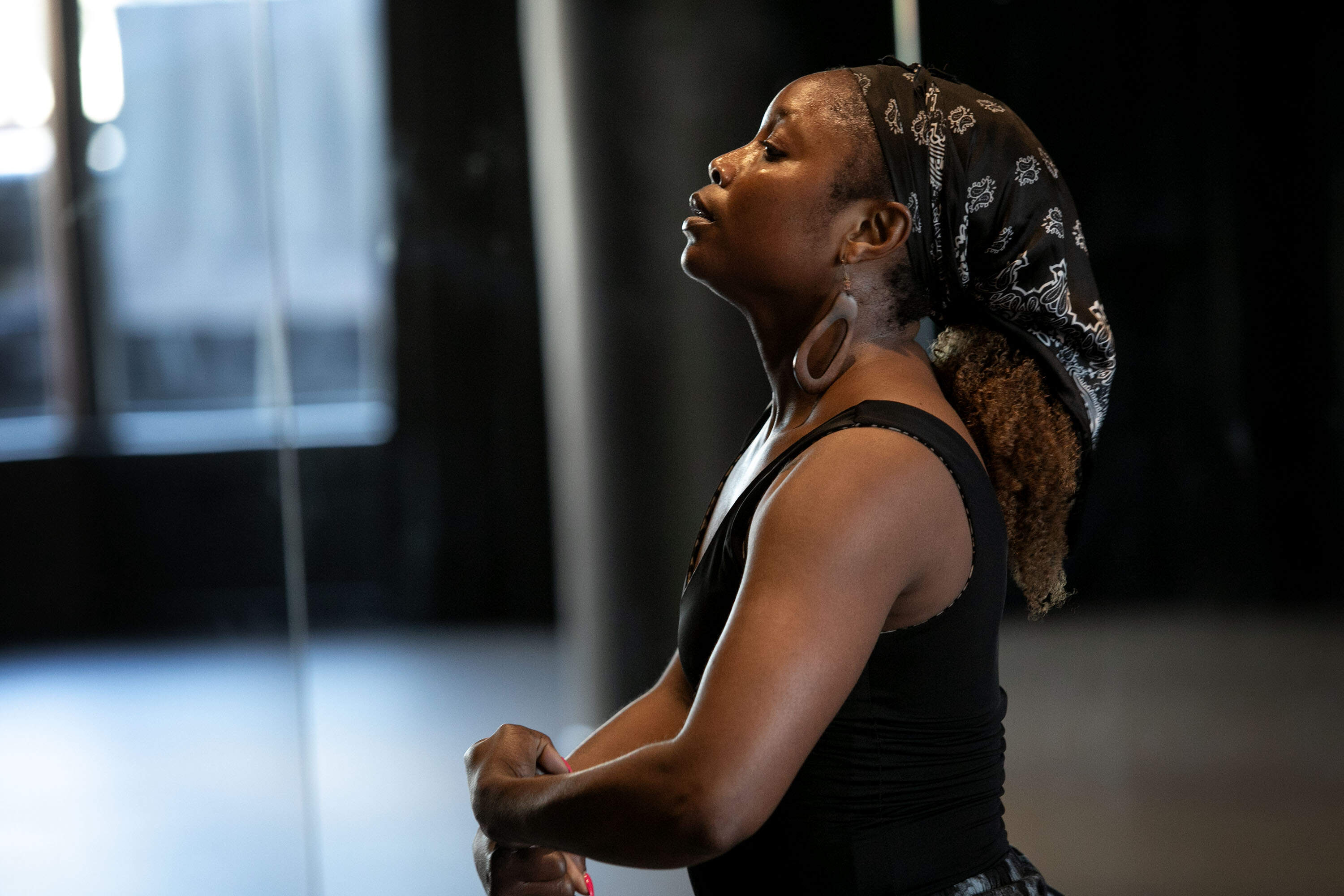
Teaching others about folkloric dance is a way for people to learn more about Haiti. Recent and historic anti-Haitian sentiment has perpetuated many misconceptions about the island’s culture.
“ Folkloric dance gives young Haitian immigrant kids a better sense of themselves,” Appolon said. “It also gives them a better kind of rooted confidence, to know that ‘I'm from Haiti and there’s beauty in our culture too.’”
While Jean Appolon Expressions is about dance, it’s also an organization that prioritizes human connection. Both Appolon and McGrath have seen how access to dance classes and workshops can change someone’s perspective.
“ We see it in our creative dance for kids class,” said McGrath. “Immediately after one session, they're finding all of these commonalities, even though they're coming from different neighborhoods and different backgrounds.”
Jean Appolon Expressions has a slew of programming planned for the year, including their annual Summer Dance Institute which has served over 2,200 youth in Boston, Haiti and the Dominican Republic.
“ It's a dream for us to continue to connect Haiti because we wanted to build that bridge between Haiti and Boston,” said Appolon. “A real bridge that can really help Haitians and Haitians abroad understand how they can still be in connection with their roots.”
The hope is that the new dance center will be a creative beacon for community members and artists, including other professional dance companies. For Appolon, one of the most important things is that others, especially the youth, see what’s possible.
“ This space really kind of allows us to really dream even bigger,” he said. “I want other kids to know that it's tangible. That they can be part of it too.”
This segment aired on May 15, 2026.