Support WBUR
Floating wetlands bring back Boston's natural landscape lost to development
There’s an island in South Boston’s Fort Point Channel that wasn’t there just days ago.
In less than a week, engineers and landscapers built a 10-ton floating wetland from recycled pipes, stainless steel and compost. They mulched and planted it by hand, right there in the channel, their footsteps squelching as water seeped through the dirt.
“ I really want to see more people bringing their attention to the waterfront,” said Chris Mancini, executive director of Save the Harbor/Save the Bay. The nonprofit worked with real estate development firm Alexandria to install the artificial wetland in the waterway.
With a little TLC, he said, Fort Point Channel could be “spectacular,” he said.
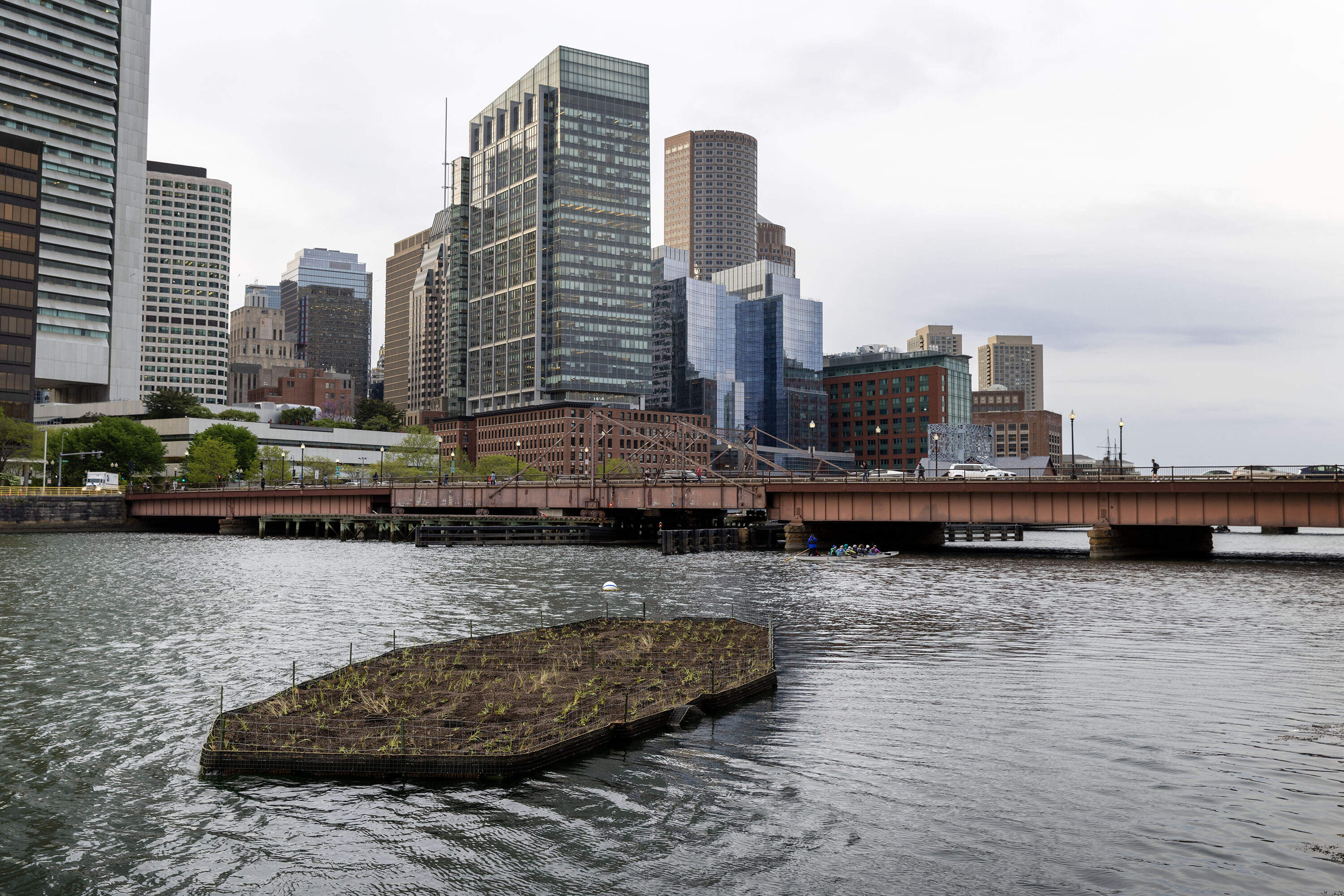
The 1,400-square-foot wetland has the footprint of a small house. For now, it looks a little spare, like a raft of mud with a few sprigs of green. But its creators hope it will eventually foster a tiny, thriving ecosystem.
The island is home to about a dozen salt-tolerant plants native to New England. Over time, mussels, clams and sponges are expected to latch onto the underside of the wetland, as fish and zooplankton find shelter in its dangling roots.
Designed by the Scottish company Biomatrix Water, the wetland is like a “giant planting basket” floating in the channel, said the company’s founder, Galen Fulford.
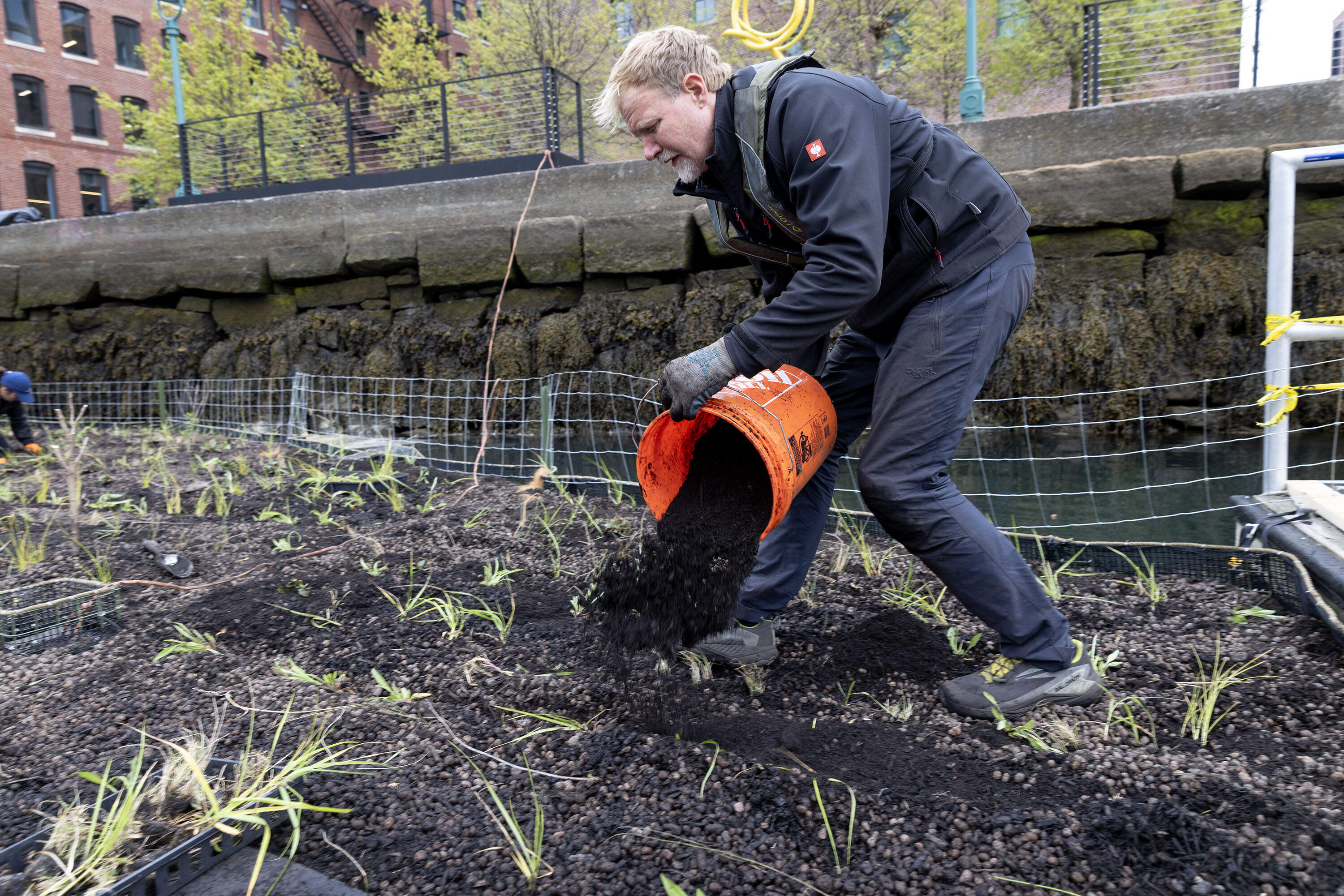
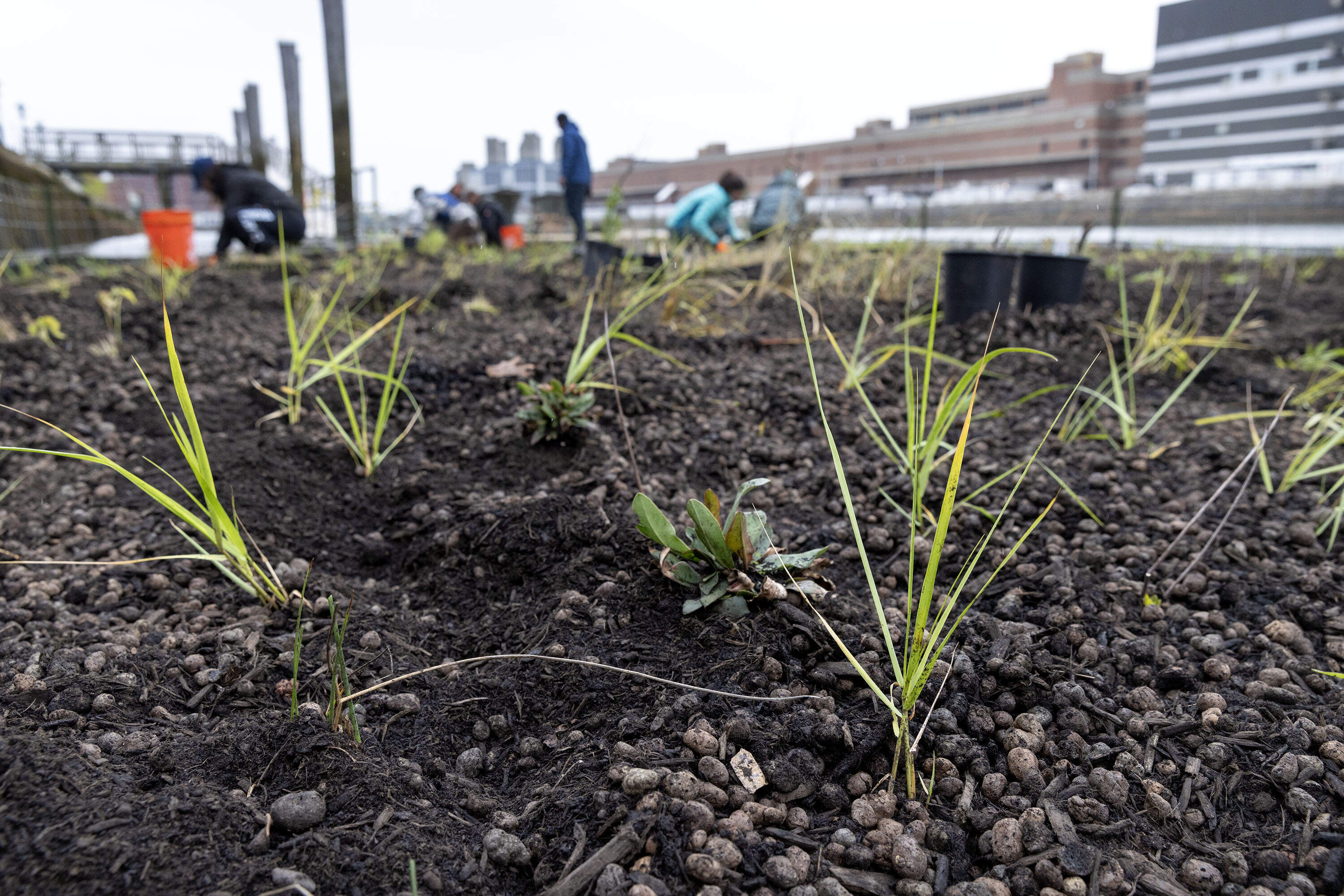
The bed of dirt and mulch lays atop buoyant tubes, and is held in place by wiring along the perimeter. Native plants are laid in the rows between the tubes, so their roots can extend into the water below.
The project aims to bring back natural “edge habitat” — the landscape between water and land — that disappeared when developers reshaped Boston’s coastline with landfill and seawalls. Those original wetlands provided habitat for birds, fish and other animals, protected against flooding, and helped clean the water. Recreating those destroyed coastal environments can help protect cities as climate change brings rising sea levels, increases stormwater runoff and disrupts ecosystems.
The Fort Point floating wetland is one of more than 200 projects Biomatrix has installed in over 20 countries. But this one is unusual because it’s in salt water — a much harsher environment than the company's other freshwater projects.
A similar floating wetland has been a seasonal feature in the Charles River since 2020. Each year, after the winter river ice melts, members of the nonprofit Charles River Conservancy use a tugboat to shepherd the island from its hibernation spot at the MIT sailing pavilion back to its post near the Longfellow Bridge.
Every summer for the past decade, toxic algae has bloomed in the river, driven in part by warmer weather and heavy rain. The artificial wetland is Charles River Conservancy's executive director Laura Jasinski's attempt to combat the perennial problem.
She partnered with Max Rome, then a Ph.D student at Northeastern University studying urban water quality, to set the Charles River island afloat.
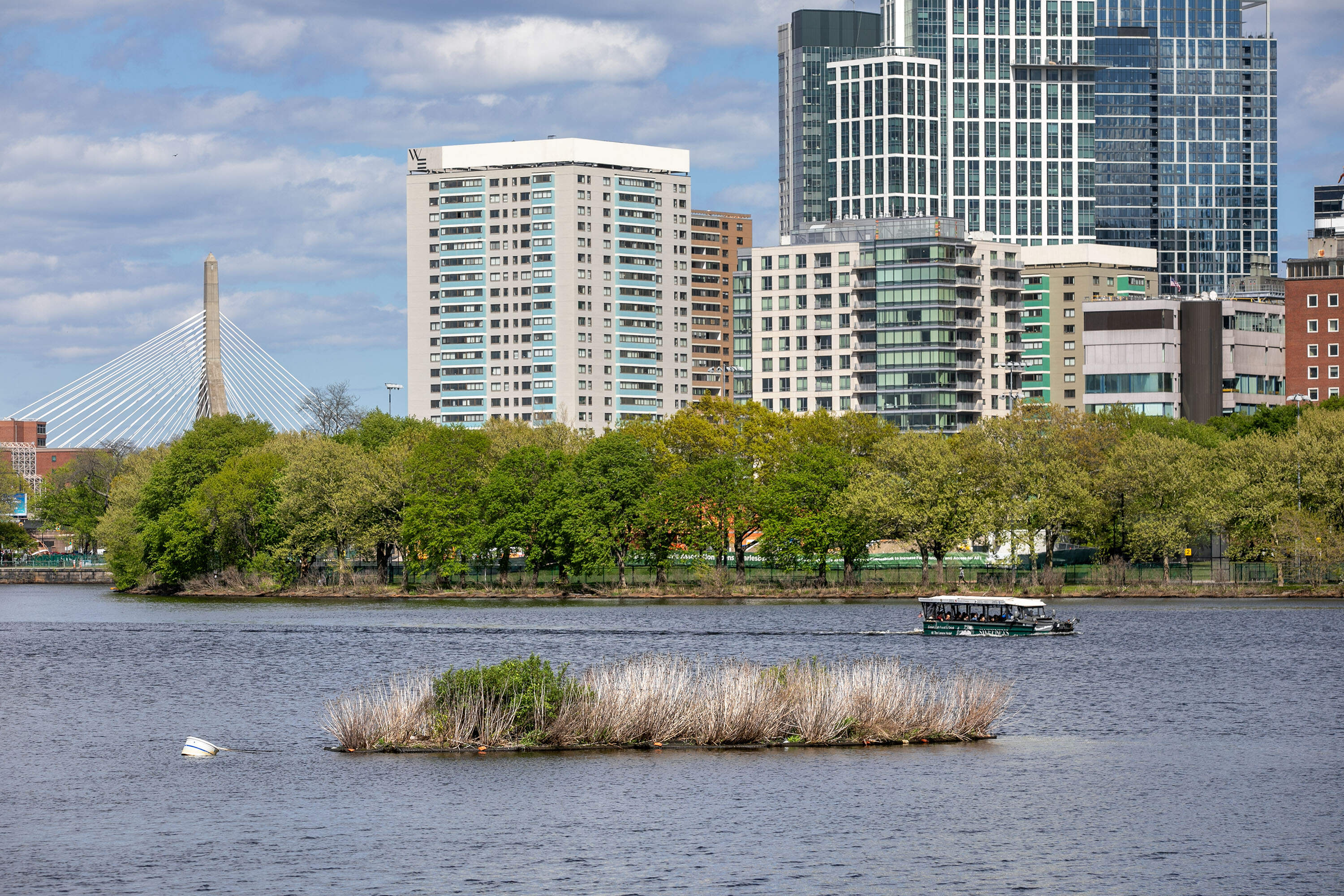
A Boston duck boat passes the Charles River Conservancy's floating wetland, downriver of the Longfellow Bridge. (Robin Lubbock/WBUR) “The Charles River floating wetland was really our way of trying to create a demonstration project,” said Rome, now the director of green infrastructure for Boston.
Rome studied the wetland’s effect on the river and wrote his dissertation on the results.
Because the water in the Charles is always moving, he wasn't able to measure the wetland's impact on water quality. But he did observe more algae-eating zooplankton hiding out in the long, underwater roots of the installation compared to other locations in the river. And he suspects its plants can soak up nutrients that enter the Charles via stormwater runoff.
He said preventing pollution from entering the Charles would be a more effective long-term solution to algal blooms, but the wetland could help.
“If you put this vegetation right in the river,” said Rome, “you can get some of that benefit, at least locally, very quickly.”
Fulford of Biomatrix agreed that a single wetland can’t be a silver bullet for water quality. But he called each floating island an “incremental step” in the right direction.
That’s why Jasinski wants to install more.
She aims to line Broad Canal, by MIT’s campus, with 20,000-40,000 square feet of wetland. It could form a kayak trail, she said, so people can appreciate the different plants and critters that take up residence in the new space.
Further downriver, the Massachusetts Department of Transportation project is working on plans for a potential bike path atop floating wetlands behind the Museum of Science.
Wetlands in other U.S. cities, like Baltimore and Chicago have been popular with residents, visitors, and local wildlife alike. Chicago’s Wild Mile has recently become the playground for the North American River Otter, a species that once went nearly extinct in Illinois.
Fort Point Channel's little island should look completely different by the end of next summer, according to Fulford. He expects that the saltwater plants will spread, local critters will move in and birds will find new nesting spots.
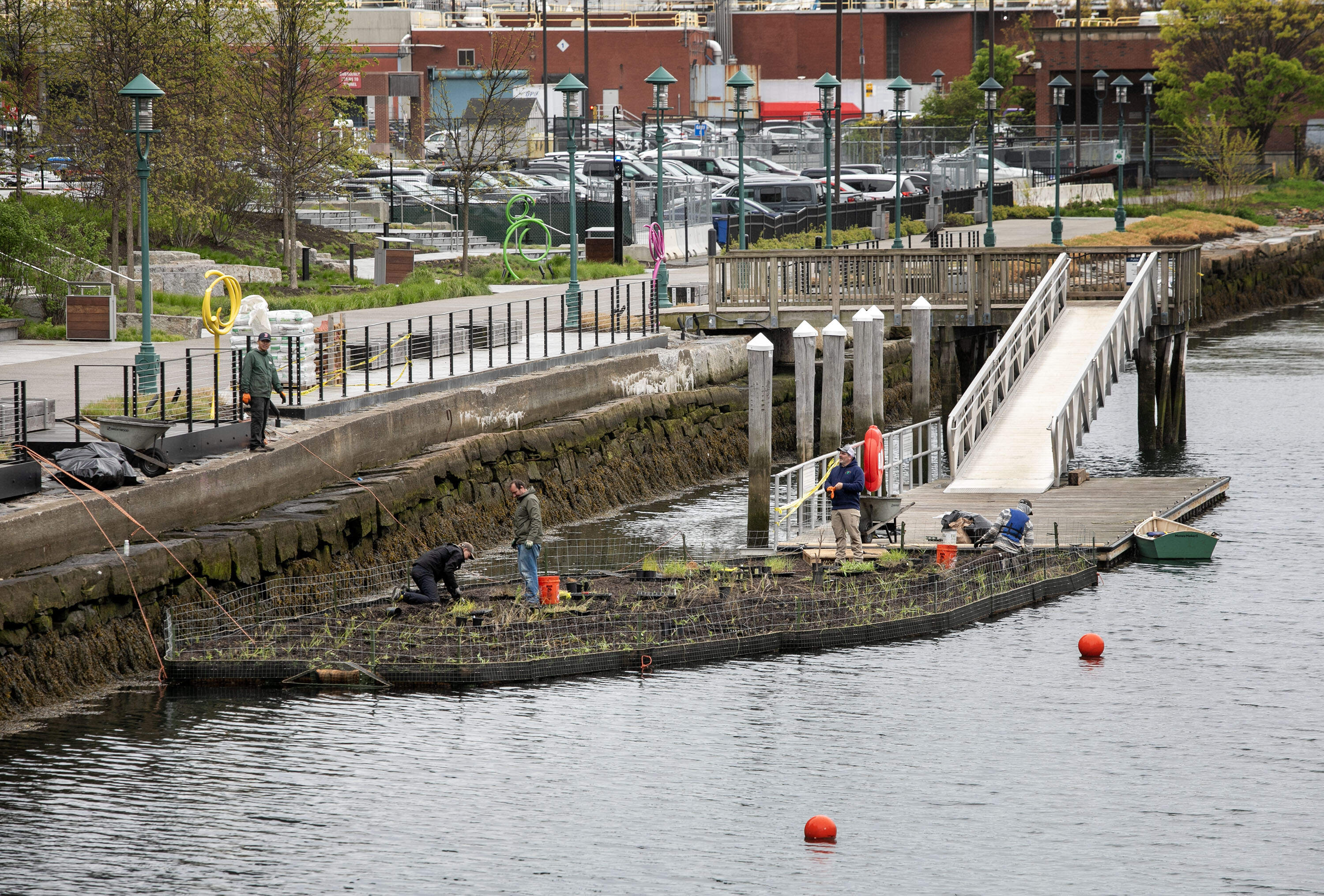
Biomatrix Water staff and volunteers work on planting grasses and other marsh plants on the newly constructed floating wetland in Boston's Fort Point Channel. (Robin Lubbock/WBUR)
This segment aired on May 26, 2026.