Support WBUR
What happened to Sports Illustrated?
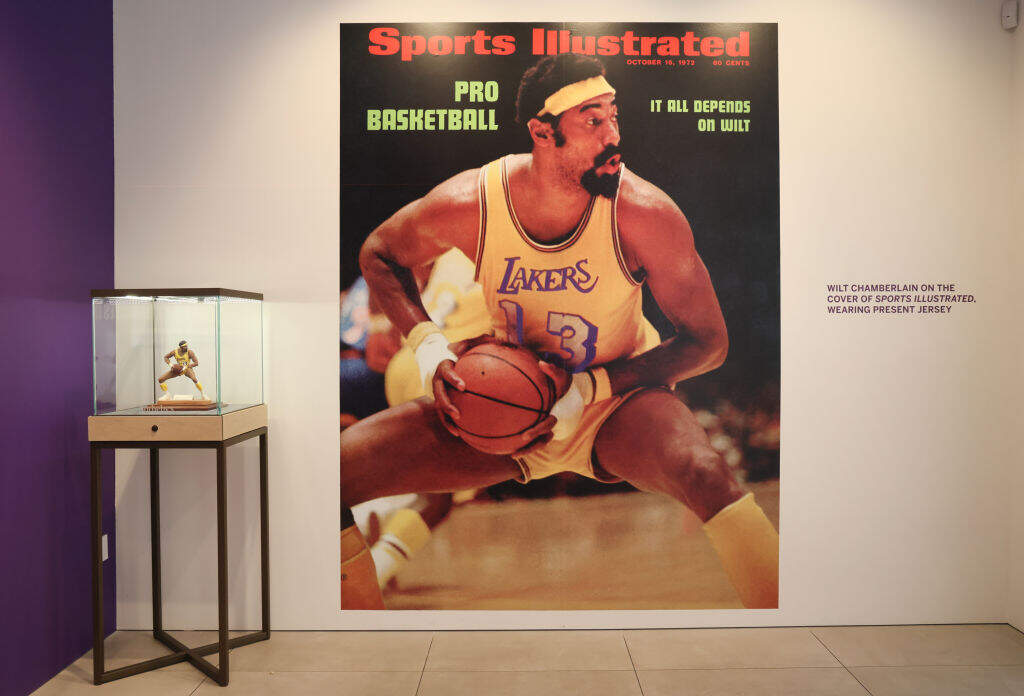
Sports Illustrated recently pulled author profiles and articles from its website after reporting found they were generated by AI.
What does the incident tell us about AI in journalism today?
Today, On Point: SI's continued decline and the rise of AI in journalism.
Guests
Maggie Harrison, writer for Futurism. Author of the recent article “Sports Illustrated Published Articles by Fake, AI-Generated Writers."
Richard Deitsch, media reporter for The Athletic. Previously worked for 20 years for Sports Illustrated. Host of the “Sports Media with Richard Deitsch” podcast.
Also Featured
Lynn Walsh, assistant director at Trusting News. Former ethics chair and national president for the Society of Professional Journalists.
Transcript
Part I
MEGHNA CHAKRABARTI: Sports Illustrated. You used to go to the magazine for the best in sports journalism. Making the cover of SI could turn an already big name in sports into a global superstar. It was the magazine that loved sports for the sake of sports, while also bringing a literary creativity that turned sports articles into great sports stories.
Okay, so that was a long time ago. And in more recent times, SI, let me just put it this way. For those of you old enough to remember, you remember there was that ABC Wild World of Sports intro from the late 1970s? The one where that ski jumper in the intro who represented not the thrill of victory, but the agony of defeat.
That guy who crashed so badly while coming off the ramp that honestly, he just could not look away? Yeah, that's the Sports Illustrated of recent years. So you'd think things couldn't get much worse for the magazine. And then, along comes SI writer Drew Ortiz. He quote, grew up in a farmhouse surrounded by woods, fields, and a creek.
His profile read, that's what it described him as. He quote, spent much of his time in his life outdoors and is excited to guide you through his never-ending list of the best products to keep you from falling to the perils of nature. End quote. Ortiz's profile had his image, and his email, ortiz.drewsireview@gmail.com. What could possibly go wrong?
This is On Point. I'm Meghna Chakrabarti. Something did go wrong. And that is, Drew Ortiz wasn't a real writer. He wasn't even real. Maggie Harrison, who or what is Drew Ortiz?
MAGGIE HARRISON: It's a great question. It's great to be here. Thank you for having me. Drew Ortiz, like you said, he is a fake writer or was a fake writer. He's since been deleted with a fake bio and an AI generated face that we're able to find at a website that sells AI generated headshots. His purpose has been disputed.
Our sources at the content provider alleged that his fake profile was used to conceal AI generated content. Sports Illustrated and the Arena Group allege that he was a very robust pen name for an individual writer, which is a very interesting claim and a very interesting take on the use of a pen name.
CHAKRABARTI: Okay, so first of all, let me introduce you properly. This is Maggie Harrison. She's writer for Futurism. It's an online publication that covers the future of science and tech, and she broke this story recently. It was headlined, Sports Illustrated published articles by fake AI generated writers. So to be clear, no matter what certain representatives of SI and its owners say, you feel confident from your reporting that Drew Ortiz is not a he, but an it.
HARRISON: Yes, exactly. Drew Ortiz is not a real person. We cannot find a trace of him anywhere else, and in general, I have yet to meet a human with an AI generated face that we purchased from an online marketplace.
CHAKRABARTI: (LAUGHS) I'm sorry. This is actually a very serious issue in journalism, and I don't mean to laugh, but the kind of, there is a little edge of ridiculousness around it.
I've, all week long, I've had to train myself not to say he, and just to say it.
HARRISON: It's very strange, and like you said, it's very serious, but at the same time has just this very unique absurdity on so many different levels.
CHAKRABARTI: Okay, so what first put you on to the fact that some of the articles, and he was doing a lot, it was doing a lot of product reviews, right?
So what first put you on to that some of these things might have been generated by AI and not a real person?
HARRISON: That's a, it's a very good question, and we do have a lot of ongoing reporting that we're doing. So there are some things I can't quite speak to. But we, there were similar reports that came out some similar allegations at a separate commerce site, the USA Today affiliated website Reviewed, which is owned by the newspaper giant Gannett. They had made allegations of not just AI generated content being published on their website, but of AI generated people as well, which, we've been covering at Futurism.
We've been covering a lot of AI journalism, since CNET broke in January, we've been following it, AI is a central beat for us. And AI journalism, of course, as somebody in the media industry and just as a consumer of media is fascinating and very important. So we've been following it very closely.
But the allegation of, we've seen a lot of AI efforts at this point, but the allegation of fake people to publish it under, that was a very new and striking claim. We just pulled a few threads, and we were able to, so I guess a very useful way to frame it is that we were looking for it.
CHAKRABARTI: Okay.
HARRISON: We were looking for this kind of content somewhere else and we happened upon it at Sports Illustrated and, if I hadn't been looking, I'm sorry --
CHAKRABARTI: No, I was going to say, so given that you were tipped off. That's what generated the search, as you said. But I think you're about to say, if you hadn't been looking for it, would you have known that it was there?
HARRISON: No, if I really looked closely, I would have thought that guy's face is very strange. (LAUGHS) But in general, I probably would say that's some really weird editing that they did, or, I wouldn't chalk it up to this guy is probably fake, which I think is a very, to me, it marks a very strange and important turn in just, life again, as a consumer of media and the questions that we ask ourselves and the quest to have media literacy.
But yeah, so if I was an everyday consumer, especially, it's volleyball blogs, it's blogs about fishing bait. It's not anything. It's not hard-hitting news that might be being published under a fake person, or I'm not necessarily thinking is this misinformation? But it is, because of the nature of the content and just because of the fact that this isn't something I'm looking for yet, as some somebody who's just a regular consumer of news online, I probably wouldn't have noticed.
CHAKRABARTI: It's interesting because the product review angle fascinates me because it may not be one of the in-depth sports articles, but it's designed to sell something to people. So we'll get back to the business aspect of this in a second, but can you give me some examples? You mentioned volleyball and as you went through Drew's articles, the volleyball one stands out because you quoted some language from its article on that.
HARRISON: Yes, it's very stilted and very strange. Like some of the copy is you know, passable enough, but I think the way I've found very useful to explain is that it's if an alien came to earth and had access to every single textbook that existed about volleyball, had every text available, had all of the information it needed, but also had no concept of what it was to be in a physical body and actually didn't know anything about volleyball.
That's how the text itself reads. Like I wouldn't read it and think this person knows volleyball. I would think this is a really strange way to discuss buying a volleyball or fishing bait or whatever it, what have you.
CHAKRABARTI: Well, so you quote an Ortiz article where the article warns that volleyball, quote, "can be a little tricky to get into."
I'm sorry. I shouldn't laugh. This is serious, especially without an actual ball to practice with.
HARRISON: And again, it is funny, like there are those two sides. There's a seriousness side and there's that absurd, just bizarre side to it. But yeah. And again, it's not incorrect.
Like I would, if somebody said yes or no, is this correct or incorrect? I would say it's probably right that it would be tricky to play the game. Should you not have the equipment to play, but it doesn't really offer value to the reader. I'm sure if I clicked on an article that was about the best volleyballs to buy, I wouldn't need that explained to me.
It's a lot of like fluffy filler.
CHAKRABARTI: Okay. Now aside from just looking through the articles and being like, this is weird. It doesn't sound like it was written by a human. You actually talk, do you talk to some people involved with the generation of this particular content?
HARRISON: Yes, so I spoke with several people who were close to the creation of the content at the third-party provider of the content, which we don't name them in the article, but they were named by Sports Illustrated. After the fact, once we published the article, Sports Illustrated came out with a statement, they named the third-party provider, it's called AdVon Commerce, and we have spoken to insiders at AdVon Commerce who were close to the creation of Sports Illustrated and the Arena Group content specifically, and they said, it's AI generated.
We have an AI operation and Drew Ortiz is one of several profiles that are fake.
CHAKRABARTI: At Sports Illustrated?
HARRISON: At Sports Illustrated, specifically.
CHAKRABARTI: Okay. Sports Illustrated and its owner, the Arena Group, have pulled all of the Ortiz articles off of SI. Have they pulled anyone else's articles off?
HARRISON: Yes, David Ortiz has since been deleted. They actually deleted a full section of the website where a lot of this specific content was housed. It was seemingly operated and published mostly. We haven't traced it or published; we haven't traced it to other areas of the website. But it was published to this site called Reviews and over at TheStreet, which is a sister website of also owned by the Arena Group, a sister website of Sports Illustrated.
There was a similar section. It's titled Reviews. There's all kinds of, these articles published under various fake names. But we had noticed it was very strange. So they would have ... published articles for a while. And then David Ortiz was then replaced by a new fake person named Sora Tanaka.
And this happened in some other instances too, where these fake profiles were intermittently scrubbed off of the website and just replaced with a new fake person. And then a few weeks ago, they were seemingly replaced by all real people, real contractors who work for this third-party company, which, and no editorial update, like throughout all of this, there was not one notice from the editors at either the third party or at Sports Illustrated to say, "Hey, we made a major editorial change to all of these articles."
And actually, it wasn't written by the person that we said it was written by. And then after we had emailed the Arena Group, they were deleted.
CHAKRABARTI: Okay. So that's important to note, right? That the editorial staff at Sports Illustrated and the Writers Union were not involved with this at all. In fact, the Writers Union has put out a pretty lengthy response statement on the AI, Drew Ortiz scandal at SI saying they too are demanding answers and transparency.
So take a quick second here, Maggie, and describe to us, someone was making these decisions. Were you able to find out who and why? What was their intent?
HARRISON: So I don't want to speculate on the decisions being made in the C suite, and the Sports Illustrated, the Arena Group C suite, and we do have some forthcoming reporting coming out about this but yeah, it's an interesting question, and it's a very, again, I keep going back to the word strange and absurd, it's a very bizarre thing to do on especially a website like Sports Illustrated, we've been in our coverage of synthetic content online, there's a lot of AI spam, there's a lot of synthetic spam, and a lot of fully synthetic websites being spun up, but this isn't that, this is Sports Illustrated.
This is one of the most storied American literary bodies in our nation's history. So the intent to me, I can't really see a reason for using these names and these profiles for any reason other than to conceal the nature of the content.
Part II
CHAKRABARTI: I just want to note for listeners, though, that we first reached out to the Arena Group, which owns and publishes Sports Illustrated. We reached out to AdVon Commerce. That's the third-party contractor that created the AI profiles and articles. And that's the group that the Arena Group says was responsible for the content.
We did not receive a response from anybody. But that doesn't mean that things haven't been happening. Just, was it just yesterday, Maggie, Sports Illustrated fired its CEO, who is Ross Levinsohn. Have you, other than that action, have you seen any other formal, excuse me, acknowledgement by the Arena Group of what has taken place?
HARRISON: We have not. We've reached out to the Arena Group multiple times, we did throughout the course of our first investigation and we did not receive a formal response ourselves. They published a rebuttal saying that again, these weren't, there's no AI or we've done an initial investigation and our contractor has said that they didn't do anything wrong, that these are just pen names, which we don't condone and that there was no use of AI.
We've yet to see, what that investigation really entailed other than asking the contractor if they had used AI and the contractor was saying yes or no. We're still quite hazy on what that investigation really, yeah, what it entailed. But no, there's been no formal acknowledgement. It was just, they had deleted everything.
Again, no editorial updates and other than the firing of the CEO and a few other executives, we have not really seen anything since then.
CHAKRABARTI: Interesting. And soon after firing Levinson yesterday, he was replaced by interim chief executive Manoj Bhargava, who I didn't know this until yesterday, it was the founder of Five Hour Energy, that drink.
And he also actually happens to own a majority stake in the Arena Group. So the story keeps going. The real-life human story keeps grinding on here. Maggie, hang on for just a second, because I want to bring Richard Deitsch into the conversation. He's a media reporter for The Athletic. Before that, he worked for Sports Illustrated for 20 years.
And he's also host of the Sports Media with Richard Deitsch podcast, and editor of this year's Best Sports Writing of 2023 Anthology. Richard, welcome to On Point.
RICHARD DEITSCH: Nice to be here.
CHAKRABARTI: Okay. So first of all, I'm going to want to hear a lot about what it was like to work at SI back in its glory days, but when you first heard about its use of, or read Maggie's reporting about the AI writers, what was your initial reaction?
DEITSCH: My initial reaction was just how incredibly damaging it is to the journalists who are still working there under really very tough conditions and at a place that has just experienced job cut after job cut, people there have experienced multiple sales now of Sports Illustrated. And so my first thought was just how bad I feel for what remains a lot of talented writers.
At that place that they have to work in an ecosystem where, they wonder, like, how much can we trust our own management?
CHAKRABARTI: We're going to come back to what it means for sports journalism today in a second. But Richard, you have this particularly important history with SI. I think you were hired first back in 1997.
DEITSCH: It's 1937. Yes, it's been a while, but yeah, in the late 90s, that's true.
CHAKRABARTI: Okay. We're both dated here. I'll be perfectly honest with you about that. So back then, what did it mean to have SI give you the nod and say, yeah, come write for us?
DEITSCH: It was incredible. That was my, I had grown up as a Sports Illustrated subscriber.
My first issue, I remember my mom bought me when I was seven and that was essentially my dream to work at. When I got there, and I got there really under very lucky circumstances, the late '90s still. Journalists were still being hired; young reporters were still being hired.
And it was incredible. You felt like you were, you felt, I hate to use a sports cliche, but you like felt you were part of the 1927 Yankees or the 1996 Bulls. And, by no means was I ever any kind of star at Sports Illustrated, but I was so fortunate to work at a place with these literary giants who I had read growing up.
And then I got a chance to occasionally work with them and see them in the halls.
CHAKRABARTI: Literary giants, like who?
DEITSCH: Literary giants like Gary Smith and William Nack, Tim Layden, Scott Price. I once fact checked Frank Deford, which was a pretty, just an kind of an amazing experience just given his reputation.
And the one thing, even when I got there, and I would say I got there probably, really a touch after I don't want to call it the glory days, but like a touch after where really, like money was no object. And they were just financially so sound. The one thing about working there in even the early 2000's was like every story was just like there was an investment in every story.
People really cared about the journalism of every story. There were multiple levels of edits. Every story was assigned a fact checker, and you just couldn't help even through osmosis just understand how much care that that place really took for every word. And every fact, and then, of course many media businesses, things change. Time, Inc. was very slow to adopt to the web. Time Warner, the parent company at a certain point, really abandoned Time, Inc. because they realized that wasn't a great revenue stream for them.
And by the time that I left in 2018, Sports Illustrated had been already sold to Meredith, another big publication, another big company that did publication in the middle of the United States, in Iowa, and you knew that its future was not really so sound because it had really been abandoned by a couple of businesses prior.
So it's, again, my thought is just with the people there because I can, even in this day, there's still so much journalistic talent there but they're fighting such headwinds.
CHAKRABARTI: Oh, yeah, they must be definitely, they're fighting it now, they must be definitely looking towards their future and wondering if this was a trial balloon about how many humans can be replaced at SI by a machine. But I want to go back to something for, just to get a deeper sense for people who weren't regular readers of Sports Illustrated. First of all, when you listed all those mergers, Richard, I was feeling a bit crotchety myself because I remember them all. But there was something, and those legends that you mentioned, there was something about, you talked about the journalism and then the editorial process.
But the particular human verve and creativity and insight that was brought to sports in Sports Illustrated that made people who, maybe if they didn't really have much particular interest in any one athletic endeavor, but they would pick up the magazine, start an article and not be able to put it down.
What was that SI thing?
DEITSCH: I think the thing was that they were willing to be experimental. They were willing to be literary. They were willing to cover some things that normally were not covered in the traditional newspaper sports page. But the reality is they had resources for it. That's really, at the end of the day, there was just an investment.
And if somebody had a great idea to do a long form 20,000-page feature on, let's say, a diver who wanted to set the record for the deepest dive in current history, that might get greenlit in terms of somebody being able to fly to whatever exotic place where such a thing would happen and then a story would be produced from them.
The other thing too, is it just, the magazine like meant so much to so many people that it really did open doors. It always blew me away that when I worked for a very small paper in Buffalo, I would call somebody and maybe I'd get my call called back or maybe I wouldn't.
But if I ever left a message saying, who I was from Sports Illustrated, that call was almost always returned. And it just was, it was a recognition of just like how important that brand was for people in America. Like it meant something. And then obviously of course the cover really meant something to people for such a long period of time, you were on the cover of Sports Illustrated.
You were stamped as something, kids think of it as, think of it as Taylor Swift writing a song about you.
CHAKRABARTI: There's a metaphor that'll land very powerfully with a lot of people today. Richard, hang on here for a second. Because Maggie, I want to ask you a quick question about this, because you mentioned this in your first article that broke the AI writers' story here, you say that now that SI is under the management of the Arena Group, parts of the magazine seem to have devolved into a Potemkin village in which phony writers are cooked up out of thin air. How do you have any insights or any opinions about how the domino effect of ownership that SI has been through over the past many years, if that plays into this at all?
HARRISON: Yeah, I do think, I agree that it's really sad what's been happening at Sports Illustrated for quite a while now, and I do want to really hold solidarity with the writers who came out very strongly against the Arena Group and, you know, it's not journalism and it's certainly not any kind of journalism that they stand for.
But yeah, I do think that the name Sports Illustrated, it has been turned into a shelf in a sense for, you know, this kind of commerce affiliate like yeah, like we wrote Potemkin village. But I do think that this is very much a symptom of a larger problem and I think that we've seen a lot of, almost every AI effort that we've seen in the past year has been coupled with layoffs.
And I don't think that's a touch point to ignore. I think that a lot of publications are turning towards AI as a Band-Aid for a bullet wound, really for larger issues. And think that maybe they can eek out some extra content, maybe get some extra eyeballs, maybe sell a few products, maybe get some extra clicks.
But it's especially, in a case like this, where it's so egregious that the way that it's being done and how really obvious, I think obviously bad for consumers and it lacks value for consumers. I think that it's come at a much greater cost to the names of publications.
CHAKRABARTI: Now we're going to get back to SI in particular, specifically in just a minute here, but Maggie, you had mentioned TheStreet earlier, and I want to just talk a little bit more about that because both as you and Richard are pointing out, there is a superseding group here.
That's making these decisions. And that is the Arena Group, which bought, owns SI and also in 2019 bought, TheStreet, which is a financial publication, but I actually happened to read it. Now I'm going to have to just scrutinize it a lot more here. We did not receive any kind of response from the Arena Group, but what did you find, Maggie, that they're doing at TheStreet?
HARRISON: TheStreet is interesting because they were doing a few different, so they were doing the same kind of affiliate content as we were saying over at the Sports Illustrated, where instead of sports goods, it was office supplies and cleaning stuff and a lot of various consumer goods for a lot of different consumer categories.
But another thing that they were posting were blog posts, which were, they were linked back to affiliate posts. So the ultimate goal was like clearly to get some links back to some commerce, consumer goods and get some clicks on every, and eyeballs on every single page. So they're still geared towards selling products in some way, but they were really strange.
There was one of the ones that we discussed in the article. It was a blog. It was a financial advice blog. And TheStreet is a financial publication. So it's not surprising that they were attempting to publish financial advice, but it was very strange. It was a whole opening paragraph about how your financial status translates directly to your worth in society.
And then I went through a numbered list of ways to up your financial status. It was supposed to be a one through five list, but every line was just number one, which I personally wouldn't take financial advice from somebody who cannot count to five. So it was very similar in some ways, but they were taking it to a different level with the blog posts.
CHAKRABARTI: Yeah. Okay. Richard, when did you actually leave Sports Illustrated?
DEITSCH: I left in 2018.
CHAKRABARTI: 2018. So that's the year that it became a biweekly publication. Is that right?
DEITSCH: Yeah. There were changes, significant changes near the end of my run when it came to the magazine. Circulation obviously had declined, the reading market was very different.
Just the realities of the day are that people don't buy weekly magazines the way they used to in the '40s, '50s, '60s, '70s. So you could see what was going to happen in terms of the weekly frequency. I will say, and maybe this is a little bit romantic there, there are those of us who always wonder what would have happened had had either Time Inc. or the Meredith Corporation found a better steward for Sports Illustrated.
Because one thing that's always true in American life is that brands, well known brands do matter if you protect them and harness them. And that was the one thing about Sports Illustrated. Is that even in 2018, 2019, not so far long ago, like the brand still mattered to a lot of people and it still stood for something.
But to get back to your point, yeah, by the time I left, it did seem rather clear that the days of it being like a 52 week a year publication were not going to last.
CHAKRABARTI: I just want to read for a second how the Arena Group describes itself. And once again, just want to remind folks, they did not respond to our request for a comment or an interview.
But they say on their website about us, "The Arena Group combines powerful brands. In areas consumers are passionate about and delivers compelling experiences. Our team of award-winning journalists, storytellers, content creators, and entrepreneurial producers deliver exciting and dynamic destinations in sports, finance, lifestyle, and more.
Our advanced technical solutions provide opportunities for growth for our partners, targeted solutions for marketers. Let me read that again, targeted solutions for marketers and cutting-edge experiences for consumers. I noticed in there that journalism is exactly one word in the first paragraph.
So when we come back, we're going to talk more about journalism more broadly and what the Sports Illustrated story tells us about, I'm calling it AI's creep into journalism and what has to change right now.
Part III
CHAKRABARTI: Richard, I wanted to ask you, since you're at The Athletic right now, which is within the New York Times, we should say in recent, just recently, the New York Times basically made The Athletic its entire sports department.
What's the difference, or how does The Athletic run now and does it feel to you like its editorial firewalls, let's put it that way, protects from the kind of thing that happened at SI?
DEITSCH: That's funny, that's probably a question well above my pay grade, but I hope so.
The Athletic really treats journalism at a significantly high level. I think the product speaks for itself. I hope the staff speaks for itself. It's one of the largest sports journalism staffs in the world, if not the largest. And I can only speak as a writer on the line, but yes as someone who's there, I feel pretty confident that those guardrails exist from everything in my experience so far of working at The Athletic. It's very clear how much they care about journalism and how much they care about editorial. And yes, I'd like to believe that those guardrails exist and that I won't be attending a staff meeting soon with AI bot Charlie.
CHAKRABARTI: Oh, yeah. And when you left Sports Illustrated in 2018, we should also note that, what, it was just a year later that almost 40% of the staff was laid off at SI. So as Maggie, as you said earlier, those two things, layoffs and sometimes AI are pretty closely associated with each other in some of these events that have been happening at Sports Illustrated.
Although, again, the 2019 layoff was much prior to where Drew Ortiz entered the scene. Let me ask you, Maggie, you had mentioned CNET earlier, right? This incident, or this use of AI writers at Sports Illustrated isn't new by any means. Can you tell us about a couple of the other examples that we should be aware of?
HARRISON: Certainly. There have been several. Yeah. CNET, that broke in January, I believe it was late January, early February. And they've been publishing AI generated articles that were not, the disclaimer was very, not easy, exactly easy to find as a reader, that would give somebody the proper, yeah, this was generated by AI or AI was used to write this article, as I would personally hope to see from anybody who does try to experiment with AI, I think that's a very basic consumer rights question.
But yeah, there have been, and again, at CNET, there were layoffs a little bit later on. At Red Ventures, CNET, and a few other publications under the umbrella of the owner Red Ventures. There was another, Buzzfeed is another example of a company that has made a lot of very big claims about AI and turning everything into AI generated gamified content.
And it all sounds very, it all sounds very CoCoMelon-y for grownups to me, a lot of just moving stuff everywhere, flashing lights, very high emphasis on entertainment. And BuzzFeed has also been a company that's been very much struggling, laid off, or just completely ended their BuzzFeed news division, which is very sad, in my opinion. It was a great new staff, and they won awards, they broke a lot of really important stories. And those are the two, I think, to me, the two very striking examples of AI use in media that's been coupled with some very serious, the BuzzFeed, loss of BuzzFeed News, I think that was a very big deal.
CHAKRABARTI: Okay. I should note that this summer, following the revelations of AI generated articles on CNET, they introduced a new policy that promises that no stories will be entirely produced by an AI tool. So at least, some change there, but going back to the Arena Group, I just want to note.
All the publications that they own or oversee, obviously Sports Illustrated. We've talked about TheStreet, Parade Magazine, which at one time went to almost every home in the United States back in the day. Men's Journal. So it's got a lot of very known brand names underneath its umbrella, which is why this isn't exclusively a story about SI, right?
It's about journalism more broadly. And that's why we talked to, excuse me, I've got to find the right page. There we go. I'm still human, which is why I can't find the information immediately. But we talked to Lynn Walsh. She's the assistant director at Trusting News and a former ethics chair and national president for the Society of Professional Journalists.
LYNN WALSH: The issue is that trust in news is already low. People tend to have a distrust or question new technology anyways. When you combine those two, what we're looking at is potential for even more people to lose that trust.
CHAKRABARTI: Lynn says that as AI continues to develop rapidly, journalism organizations must be thoughtful about how they disclose the use of AI. She says outlets should not only alert the public that it's using AI, but also be specific about how they're using it.
WALSH: Just saying something like this company, this AI company, generated this. I don't know that people understand what that means or understand that means that maybe a journalist didn't touch the content, wasn't involved, a real person wasn't.
And so we need to get very specific about what we're saying, if we are using AI.
CHAKRABARTI: In the about category, how about answering these questions? Was AI used to write a headline? Was AI used to analyze data or do any of the research? Was there a human involved in the process? If so, when and how? And that's because on the flip side, newsrooms can use AI for purposes that freeze up reporters to spend more time doing meaningful work.
And in the spirit of full disclosure, in fact, at On Point, we do use AI tools in one place that significantly enhances our productivity. It's the only place we use AI tools. And that is to help transcribe our interviews. So On Point producers use the AI generated transcripts for notes, but a human carefully edits and corrects the transcripts that appear on our website, which is Onpointradio.org, by the way.
Now, Lynn Walsh believes there's potential for AI to be a helpful tool for journalists, as mentioned, but in order to rebuild the public's trust in media, and for the future appropriate use of this technology, newsrooms are going to have to be very careful about how they approach this now.
WALSH: So now, unfortunately, if people are aware of that Sports Illustrated example, when the use of AI comes up, potentially they're going to point to that as, "No, this is how all media does it, right?" But as an industry, we can look at this as a learning opportunity. Hopefully, if you are a newsroom, you can differentiate your use of AI and say, "That's not how we're going to do it."
So you might have seen what Sports Illustrated did. We are not doing it that way. Instead, here's how we are approaching it. And get on the record with that. If newsrooms don't get on the record about their use of it, that's only going to lead to more problems and complicate that issue of building trust in news, but also just in the use of this technology even harder.
CHAKRABARTI: That's Lynn Walsh, she's assistant director at Trusting News. So Richard, let me go back to you here. Do you use any kind of even low grade AI tool now? Or can you see how artificial intelligence could, in fact, enhance your reporting?
DEITSCH: I do not use any AI tools, although I will say that what I report on and what I write about, you're going to see a lot of AI, when I talk to people at ESPN or Fox Sports or CBS Sports.
They're using that technology to help with their sports live programming. AI can be an incredible tool just in terms of producing a better broadcast, more advanced stats, faster processes. Hey, there's a massive AI revolution in sports. It's not necessarily new, but that exists. The one thing that does strike me though, from listening to everything I've just heard, including, obviously, the great reporting from Futurism is I worry about sports coverage in small places that don't have the massive resources of The Athletic.
And we saw this a little bit, I think, with Gannett, in that if you have a choice between paying a reporter $50,000, $60,000 a year in a small, midsize town to cover high school sports, versus this kind of technology, which clearly will not produce any kind of journalism or perhaps even any kind of readability stuff.
But if it becomes just such a cost-efficient use of whatever management or ownership's time is, you really could start to see a lot of that kind of coverage, small towns, rural towns, where local high school sports is essentially just AI generated. Yeah. And that's a scary thing. Not necessarily that the AI won't maybe get good enough so that the names are correct, and the scoring is correct.
But think about what it takes away from that town. You really lose a human being who's then able to go out and tell the stories of that town, and what you'll get in return is just essentially computer-generated aggregate.
CHAKRABARTI: Maggie, considering what Richard just said about not just is the richness and the storytelling missing when we turn to AI, because like you said, it was extremely poorly written, thinking back to what Lynn Walsh told us, the accountability factor is missing, right? You wrote about this in your article.
HARRISON: Absolutely. Accountability is incredibly important, and I actually think Gannett is a very good example of this. Where they're publishing, they're using this AI service called Lead AI, I believe it was, to generate these very three line, maybe, six sentence roundups of local high school sports games. This person played this person. And they won by this amount.
And Gannett had said, made a very big, bold statement about how they're going to use AI, but they're going to be super responsible about it, and this is the way that they're going to do it, and it was, very clearly, it was published by Lead AI.
It was very clearly denoted as AI generated, but there was also clearly very little human oversight, which was, it's a different, concerning element to the concept of using AI in newsrooms and what that means for people who are reading it. There were a lot of incomplete sentences, HTML text was popping up, and if a human editor had seen that, they obviously would have gotten rid of it.
CHAKRABARTI: Can I add one thing there? Because in your article, so there's the sort of grammatical and writing based errors and critiques, but you make a much more important point also in your article. Because I'd mentioned Men's Journal as one of the brands underneath the Arena Group's umbrella and you found that they started publishing AI generated content, too, in health advice stories and some of that advice was wrong?
HARRISON: Yes, there were a Men's Health article that was AI generated was riddled with medical inaccuracies. That were also very nuanced inaccuracies that wouldn't be particularly easy for a consumer to catch. And again, it's a Men's Health or Men's Journal. It's not a synthetic spam website that's churning out content that you definitely shouldn't be reading and probably know you shouldn't be reading in most cases; it's being normalized within these bigger publishers.
I have a lot of name brand juice behind them.
CHAKRABARTI: Yeah. And frankly, publications like Men's Journal, as much as we'd love to support nonprofit news organizations like ourselves, or let's say in the health world, STAT, that's producing like top level health journalism, Men's Journal, arguably reaches more people.
This is not an insignificant problem.
HARRISON: No. And ... I just think there should be a consumer should be able to make a choice. Where I think part of, very carefully denoting, I think, is a very basic first step. To carefully denote, AI was used, where AI was used, where humans were involved where they weren't involved.
I think that's basic. It's like having a nutritional label on the side of a carton of something in the grocery store. I can read that as a consumer and I can make a choice of whether I want to buy it or not, whether I want to read it or not. And I think that newsrooms who aren't giving their readers that basic due diligence and that basic accountability, I think that they should really ask themselves why that is.
CHAKRABARTI: As you point out in your story, that when folks get caught using this AI generated content, it frequently does backfire, so there's that. But with that, I'm going to wrap up with one correction. And I'm a human making a correction for myself. I had originally mentioned that Ross Levinsohn, I called him the CEO of Sports Illustrated.
That is wrong. He was, until yesterday, the CEO of the Arena Group as a whole, and that's the job that he lost as of yesterday.
This program aired on December 12, 2023.