Support WBUR
A scientist's search for the origins of COVID
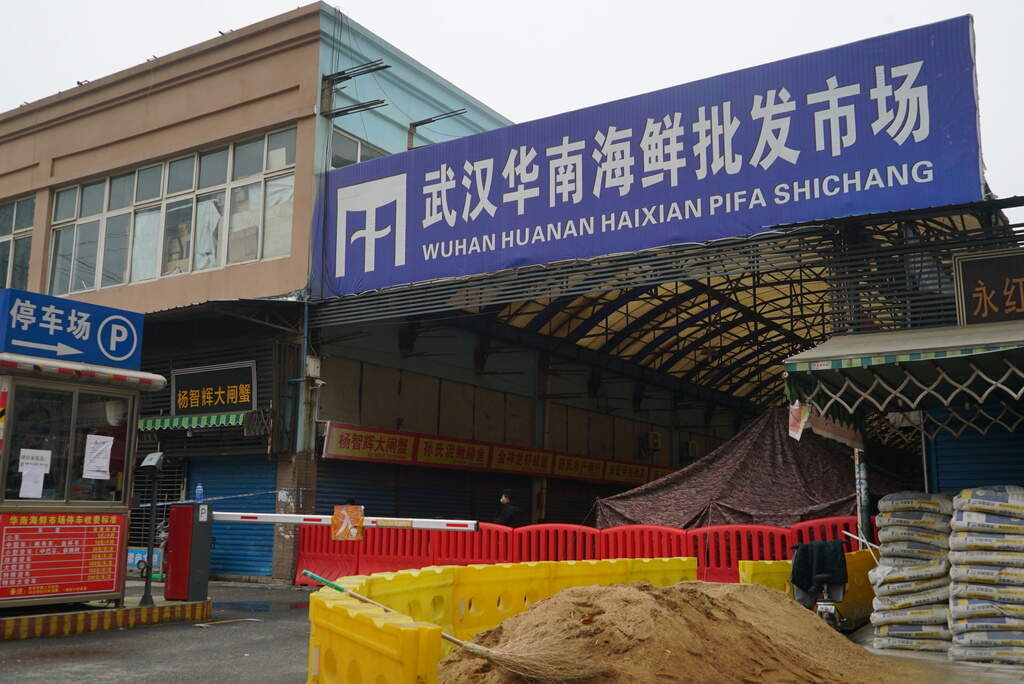
In 2020, Alina Chan called for the scientific community to not abandon a potential lab leak origin of SARS-CoV-2. She was called a conspiracy theorist and a race traitor. Her story and the search for the origins of COVID, four years later.
Guests
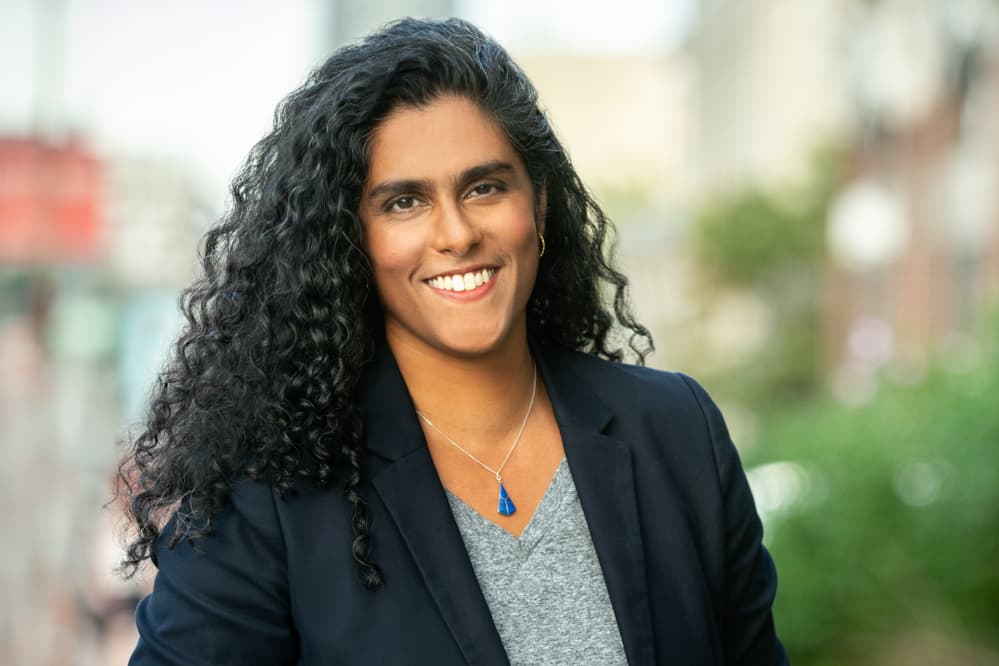
Alina Chan, scientific advisor for the Vector Engineering Group at the Stanley Center for Psychiatric Research at Broad Institute. Co-author of Viral: The Search for the Origin of COVID-19.
Also Featured
John P. Moore, professor of microbiology and immunology at Weill Cornell Medicine. Co-author of a recent publication on the Journal of Virology titled “The harms of promoting the lab leak hypothesis for SARS-CoV-2 origins without evidence”
Melissa Creary, assistant professor in the department of health management and policy at the University of Michigan.
Transcript
Part I
MEGHNA CHAKRABARTI: Four years ago this week, pharmaceutical giant Pfizer made news with its announcement that the company would expand its phase three clinical trials of a COVID vaccine to more than 44,000 people. Hope was rising that an effective vaccine would soon be available. By this month, four years ago, one million people worldwide had already died in the pandemic. Many more deaths were to come.
There was still so much unknown about SARS-COV2. Finding answers was made vastly more difficult because by this time in 2020, almost every aspect of the pandemic had been politicized. But perhaps none has been more politicized than this: Where did the virus that causes COVID come from?
Did it jump from animals to humans? Or, did SARS-CoV-2 escape from a lab leak?
That we still haven’t definitively answered that question says a lot about how hard it is to do good science in the middle of a global pandemic and a global political firestorm. I emphasize the word, definitively.
And because of that, listen to Dr. Anthony Fauci in a House hearing back in June of this year. He was asked by Virginia Congressman, Republican Morgan Griffith if COVID could have come from a lab doing research funded by the National Institutes of Health.
REP. MORGAN GRIFFITH: In an off-the-record member level briefing in February of 2022, I asked about the likelihood of nature of a SARS-related coronavirus to have a furin cleavage site, particularly since it takes the 12 nucleotide change in there to make it as viral as this was going on. And at the time, you said to me ... “Well, that wasn’t us. If that was being done, it wasn’t us.” And you confirm that for the record, yes? It wasn’t you. It wasn’t what you were funding.
FAUCI: What I’m saying is that I cannot account nor can anyone account for other things that might be going on in China, which is the reason why I have always said and will say now, I keep an open mind as to what the origin is, but the one thing I know for sure is that the viruses that were funded by the NIH phylogenetically could not be the precursor of SARS-CoV-2.
CHAKRABARTI: Dr. Fauci is both crystal clear and subtle with this answer. He says: No one knows fully what went on in China in 2019 and 2020. There was research going on coronaviruses there. But he is unequivocal in his certainty that NIH funded research could not have led to the pandemic. This is an important detail. Because he also says, essentially, that he doesn’t reject a lab leak origin of some kind because, as he said then and repeatedly before: “I keep an open mind as to what the origin is.”
Well, Alina Chan joins us today. She’s a molecular biologist at the Broad Institute, one of the most scientifically distinguished research institutes at MIT and Harvard.
She was one of the earliest voices asking the scientific community not to abandon the possibility of a lab leak theory. For that, she’s been called a conspiracy theorist, a race traitor, and more. She’s also the co-author of Viral: The Search for the Origin of COVID-19.
In June, just days after Dr. Fauci was giving that Congressional testimony, Chan wrote a New York Times opinion piece headlined: “Why the Pandemic Started in Lab, in 5 key Points.”
Alina Chan, welcome to On Point.
ALINA CHAN: Thank you.
CHAKRABARTI: So first of all, respond to that bit that we played from the hearing where Dr. Fauci says he's got an open mind, but under no circumstances does he think that NIH or U.S. funding contributed to the emergence of SARS-CoV-2.
CHAN: So regardless of whether the pandemic started in a lab or in a wildlife market, we do know that the U.S. was sending money to China to build an unprecedentedly large collection of pathogens and to perform experiments that enhance those pathogens. If you're asking me, is the U.S. culpable? I'd say maybe culpability isn't the correct word, but it could be responsible. So the U.S. is involved in this research. It's an international endeavor. It's not a China only issue.
CHAKRABARTI: So can you just provide a piece of evidence or two of why you say the U.S. was involved in this research?
CHAN: So we know specifically that this Wuhan Institute of Virology had been funded and had been collaborating with a U.S. nonprofit called EcoHealth Alliance. And the EcoHealth Alliance had gotten tens of millions of dollars from U.S. federal sources, not just the Defense Department, but also the NIH and the NIAID, which Dr. Anthony Fauci was a director of for more than 40 years. There was U.S. money flowing to China and specifically to the Wuhan Institute of Virology.
CHAKRABARTI: But can you trace that money directly to the emergence of SARS-CoV-2 when we don't definitively know whether it came from a zoonotic transfer or a lab leak yet?
CHAN: So what we do know is that the U.S. money was used to perform risky experiments with exactly that type of virus, SARS-like viruses. But what we do not know is what viruses the Wuhan Institute had been collecting ... especially the last four years before the pandemic. So we do not know what they did with the money.
And this is not abnormal, because once money leaves your hands you can't control what your foreign subcontractors are doing. You can't even control what your local, what your local funding recipients are doing the money. So we've seen that in, in the case of Wuhan, but even with local universities like Boston University.
CHAKRABARTI: Dr. Chan, so I'm gonna come back to this repeatedly and I'd like to do so in going through the five points that you wrote in the New York Times, but you admit just then that we don't know, right? When the money arrived in China, it was essentially a black box, is what you're saying.
So if there's no definitive proof for, in fact, any of the points that you put out in that New York Times piece, then the number one criticism that other members of the scientific community have offered to you, continuously for four years, is that this is nothing more than pure speculation.
CHAN: So what I think needs to happen is an investigation. So in the absence of proof, the answer is not to say we can't do anything, let's give up. Especially when this concerns millions of lives. So some 20 plus excess deaths are accounted to COVID-19. And so there's no way we can just say, Forget about it. It's not important. In fact, finding the origin of COVID-19 could save millions of lives in the future. And yet no proper investigation has happened. We have not subpoenaed, we have not obtained the exchanges between the Wuhan scientists and the U.S. collaborators. And that's something that we don't even need China's permission or collaboration.
We could just go to the institutes now and say, can we see what the Wuhan scientists told you in 2018 and 2019 before the pandemic? But we have not done that.
CHAKRABARTI: Okay. I'm going to come back to that because the question of what is the action that we must take as a nation for the good of public health is the foundation of what I want to talk with you about today. But I want to go through some more of the details that you lay out over the past few years, but most recently in this New York Times piece.
So it does seem as if there's some consensus around the idea that a SARS-CoV-2- like virus may have originally, way back in the chain, it seems to have come from bats, right? You even say that in your piece. But then are these bats from a particular area of China? And if so, how do we know that?
CHAN: Yes. So actually the work came from the Wuhan scientists who had spent more than a decade before the pandemic studying exactly these viruses. And because these viruses could not be found in their hometown, in their home province of Hubei, they had to go over hundreds of miles down south to South China and to Southeast Asia to collect these samples and bring them up to Wuhan.
And so we know from your work that the closest relatives of the SARS-CoV-2 virus that caused the pandemic are found in Yunnan and from other people's work also, that they're found in Laos. So these two bordering regions, about a thousand miles away from Wuhan. So the virus must have come from there.
And I'd say that there's widespread consensus among scientific experts that the virus came from that region. So the question is, how did it get from the bats in that region to Wuhan? And that is what we call the proximal origin. So there's debate on whether it was the scientists who brought these viruses up and it leaked from the lab somehow, or was it through the wildlife trade where a bad virus infected some animal or wildlife trader who then made their way up to Wuhan.
CHAKRABARTI: Yes, some kind of interim vector. That then may have, because this is a virus that definitely jumps, right? I don't know, I don't see any persuasive evidence that the possibility of an interim vector that then ended up in the Wuhan market isn't a plausible, if not overwhelmingly plausible theory.
CHAN: Yes. So I make that point in my New York Times opinion piece as well, is that both natural and lab-based hypothesis are both plausible. But in my opinion, the one piece of evidence that really shifts the weight of evidence, I'd say, even though none of the evidence is dispositive or definitive, I'd say that overall, the circumstantial evidence leans very strongly towards a lab leak.
Because in 2018, the Wuhan scientists and their U.S. collaborators pitched an idea to collect and study exactly the viruses, like the one that caused the pandemic. They proposed specifically to put a gain of function feature called a furin cleavage site into SARS-like viruses they found in nature, and that is the type of virus that leaked in their city, not two years after they had that idea.
So for me the stack of coincidences has gotten too great to ignore, too great for me to say that both natural and lab are on even footing.
CHAKRABARTI: So that furin cleavage site, I'll talk about it more later because it's something that's been bandied a lot in politics, but is that the research that you were referring to, I think The Intercept got a hold of the proposal.
It was a project named Defuse, but you also note that didn't end up getting funded by the U. S. government.
CHAN: Yes. And so both Peter Daszak, who is the Equal Health Alliance president, and Anthony Fauci both admit that the work could have been done without their knowledge using other sources of funding.
So this was a very well funded lab. The Wuhan Institute of Virology is a premier virology lab in China. They were not short on funds.
CHAKRABARTI: Okay, but that doesn't mean that they didn't do the research.
CHAN: Yes, they could very well have gone on to do the research or they could have not done the research. But recently, a European news outlet reached out to Dr. Shi Zhengli, who was the head of that lab in Wuhan, and she refused to tell them whether or not she had started the research without her U.S. collaborators.
CHAKRABARTI: And this was recently.
CHAN: Yes, this was recently. So people are still trying to get answers from the Wuhan scientists.
Part II
CHAKRABARTI: In a few minutes, we will hear from a scientist who disagrees quite vociferously with the lab leak theory. So we will get to the pushback in just a moment. But Alina Chan, I wanted to ask you more about, again, your focus on the Wuhan laboratory. Because the Defuse project, as you said, which was first reported by the Intercept a couple of years ago, right?
As you also know, it ended up not getting any U.S. funding, including not from the Defense Department, right from the DARPA research arm of DOD. But it could have gotten funding anyway. Can you talk to me a little bit more about why EcoHealth even wanted to do this kind of experiment with a coronavirus?
What was the goal?
CHAN: So the EcoHealth had to partner with many foreign researchers, because a lot of these novel viruses of concern are not found in the U.S. So in the case of SARS, especially, you can mainly find this in China and Southeast Asia. And that is why the Equal Health Alliance had built up years of collaboration with the Wuhan Institute of Virology.
And they had over the years amassed this collection of more than 22,000 samples of pathogens taken from these wild animals and been sending them in Wuhan. The reason why they submitted this proposal in 2018 to the Defense Department in the States is because they wanted money to continue expanding this research, to continue collecting more of these novel SARS-like viruses, and to do experiments to see how they could jump from bats to intermediate animals and to people, how they could cause disease.
And one of the ideas in this proposal was actually initiated by Dr. Ralph Baric from the University of North Carolina. And the idea was to put this furin cleavage site feature into novel SARS-like viruses. And these scientists had in drafts of the proposal proposed to do this work at very low biosafety.
And Ralph Baric had commented, this is not appropriate. And later after the pandemic happened, he emailed EcoHealth Alliance saying that this biosafety level they were using is just not appropriate. He said, this is, they were collaborators, but they were also competitors, and they were also critical of each other's activities.
CHAKRABARTI: So let me get back to something, though. Was the point of the research in order to try and anticipate how another coronavirus might jump from animals to humans? In a sense, it was to be prepared for the next pandemic, or was it defense related? Because, let's be honest, countries are still, even if they won't admit it, bioweapons are not off the table.
CHAN: Yes, I would say that you are on point. So it is these two reasons that they offered. So one of them is that they wanted to collect them to prepare for future outbreaks of similar viruses. But the problem with that approach, as many experts had been saying, even before the pandemic happened, is that there's just way too many viruses in nature. There's no way you can predict what will be the next virus is causing the pandemic.
And with the second reason it's about defense. But defense has a very blur line with offense. And you can imagine that there's this giant collection of pathogens in China that the U.S. has helped to fund. Who controls what is done with that collection of pathogens? Is it defense now or is it offense?
CHAKRABARTI: And I think that the Chinese, we do know that the Chinese military has connections with that Wuhan Institute as well, which is apparently another reason why the Chinese government has not been forthcoming with all of the information that they could have provided from the Institute, correct?
CHAN: Yes.
So the U.S. intelligence community has confirmed that the Wuhan Institute of Virology had military work being done there. They were using the space to do military research.
CHAKRABARTI: Okay. So let me just get at something which, to my ear, sounds like a logical inconsistency in what you're saying. And that is, on the one hand, you have said that the Wuhan Institute for Virology is this world renowned institute when it comes to, specifically, coronaviruses.
It's got 20,000 samples, and it seems like people from the International Infectious diseases community looked to, or looked, prior to 2020, to the Institute as a place of valuable research.
CHAN: Yes.
CHAKRABARTI: But then on the other hand, you say this same place was practicing low biosafety conditions. How can those two things be true at the same time?
CHAN: So biosafety conditions and requirements differ widely around the world.
It's usually set internally. So people at an institute, especially with novel viruses for which you do not know whether they can cause disease in people or not, they have to make their own assessment of, is this dangerous?
And for these scientists who had spent more than a decade before the pandemic collecting these viruses, they'd been crawling into caves where they were surrounded by millions of bats, reported being bitten by bats and things like that, and they had never caused an outbreak. So for them, their guards had been completely lowered.
And for them, doing the work at low biosafety was acceptable because they've been doing it this way all along. So why go all the way up to high biosafety, where it's so much more expensive, costing millions of dollars, it slows everything down drastically. And you just don't have that many personnel who are trained enough to do that work at high biosafety.
So to stay competitive, to get the work done faster, to get more money, more prestige, more papers, they opted to do it at low biosafety. They saw that there was low risk.
CHAKRABARTI: How do you know for sure that they opted to do it at low biosafety though?
CHAN: So we know from their papers that they'd been doing these experiments with live infectious viruses at BSL-2, which is low biosafety for these viruses.
And this had been pointed out by Ralph Baric, a close collaborator of the WIV. So he noted that he said he's quite convinced that they were doing the work at low biosafety. He even pointed it out in a draft of Defuse, saying that BSL-2 is not appropriate for handling these viruses. U.S. researchers would freak out if they saw that, but they went ahead.
CHAKRABARTI: You have a quote from an email from him saying, I have no doubt that they followed state determined rules and did the work under a biosafety level two. China has the right to set their own policy. But he doesn't believe that was appropriate containment.
CHAN: Yes.
CHAKRABARTI: Okay. And biosafety level two for lay people, what does that mean?
CHAN: So there are four levels of biosafety. Some people would even say that the lowest biosafety level is two, because at one you can do almost anything at that point. But four is the highest level. And even though it's only an increase of one number per level, there's actually a dramatic and very costly difference between each level of biosafety.
So BSL-2 is, I think everyone can agree now, it is not safe to be handling novel pandemic pathogens at that level.
CHAKRABARTI: And biosafety level four is what? Fully, being fully suited, positive pressure, like double what, lab rooms that are like double, triple walled and have very specialized HVAC systems, all that?
CHAN: Yes. It's like what in the movies and actually the pictures that they show in a lot of news reporting, they are showing BSL 4 or BSL 3 level. But if you look at BSL 2, that's none of that. So people don't even have to wear a mask at BSL 2. And there's no full body protection, that kind of thing.
You wear gloves. And you do some of the work, even outside of a biosafety hood, so there's a large risk of exposure to a respiratory virus.
CHAKRABARTI: Okay but Alina Chan, at this point, as you well know, we're not in a court of law, honestly, we're in the court of scientific investigation and also the court of public opinion.
But nevertheless, everything that you presented while factually true about the lab is also circumstantial regarding a lab leak origin. I was under the impression, and correct me if I'm wrong, that genetic analysis of viruses had gotten so good. That by this point in time, we should be able to genetically pinpoint exactly where the origin is.
No?
CHAN: No, so the problem is actions by the Chinese authorities to prevent us from getting that data. So what we do know is that in 2020, on January 3rd, China instructed the destruction of patient samples. So they told all these hospitals that have been collecting patient samples, destroy the samples.
You're not allowed to have them. And then we know from some of the reporting too, that there might have been November cases, November 2019 cases, and we do not have access to that data. So all we know about the earliest cases are what China would tell us, and this is the data that they handed over to the World Health Organization only a full year later, in January 2021.
So there's so much that we do not know about the earliest days. The only data that we have are things that are leaked by Chinese scientists, at great cost to themselves, or about cases that were outside of China, that were detected and sequenced.
CHAKRABARTI: You say though, in your New York Times opinion piece that the existing genetic and case data that we do have shows that known COVID-19 cases from 2020 probably do stem from a single introduction.
CHAN: Yes. So that much we do know. So we do know that the most likely, the most probable, almost certain right now, based on the genetic evidence that we have is that all the cases that we know about in the pandemic came from a single introduction of the virus into the human population. But what we do not know is who that patient was or when that case was infected.
CHAKRABARTI: But then why couldn't it have been from the Wuhan market?
CHAN: Oh, so if you look at the known cases from the Wuhan market, you can see that they are downstream of that introduction. They are not the earliest cases. So of the people that we know were at the market who got sequenced, we know that those cases certainly did not start the known pandemic.
CHAKRABARTI: Okay, how do we know that, though? Because you also do acknowledge that there have been some strong scientific papers. A couple of them were published in Science Magazine, in the journal Science.
CHAN: Yes, two years ago.
CHAKRABARTI: Yes, showing that, according to the evidence, the available evidence, I should put, as they read it, that the Wuhan animal market is the most likely location for the origin and zoonotic spread of COVID.
They say that reports confirm that most of the earliest human cases centered around that Huanan seafood wholesale market. And the data statistically located the earliest human cases to one section where vendors of live wild animals congregated.
CHAN: Yes. So this is a problem that stems from scientists outside of China, looking back at the data that was shared by China, without understanding the methods that the Chinese used to collect that data. So because the Chinese had used highly biased methods to collect early case data, they ended up making all the data look like the pandemic had started in the market. And this is what the Chinese investigators acknowledged multiple times, even in early 2020 and later in 2021, when they gave that data to the World Health Organization.
And even today, Multiple people, different branches of government authorities, investigators, even scientists in China, all said that they had been searching for the animal at the market, so none of them had been looking at the lab. On day one that they heard about this pandemic, they only heard of four cases linked to the market, and after that, they searched only for cases either at the market, at hospitals near the market or in the neighborhood of the market. And that is why when you look at how the cases are distributed, they all seem to form this big bullseye around the market. So it's not because the cases were actually forming a bullseye around the market, but because the search, the methods for collecting those cases had been biased.
CHAKRABARTI: Oh, interesting. Because, in these papers, they say that they find that genomic diversity before February 2020, they say there were two distinctive viral lineages which were the result of at least two separate, in their minds, according to their reading of their cross-species transmission from animals into humans.
They do acknowledge that the precise events surrounding virus spillover will be clouded, but all of the circumstantial evidence, as they read it, points to one zoonotic event at the Hunan seafood market.
CHAKRABARTI: So in the paper, they argue that there were two zoonotic events at that market. But since then, the paper has been refuted thoroughly by other peer reviewed papers.
The authors have even had to publish a correction. And if you're a scientist, you know that to publish a correction is a very major event. You don't just do it willy nilly. There has to be a very severe reason for you to publish a correction. And so now, if you look at all the data, even Dr. Ralph Baric, who has every incentive to wish that this did not start from his collaborator's lab in Wuhan, he says that these papers do not hold water.
So he says that a lot of experts, virologists, look at those papers and go, so he says, is the market where it started? He said, no chance. Ralph Baric, he is the expert in this sort of virus, and he has every incentive that this doesn't come from a lab. And even then he is ruling out that market.
CHAKRABARTI: So you say in your New York Times piece that not a single infected animal has ever been confirmed at the market or in its supply chain. How do you definitively know that? You don't definitively know that.
CHAN: No, we do not. But what we do know is that none of them have been reported. The reason for this is that the context here is that there are a group of virologists who are strongly arguing that they have evidence for an infected raccoon dog.
And so in response to that, I'm saying that no, there's no evidence of that. No one has reported it. No one has so far confirmed or found any infected animals or found evidence that such viruses would circulate in Wuhan, all the way so far up north from the natural reservoir.
CHAKRABARTI: So over and over again, we come back to your admission that you're asking these questions and making these observations based on circumstantial or inadequate evidence.
Those strong papers that we just talked about, they admit also that there's circumstantial evidence. Scientists everywhere are working with, let's say, a far from ideal data set.
CHAN: Yes.
CHAKRABARTI: So who really is to blame here?
CHAN: It depends what you mean by who is to blame and for what. If we have to talk about the lack of data --
CHAKRABARTI: Who is to blame for that, who is to blame for the fact that we still do not definitively know where SARS-CoV-2 came from?
CHAN: I would say that China has the most responsibility here, because they do sit on all this important data about the early cases, whether or not there were infected animals or not. We don't know fully how hard they tried to collect that data, even though they did tell the World Health Organization that they've been screening tens of thousands of animals and searching the supply chain and farms, and they say that they found nothing.
How much is credible? How much can we take on trust? I don't know. But on the other hand, there are, again, things that we could have investigated outside of China that have not been investigated. So I'd say that blame falls on us in the U.S. and the international community not following up on plausible routes of investigation that don't need China's approval.
CHAKRABARTI: Why did you start taking up this cause of not wanting the scientific community or even political leadership, as you're saying, in this country, taking up the cause to not ignore a possible lab leak?
CHAN: So I think that finding the origin of this pandemic can, again, save millions of lives in the future.
And there are three reasons for this. So the first thing is that as with anything, even a plane crash, you need to investigate, to know exactly what measures to put in place to effectively reduce that risk. So without knowing how this happened, especially whether it's from a lab, no new measures today have been put in place to prevent such a tragedy from happening again.
And the second reason is deterrence. So if you show the whole world that we just sit on our hands and we don't investigate, even when 20 million people die, then what motivation is there for people to be less negligent, to be more strict on themselves, to hold themselves to a higher standard in the lab.
And lastly, I think public trust depends on an investigation. So the public, including other scientists like myself, we need to see our peers. We need to see scientists. We need to see public health leaders. We need to see our political leaders leading the charge. Not trying to dismiss an investigation, not trying to stall it.
Trying to say we don't need to find out how a million Americans died.
CHAKRABARTI: But this issue of public trust, though, your strongest critics say that your pursuit of maintaining legitimacy around a possible lab leak is actually damaging the public trust in science. That's their criticism of you.
We'll have your response to that when we come back. This is On Point.
Part III
CHAKRABARTI: Now since the start, as Dr. Chan well knows, many scientists have pushed back against the possibility of a lab leak theory, and instead pointing to what they see as the overwhelming evidence of a zoonotic transfer as the more likely origin.
Then of course that's the idea that SARS-CoV-2 spread from animals to humans, and as we've discussed, perhaps in that Wuhan, Huanan seafood market.
JOHN MOORE: Firstly, it's inherently a very reasonable hypothesis because, for example, SARS in 2020, 2002, 2003 and, you know, mini pandemic, that was pretty much definitively proven to have arisen in a Chinese wet market. And SARS is, of course, another coronavirus very closely related to SARS-CoV-2, but not the same. So, you know, it's inherently reasonable. To consider the wet market hypothesis, because zoonosis from animals is a regular occurrence.
John Moore is a professor of microbiology and immunology at Weill Cornell Medicine.
MOORE: Now the studies that were done on samples from the Wuhan wet market. Identified viral sequences, SARS-CoV-2 viral sequences in laboratory assays of samples that were gathered from the wet market, before it was thoroughly disinfected. And those assays show the presence of virus. Around the right time in a plausible place for a pandemic to start, and it shows to the data, show to independent but closely related viral sequences in the wet market samples.
CHAKRABARTI: Moore is very clear that the evidence for the zoonotic transfer isn’t complete. At least in part due to the lack of transparency by the Chinese government.
MOORE: I don't know of a single virologist or public health specialist who has any faith in the Chinese government's abilities to be transparent on the origins. They're just a secretive society. They don't want the stigma of having the virus proven to originate in a wet market or a lab leak. So yeah, they're not helpful and that's not going to change, but it's not something that we can factor in. It's just one of the reasons why there are evidence gaps.
CHAKRABARTI: Last month, Moore, along with 40 other virologists, published an essay in the Journal of Virology that raised their concerns about that politicization … titled, “The harms of promoting the lab leak hypothesis for SARS-CoV-2 origins without evidence.”
MOORE: it's a really damaging hypothesis. It is degrading the trust of the American public. In virology and yet virology research is essential to understand future pandemic risks. If we degrade that capacity to conduct virology research because of an unfounded, ill documented hypothesis that the virus leaked from a lab, then we're really shooting ourselves in the head and for the future.
CHAKRABARTI: Moore says many of the claims about the lab leak theory are based on speculation and already debunked.
MOORE: The notion that the furin cleavage site is something deliberately engineered is, you know, just BS. Then there's the notion that a couple of Chinese virologists were off work sick in late 2019, and they worked at the Wuhan lab. Therefore, the speculation is they must have been sick with SARS-CoV-2 COVID. The Chinese scientists involved have denied being sick and denied having COVID at that time and the test results show that they didn't. Now, of course, you can argue that the Chinese scientists are being coerced by the Chinese government. But again, it's speculation from the lab leak mavens. It's not proof that it happened.
CHAKRABARTI: Ultimately, Moore says that his main concern is the potential impact that this push for the lab leak theory could have on the future of his field and on global public health.
MOORE: The general climate of harassment is such that young virologists or young potential virologists are steering clear of the field and seeking other other avenues for their research. Because they see this as a toxic environment now in the States and that's going to have long term implications. You know, I mentioned the paper by 41 virologists. I recommend that everyone read that article. It's readily available and it outlines just why virology is under threat from the lab, leak salads, and the support and the political supporters, and right-wing social media infrastructure that wants to blame China. specifically for a lab leak.
CHAKRABARTI: John Moore is a professor of microbiology and immunology at Cornell Medicine. We have a link to the publication at on-point-radio-dot-org.
CHAKRABARTI: So Alina Chan, respond to that. I think the most important point that I'd like to hear you on is him saying that by virtue of you pursuing or keeping open the possibility of a lab leak, that you, in fact, are complicit in undermining the public's trust in science overall. Because it opens the door to the possibility of a scientific experiment having caused the worst global pandemic.
CHAN: I think the truth is the truth, right? So if scientific research is what caused this pandemic, we have to find out.
We cannot try to protect science by hiding the truth. But I'd like to correct Dr. Moore on one point, which is that the Chinese government actually told the whole world in January 2020 that this pandemic has started in the wildlife market. So back then, they were telling us all that this is the origin.
It was illegally sold animals at the market. It was only later in May that the head of the Chinese CDC stepped up and said, we searched and we could not find any evidence. This is where the pandemic started, and so no infected animals, none of the earliest cases had any confirmed exposure to these infected animals, no infected animals again, no evidence that such viruses had been circulating in that market, and so what a lot of experts like Dr. Moore fall on is for evidence, it's just priors.
So based on their experience, they've seen this sort of thing happen in nature all the time. So when they see this happening, Wuhan again, they're like, it's just the same thing happening again. But the problem is that around the world right now, this sort of research with pandemic risk is proliferating.
So unlike a hundred years ago, or even, let's say, 20 or 30 years ago, now, today, we have dozens of these labs that are studying pandemic pathogens, things that could leak out of the lab and cause pandemics. And so it is the responsibility of the scientific community to step up and to investigate when such incidents occur.
We see this with chemical incidents, we see this with transportation accidents, we see this with nuclear accidents, right? You have an independent organization that goes in, does inspections, does investigations, and publishes the results to convince the public that things are well managed. And that is what builds trust.
Building trust is not covering up faults, it's acknowledging faults and then making amendments to that.
CHAKRABARTI: I want to come back to that in a second, but let me ask you. I think what Professor Moore there is saying is, in a sense, don't we have an Occam's razor issue here where for, as he points out, and as far as I could tell, for all previous little SARS like viruses, SARS, MERS, for example or novel diseases that they've come from zoonotic transfer, right?
And we know that cause we were able to determine their origins. And therefore, in the absence of definitive evidence that it's a lab leak, isn't the simplest theory most likely to be true? That it once again, I think that's what he's saying, that it's a logical way of thinking about it.
CHAN: Yes, I agree. So people can cut it either way they want. For some people, the market hypothesis is more simple, but for some people, the lab hypothesis is more simple. So for different people, different hypothesis makes more sense, based on the circumstantial evidence. And for me, it really comes down to this.
This pandemic could have been caused by any of hundreds of species of viruses, in any of tens of thousands of wildlife markets in that area, in any of thousands of large cities in that area, and in any year. But it was a SARS like virus with a furin cleavage site that emerged in Wuhan not two years after the scientists there, who sometimes worked at low biosafety, had proposed exactly collecting and creating those viruses.
CHAKRABARTI: So the other point that Dr. Moore brings up that's very important, is we're not just talking about this in the purity of scientific debate. We're talking about this in a world that is wildly politicized and in a nation in the United States that is radically politicized. Right now outside of scientific circles, the people who are most vociferously championing a lab leak theory, they're right wing members of Congress who are doing so not necessarily because they believe in doing good science, but they, as he, as Moore said, they want to undermine the current administration or they do just want to advance conspiracy theories in order to have the public be continuously divided.
It's not for the good of science that they are advancing at every turn a lab leak theory. Are you not a stooge for that right wing?
CHAN: I share Dr. Moore's concerns. I share people's worries about how science is being politicized. This is the bottom line, is that scientists cannot be lying or obscuring the truth for whether it's selfish reasons or political reasons, or even good intentions. Because the moment you allow experts to spread misinformation, to manipulate the public, to behave in the way they want, there will be a complete breakdown of public trust. Like even for me now, when there's a new pandemic happening, who can I turn to for the truth?
Because we've seen in this COVID-19 pandemic that the experts themselves, they have all sorts of good or bad intentions. They sometimes give themselves reasons to lie. To tell people things that they know are not true, or that they're even uncertain about. Because in this pandemic, people tend to voices of certainty.
In a crisis, people want to hear certain things. They want to have confidence in the things that they're hearing. But we've seen that, oftentimes, experts cannot reach that level of certainty. And later, when people realize that they've been lied to, that completely destroys public trust.
CHAKRABARTI: I'm confused because you were saying that experts, they cannot reach that level of certainty, absolutely true. But then you're saying that people lied?
CHAN: Yes.
CHAKRABARTI: Lied because they couldn't come, they couldn't bring themselves to say we're uncertain?
CHAN: Yes.
CHAKRABARTI: But they, but I think folks would be saying that like you're doing the same thing now.
CHAN: Oh no, I'm not lying about the origin of COVID-19. So I'm very clear that I do not know the origin of COVID-19 and that we should investigate.
CHAKRABARTI: Okay. I wish I had another half hour to talk with you, Alina Chan. This has been really fascinating, but I do want to take the last few minutes to ask you, you've been saying this. Don't close the door on investigating the possibility of a lab leak origin for four years now.
CHAN: Yes.
What has that cost you? People have obviously, we had a hard time getting scientists to talk to us in the production of this show. Because to this day, they did not want to speak to us. Even if they totally disagreed with you, because they told us, to our faces, we are legitimizing a conspiracy theory that isn't doing the public's health any good.
So you've been called a conspiracy theorist. You've been called a race traitor. You're Chinese in origin? Asian?
CHAN: I have Asian ancestry.
CHAKRABARTI: Asian ancestry. Okay, good. I didn't want to label you unnecessarily. What has this cost you?
CHAN: The surprising thing is that I have actually been a very moderate voice in this entire conversation.
Like my stance in 2020 was a lab leak might be unlikely or likely. We don't know. We have to investigate. And today I have shifted more towards likely, but it's still the same stance. We don't know. We have to investigate. And for that, I've been attacked by people on both ends. So I've been attacked by all these other scientists who say that I'm hurting science.
So they've essentially built this cult of science, and they see me attacking it, questioning whether science is what causes pandemic. So I've gotten a lot of hatred from that crowd for sure. And they've slandered me over the last four years and that kind of thing. But on the other hand, you have people who want to be certain that this came from a lab.
And so when they see someone like me hedging and saying that, no, we actually don't know yet, we need to collect more evidence. They think that I am actually a stooge. They actually think that I am protecting science, that I'm preventing a certain conclusion of a lab origin. So actually the hatred and the harassment has been coming from both ends for me.
And that is the thing that a lot of these scientists who are criticizing me, they seem to not be able to acknowledge that.
CHAKRABARTI: Does that make you worry about the future of scientific integrity when it comes to the global scientific community around virology?
CHAN: Instead of worrying, I think we should take action.
And I think I've been encouraged by a lot of rare voices, but they are out there. There are a lot of scientists who have spoken up and are investigating on this issue as much as they can. And for that, I think that there's still hope, that there are scientists with integrity who will act sometimes seemingly against the interest of science, but ultimately in the long term by investigating, by showing that we're not covering up, this is how you earn trust.
This is how you show people that you are not covering up. And so I do think that there's hope. And I think that there should be more systems to incentivize scientists to speak the truth, to investigate, even when it's inconvenient.
This program aired on September 13, 2024.