Support WBUR
Elections officials endure protests, death threats. Here are their stories
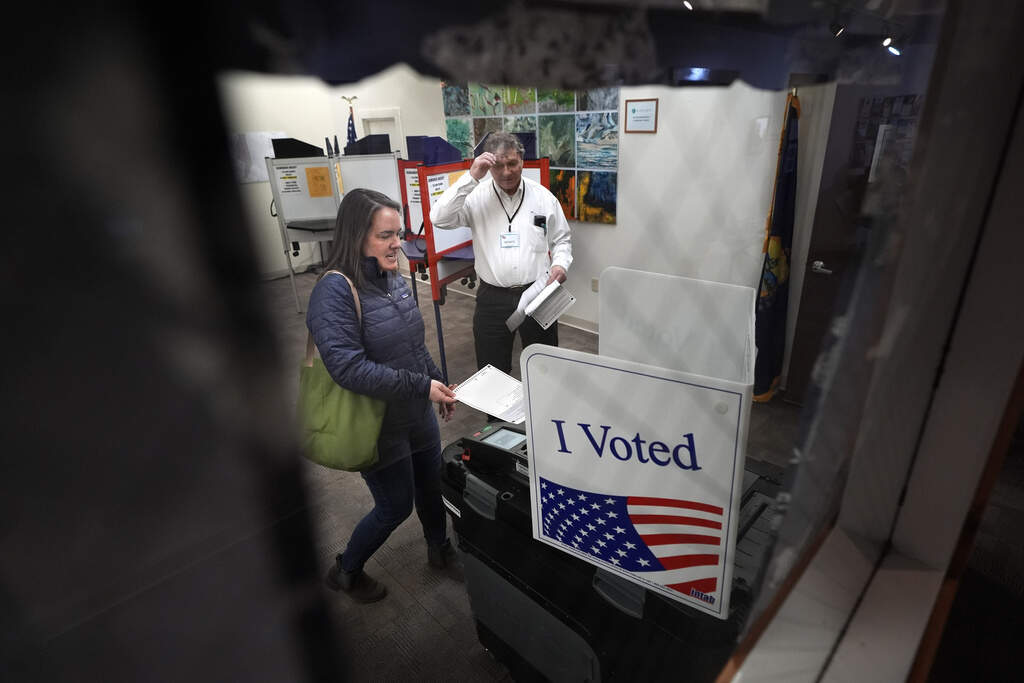
Local election officials are working hard to make sure the 2024 election goes off without a hitch. And they're doing that despite being criticized, hounded, attacked, and threatened.
Three county elections officials, Democrats and Republicans, from Nevada, North Carolina, and Pennsylvania share their experiences from the frontlines of America's elections.
Guests
Amy Burgans, clerk-treasurer in Douglas County, Nevada.
Erica Porter, chairwoman of the Board of Elections in Wake County, North Carolina.
Karen Chillcott, chief clerk for Erie County, Pennsylvania. In that she role, she also serves as the clerk of elections.
Transcript
Part I
MEGHNA CHAKRABARTI: Since 2020, one of the toughest, least appreciated jobs in America is also one that used to be one of the most ignored, being a county elections official. But then, the 2020 election, and Donald Trump's continued insistence that the election was stolen from him, It was not, but that insistence subsequently made county elections officials the targets of criticisms, attacks, and even death threats.
But they continue to work in every U.S. county, including yours, to ensure that Americans enjoy the privilege of a free and fair opportunity to vote. So today we'll hear from three county election officials, all from swing states, about how much harder their jobs have become and what they are doing to prepare their counties for November.
And we'll start with Amy Burgans. She's the clerk treasurer of Douglas County, Nevada. It's a county with a population of less than 50,000, and she joins us from Douglas County. Amy Burgans, thank you so much for taking the time to be with us and welcome to the show.
AMY BURGANS: Thank you. I appreciate you having me.
CHAKRABARTI: I'm wondering if you could just start off by telling us, in the past couple of years on an average day, when you come into the office and you sit down at your computer, what has it been like? Are you receiving criticisms or threats as I described?
BURGANS: Absolutely. Just yesterday I was outside my house and my neighbor came out and wanted to talk about the machines that we use and the fact that they're connected to the internet, and that the election can't be trusted. And I have lived across the street from this person for 16 years. They have known me as a stay at home mom, raising my five kids. They have known me through everything.
And yet they still believe that there is something wrong with our voting machines. And this happens, what, almost on a daily basis, something like that?
BURGANS: Absolutely, every day.
CHAKRABARTI: Every day?
BURGANS: Every day. Every day we hear about how, whether it's an email or a phone call or someone that comes to our front counter during election cycle, people absolutely believe that there is something wrong with the voting equipment that we use.
CHAKRABARTI: Now, I'm going to give you a chance in a few minutes to really explain how much is being done in Douglas County to ensure a fair and transparent election, but let me go back in time a little bit about how you got to this job. You said that you were a stay-at-home mom. You were, you're a military veteran as well?
BURGANS: Correct. Yes. I joined the military when I was 18. But when I got out of the military, I was a stay at home mom, had five kids, I homeschooled all my kids, and just was enjoying life and being a mom, and when I went back to work, I was asked by the previous clerk treasurer, I was working for Douglas County, and I was asked by the previous clerk treasurer who was resigning from her position if I was interested in stepping in. She and I had known each other for, at that point, maybe 15 years. So we knew each other very well. And she thought that I had the background and the personality to be able to tackle this position.
It takes a special personality to be able to stand up for what you believe in. And to do a good job, and to be able to present that to people that you're going to get the criticism and you're going to get, by people that you've known forever, you're going to get told that the election is wrong, something happened, everything that happened during the 2020 election cycle.
People wholeheartedly believe that it was rigged. Now I think part of the specialness of your background and personality, I want to just underscore, in your military service, you were a member of the military police?
BURGANS: Correct. Yes.
CHAKRABARTI: Yeah. So do you think that's given you experience and fortitude to withstand?
Not just the criticisms, but I understand you've also received death threats as well?
BURGANS: Yeah. In 2022, I did receive a death threat.
CHAKRABARTI: It was written on a ballot, right?
BURGANS: It was, yes, and not a voted ballot. It was a ballot that we had sent out and they returned it as undeliverable after having written all over it.
And it did have a threat on it with my name circled and like an arrow to it kind of thing. Yes.
CHAKRABARTI: Even with your military service, that couldn't have been easy.
BURGANS: It increased since right before taking this position, I became a single mom and I still have two of my five children at home.
And so my big concern was my children's safety. So it did increase, I put an alarm system on my house. I already had cameras, but the cameras are linked to the security system. So that if there are times where I won't even notice the fact that my phone has gone off and I will have 40 text messages.
So the alarm system is monitored by a company so that if for some reason I'm distracted, there is someone responding if something was to happen at my house. So yes, it did increase my, not fear for myself, necessarily, but there's definitely a heightened awareness for my children and my loved ones. And then also for my election workers. The majority of my election workers are retirees that are not necessarily prepared for something to happen.
So my big concern is for them. I'm always, during elections, the last one to leave to make sure that everyone has gotten out of the parking lot safe and that there's no one lingering around.
CHAKRABARTI: Wow, Amy, I have to say, even just listening to you describe that, my heart rate is rising and I'm sitting here in the safety of a glass box in a radio studio.
Now, you've said a couple of times that a lot of the people coming to you, insisting that the 2020 election was rigged, are people that you know, because you've lived for so long in Douglas County, including your neighbors. I'm wondering if you could tell us a little bit of the story, though, about your own transformation in terms of your confidence in elections.
Because I understand that the aftermath of the 2020 election, you yourself had doubts about the security of it?
BURGANS: I did. Excuse me. So I was appointed in December of 2020. So even though I worked for the county, I was not working in elections during the 2020 election. I was just an average Joe citizen, not having a knowledge of the elections, how they're run, the safety, security.
I watched the same news that my neighbors were watching, and I didn't, I wasn't passionate about it. A lot of people are very passionate about the election having gone wrong and there's no way that the winner could have won that kind of thing. I just on a surface level believed what I was hearing in social media and on the news. But in 2020 December, when I was asked to step up and the commissioners appointed me to this elected position. I had to learn really quickly. Because I was now the person that was getting the feedback on the election being rigged and all of the things that I'm still hearing, but I think it's less now than it was when I first took office.
So I had to learn really fast, so I threw myself into, excuse me, threw myself into learning as much as I could about how do we run elections? What are the safety procedures? The chain of custody? I wanted to know everything about the equipment as much as I could. I went to everyone that I could to ask questions and to find out as much as I could.
And then I was very hands on with the equipment that we do use and the software systems. And it took about six to eight months for me to fully understand everything, because there wasn't an election cycle until 2022 for me to really see everything in use. But my mind is completely changed.
And I will tell you, that when I have a skeptic, I always say, come be a part of the process and it doesn't mean you have to work full time. It doesn't, just give me a couple of Saturdays. Give me a couple of evenings. Give me, if you're retired, give me a couple of weekdays where you can come and be a part of my certification board. Be a part of the process of me doing the logic and accuracy testing before and after an election. See the audits that we do afterwards, know, come in, come and be a part of that.
And the people that have are right there in the same boat as me, they have changed their minds. They have said, you know what? I just can't see it anymore.
CHAKRABARTI: Yeah. So you went from reading on a Facebook post about dead Nevadans voting, right? These misinformation on social media, as you said, and even listening to some family members, I understand, who had deep concerns about voting integrity.
And then after you said, six to eight months of really getting to know the system, and the system, if I could just add a little bit more detail, these are things like how the voting machines are inspected and the detailed process of signature verification, stuff like that, right?
BURGANS: Who has access to the machines.
CHAKRABARTI: Who has access, yeah.
BURGANS: And the chain of custody that we have when the machines, they're in a locked room. That only full-time staff has access to, badge access to, which means that I know who opens and closes the doors every day. And they're under 24/7 video surveillance. And then once they leave that room, the chain of custody that goes along with them, with seals that I can verify at any time, it's pretty deep security protocols that we have for those machines.
So really the only way for anything to go wrong is if I authorize it.
CHAKRABARTI: Yeah. So since then, you have, you can say with confidence that elections in Douglas County are more secure than they've ever been.
BURGANS: The chain of custody and the protocols, most of those were already in place.
CHAKRABARTI: They've always been secure then?
BURGANS: They have always been secure. Douglas County has always done, at least through the previous clerk treasurer,
CHAKRABARTI: Amy, can you just hang on for a second? I'm so sorry that I have to interrupt you. I just, I'm hearing the music, so I've got to take a quick break.
You're listening to Amy Burgans. She's one of three county elections officials who are joining us today about the challenges they have in being sure that people believe that the elections they are running are secure. And we'll also talk about the extent that they're going to build confidence in voters in their counties.
Part II
CHAKRABARTI: Today we're listening to three county elections officials about what their jobs are like in these fraught times of ours, regarding confidence in the security and integrity of American elections. They are working hard to be sure as always that elections in their counties run smoothly.
You've been listening to Amy Burgans. She's the clerk treasurer in Douglas County, Nevada. She's a Republican there. We're going to go to North Carolina in just a quick second, but Amy, can I just ask you one more question? Because you described in detail the security measures that go around in protecting the integrity of elections in Douglas County.
But I understand that of the 50,000 people, roughly, who live in Douglas County, Nevada, that you still estimate about half of them believe that elections can be rigged or have been rigged?
BURGANS: That's a rough guess. I just know that I have friends for years that still believe it, even though we have deep conversations. So 50%, I just, I know that half of the people that I know have that type of belief about the election. So yeah, it's just a guess, but yes.
CHAKRABARTI: Okay. I get it. Let's call it a knowledgeable extrapolation.
BURGANS: I like that.
CHAKRABARTI: So stand by here, Amy, because listen along with me, 'cause let's move to North Carolina and I want to welcome Erica Porter into the conversation.
She's chairwoman of the board of elections in Wake County, North Carolina, and she's a Democrat. Erica, welcome to On Point.
ERICA PORTER: Hi. Thank you for having me. It's a real pleasure.
CHAKRABARTI: Now, first of all, before we get to the issues of election confidence and security in Wake County, obviously, because even though that's in eastern North Carolina, your colleagues in western North Carolina are dealing with the catastrophe of Hurricane Helene.
I was just wondering if you had any news or update about how things are going there, regarding the fact that even in the middle of this disaster, there's still an election that has to be pulled off.
PORTER: Yeah. We got a small update from our state chair. Right now, people are still in that triage situation, still looking for folks. I don't, I can't even tell you the number. I apologize. But the offices in that area right now are still closed. Our state is sending emergency kits where they can run an election should they not be able to open that office.
And so they are still planning. But like you said, the election's still going on. And we're all ready to jump in if we need to help our neighbors. and make sure that we can run this in North Carolina smoothly.
CHAKRABARTI: Yeah, we'll see how it unfolds. But it does not help at all that a huge natural disaster has befallen the people of Western North Carolina.
But Erica, let's talk about what Wake County. You heard me ask Amy as the first question about what are some of the challenges, or criticisms or even threats that she has been received, same thing to you. Can you tell me a little bit about what the job is like these days?
PORTER: Yeah, you know, how you mentioned, we used to be ignored. And I'm a behind the scenes type of person, that was one of the things where I was really interested in becoming part of the board. But since 2020, we have been in the spotlight. I never thought I would be on the radio right now, to be honest. Now I take my job very, I've always taken it serious, but I really take it serious into getting out to the public now, because of all the misinformation that we were dealing with in 2020.
And I was on the board for that election. And I remember the signal groups, the telegram groups that were out there, with people putting our names in the groups. Yes, you can find our information. It's public knowledge, but for your average person, you really have to dig for some of those things, but seeing my name put in a secret group, was very jarring.
I've had to take out some security measures, at my apartment. I'm a single woman and I live by myself, it's just something I never thought I would be a part of.
CHAKRABARTI: Being doxxed is never, ever a pleasant experience. But, by the way, you said you'd never imagined you'd ever be on the radio, and Amy, I heard you chuckle there as well.
I just want to say and I'm completely unafraid of editorializing like this. I feel that right now, some of the greatest patriots defending American democracy are absolutely people like you three. And we'll hear from Karen Chillcott in a minute. But who are doing on the ground work, like literally where the rubber meets the road, to ensure that this institution of voting that we've had throughout the history of this country maintains its integrity so that we can have confidence in our democracy. And I just want to thank all three of you for putting yourselves on the line for doing that, in a job that, in better days, was quite ignored. But Erica, hearing that you're concerned about even just where you live and being doxxed.
And I understand even other elections workers that you're working with, you have to wear PPE now. Is that right? When opening the mail or do I have that wrong?
PORTER: We haven't taken that measure in Wake County.
CHAKRABARTI: I think I got my elections officials confused. We'll hear that story in just a second.
But so tell me a little bit more then though about the nature of the kind of criticisms that you get and how, if at all, you respond to them to tell people, things are secure here.
PORTER: Yeah. And like she was saying, people don't trust the machines. That's really that big piece about it.
And previously in Wake County, in North Carolina, we used to be able to modem our results in from each polling place. And so we would have elections results pretty fast after it closes at 7:30 p.m. But we no longer do that, and we haven't done it for a while. So we have to bring our machines back and then they're all air gapped.
So there's no internet with our machines. But, people still do not trust that. And they think that folks can come in and hack our machines, from other places around the world. The interference was a huge narrative in 2020, but that's just not something that can happen with our machines.
We have to physically take out the cards and then enter them into our system. The narrative that people are interfering remotely is just not possible with our machines in Wake County. And North Carolina.
CHAKRABARTI: I understand that even, I think maybe, not again, correct me if I'm wrong, but maybe it was prior to 2020, but the building in which votes are tallied in Wake County was redesigned to be more transparent if people wanted to observe?
PORTER: Yeah. And we try to be as transparent as possible. We moved into a new facility, I believe in 2019. And were ready to renovate, but then COVID hit. So we used our open warehouse and we made it work in 2020. But right after that, the renovation started. And so now, and we have officials from all over the country that come to look at our building, because we designed it to be transparent.
And literally transparent, our counting machines are right behind glass. So folks can sit there and watch us put our ballots through the machine. Our meetings are open and as the official before me mentioned, I invite people to come and watch this process. Our officials who are helping us tally our absentees are right in the room with us.
We made sure that the public can come and watch and see for themselves how we do it in Wake County and that they can see that everything is on the up and up.
CHAKRABARTI: Yeah, but it doesn't seem though that even that level of transparency has dissuaded some people from believing that, I don't know, when you walk behind around a corner, that you're like, I don't know, yeah, you've got buckets of ballots that you're like, throw, you're throwing out, or maybe you're like changing votes in secret.
PORTER: And to do that, we do a bipartisan team, right? So anytime we have to walk with equipment or ballots, we make sure that two of our board members are walking with them. So that people know that it's not just a Democrat there, right? There's a Republican there, as well.
And we walk with those ballots to make sure that there's some trust in the two seconds that you don't see us and that we're not doing anything.
CHAKRABARTI: Yeah. So you're not putting on like a pair of glasses and a mustache and like changing people's votes. But Amy, actually, that brings me to some like really interesting things that you're doing in Douglas County, again, to be totally transparent about the tabulation process. I understand that you basically have a live stream that's going 24/7.
BURGANS: Yeah. And it starts the day that the law allows us to start deconstructing the ballots. So it's on the Douglas County, Nevada YouTube channel. And we have cameras in every single room where we, because we don't have an actual elections facility.
We are just in the historic courthouse where my clerk's office and my treasurer's office is, the assessor's in here, that kind of thing. So we have multiple rooms that we have to use for deconstruction and tallying and signature verification. It's like a Brady Bunch type, six pack of cameras and all of the rooms are covered from different angles.
And it goes for 24 hours a day, seven days a week, even though we're not working 24 hours a day. I don't turn the live stream off when we're not working, so that people can't say what's going on after the cameras go off. So for 24 hours a day, seven days a week, for about a month, we live stream all of those rooms and it just allows the public, we don't have a facility where we can be that transparent with people watching every single step of the process.
So this allows them to be able to do so from the comfort of their home or wherever they're at.
CHAKRABARTI: Yeah, and I think it's really smart to not, to never turn the cameras off, right? Because then no one can say in the middle of the night, there was a truck that pulled up and who knows what got loaded into the back of that truck.
Okay. So Amy and Erica, hang on here. Because now I want to, I want to bring in Pennsylvania into this conversation, and Karen Chillcott joins us. She's chief clerk for Erie County, Pennsylvania, and in that role, she also serves as the clerk of elections. And Karen, welcome to you.
KAREN CHILLCOTT: Hi, thank you, Meghna.
Hi, Amy. And hi, Erica.
CHAKRABARTI: And I understand that you took on this role just last September. Is that right, Karen?
CHILLCOTT: That's correct.
CHAKRABARTI: One would wonder why.
CHILLCOTT: To be honest, I had a life change. I moved to Erie and when I saw the position come up, I was very interested. Because as county clerk and chief clerk, you're working with county government, the legislative branch of the government with county council.
And that was my largest interest in the position and with that position came the elections department, which I find is a very large part of the chief clerk position. So it's very exciting.
CHAKRABARTI: That's a much more noble reason. Because I was thinking of like, why, frankly, I am very glad that the three of you have the fortitude that you do to withstand all the criticisms and targeting that you've been receiving. Because that was the source of my question.
Wow, why would someone want to do this job today? Because I got my stories mixed up earlier, but Karen, I think it's in Erie County, right? That you've received some shady mail that's required folks there to have to wear some kind of PPE.
CHILLCOTT: In our county, we haven't received that yet, but our public safety information is that nearby there have been places who received white powder substances in the mail to their elections department, and that being we're one of the top two counties, really, that the country's looking at during this election, and we could be a prime target for any sabotage or harassment. So we want to take that extra step and be prepared with PPE. So we have aprons, masks, and gloves for any of our mail handlers. We have Narcan and procedures in the event of any emergency in the office.
CHAKRABARTI: Wow. It's similar in Nevada.
BURGANS: We have a neighboring county that has received the same mail.
And so we have my full-time staff is all trained. We did training on Narcan and we have it in every room where we have mail ballots. I carry it in my truck and in my bag. And then we also have the PPE. I have found, and this might be true for you guys, that if we mandate that people wear it, the poll workers, we lose poll workers. It's a struggle with protecting my staff without getting rid of them by scaring them off.
CHAKRABARTI: Yeah. Karen, have you seen something similar in Erie County? And I just want to underscore something that you said a second ago. You're absolutely right. There are a handful of counties that the entire nation is looking at in Pennsylvania, because all the analysis says that Pennsylvania is pretty much going to decide this presidential election.
So you must be feeling the glare of the spotlight even more.
CHILLCOTT: True. I think initially everyone was, I think there's past trauma from the 2020 election, even though I wasn't there for that. The previous clerk had been there for 19 years, the one who had been there through the 2020 election. And he said, never again, I'll never do a federal election.
And he left at the beginning of 2022. And we had a clerk in between. Now I'm there. So I think part of it is where the staff is still feeling some of that trauma from 2020, but we've calmed down enough, and we have a sense that we have things in order. We've learned a lot from 2020. We've prepared a lot, but you don't know what you don't know.
There's still, every day, a growing sense that we're on pins and needles of what could happen and at what point could our safety be more compromised.
CHAKRABARTI: Wow. Erica, let me turn back to you. Do you feel that same sense of, or you and your staff feel that same sense of aftershock or trauma from previous elections?
PORTER: Oh my gosh. Yes. 2020 was a doozy. We have, right now, over 849,000 voters in Wake County. We were pulling as a board, sometimes 14-hour days trying to count these ballots and you're talking PPE. We do the same thing with Narcan. I even have some that I keep around.
But we were mandating it in 2020, as we all know, a lot of our officials are elderly, and we were mandating that people wore it. And we would have folks coming in our audience to watch, who were refusing. And we had to let them know that we're putting the safety of our officials first.
If you want to come in and watch, like this is how we have to do it, because we care so much about the thousands of people that we employ for these elections.
Part III
CHAKRABARTI: We're joined today by Amy Burgans. She is the clerk treasurer in Douglas County, Nevada. She's a Republican. Erica Porter joins us today.
She's chairwoman of the board of elections in Wake County, North Carolina. She's a Democrat and Karen Chillcott is with us. She's chief clerk for Erie County, Pennsylvania. She's a Republican. Now, I only identified party affiliation just for the sake of transparency. All three of these women are working in their jobs in a nonpartisan manner.
And Karen, I wanted to actually, first, ask you a question, then hear from Erica and Amy about this. Because another thing that a lot of people have concern about is who's supposed to be on the voter rolls and who's not. And there's a lot of activity in various places about taking people off the rolls or misinformation about how to register.
I'm wondering how that's been playing out in Erie.
CHILLCOTT: There is a process. Put forward by the state, by our Department of State, and we follow that guidance every year that we're required to do that. This year, we sent out about 7,000 letters in June to individuals we identified who hadn't either voted in 2 major elections or looks like they may have moved out of state. So we sent out about 7,000 letters. We've received back about 4,000, and I don't have a breakdown of whether they're still interested in voting or if they've relocated or otherwise. But in addition to that, we take those people off our rolls at the end of the federal election.
So we did that last in December of 2022. And we have a group from the public who has taken it upon themselves to find another database that they believe is more accurate than ours. And they have sent letters to all of these people, as well, with a form for them to cancel their voter registration. And an envelope that has a stamp on it where they've asked these people to return it to our department. So that has created a bit of a problem as far as duplication and burdening our staff who are already working 12 hour days and Saturdays preparing for the election.
CHAKRABARTI: Are they sending the official form, this private group?
CHILLCOTT: They are sending the form because it's a downloadable form. It's a state form. But they're sending it with their own letter.
CHAKRABARTI: I see, and they're using some other database, right? It's not the official one for the community.
CHILLCOTT: Correct. Correct. It looks like they're using data from some AI software that has searched the internet for inconsistencies with postal addresses or other places where people may have changed their addresses.
And the concern is where people may have changed their addresses, they may not have had to provide identification or prove their residency or prove who they are at all. So it's not necessarily a valid way to go about things, but they nevertheless have this list and have sent out letters.
CHAKRABARTI: Wow, Erica and Amy, and Erica, I'll just turn to you here. Anything similar going on in Wake County in terms of confusion over who should be on the rolls or not?
PORTER: Absolutely. I don't know if you've seen the news articles. There's a huge article going out that's about 757,000 voters were removed in North Carolina.
And I keep getting messages every day, and I have to remind people, one, that data is so important. For almost two years' worth of voters. It started in January 2023 and went to August '24. It's already skewed right there, but I have to keep people calm and let them know this is a normal process in North Carolina.
We are mandated by the state as well, all of our direction comes from the legislature. And this is a normal process. There are so many different categories of why someone may have been removed and it's not nefarious, you could have just gone to another county, and you just got removed from the Wake County, right?
Or you moved to another state or unfortunately someone passed away and that's a process that we have to do. And so I'm just trying to comfort voters and let them know that we're not out here just taking people off. Some of these processes actually take years to happen. You have to have no contact, two federal elections and that's a while. I have to keep telling people that this is normal.
CHAKRABARTI: Yeah. I think part of the concern is that first of all, it's a huge number, like you said, what, 747,000 people and also that this process, as you say, which is a normal process, and I want to underscore in this case that you are a Democrat, but it's coming, what, just a couple of weeks after there was a court case filed by a group of North Carolina Republicans whose complaint was there were inadequate numbers of people removed from the voter rolls.
So the timing there, I think, is what's gotten a lot of people concerned.
PORTER: And they should be concerned. But I want them to know that this is what happens. Yeah, fine.
CHAKRABARTI: That's okay. Amy, I heard you wanted to speak up there about voter rolls.
BURGANS: Yeah. Similar process. I think, majority of the state laws that we all follow are guided by a federal law, the NVRA process. And in July, we did a similar process after our June primary, we sent confirmation notices to people that we had received and deliverable mail from. And we are a small, smaller rural county. So we only have about 45,000 registered voters, whether active or inactive. Inactive, obviously with being an all-mail ballot state, inactivating people that are not active is important because of the fiscal responsibility that goes along with mailing ballots out to people that they're going to come back undeliverable.
So we ended up sending, I think between 4,000 and 5,000 confirmation cards. And we inactivated over 2,000 people that did not respond. So being able to do that saves Douglas County a lot of money, but as far as people trying to help, always, there's always people trying to help and I don't mind them trying to help, but they have to understand that there are timeframes by which the law says we cannot act on outside information during a certain time frame preceding an election. So when people are trying to help right now, they don't like to hear us say that we can't do anything until after the election with this information, because we can't do anything, because of the way that the laws are written.
And that is to protect the right of the voters. We are more than happy to have people give us information. People bring us obituaries. There's all kinds of people that try and help. And I appreciate the fact that they want clean voter rolls. That is our ultimate goal too. But I would say 99% of the time, when an outside influence brings me information, we have already received that information and have acted on it through the means by which the state has set up for us to receive that information.
CHAKRABARTI: That is so important to know. On that point, in terms of proactive, being proactive, Karen, I had asked Erica and Amy to share a little bit about the steps by which their counties take to ensure the integrity of the vote. And I wanted to just give you a chance to answer that, too.
When someone comes to you and says, I've got a concern about the elections, I think maybe there's fraudulent ballots or you're changing votes. What do you tell them or how do you describe the system to say, Hey, no, this is why our elections in Erie are secure.
CHILLCOTT: I would say, number one, learning about the voting machines.
The voting machines that we have, there's two media devices inside them. So we have one that is collected at the end of the night of the election, and one remains locked up in the machine. We also have the paper trail. So we have all of the paper ballots that were voted for Election Day. When you go to the polls in Erie County, you're voting on a paper ballot, and then that ballot is scanned into the machine and imaged.
So we have three different versions of what happened on Election Day, and they should all be the same. So if someone has a question about what happened that day, we can go right back to the machine. We can look at the paper ballots. We can do a hand count, we can look at the secondary media device. We can ensure that nothing has happened.
Our voting machines are never connected to the internet. And when the votes are uploaded, we, like I said, we have the backup. We have the tally sheets, and they're backed up on a secure line. So when we remit them to the state, that is done securely as well. Nothing's being flipped and flopped in the process.
People have said, there's fake ballots or, what if somebody has voted twice or my vote won't count because I have a mark on the ballot. And those, I see those comments, whether it's in social media or on the news. And I think people are only getting half of the story. So your ballot might get rejected by a machine.
But it's not being rejected permanently. It goes into a manual review so that it can still count.
CHAKRABARTI: We only have about five minutes left with the three of you, and I once again just want to express my gratitude that this is a really busy time, let alone the sort of the political world we're in.
Logistically, I'm sure you're working 12, 15 hours a day right now, because voting is starting in some places, let alone preparing for November. So I'm grateful that you could spend an hour with us. But I also wanted to just hear quickly from the three of you about whether you feel that your jobs have become much more than simply being an elections official for your counties. Because I see the three of you as being on the front lines now, whether you want to or not, of defending a key part of our democratic process in this country. And I'm wondering, and Erica, I'll start with you, do you ever think of your work in that way?
PORTER: Absolutely. I'm going to say, first of all, my job is not a full-time job with the board. So I work another job. But I take this extra time to ensure that our elections are fair and safe. I am a Black female, and I believe that me being on this board means a lot for access to people.
I believe that my voice and being out here and doing things like this is only going to make it more fair and more safe for our community to vote. And so I really do take it serious. And I think I'm here for a reason and I'm grateful to do this work. I'm grateful for the other two women on this panel as well.
And for our staff, this is a big job and we lay a lot on the line to make this happen. And I'm grateful for the folks who understand it, I just want to make sure that we get out there and talk more about elections. Now that this is what we are. We are public faces of election now and so we have to do this more often and I'm grateful for you for having us on here.
CHAKRABARTI: It's my privilege actually. And Karen, same question to you.
Does this job feel bigger than just trying to make sure that there's a clean election?
CHILLCOTT: It does. It takes strong leadership for the office and for the staff and for the public to give the public confidence. Somehow it's become acceptable to attack and question the integrity of our elections.
And it's just, it's not warranted. This is democracy. This is an attack on democracy, American democracy, and that's the gold standard in the world. It needs to be kept in high guard and that's our responsibility.
CHAKRABARTI: Now, since you're new at it, how long do you think you want to keep at this job?
CHILLCOTT: My intention is to stay in this position until I retire.
CHAKRABARTI: Okay. And Amy same question to you. How much of what you do now is because of love of country, actually, and not just because you want to be of service to Douglas County?
BURGANS: My whole life really has been service to country, whether it was in the military or being a stay-at-home mom, raising my kids, that was to create the next generation of hopefully amazing people that give back to this amazing country.
My oldest son is actually in the military and stationed in Korea right now. That's just, it's been my passion my whole life. Elections is my newest passion. I would have never known how passionate I was about this had I not been given the opportunity to be in this position. But when we talk about the time frame, and how much effort does go into running an election?
In Nevada, the majority of us that run elections are clerks, clerk treasurers, clerk recorders. We have multiple titles, which means I run the clerk's office, the treasurer's office, and the elections office. And during elections, really the whole year, 90 plus percent of my time is focused on elections.
I've had to completely restructure the clerk treasurer's office in order to have management to be able to oversee those other departments while elections are going on, because elections is so time consuming. And you're right. I've been working 15, 16-hour days for over a month trying to just make sure that everything is as seamless as possible for Douglas County and for the state of Nevada.
So it's very time consuming. It takes away from family life. I have been to one of my teenager's cross country meets, and cross country is almost over. It's time consuming.
CHAKRABARTI: You know what? The time that you're giving to the residents of your respective counties is also time that you are giving to this whole country, and I cannot thank the three of you enough.
This program aired on October 3, 2024.