Support WBUR
Trucks and SUVs are bigger — and more dangerous — than ever. New safety rules aim to fix that
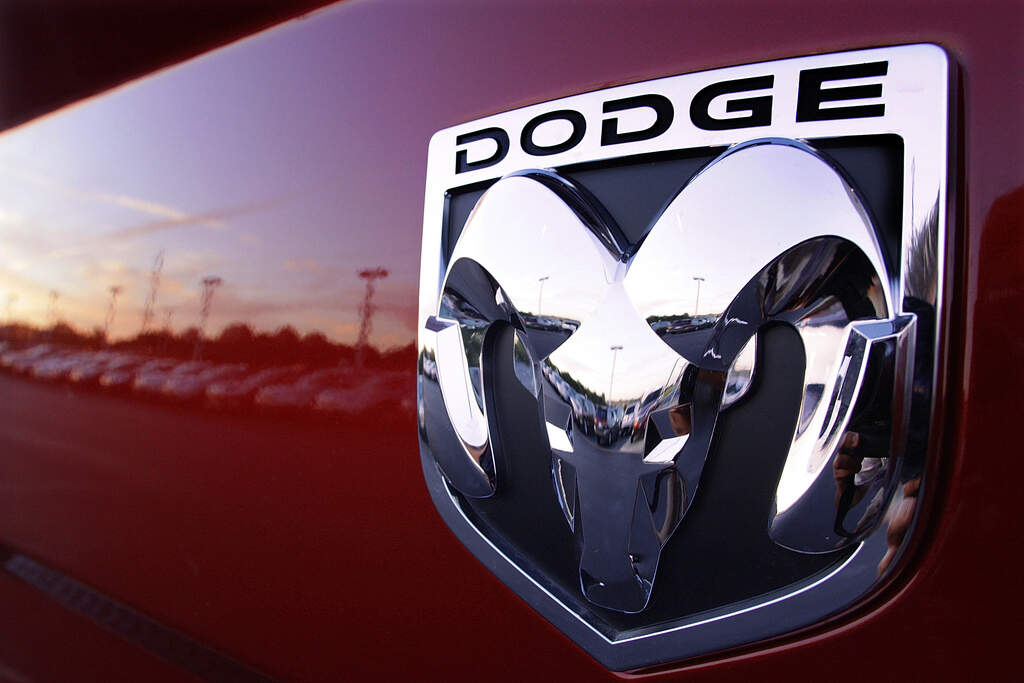
Pedestrian deaths in this country are at an all-time high. And now, the government is stepping in. For the first time ever, the National Highway Traffic Safety Administration has proposed new rules that would affect the external design and look of supersized trucks and SUVs.
Guests
David Zipper, senior fellow at the MIT Mobility Initiative.
Also Featured
Amy Mendelsohn, Chicago resident who was hit twice by SUVs in crosswalks.
Jessica Hart, advocate for Families for Safe Streets and mother of Allie Hart who was 5 years old in 2021 when she was killed in a crosswalk a block from her home.
Peter Kurdock, general counsel with Advocates for Highway & Auto Safety
James Rampton, lecturer at the University of Michigan School of Information and a former lead product designer for General Motors.
Transcript
Part I
MEGHNA CHAKRABARTI: Americans love their trucks. And the bigger, the better. Take the Ford F-150.
FORD ADVERTISEMENT: There's a lot of reasons why you should buy a Ford F-150. Part of Ford F Series, the best-selling truck lineup. F-150 only gets better with time. Tough this smart can only be called F-150.
CHAKRABARTI: The F-150 is also getting bigger with time.
Current models weigh 800 pounds heavier than F-150s made back in 1991. I know that's a long time ago, but they're also 7 inches taller now. And it's not just Ford. Just about every truck and SUV today is much larger than they were even 15 years ago. And those behemoths make up 80% of U.S. car sales. As trucks and SUVs have gotten bigger, they've also gotten deadlier, but not for passengers inside the vehicles. They're deadlier for people outside of them. Between 2013 and 2022, less than 10 years, pedestrian deaths in this country rose by almost 60% and the vast majority of those deaths happened in what's called single vehicle crashes.
In other words, a car hits a person. Amy Mendelsohn of Chicago is lucky. She's survived being hit by an SUV twice. The first time was in 2008.
AMY MENDELSOHN: I was in the crosswalk. There was a couple in front of me with an umbrella. The car seemed to acknowledge and slow down for the couple with the umbrella. And then accelerated into the crosswalk, hitting me who was just six feet walking behind them. And threw me forward ... some whiplash, and I was so young at the time.
I just thought, that's life in the city. It happens.
CHAKRABARTI: Then, in 2013, she was hit for a second time, and it was worse.
MENDELSOHN: This car was making a right-hand turn. I didn't see it coming. It was a total shock. Because I was well into the intersection, had the light with the crosswalk. I was in a school zone at around 4 p.m. Witnesses said that I did a flip in the air, flipped up and then landed back on the ground for the back tires to then roll over both of my legs.
CHAKRABARTI: Amy was severely injured. Her arm required major surgery, a plate and 10 screws. She'll spend the rest of her life in physical therapy. We need to stop looking, thinking about our windshield as a TV screen.
MENDELSOHN: And that's a virtual reality out there. Because that is reality out there. You may feel safe and comfortable inside your vehicle, but you need to consider that you're handling a massive machine. That is deadly.
CHAKRABARTI: Amy is now an advocate for pedestrian safety, but finds it difficult to talk about her encounters, in part because she knows others out there have suffered even worse.
JESSICA HART: My name's Jessica Hart. I am the mother of Allison Hart, Allie, who was five years old when she was riding her bike in a crosswalk and was struck by a large Ford van. And she was killed as a five-year-old. Allie died in 2021. She was magical. She was just joyful and loving and happy and creative and thoughtful and curious.
And she had just started kindergarten, and it was the first year back after COVID.
CHAKRABARTI: Allie was one of almost 7,400 pedestrians killed in vehicle accidents in 2021. The very next year, 2022, even more people were killed, 7,522. And 2022 was also a 40 year high for vehicle caused pedestrian deaths, up 83% since a low of 2009.
Jessica is now a member of the advocacy group Families for Safe Streets. The group offers a refuge for families and individuals dealing with the death of a loved one. It also pushes for greater vehicle safety regulation. Just last month, the National Highway Traffic Safety Administration took an unprecedented step.
It has proposed a new rule whose aim is to lower the rates of pedestrian deaths and injuries. It is the first time NHTSA has proposed a rule dealing with the safety for people outside of a vehicle, and it could have a profound impact on the overall design of trucks and SUVs. The new standard would mandate car manufacturers create test procedures that simulate a head to hood impact, and therefore alter their designs to minimize the risk of head injury for people outside of a vehicle.
Jessica says she hopes car manufacturers move to reduce their car's front ends because a smaller hood height could have saved her daughter's life.
HART: If it had been a smaller vehicle, It would have struck her body at a lower place, and she may be alive today, and that's as a child, and so if something's even taller or bigger or heavier, certainly for me as an adult, if a smaller car were to hit me at my legs, I would be okay, most likely, I wouldn't be dead, but the cars that are on the road today are so much taller, so much heavier, have such poor visibility that they're striking people in their heads, in their brains, their vital organs, torsos, and you just don't stand a chance.
CHAKRABARTI: Jessica Hart says the new NHTSA proposal is a step in the right direction, but only one step.
HART: It's really frustrating that people aren't seeing this for the crisis that it is. And we're getting this tiny little grain of a proposed rulemaking that would require vehicles not create the front ends, not create excessive risk for pedestrian head injuries.
That's a tiny nugget. But it's a nugget. And it's a start.
CHAKRABARTI: So could the new proposal mean an end to those massive trucks and SUVs, the ones with a front end that comes right up to your chest or even your eyebrows? And would consumers want to buy trucks and SUVs like that? David Zipper joins us now.
He's a senior fellow at the MIT Mobility Initiative and a contributing writer to Vox, and he has been following this issue of bigger trucks and SUVs for quite some time. David, welcome to On Point.
DAVID ZIPPER: Thanks for having me.
CHAKRABARTI: How would you characterize the very existence of this new vehicle safety proposal?
ZIPPER: I'd say it's actually really a watershed moment for NHTSA. Really, since NHTSA was created in the late 1960s, the agency has been focused pretty much exclusively on the safety of people inside of cars, drivers and occupants. And that sort of fed this trend, that you can call it car bloat or truck bloat, just ongoing expansion of vehicles because Americans have conflated a safe car with a bigger car and as you've already shown, that creates really serious risks for anybody outside of a car.
And now, with this proposed rulemaking, it's really the first time the NHTSA has said, maybe we've gone too far. Maybe we need to actually have a rule, not a suggestion, but a rule within what's called the Federal Motor Vehicle Safety Standards to protect pedestrian safety. I think it's a really big deal.
CHAKRABARTI: So the first time ever the concern for people outside of a vehicle. Now, but what specifically does this proposed rule say, because it doesn't, as far as I read, it doesn't say you can't have a giant, front end of a truck anymore. It's not actually putting any dimensional demands on a car or a truck or SUV design.
What is it actually saying?
ZIPPER: That's right. It's a little bit more complicated than that. What basically, the test is modeled off of what other countries have been doing, frankly, for many years. The U.S. is a laggard in pedestrian safety. Europe has been doing this for 20 years, Australia for many years, Japan as well.
And basically, what NHTSA is suggesting is that we, the U.S. follow what those other countries are doing, which means basically conducting a very carefully observed test with something called a head form that resembles a person's head striking the front of a vehicle and measuring what happens to it.
So that, if the damage inflicted on the head form exceeds a certain threshold, then that car is not, doesn't pass the test and can't legally be sold in the U.S. actually. So what that means practically is that vehicles that have a higher front end are more likely to score badly and also vehicles.
This is where it gets a little nuanced. If the hood is relatively firm, so the head bounces really hard off of it. That's bad. But if it's also really soft, that could be bad, too, because then the head could go straight as it could basically indent the metal on top and hit the engine block below, and that's really bad, too.
You want a Goldilocks hardness, if you will, in the middle. So there's a number of, it's hard to say exactly which models would flunk this test right now. Obviously, if this becomes a final rule, automakers have, will probably have years to adjust their models, but it would definitely be an issue for the larger SUVs and trucks on the market now.
CHAKRABARTI: Now, you said earlier that people have been conflating bigger and heavier vehicles with being more safe. I'm not, I don't necessarily think it's a conflation, like people inside those vehicles, maybe not any more or more safe than in passenger sedans, but it actually makes intuitive sense that if you've got a lot of mass around you, you're more likely to have that mass absorb a crash rather than your body.
ZIPPER: Yeah, I guess it's a matter of if you're thinking about safety from a societal perspective or from an individual perspective.
CHAKRABARTI: That sounds very American to me.
ZIPPER: Doesn't it? Yeah, if you're going to take the libertarian perspective of, say my safety matters and the rest of you, good luck, then it's actually true.
You're right, Meghna. Get the biggest car possible, because even if you have a big car, a slightly bigger one gives you a tiny bit maybe more safety in a crash. The problem is that tiny bit of additional size creates major problems for everybody else outside the car. And this is why, where the failure to regulate creates a societal problem. Because if everyone is looking out for their own interest you end up with a pretty big collective issue at the end of the day.
CHAKRABARTI: Yeah. I'm not sure if it's so much like a libertarian streak in this country. This is if you happen to be walking on two feet rather than behind the vehicle, behind the wheel of a car, tough to be you, but it's more the vehicle centric nature of American culture, right?
That's what we're thinking first and foremost when we think about safety. So on that point, just a quick yes, no, and then we'll follow up after this break, David, up until now, has there any been any required crash testing for new models that involved a vehicle crashing into an external crash test dummy?
ZIPPER: You mean crashing into a pedestrian type of thing?
CHAKRABARTI: Yeah.
ZIPPER: No, that's not been done.
Part II
CHAKRABARTI: You're probably very familiar with those videos of car safety tests, where a new car model gets crashed into a wall, and there's a crash test dummy on the inside of the car. You've seen those slow mos. Disturbing, but they're really important tests for vehicle safety.
The National Highway Transportation Safety Administration is now proposing a new rule that for the first time would require crash tests for new vehicles and their impacts on pedestrians. This hasn't been done before, and it could actually go so far as to change vehicle design in this country, and David Zipper joins us today.
He's a senior fellow at the MIT Mobility Initiative, and he's been following this issue for a long time. David, I want to just take a step back before we dive into even more of the nitty gritty of the proposal and ask, how did we get here? Because I'm old enough to remember when trucks weren't all that big.
And it seemed like all of a sudden, they got huge. Now, huge and awesome, I'll be perfectly frank. I still yearn for a Ford F-150 Lightning but they also, it feels like it happened overnight. I don't know, 10, 15 years ago.
ZIPPER: Yeah. There's a number of things that happened at the same time to create the sort of situation we have now, with not just such big SUVs and trucks, but so many of them, four out of five new cars or SUVs and trucks.
I think a part of it goes back to the 1970s, when SUVs and trucks were together, less than 25% of new car sales, they were really used, SUVs weren't around at all, really, back then, and pickups were used mainly for workers, construction workers or something like that. And at that time, the federal government actually enacted a rule that helped seed the rise of car bloat, which was some fuel economy standards called CAFE that basically created a lenient category for light trucks, quote-unquote, light trucks or SUVs and trucks.
And that incentivized automakers to sell more of those light trucks and fewer of the sedans and station wagons that would require them to be more aggressive in the sort of fuel economy technology they had to install. So that was, and by the way, that did not just accidentally happen, that was the product of lobbying by the automakers, particularly a company called AMC that was selling the Jeep at the time.
CHAKRABARTI: Yeah, I was going to ask you, how did that little carve out in the emission standards happen?
But you just answered it. So go ahead.
ZIPPER: I got you. I got you. Yeah so that sort of set the process in motion. And then in the 1980s, I think, Detroit realized that they could make more money off of selling an SUV or pickup than a sedan or station wagon. The price point was a bit higher.
So you started seeing a lot of advertisements suggesting that these weren't work vehicles. They're actually a great way to see the great outdoors or to bring your family on a trip or to go to school. And then you really start seeing the vehicles take off. Now that explains how they're gaining sort of market share, if you will.
And by the way, they're starting to also get a little bit bigger. Because every time there's a product refresh, you have the auto company workers thinking how do we get a leg up on the competitors? Maybe we add a little bit of extra leg room. We make it a little bit taller. And bit by bit, the models are going to keep getting enlarged over time in that way, right?
So that, I think, is a really big part of it. And then, to be totally honest. Americans, a lot of Americans like big cars. I think it's important to acknowledge that there is something here where people saw that they could have more space. Maybe obesity has risen in America in the last 40 years and having more space to be able to sit into a vehicle.
I've heard automakers say that's a contributing factor. So there's a lot of things happening here at the same time. And I guess the last point I might make is I do think that there's a little bit of a defensiveness sometimes in people's decision to get an SUV instead of a sedan or a larger SUV than a medium sized one. Because they look around and they see so many other SUVs and pickups on the road and they think, I don't want to be in a disadvantage.
If there's a crash and that's not an irrational thought, by the way, so I would offer those as some of the factors that have contributed to where we are now.
CHAKRABARTI: But then, like you said, the other big difference is that they are 80% of new car sales now. So they have basically pushed sedans off the map in this country.
I can't remember which one of the big U.S. carmakers doesn't, is it GM that doesn't even make a sedan anymore or Ford? I can't remember one of them.
ZIPPER: They're both actually in the U.S. yeah. Malibu is gone. That was just a few months ago.
CHAKRABARTI: That was the last one. That's right.
ZIPPER: For GM.
CHAKRABARTI: The first car I ever drove in high school was a used Chevy Malibu actually.
And it was huge though. I have to say it was big for a sedan back then. But, I'm mentioning the U.S. carmakers, but to be fair, this has to do with every SUV and truck sold in America. So even the foreign makers have upsized their vehicles.
ZIPPER: Yes. Yeah, I think that's fair to say. The foreign makers, often foreign markets still have more sales for sedans and sometimes station wagons.
So they still have that in their DNA. They're still a little more used to producing them, things like the Camry or whatever. But you're right that it's the same, this trend toward bloat. It really goes across pretty much every automaker that I've looked at, selling in the United States.
And by the way, Meghna, this is a trend that's less pronounced, but still visible in other countries too. Almost half of all new cars last year sold worldwide were SUVs, which is an all-time record.
CHAKRABARTI: Wow. Earlier on when I introduced this topic, it was because of the correlation between truck bloat, as you're calling it, and this dramatic rise in pedestrian injury and deaths, starting around what, 2009 or so, the curve just goes, starts going very steeply upward.
But correlation, of course, is not causation. So can we say for sure? That these bigger, heavier, taller vehicles are a driving factor in increased pedestrian deaths in this country?
ZIPPER: Yeah, that's a really important question. And to answer, I would say, it is not credible to say that car bloat or truck bloat is the only reason why we have a pedestrian safety crisis in the United States.
But it is also not credible to say that it is playing no role in the pedestrian safety crisis. We know that it's a contributing issue, and I can offer just one study by a University of Hawaii economist named Justin Tyndall, who basically looks solely at the shift from sedans to SUVs.
Not looking at ongoing growth in SUV size, not looking at pickups, but just between 2000 and 2019, he concluded that if the Americans who shifted to an SUV from a sedan had just stayed within a sedan, we would have 1,100 lives saved among pedestrians. So I think that's actually, and there's a number of studies that have basically supported that kind of a finding.
Concluding that there are, for example, major blind spots for tall SUVs and trucks when turning due to what's called the A pillar, which is that sort of structure that we all are familiar with between the side window and the windshield. On a tall SUV and truck, those pillars are pretty big, and they can easily conceal a pedestrian.
And there's a bunch of studies showing also that tall and flat front ends on vehicles, which is very common on SUVs and trucks, are far more likely to kill a pedestrian in the event of a crash, like 45% more likely. So I think it's very clear that this is a contributing factor. But I appreciate your point that it's not the only thing that's going on here.
CHAKRABARTI: I'm going to ask you about smartphones and distracted driving in a few minutes here, but you talked about blind spots and the side blind spots, but I think the other thing that people have been taking note of recently is just directly in front of a driver in one of these big trucks.
There's a very significant front end blind spot as well, because as you just mentioned, the hoods are so high and so flat. So here is a 2022 NBC News report that explores this, and you'll hear reporter Vicky Nguyen on the supersizing of SUVs and trucks and that front end blind spot.
(MONTAGE)
With parents' permission, we lined up kids in front of the best-selling car in the country, the Ford F-150.
One, two, three, I couldn't see any of them over the hood until finally --
The 11th child sitting down, I can see the top of her head, her little white bow.
We had similar results with the Toyota Tundra, the Cadillac Escalade, and the Jeep Wagoneer.
CHAKRABARTI: A huge blind spot in the front end as well.
ZIPPER: That's exactly right.
That's exactly right. And it's a huge issue, particularly for children or those who are in wheelchairs or pedestrians. It is. And by the way, this is not something this blind spot issue that NHTSA is yet addressing. They focused on this head hood impact. Hopefully in the future we can look at the blind zone issue too.
CHAKRABARTI: Okay. That's an important point. Because it may be even it says hoping they can get two birds with one stone here. I don't know. Because if they brought the front, if car manufacturers have to bring that front end down in order to achieve the impact safety, who knows what that might do with the blind spot.
But you also then are reminding me of another special specific aspect of the NHTSA proposal, which is, I believe these pedestrian impact tests or head impact tests have to be done at speeds at 25 miles an hour or below?
ZIPPER: That's right. The test simulates a collision with a vehicle moving at 25 miles per hour.
CHAKRABARTI: Okay. And why did they cap it at that? They do that, I think that's the standard speed that is used for the same sorts of tests in other countries as well, are very proximate with 40 kilometers per hour, but you're, I think, alluding to a important point, which is lots of pedestrians get hit at higher speeds than that.
And it's not clear that what you can let's put it this way, you could assume that the damage done to a pedestrian head in a collision that's going 30 or 35 miles per hour is going to be worse. And that's not something that NHTSA is proposing to look at with the test as proposed right now.
CHAKRABARTI: Yeah, it looks like they're not considering extent of injury, but sheer numbers, right? Because I just pulled it up here because I thought I might as well look up the answer to a question I have. And it says blah, blah, blah, blah, blah impacts at vehicle speeds up to 40 kilometers or 25 miles an hour.
And then NHTSA says, because those impacts encompass about 70% of pedestrian injuries from vehicles. Because that makes a lot of sense, because I guess a lot of it's city driving or parking lots or stop signs, things like that.
ZIPPER: Yeah, but I think you're right. That's numbers, it's not severity. If you're going to get hit by a car going 45 or 50 miles per hour, which does happen, the way we've designed streets in this country, you're in really bad shape.
And I don't want to be cavalier about it, but they're throwing up their hands and saying we really can't make any promises about that.
CHAKRABARTI: I have to say that we did contact Ford, GM, and Stellantis to get a comment from them or if someone from those major companies could join us.
They all declined and pointed us universally to the Alliance for Automotive Innovation. It's an industry trade group. And the Alliance sent us this statement, quote, safety is a top priority of the auto industry. In the 10 years since NHTSA first began considering this plan, vehicles on the road have gotten even more safe as automakers across the board test, develop and integrate breakthrough safety technologies, that we know can help save lives and prevent injuries for drivers, pedestrians, and road users. And then they go on to say, unfortunately, the agency, meaning NHTSA, deviated from standards already in place around the world, a decision that could require new vehicle designs and additional costs for vehicles in the U.S. market, end quote. What do you make of that, David?
ZIPPER: I have many thoughts, Meghna.
CHAKRABARTI: Do tell.
ZIPPER: One is the cars are getting safer over the last ten years. Tell that to the pedestrians, the families of the pedestrians who have been getting killed as we've seen pedestrian deaths shoot up.
And if we're talking about oh, no, we're going to actually, these requirements could add additional costs to vehicle construction, I shrug my shoulders a little bit and say, okay, safety is the priority number one, so I'm not so sure we should be worried. And by the way, in that proposal for this head hood pedestrian safety rule, I believe NHTSA estimates the marginal cost for adhering to this new standard should it become law would be $3 per vehicle, $3.
I think that protecting pedestrians or taking a step in that direction is probably worth $3 per vehicle. If the automakers don't agree, then I'd like to understand why.
CHAKRABARTI: I would say, I think that the car manufacturers do take exception to some of the claims even that we've made here in this hour, because thinking about recent-ish changes that were required to be made, I think there's been a lot of concern, for example, that cars are getting very quiet. And for people who are differently abled regarding hearing or vision, even, that there have been some rules put in place, and that would be for the safety of people outside of a vehicle, so maybe this NHTSA proposal isn't all that novel.
David?
ZIPPER: I would say if a vehicle is going to be making noise at 40 miles per hour, I don't know that's gonna do much good for the person that's struck at that speed. But what I think they probably are referring to, and I've heard the Alliance for Innovative Innovation make this point previously. They're probably thinking when they say there's new technologies that are coming out and are being mandated, there's a technology called pedestrian automatic emergency braking.
And that's something that is genuinely constructive, and the automakers have agreed to have a mandate around in 2029, so a ways away. But what this technology does is it basically forces a vehicle to halt when a pedestrian is identified by sensors of various kinds in its past, it is a truly useful technology that some vehicles already have now and automakers often make a big deal about.
It doesn't work all that right now. It often doesn't work at night or when cars are turning. Hopefully it gets better by 2029. But even at that point, and I think this goes back to what we were talking about earlier. PAEB, as it's sometimes referred to, really can only prevent a crash if a vehicle is going, below 40 miles per hour.
It's not significantly below 40 miles per hour. Above that, you're still going to have an impact, and that's where this sort of headhood pedestrian safety rule, which affects car design or car shape, comes into play. That's what I would say.
CHAKRABARTI: The automakers say that they've spent, what, more than a billion dollars developing the PAEB as you mentioned, and they'll point out that they voluntarily agreed to deploy these systems, and you said 2029.
It looks like on some of the vehicles they said they're going to have it on all new vehicles by 2025 even. So earlier, I guess the argument that they're making is that there are other technologies already in the works, sensing, lane assist, automatic emergency braking, things like that, which go a long way to assuring higher degrees of pedestrian safety, such that NHTSA wouldn't have to propose a new rule that would act that could actually have a major impact on the look and external design of a car.
That, I think that's what their issue is.
ZIPPER: Yeah, I think that's probably relatively fair. It's unfortunate that they're not here to explain their perspective in more detail directly. And I think, PAEB, I want to be careful here. PAEB can ultimately be a very useful, constructive technology that can save lives.
It's pedestrian automatic emergency braking. But nobody who works in this space says that it's foolproof. Nobody says that it can ever prevent all pedestrian crashes or even close to that.
CHAKRABARTI: Nothing's foolproof, right? Because as long as a fool behind the wheel isn't actually doing their job as the driver, nothing's going to be a hundred percent, David.
ZIPPER: That's part of the problem, the fool behind the driver. There's an issue there, because if drivers end up overestimating the value of the vehicle. That technology, they may actually drive in a more risky way. We've seen that happen in the past with seatbelts and airbags, and there's a risk there too, I would say.
Part III
CHAKRABARTI: Now, David, if you just hang on here with me for a couple of minutes, we wanted to take a look at what it takes, really the whole process, as much as we could, to fully implement new automobile safety standards. And sometimes it takes years of work, thousands of hours of advocacy, and ultimately a lawsuit.
And we've got a really good example, because all of those things, in a nutshell, is the story of a feature now ubiquitous in cars and trucks, backup cameras.
GREG GULBRANSEN: I just call it the worst thing in the world. It's, it's my true nightmare. You know, my true nightmare. While backing up, I felt a bump and got out of the car and saw that I had just driven over my son.
CHAKRABARTI: In 2002, Dr. Greg Gulbransen, a pediatrician, was backing up his SUV in his driveway. He described to the Today show how his two year old son, Cameron, darted into the driveway behind the car. Gulbransen didn’t know his son was there. He couldn’t see him in the SUV’s large rear blindspot. Cameron was struck by the car and killed.
The Gulbransens lived on Long Island, New York. Their SUV didn’t have a back up camera. At the time, rear cameras were only available in certain models. The Gulbransens, and other families who’d experienced similar tragedies, wanted rear cameras in every car and truck sold in the United States. They took their cause to New York Representative, Peter King.
PETER KING: I can't imagine a more horrific circumstance for a family to go through, for parents to go through. And yet, Doctor Gulbransen, Mrs. Gulbransen, they took this tragedy as an opportunity to save the lives of other children throughout the nation.
CHAKRABARTI: That’s King in 2008. Five years earlier, he first met with the Gulbransens who asked King to introduce legislation to mandate back up cameras. At the time, the federal Department of Transportation estimated that backover crashes killed almost 300 people, and injured 18,000 more every year. Most of whom were children, the elderly, or people with disabilities.
As mentioned, though, it took five years for the legislation to make its way through Congress. It finally did in 2008, in the form of House Resolution 1216, The Cameron Gulbransen Kids Transportation Safety Act, co-sponsored by Illinois Representative Jan Schakowsky.
JEN SCHAKOWSKY: Expanding the rearward visibility standard will give drivers a better means of detecting when small children or objects are behind their vehicles. Some SUVs have rearward visibility so poor that up to 62 children could fit in their blind spot when the driver is none the wiser.
CHAKRABARTI: The legislation passed the House unanimously. It received bipartisan support in the Senate, and was signed into law by President George W. Bush.
To be clear, the new law didn’t require cars to have backup cameras, specifically. Peter Kurdock, general counsel at Advocates for Highway and Auto Safety, says it mandated something more general.
PETER KURDOCK: So bill was passed and it said essentially directed NHTSA to improve rear visibility of motor vehicles. It did not dictate the installation of rearview cameras.
CHAKRABARTI: That distinction goes a long way in explaining what happened next. The Gulbransen Act gave the Department of Transportation three years to issue new rules around rear view safety standards. DOT failed to meet that deadline in February 2011, and instead issued at least two extensions for itself. Kurdock says that gave auto manufacturers time to lobby hard against rear view cameras.
KURDOCK: You know, the agency was looking at different things, mirrors other things. And so obviously, during that process, you know, manufacturers are arguing for different things. arguing that the cameras were too expensive, there were less, you know, expensive alternatives that could set by the requirement. But we, we should, we demonstrated, we believe we demonstrate through technical comments that really the only way that the agency could, could fulfill a congressional mandate was through the installation of cameras.
PATRICK IVISON: The reason I'm here today is to honor those children that didn't survive and couldn't be here. I want to speak on their behalf so that the world understands that it's impossible to avoid hitting something that you simply cannot see.
CHAKRABARTI: As DOT continued issuing rulemaking extensions, advocates returned to Washington. 16-year-old Patrick Ivison was run over by a reversing vehicle when he was barely a toddler. The car tore off much of his scalp and severed his spine. He testified in a National Highway Transportation Safety Administration hearing in March 2011.
IVISON: I sustained a C4-C5 spinal injury, and I was unable to move anything from the neck down. In the police report, it said listed my injuries as a minor scalp laceration and the driver was cited for unsafe backing. So please, please issue a strong standard that eliminates the blind zone behind a vehicle. This standard is just as important to American Children as seatbelts or airbags.
CHAKRABARTI: The extensions dragged on for years. Ultimately, Kurdock’s group, Advocates for Highway and Auto Safety, and Public Citizen, a legal advocacy group, petitioned the US Court of Appeals to force DOT to issue the new safety rules.
The case was scheduled to be heard before the court on April 1, 2014.
KURDOCK: One day before oral argument was scheduled to be heard in the second circuit. Literally the day before DOT announced that they were going to issue the final rule, whether that's a coincidence or not I leave it to you and the listeners to, to put two and two together, we think it's probably not a coincidence. So they finally issued the rule, but it took six years.
CHAKRABARTI: By DOT’s own estimates, the new rule prevents at least 7000 injuries and 100 deaths every year.
So why did it take so long? Kurdock says there are some peculiarities to the U.S .system of automobile regulation.
First, though there are federal safety standards, most of the actual safety testing is done by the car manufacturers. It’s largely a system of self-regulation.
KURDOCK: What happens is that a auto manufacturer self certifies essentially to DOT, the U.S. Department of Transportation, that the car meets all the federal motor vehicle safety standards, all the regulations place on braking and occupant protection on airbags and make hazard, a functional review camera that meets all the requirements of the camera, all those things before it's sold on the lot. And then if someone, whether it's the media or a consumer, if there is, or the sometimes automakers were self report that they find a defect in the car and then a recall is issued and it's fixed. But there's no one testing though. No one testing all of those cars before they're sold.
CHAKRABARTI: To be clear, no one other than the car manufacturer is doing the testing before a new model appears in show rooms. Once it’s on the road, however, federal regulators do sometimes independently test vehicle safety.
In Europe, the system is different. Manufacturers must submit car schematics to regulators who must approve the design before the vehicle can be built.
Second, safety regulations are subject to strict economic analysis.
KURDOCK: During the Reagan administration, they put a law in place that requires a cost benefit analysis. So every proposed rule goes to the Office of Management and Budget which is part of the White House and they literally do the math in auto safety, do the benefits. Essentially the live saves, the injuries prevented, the crashes prevented. They literally put a number on all of those things. They have the DOT has a literal number that they put on a, they call it a value of the statistical life. And so they add that up and they say here are the costs to the manufacturers and if the benefits exceed the cost, they can issue the rule essentially.
CHAKRABARTI: DOT says that doing that detailed analysis takes considerable time. Kurdock says that the problem is constant regardless of who’s in the White House. And that time is what allows car makers to lobby against new federal safety standards that would impact their entire fleet.
Kurdock believes that’s what needs to change. Overall safety standards need to come first, he says. Which is the opposite of the system we have now, where new safety features trickle into the market.
KURDOCK: It'll go first into very expensive vehicles. The high end, the Mercedes Benz, the BMWs of the world or it will go into the highest level models in a manufacture, the most expensive models. If you want a rearview camera for instance, you also have to pay for the leather package and the heated steering wheel and it's a $6,000 package in addition to the base cost of the vehicle. And that's really cost prohibitive for a lot of families and listen, you know, in their perspective like, yeah, we're going to offer review camera.
We want to offer it as a part of the package and make people pay for it. You know what I mean? And we're like, no, not when it comes to safety like we get it, you want to charge somebody more for the fancy leather seats, you go at it, go for it, but we're talking about saving the life of a child like let's make it standard equipment so everyone can, can reap the benefit.
CHAKRABARTI: That's Peter Kurdock, General Counsel at Advocates for Highway and Auto Safety.
CHAKRABARTI: So David Zipper, to me, that is the fascinating backstory of now something which most drivers say they probably couldn't live without, which is those rear-view cameras, but given that sort of winding road that it took to get that one safety feature into cars sold in this country. What do you mean that it holds, what lesson does that hold in store for this idea of going after truck bloat and pedestrian safety that NHTSA is now undertaking?
ZIPPER: Yeah, I think no, it's a fascinating story. And by the way, now there's a discussion on Capitol Hill about front view cameras. Because as we were talking about before about the big blind spots in front of SUVs and trucks where they can't see children, Senator Blumenthal of Connecticut has called for a mandate for front view cameras that would allow a driver conceivably to be able to see people in that blind spot.
Of course, my initial thought is why don't we just shrink the car a little bit and you don't have the problem. But I think that there's an important lesson from that story, which by the way I think has been repeated many times in the last 50 years of automotive history, where automakers do want to delay, at least if not kill safety mandates, because it gives them time where they can upcharge for those safety features.
This happened with airbags as well. And just as it was just discussed in the previous segment, that's a real issue when you think about it from an equity perspective. Because can you really look somebody who has a lower income in the eye and say, I'm sorry. You can't, since you can't afford the upgrade package, we're now gonna give you a less safe vehicle.
I just don't see how that's something that we should be okay with.
CHAKRABARTI: Now, I have to say that we again, we did reach out to the auto manufacturers. They declined to speak with us. But we did actually get a hold of Jim Rampton, who's a lecturer at the University of Michigan School of Information, and he's formerly a lead product designer for General Motors, of course, not with GM anymore, but has that experience.
And he talked to us about the fact that he's not sure that this rule is really the best idea, or is going to achieve what NHTSA hopes for. Because of what you and I discussed earlier, David, that there are other aspects of safety, distracted drivers and cell phones, which may be worth greater scrutiny.
But he also says that should this proposal go forward, he is confident that car companies and their designers will work to incorporate the proposal into their designs.
JIM RAMPTON: They don't want to be told in general, like how to limit creativity. But at the same time, I also can speak firsthand where we love a good challenge.
And I think that car designers are some of the most brilliant people on this planet and some of the most creative people on this planet. And you'd be amazed as to some of the cool stuff they can think up to not only look, make it look really cool and fun to drive, but also make it incredibly safe.
CHAKRABARTI: David, I'm also wondering it's a challenge, right?
It's a fight sometimes to get these new safety features in as we've been talking about. But ultimately, to Jim Rampton's point, when the rules are made, the car companies do comply and comply well. So is there a faster or more collaborative way to speed up this process so that both the manufacturers arrive at a place of certainty and the public arrives at a place of greater safety?
ZIPPER: Yeah. I think that the lesson there to me is that NHTSA should be setting aspirational goals around vehicle design for safety for the automakers, stretch goals, if you will, like we were talking before about the pedestrian automatic emergency braking standard, which is going to come into play in 2029.
Maybe that should be a lot sooner, both because we have pedestrian safety crisis in this country and because as was just communicated, automaker designers are really freaking smart and creative. Maybe we should basically nudge them to apply some of that brainpower toward the safety crisis that we're facing, as opposed to the styling and other elements that often attract, always attract a lot of attention.
That's what I would say.
CHAKRABARTI: Do you happen to know why NHTSA decided to do this now? Propose this now? Because the automakers were saying that this has been under development for 10 years at NHTSA. I'm not quite sure about that.
ZIPPER: I don't know about 10 years, but it was something that actually Congress required was a step to look.
Congress basically in a bill a couple years ago required NHTSA to develop or explore standards to look at pedestrian dangers. I think from hoods. And that was delayed, like NHTSA didn't hit that, the deadline there, as often happens. But, and frankly, I and a lot of other people thought that they were just going to sit on it through the Biden administration, but they didn't.
And this is basically fulfilling a congressional mandate, a little bit late, but definitely better late than never, I would say.
CHAKRABARTI: We've got about 30 seconds left, David. My last question is this, I use the word awesome in thinking about some of these trucks, and I do think they look awesome.
This has got to be an issue that's top of mind for the manufacturers, right? Don't you think they're wondering if we have to change the exterior design, will consumers still want to buy trucks and SUVs like that?
ZIPPER: I think that's a question for them. I think American, we're a auto oriented country.
You can't get around most of this country without having an automobile. And I think the idea that suddenly Americans are going to stop buying vehicles because SUVs and trucks are a little bit more safely designed is wrong. To me, a bit preposterous.
CHAKRABARTI: And do you know what the next step is in this process?
Like how long does the comment period for the proposal go?
ZIPPER: Yeah, that's important. There's a comment period open now for about the next month. I believe you can find that online. If you have thoughts about this and then NHTSA could issue a final ruling in the waning days of the Biden administration. They could change what they have, or they could frankly, let it go.
We'll have to see.
This program aired on October 7, 2024.