Support WBUR
Sarah Longwell on what’s driving the Trump-to-Biden voters in 2024
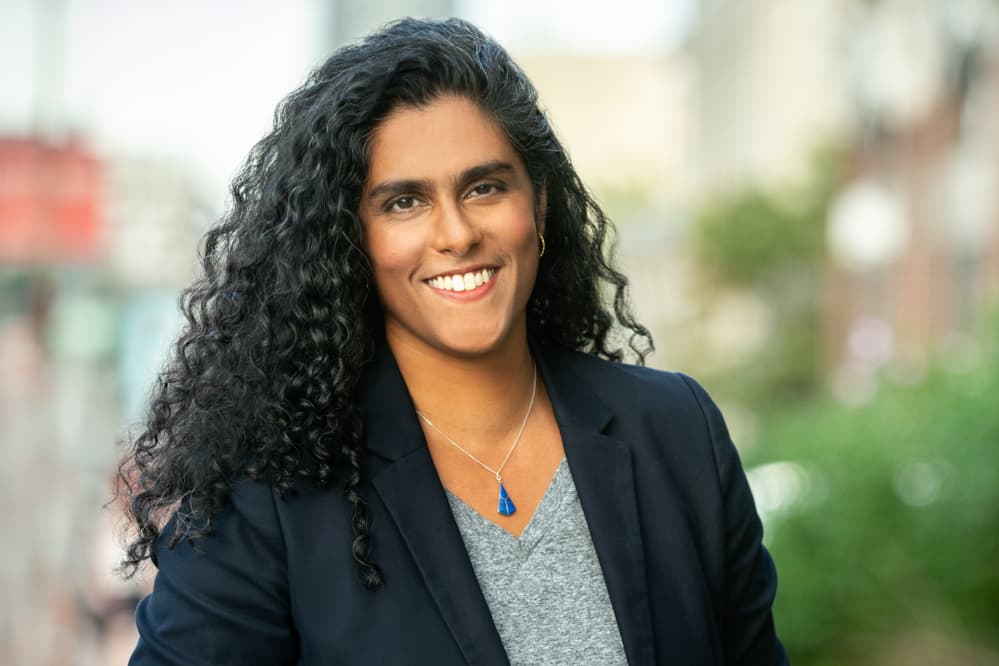
For years, Republican strategist Sarah Longwell has been conducting focus groups with so-called “flippers,” voters who supported Donald Trump in 2016 then flipped to Joe Biden in 2020. Longwell’s analysis on what’s influencing them in 2024.
Guest
Sarah Longwell, Republican pollster and strategist. Director of the Republican Accountability Project. Founder and publisher of the center-right online publication The Bulwark. Host of the podcast "The Focus Group."
Transcript
Part I
MEGHNA CHAKRABARTI: For years, Sarah Longwell has been talking to voters all across the country, conducting hundreds of hours of focus groups to ask about what's motivating voters and how they plan to cast their ballots. Several of those focus groups have been with so called flippers, voters who supported Donald Trump in 2016 but flipped to Joe Biden in 2020.
Now, just three weeks away from Election day, we're going to talk to her about what's motivating these voters in this year's presidential race. Sarah Longwell, by the way, is a Republican pollster and strategist. She's the director of the Republican Accountability Project and founder and publisher of the center right online publication, The Bulwark.
She also hosts the podcast, The Focus Group. Sarah, welcome back to the show.
SARAH LONGWELL: Thank you so much for having me. I'm very happy to be here.
CHAKRABARTI: So I'd like to start by really setting a broad table here. Because throughout this election, but especially in the past two or three months, we've heard repeatedly many folks saying that this may be the most important or consequential election in a generation, if not more.
I'm wondering if the voters that you've been talking to, do they see it that way or do they see it as something different?
LONGWELL: The thing about voters is that they're very different. There's a broad spectrum. And I would say if you are a democratic voter or a left leaning independent, that's probably true. Because for those people, they revile Trump.
He continues to be, the fervency with which his base supports him has a mirror image on the left of people who despise him. And so for people who believe that Trump is an existential threat to democracy, who believe that he represents everything that is dark and negative about our politics.
They very much see it as incredibly important, because what's important is keeping him out of the White House. But for a lot of more marginal swing voters, they tend to view, they don't view politics with the same existential sensibilities. It is much more about, okay, who's going to do what for me?
They don't see Trump necessarily as a unique political figure. And I would say this is one of the things that's really different about this election, which is now Trump's been with us for a very long time, almost a decade. And so one of the things that's always interesting to me is when I talk to younger voters, who, let's say, are in their early 20s, who talk about coming of age with Trump in the picture.
For a lot of us who are older, Trump coming into the picture was just a complete diversion from regular politics. None of us took him seriously at first, didn't think there was a world in which he would become a political figure. But now, if you are a young Republican who's 24, 25, you came to the Republican Party for Trump, you want a Republican, you don't even understand like what a Nikki Haley situation is about. That's not, and so I think that there's, all voters are different and obviously I consider it to be, I'm with those voters who think it's an incredibly important election.
I think that it would say an enormous amount about us as a country. If we were to reelect a person who didn't engage in the peaceful transfer of power and claimed that the election was stolen. I think that would be enormous and a big change for who we are as a country, but no, a lot of voters don't see it that way. And see us as, not as politics as usual exactly, but I wouldn't say they see the stakes as high as some of the rest of us, and frankly think some of us are hysterical.
CHAKRABARTI: Oh, interesting. You said two very important things there, which honestly, I hadn't thought about before, that if you're a young Republican in your early 20s, let's say, and you came to the party for Trump, you can't imagine a Republican Party without Trump. This means that Trumpism as a way of viewing the world and a desire for America has in fact fully embedded itself well beyond Trump and so therefore there's going to be a reverberating effect for, I don't know, generations?
LONGWELL: I think that's right. One of the things that I try to explain to people almost as a time saving mechanism, is to say the Republican Party of Mitt Romney, the one that I grew up in, the one that interested me as a young emerging conservative, it is gone. And it is not coming back.
And so nobody should think that it's coming back. The Republican party may cease to be as dangerous as it is at this moment, as anti-democracy as it is, as anti-truth as it is. It may move on into something that is healthier, but it will not look like a political party that cares about limited government, free markets and American leadership in the world. That three-legged stool, that Reagan-esque conservative, that's gone. And so I think that's why you see certain candidates, somebody like a Larry Hogan, who tries to speak that language, finds himself a man without a country, a man without a home, a man without a party, because that party's just gone and it's not coming back.
CHAKRABARTI: Now, you talk to voters of all political persuasions, as you said, and very clearly the existential terror, let's put it, is amongst Democrats and the left. But is there a same sort of fervent set of feelings amongst the people who continue to support Donald Trump? If not terror, then that perhaps 2024 is the opportunity to return him to the White House to complete the work that in their minds may have been cut short by him not winning in 2020.
LONGWELL: So I would say that's a base perspective. There's a Donald Trump base in the Republican Party that sees 2024 as like a revenge tour, right? This was stolen from him, and this is how he gets back in there. And that's about 70% of the Republican Party, which sort of lines up with the part of the party that thinks that the last election was stolen.
And then you see there's this sort of 30% that either voted for Nikki Haley in a primary or who would say in a survey that if Trump was convicted of, let's say, the crimes on January 6th, or the documents that would matter to them, like there is this sort of smaller but still real portion of the Republican Party that might care more about the Republican Party than Trump.
I would say that is a way to think about the Republican Party, is who are the voters who identify with Trump specifically? And then who are the voters who come to the Republican Party because it's a collection of ideas that they like? And for those 30%, I think some of those voters have become now part of a sort of tenuous Democratic coalition.
Like they vote, they voted against Kari Lake and a lot of the more extreme candidates in 2022. They voted against Donald Trump in 2020. But they might still consider themselves center right. And then there's also within that group of people, there are people who hold their nose and vote for Donald Trump. Because they are defined by a negative partisanship. Because just about anything that Donald Trump does, they can justify by telling themselves that the Democrats are worse, and they are being held in that coalition.
Not against their will exactly, because they're going along with it, but they're not there for Trump. They are hoping he goes away, but the entire Republican party, from Marco Rubio to Nikki Haley, with the exception of a few notable exceptions like Liz Cheney and Adam Kinzinger, they have been there to build a permission structure for what I often call normie Republicans to go along with Trump, by constantly talking about why Democrats would be worse.
CHAKRABARTI: We will get to talking about these Trump to Biden voters in just a second, but everything you say, Sarah, it's actually so interesting. I get lost on a million different mental tangents here, but you're absolutely right. About the genuflection that has been absolute and complete amongst supposedly mainstream Republicans, to Donald Trump.
Is there a sense that maybe some of these, let's return to voters, who hold their nose. As you said, while voting for Trump, are hoping that when he exits the political scene, whenever that might be, that they won't have to hold their nose anymore? Or is that just a fantasy that they have?
LONGWELL: Yeah. So a lot of these people, like, let's take a Mike Pence or a Nikki Haley. I do think that they live in kind of a fantasy world where they don't realize how much the party has changed. And I do think that because I've been doing focus groups now for, more than half a decade, I've had the benefit of seeing how much the voters have changed within the Republican Party, in terms of what they want.
And I think that if Mike Pence had an understanding of the party that he was dealing with, he wouldn't have run for president. You think about Mike Pence and, I always want to ask him, do you think that you could go to a Trump rally without armed security? Because you couldn't.
It's not that they don't like your ideas, Mike Pence, they hate you. They want to do harm to you. They think that you are a traitor. And I think that the extent to which the party has changed seems to have escaped. And there's ways in which you can see a Nikki Haley thinks, okay if Trump goes down, if Trump loses, then she could potentially be, this is why I think she's endorsed him. She thinks she has a future in this party. She doesn't. The voters now, so much of the coalition that sort of kept her in that race toward the end, many of those people are voting for Democrats. And are sent, like they are, there is not enough.
There's just not enough people. She surrounds herself with people, especially the Wall Street Journal editorial page types, who tell her, You could be the future of the party. But you don't have to spend that much time with voters to know they are not interested in going back to that Republican party.
They say it explicitly, We're not going back. It's funny, because that's Kamala Harris's trademark or tagline now. But I hear it from Republican voters all the time. They want, even if it's not Trump specifically, they want an America first direction. And for example, her standing with Ukraine, that is a surefire loser now with the Republican base.
They do not want to stand with Ukraine. And her views on foreign policy are now anathema to the current direction of the Republican Party. So yes, I do think there's a bit of a, I saw Mitt Romney, who I'm just an enormous fan of, and I think is doing most things correctly, but he also, I think, suffers from a little bit of a delusion.
He said, the reason that he's not explicitly endorsing Kamala Harris is that he wants to have a say in what the future of the Republican Party is. And that is just not a thing that's going to happen. The party is done with him. They do not, I know it wasn't that long ago that he was the nominee for the party.
But that party is gone.
Part II
CHAKRABARTI: Now, to those Trump to Biden voters, Trump 2016, then they voted for Biden in 2020. First of all, tell me, why do you think this is an important group to actually focus on?
LONGWELL: If you look at the 2020 election, it's very narrow. Biden won a lot of states, he won Arizona, Michigan, Wisconsin, Pennsylvania, even Georgia.
But mainly by very thin margins, and Trump in 2016 had also won many of those states by very thin margins. And so the people who flipped from Trump to Biden were the margin makers. And obviously there was incredibly high turnout on both sides going into 2020. But these are the people who decided after giving Trump a chance that they were out on him.
And so my interest has been in this particular set of voters this time around. Is Kamala Harris and previously Joe Biden able to hold what I consider to be the anti-Trump coalition together? Because for a lot of the voters who switched their votes, it was less an affirmative vote for Joe Biden and more a sign that they did not want to see Trump return for another four years.
It was an anti-Trump vote. And so I look at the anti-Trump coalition, and they say, okay this is the biggest coalition in politics, the anti-Trump coalition. Can, in 2024, does it hold? And I would say, that's why I talked to so many Trump to Biden voters. Although I also talk a fair amount to another group, which is, I call them the out on Trump group, which is people who voted for Trump twice.
But they were the ones holding their nose. And then after January 6th, they decided they were out. And so those tend to be the two. And I also, look, I run a group called Republican Voters Against Trump. We're going to spend 40 to 45 million in this election trying to persuade these sort of center right voters, right leaning, independent, soft GOP voters to vote against Trump again.
And so I'm interested in this persuadable category of people and holding the anti-Trump coalition together and hopefully growing it.
HAKRABARTI: Okay. You gave us some excerpts of what those Trump to Biden voters have been telling you. And here's one, this is from June. So given this election and the news in this election, it's a long time ago now, Sarah, but this is what the voter said mattered most to him.
VOTER: The unemployment I feel is deceptively misleading. I feel the inflation is a bit out of hands, especially when we're printing money, it feels like, and giving it away. More so taxes are not being utilized inside the country, but it seems more and more outside. So I find a lot of lack of say in our own government.
I feel a lot of who's in power making money, versus the everyday person climbing the ladder.
CHAKRABARTI: Sarah, I have to say I feel like there's two hours worth of analysis in just that 23 seconds of what he's saying. So just begin to parse that for us.
LONGWELL: Look, if Donald Trump wins this election, one of the big reasons is going to be the economy and it feels a little paradoxical because the macro outlook for the economy is quite good.
There's a lot to like about the current economy, low unemployment and the stock market's been reaching all-time highs. And the problem for a lot of these voters has been inflation. Inflation over the last few years, it's all we hear about, not all we hear about, but if you ask people, we always open every focus group with, how do you think things are going in the country, and the cost of groceries, the cost of gas, the cost of housing, whether it's rent or trying to get into a house, all of those things have given a section of voters, right?
If you're a high-income person, then you care about the stock market. For a lot of these voters, inflation has made it feel just impossible to get ahead on. And I think that Joe Biden, one of the things that he struggled with, is because he was proud of the macroeconomic condition, proud of the recovery post COVID.
He had a hard time sort of seeing that there was a lot of voters who still felt really frustrated by how high inflation was and how much it was adding to their cost of living. And as a result, had a difficult time sort of focusing on that cohort. And Kamala Harris has done a better job I think of coming in and saying, look I'm from a middle class family and I'm here to focus on the middle class. And kind of being forward looking and not focusing on defending that record. Because it is just the biggest thing people talk about.
The other thing, though, besides the economy, that I think people care about a lot is immigration.
CHAKRABARTI: Actually Sarah, hold on here for a second. We will get to that. But there's still a lot more in this guy's statement or his sense of the world that I want to help you to help us understand. So inflation, of course, absolutely.
It is, if not the number one, it's in the top two of issues for just about everyone. And I completely hear him when he says it just feels like I don't have any say. But I'm wondering, you said Joe Biden was very proud of those macroeconomic numbers. And I think one of his big failings, especially in say, 2021, 2022, was not using the bully pulpit of the presidency enough to explain why the inflation was happening, right?
You couldn't deny that we hit 9%, but I don't think he got really got into the living rooms of the American people and talked about the various factors. Because you hear this gentleman in this tape saying it's out of hand, especially when we're printing money and giving it away. It looked like he just points to the stimulus or the various stimulus packages as being the source of all that inflation.
So how well informed, or where do you think voters are getting their information about the causes of the inflation that they're suffering from?
LONGWELL: Yeah, you're right. There is a lot to unpack here. So a lot of it is the scarcity mentality that a lot of these voters operate under.
And when he's saying we're printing money, so part of that is like, that he says, yes, like we're causing this inflationary environment with bad policy. But he also, so much of what I hear about voters is we need to take care of ourselves first, like the hostility toward helping Ukraine, the hostility toward immigration.
Trump has done a very good job. And I think that people just genuinely feel this sense of resources are scarce. And if we're going to give money away, other people are getting it, right? Other people are benefiting, whether it's money. I hear this all the time around Ukraine, is the money we're sending overseas to Ukraine, and Donald Trump really nurtures this sense.
This is why, this is what America first really is about. And this is how Americans hear it. They hear it like Trump is for me. He wants me to be getting these things, but Biden and these other global elitists, they want to send this money to other people, or they want to give it to other demographic groups in the country that aren't me.
And so they're going to benefit from it. And I'm not.
CHAKRABARTI: So Trump has done an excellent job in shaping the narrative around that, when in reality, in comparison to the overall federal budget, foreign aid is always this like, foreign aid or foreign military aid, even the special aid to Ukraine is always just a minute fraction.
LONGWELL: But that's why I talk about the scarcity mentality, when you're able to get people in the mindset and this is, look, the Democrats are doing this too when they talk about price gouging. Everybody understands there's a thing that people are frustrated by, let's give them someone to blame.
And, you're right, just going back to your point about the bully pulpit, I think one of Joe Biden's biggest failures in not stepping aside earlier and not realizing his own limitations, it came at the expense of him being able to be a strong communicator at a time when Americans really needed to be communicated with. The extent to which a lot of those big bills that got passed, the only thing that people knew about them was their price tag.
People didn't know what was in them. They didn't know how it might benefit them. And there was nobody with kind of a relentless messaging ability. And this is where Donald Trump really does thrive, in some ways by having a sixth grade command of language.
CHAKRABARTI: Fourth grade is what the linguists say.
LONGWELL: Sure. What I mean, whatever it is, he relies on it. Look, when it came to the economy, Donald, the reason that people have this nostalgic sense of the Trump economy. Now the economy, he was running it hot. It was good, but he also walked around all the time saying best economy for Black people, best economy for women.
Hey, buddy, how's your 401k? He was constantly touting the economy, constantly reinforcing. And this is a thing that Republicans are just better at than Democrats. They create the environment they want to live in. And many times it is built on lies and misinformation, but they still push relentlessly so that people are living in their reality.
Whereas Democrats tend to be much more trying to like respond to people. And as a result, are not very good at driving a narrative. And Joe Biden was particularly not good at this, because he was just ill suited in the moment. Because of his age, and because he's not naturally great at this. But they never figured out how to drive this message.
And it is costing them now.
CHAKRABARTI: Okay. So you mentioned immigration, obviously the other big I issue of the election. Here is another Trump to Biden voter again from June, who said that is his most important issue.
VOTER: The immigration issue that's hitting Arizona, hitting the whole country. I live in an area, it's called Ahwatukee, it's right at the beginning of Phoenix, and we see hotels that are closed up.
The lights are off, but there's cars and cars parked all around it. So they're housing these immigrants in hotels, which they need to stay somewhere, but that's not on my pay day.
CHAKRABARTI: Sarah, I think this is the issue that's perhaps more than inflation, the most radioactive one for Democrats, because a while ago, we did several shows with dyed in the wool Chicago Democrats, they're Black, who were willing to say openly that because of the way that migrants were coming into Chicago and the amount of resources going to them, they were not going to vote Democratic.
I'm just wondering, again, like how is this playing out amongst those margin voters, as you said, are the ones that are so important this time around?
LONGWELL: Yeah, look, people think that immigration is out of control. They just do. And there's a reason that even somebody like John Fetterman, who's quite progressive, in a state like Pennsylvania, a Democrat talks about the need to secure the border.
And it's because voters in Pennsylvania care about securing the border. And I think that one of the things that Joe Biden's administration did that is really, I think Kamala Harris is struggling to deal with, is that they closed the border quite late, but it demonstrated that it could be done. And I think that people don't think about these border states.
There's a reason that right now, Arizona, which has been an increasingly good state for Democrats, as more of these college educated sort of suburban voters in Maricopa County, vote Democrat. Right now, it's where Trump has been putting up really strong numbers. The strongest ever. Despite the fact that they have both an abortion ballot initiative and a terrible Senate candidate and Kari Lake that the voters have already voted against once.
And it's because if you listen to voters in Arizona, they are very upset about the border. And I think, hear people say all the time why does people in Pennsylvania or Ohio care about these things? The extent to which immigration in voters' minds has become linked to crime, to drugs like fentanyl and then it goes back again to this scarcity mentality, right?
You could hear in what that gentleman was saying, they're getting something and I'm having to pay for it, and I don't like that. And that's what I hear from people all the time. They actually, they're not anti-immigrant really, I hear that they say things like, look, I want people to come here and I have friends who came here, or my parents came here, my grandparents came here, but they say a few things that you hear over and over again.
One is they want people to come, in their words, the right way. And two, they want to know who's in the country. They don't want an open porous border. And that has just become a real liability. And that's why you hear Trump trying to say that Kamala Harris was the border czar or was in charge of the border.
And I think with the swing voters, the ones who leaned going back to Trump, the two main reasons you hear are about inflation and then immigration and crime, but they tend to be tied together in voters' minds. But I do just want to say about these swing voters, the vast majority of them are sticking with Kamala Harris.
I think what I, in every group, there's usually one or two people that are leaning, going back to Trump. Now, on one hand, that's a positive for Harris, because most of these swing voters are sticking with her. On the other hand, with the margins being so slim, if you're losing a couple people in every group, once you get into sort of the aggregate, the macro of voters, what does that mean if you chip away at those very narrow margins?
CHAKRABARTI: Okay, so there's something very critical that you said, I just want to highlight, that when it comes to immigration, many of these voters are telling you that they're not opposed to immigration, they understand how important it is to the country, not just through their own family histories, but I would say that they do understand the economic importance of immigrants, but they're saying that they want folks to come into the United States in the right way, which I presume is through accepted legal channels and for authorities to know who they are.
I don't have to tell you this, Sarah, but for the sake of saying it out loud, these are not perspectives from the radical right, right? The radical right wants to shut down all immigration into this country, period. These are very sensible sort of desires. But I wonder if you think taking you back to your sort of strategist role, that Democrats understand that enough?
Does the Harris campaign understand that enough? Or are they just so afraid of their own base that they refuse to even engage with these sensible desires with these swing voters for fear of being cast by their base as being anti-immigrant, or racist or what have you? I'm just wondering what you think about that.
LONGWELL: Yeah, look, when I talk to Democrats, now that I'm in the business of trying to keep Donald Trump out of the White House, and have been for a couple of elections, and candidates like him, which are now proliferating across the Republican Party. I spent a lot of times telling Democrats, look, your biggest vulnerability is immigration.
You can't just have no policy on immigration. Because the fact is people understand clearly where Republicans stand on it. Even if they think Republicans are too hostile, even if they think Trump is too hostile, one of the things Trump's been able to do and immigration is really the issue that made him a viable candidate.
The Build the Wall, for voters hearing that, they didn't, they never took him super literally on the idea that he was going to build a wall, and Mexico was going to pay for it. What they heard is he was going to take immigration seriously in a way that they felt like our political class had just decided that they weren't going to do anything about this issue.
And people do want something done about it. They want a reasonable legal pathway for people to come here, but for us to know who's here. And so I constantly say to Democrats, like you have to have a position. And I do think that they are held hostage to some degree by people in their coalition who don't want crackdowns on the border, or just don't want the border to be as secure as we need it to be.
And I just think that's a vulnerability for them that they're going to have to figure out. And I do wonder, Joe Biden, did let the border be far too open and then did shut it at what looked like a politically expedient time. The crossings have gone way, way down. And now Kamala Harris is trying to tout that. And she's trying to, I think rightly, she's going on offense on the fact that Donald Trump wanted the immigration issue.
He didn't want a solution to it because he wants the issue. The problem is that he knows he wants the issue because it is a potent one.
Part III
CHAKRABARTI: Sarah, you had mentioned previously that to be clear, most of the Trump to Biden voters that you have done these focus groups with are leaning towards Harris this time around. And we've got some samples here of why that is.
Here is one of those voters talking about why he feels positive about the current vice president.
VOTER: I didn't know much about her, if anything. She was pretty much in the dark, and when they first made this transition, I thought, oh brother, this is going to be horrible. Having said that, and now watching her in action, reviewing her background in the political theater, the woman speaks beautifully.
She has a wonderful level of intelligence, consideration, and I feel true inner decency.
CHAKRABARTI: That's interesting. That last line about true inner decency. Okay, here's another voter who says he still needs to know more about Kamala Harris.
VOTER: Her style is great. I just wish I could really learn more. And because of that, I'm not going to give it my full 100% because I just have to learn more.
See how things are going to fall out with this. Now, the Vice Presidents too? Yeah, if it was the Vice President doing the whole thing? Hands down. Okay, yeah, Vance scares the stuff out of me.
CHAKRABARTI: And here's one more who says that he has been very negative on Trump from after 2020, even though he voted for Trump in 2020.
And this is what he says about Kamala Harris.
VOTER: She's a child of immigrants. And I think that's going to help her understand both sides of the border issues. And I think that she's going to be very good for that. And the fact that she's a lawyer and she reminds me a lot of Obama, just the way she carries herself, the way she speaks.
CHAKRABARTI: That last voter and forgive me, I said he, I should have said she. So Sarah, tell me about these various reasons why these Trump to Biden voters are looking more favorably on Harris.
LONGWELL: Yeah, I've actually been genuinely surprised by how well she has done with these sort of swing voters. And I think it comes from a couple things. One is, let me tell you what, these voters, they were out on Joe Biden. Swing voters. Before Joe Biden got out of the race, the number of people, including people who were left leaning independents or soft Democrats, they just thought Joe Biden was too old.
They didn't think it was responsible to vote for him again. They weren't going to vote for Trump, but they didn't think they could affirmatively vote for Biden. And then she got in there and I think immediately, and she benefited too from the fact that I was concerned when she got in. Because I said, I've been listening to people talk about Kamala Harris.
We asked about her in the focus groups and have for years and people would say, Yeah, I have a negative impression of her because I don't know her. Don't see her. Don't know what she does. And I was like, Oh, man, people aren't that fond of her. But then the second they got to, I actually, it turned out to be a real asset, because they didn't know her.
And so she got to reintroduce herself to people as her own person, her own candidate, and they liked her. They thought she seemed like a breath of fresh air. I think for people who were just so beaten down by having to face this choice of Trump versus Biden again, her sort of new perspective and her just bringing, people talk about not exactly the joy, which I think is just a smidge schlocky, but they do like the optimism. They do like the forward looking nature. She feels like something fresh and new. And look, we have been in just a series of change elections. And I think that her ability to seem not like the incumbent, but instead the new fresh candidate. I do think that is her superpower going into this election. Because voters at a gut level, there's just a lot of them that want change.
Now, this has always been Trump's benefit though, too, right? Trump, because people see him as not a traditional politician, he also gets a lot of benefit from voters on he'll shake things up. He'll do things differently. And so I think that honestly, when this election is all said and done in terms of where voters and their guts go, it will be which one of these candidates do they see as the bigger change candidate. Because people do want out of this political moment. But a lot of them, if that moment is, I see chaos abroad and I think inflation is out of control and I think the border isn't secure, they might see that change as Donald Trump. But if they see it as man, this country is so polarized, and we hate each other.
And I do not want Donald Trump to come back and reignite this hatred in people with all of his negativity and his dark vision of America, my change person is Kamala Harris. And I just think that's what it's going to come down to.
CHAKRABARTI: Here's one more where I actually think this may be the most interesting thing of these clips that we have.
And this is a Trump to Biden voter who remains undecided.
VOTER: I'm not really ready to say which one I'm voting for yet, because It's do I vote on personality, or do I vote on policy? That's what's really tripping me up this time. Because it's do I vote on morals, or do I vote on economy or health care?
CHAKRABARTI: Sarah, you know what fascinates me the most about that, is that she sees those things as different.
LONGWELL: I know. Yeah. I've thought about this particular voter a lot who said, do I vote on policy or do I vote on morals? And I think that the thing to understand about a lot of the swing voters, the Trump to Biden voters, is that they are center right voters. They are people who have often voted for Republicans their whole lives and then voted for a Democrat because they really couldn't stand Trump. And I just, I think it is, they tend to just have this sort of sheen of the Republican policies are more my policies, but I think Trump's a bad person.
And I think this is one of the things that, where I see the biggest disconnect in my mind, between reality and what the voters think. And I think, because I think the reality is that the Republican party no longer reflects the policy principles that it used to have. But I still hear all the time from voters who are like, I don't know.
Is that they still think the Republican party is the one that they like on policy. But the thing that I also try to explain to people about voters is, people talk about them like they're low information, which is not really fair. They're just busy people who don't consume politics all the time.
And so as a result, they have this, they run on, the Republicans are able to run on sort of Reagan's fumes a little bit right, and coast on this idea that just people have the impression that they'll be better on the economy, tougher on international affairs, tougher on immigration, even if many of those things are no longer true.
CHAKRABARTI: So then, if that's the case, though, why are the things that Trump is constantly talking about blaring as loudly as he can, not penetrating that veneer for these voters? Because the Republican Party of old would never endorse a tariff wall on all goods imported to the United States.
They wouldn't even, I believe, they wouldn't even go far, go get on board with a, let's deport 12 million people out of this country. I don't understand why Trump, who is not hiding these things, right? As you said earlier, this is what he's been making himself famous for this time around, but it's sudden, it's not really seeming to be crossed over into the true consciousness of these voters.
LONGWELL: Somebody asked me a question the other day about how was Trump different as a candidate from 2016 to 2020 to 2024. And there's a lot of ways that he's different, right? He's older. He's more erratic. He's now running as a candidate who once staged a coup, but I actually think how Trump is different is much less interesting than how we're different as voters.
And our threshold for things that were previously intolerable, we now tolerate them quite easily. And I think part of what happens is public opinion is like cement. It is soft at first and then it hardens. And so people made up their minds about Donald Trump a long time ago. And it's not even that they're actively doubling down on it, or just it got baked in at some point, and new information doesn't seem to be doing a ton to people.
And the other thing, and so like they're not watching Trump that closely, like a lot of times people still say the same thing in 2024 that they said to me in 2017, when I first started trying to understand how the Republican Party had voted for this guy. They say he's a businessman. He understands the economy and, yeah, he shoots his mouth off too much.
But I actually think that Donald Trump is less visible to these voters in his current form than you think, he has figured out how to exist. The media environment over the last 10 years that Donald Trump has been on the scene, has fractured time and time again, to a place where Trump is able to live inside his own media ecosystem.
Oftentimes these swing voters are not hearing from him directly. The fact that he's no longer on Twitter, and the fact that Twitter is now owned by Elon Musk and no longer a dominant platform for getting news for people. Like he's just, he's not in their faces. And media, they don't carry his rallies live.
His rally last night, Donald Trump, people were passing out at the rally, and it was supposed to, it was like a town hall. And so he was supposed to be taking questions. And so he just announced that he was no longer going to take questions. And then they just started playing music like Ave Maria and Memory from Cats and Nothing Compares 2 U by Sinead O'Connor, they just played music and Donald Trump stood on the stage.
And just swayed with the music and people slowly filtered out. It was the weirdest, most bizarre thing. And I think that normally these kinds of things, like I couldn't tell, is this a health event? What is happening here? But we can't absorb the shock of this as shock anymore. It's just yep, there goes Trump.
And he talked about the military, turning the military on American citizens recently. This should be wall to wall. But everybody's ability to be shocked and moved by this has diminished so much that it's not in our faces. I think people, we learned, everybody fights the last war in some ways and people overlearned the lesson of Donald Trump's dominance of the media cycle as we should pay less attention to him. But as a result, voters are not getting this new version of Donald Trump. You shot at them like into their faces the way that it happened in 2016.
CHAKRABARTI: Wow. Wow. Okay. Less visible than we. And the we I think that you're talking about are we in the media, political analysts, punditry, all that, those of us who unfortunately may mainline politics all the time. So in that case, again you made your views on Trump transparent earlier. You do not want to see him returned to the White House, because you do think he's a danger to democracy.
So just to remind folks about that, but given what you said about how many views about him are ingrained circa 2017, how would you then advise people who similarly don't want to see him return to the White House to campaign? On those calcified views.
LONGWELL: It's interesting.
It's not without the ability to break through. I'll tell you, the dominant thing that has broken through to voters this cycle is JD Vance's comments about cat ladies, childless cat ladies. That broke through everywhere, and I think that JD Vance has been a liability for Trump. Because he re-raises the salience of many of Trump's worst features that are baked in. But the fact that so many people do have their mind made up about Trump means that this election has to be about Kamala Harris and what she does.
And to the extent that my advice matters at all, I would say this. The more people see of Kamala Harris, the more that they like her. And so I think that this new tack of going on, she's going to go on Fox News with Bret Baier. I think going on more interviews, letting more people see her, you heard those undecided or even swingier voters.
They still feel like they don't know her that well. They're not sure. And the fact is, they do have this impression of her that Donald Trump has been trying to reinforce, that she is a San Francisco progressive. And like I said, a lot of these voters are center right, and San Francisco progressive means something to them, and it's not good.
And she's doing what she can in this short amount of time to shed that image, but there's no substitute for her getting out there, and she's got to figure out how to own every news cycle. This is Donald Trump's superpower. He owns news cycles. He drives the narrative. He makes it about him.
She was doing her best, and she was polling at her highest, although I will say not a ton about the fundamentals of this. People are freaking out right now, and I think that's just because we're so close and the stakes are so high. But she was really at her best when they were driving the news cycle.
The overarching narrative that Donald Trump was weird and unfit right and riding the childless cat lady. And now she did have some big tentpole moments. She had a great debate. She had a great convention. She had a great introduction, but they've got to recapture that and I think having that north Star, not about trying to go policy for policy and fight each of them out with the Republican Party.
They've got to get back to big picture, I will, you can trust me with the presidency because I am a normal person. I'm not going to do anything crazy and super liberal and Donald Trump is completely unfit and he's crazy. And last night she was holding a rally in Pennsylvania and she was playing Trump's sound bites of talking about turning the military on people. And I said yes, more of that. We got to get to the contrast place where she says you want me and not him.
CHAKRABARTI: So last question, and this was generated by something that was said on another podcast, Pod Save America, of course, very popular very liberal. But they were pointing out that according to their analysis, undecideds aren't really undecided and they may not actually even be the most important vote of all. What may be the most important voter, people who have been disengaged, essentially, who voted, what, 50% of the time in the last four presidential elections? And motivating those voters to the polls is what could tip the balance either way. I'm wondering what you think about that.
LONGWELL: No, I think that's right.
We're moving out of the persuasion window. Now, I still think that. And I still think about undecided voters as people who are undecided between voting and not voting. I think sometimes people just think it's people who have to make a choice between the two candidates.
And I think at this point, most people are leaning one way or the other, although I still talk to voters all the time who say, I'm just not sure I go back and forth. I just don't know. But yes, for the most part, people have made up their minds. The question is, can you drive these people out? And that's why I think the relentless messaging, I think she's gotta be out there dominating these news cycles so that people are like, Oh yeah, I want to go vote for her.
It's worth it to me to get up off the couch. Donald Trump is really bad. I am really scared about him. And I think that the Democrats, as somebody who's spent most of my time in the Republican circles, and now talks to a lot of Democrats, I get surprised sometimes by how quick they are to freak out.
And they start saying, Oh she needs to do better with Black men. And she needs to do better with Hispanics. And you need this message and this message. And I really think, focus on the overarching message, the overarching contrast. He is unfit. He is weird. He is crazy. I am normal and I'm not going to do anything nuts and you can trust me and I can pass this presidential threshold.
This program aired on October 15, 2024.