Support WBUR
The 'money ladies' financial guide for 2025
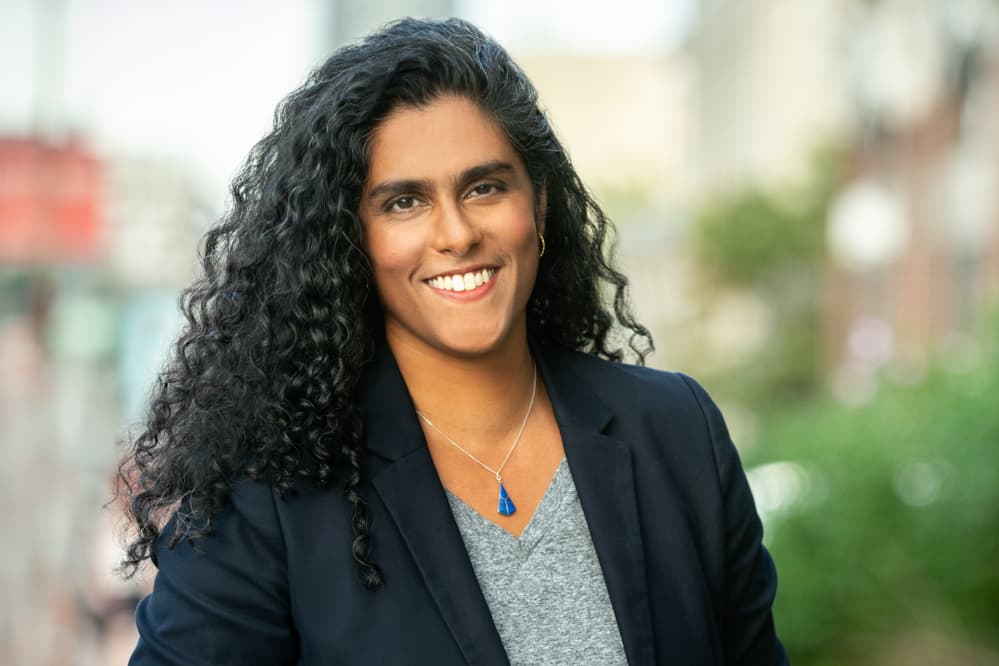
On Point’s 'money ladies' Michelle Singletary and Rana Foroohar are back to start 2025 with frank talk about the macro and micro of the American economy in a new year, and under a new presidential administration.
Guests
Rana Foroohar, CNN global economic analyst. Global business columnist and associate editor at the Financial Times. Author of several books, including Homecoming: The Path to Prosperity in a Post-Global World.
Michelle Singletary, Washington Post personal finance columnist. Author of, among other books, The 21-Day Financial Fast: Your Path to Financial Peace and Freedom. Her recent 7-part series is called “Scammed.”
Transcript
Part I
MEGHNA CHAKRABARTI: This is On Point. Alive and kicking at the start of 2025. Happy New Year, everybody. I'm Meghna Chakrabarti and Happy New Year to our money ladies, Michelle Singletary and Rana Foroohar. Hey there, ladies.
RANA FOROOHAR AND MICHELLE SINGLETARY: Hey.
CHAKRABARTI: Happy New Year to both of you. Before we get into the nitty gritty of the economy, what I really want to know is how was your holidays, Rana?
FOROOHAR: It was good. I had just, hordes of family. We staggered them, which was good. I did a lot of cooking, and we had a white Christmas in New York, which was lovely.
CHAKRABARTI: Great. And do you have any New Year's resolutions?
FOROOHAR: Oh, my Lord. Daily meditation to make it through the next four years.
Yeah, let's just stop at Pilates. I'll stop there.
CHAKRABARTI: That's good. Your body is your temple. Okay.
FOROOHAR: It's all about self-care.
CHAKRABARTI: Michelle, how were your holidays?
SINGLETARY: My holiday was really good. We always do a big family meal and everybody cooks and we did Secret Santa. So no one overspent their budget, which was pretty cool.
And now that my kids are on their 20s, I don't have to do big piles for them. So I'm like, yay. ... Oh, and my two young daughters in their twenties bought their first home.
CHAKRABARTI: Wow.
FOROOHAR: Fantastic.
CHAKRABARTI: Congratulations to them.
SINGLETARY: Yeah. 24 and 29, the sisters. Bought their home and it was a great experience, and they listened to their mommy and daddy and got a good deal and their monthly payment is 30% of their net pay.
We didn't tell, don't listen to what the banks say you can afford, listen to mommy and daddy.
(LAUGHS) Yeah.
FOROOHAR: Excellent.
CHAKRABARTI: That is fantastic. It's great. Okay. And do you have any New Year's resolutions?
SINGLETARY: Just deeper in my faith and just trying to rest more and take care of myself. I'm one of those people that's hard to say no.
And so this year, just really more self-care.
CHAKRABARTI: Although I have to say we benefit from the fact that you can't say no to us, Michelle. So I thank you for that.
SINGLETARY: (LAUGHS) Never say no to you. Never say no to you. You're in the yes pile. Absolutely.
CHAKRABARTI: I had the Stay-iest of staycations over the holidays, which was unusual for us, but my elder offspring is really into cooking now, so there was a ton of food.
We played board games. We read books. We went on walks. This is a warning to both of you. I am recharged. Okay.
(LAUGHS)
My New Year's resolution is in the late summer, I'm going to hike the Teton Crest Trail in Wyoming. So there you go.
FOROOHAR: So good.
CHAKRABARTI: But now, oh, by the way, for folks who don't know, the money ladies, they're legendary at On Point, but they are Michelle Singletary, who's the personal finance columnist at the Washington Post, nationally syndicated, and also author of a ton of books, including the 21 day Financial Fast.
And of course, there's Rana Foroohar. She is CNN's global economic analyst and global business columnist and associate editor at the Financial Times and also author of many books, including Homecoming: The Path to Prosperity in a Post Global World. Okay. So now, since I've wasted a lot of time.
FOROOHAR: Thank you for the plugs.
CHAKRABARTI: But I like to get into, actually really to reconnect with the two of you. So I wanted to start on a more human note than the angst that we're about to spend the next 40 minutes going over. At the end of last year, we did let folks know that we were going to be talking to you today. And we wanted them to send us their thoughts, their questions, their hopes and dreams for the economy, both macro and micro.
And what we heard a lot of was a lot of worry. Essentially, from people who were thinking about what could happen if President elect Trump follows through on some of his campaign promises, such as on things like taxes and tariffs. So let's start with Stephanie in Urbana, Iowa.
STEPHANIE: I meet with my financial advisor in January, and I'm thinking about taking all of my money out of the stock market.
Out of all of my savings plans, with a couple of exceptions, as far as the Roths are concerned. And moving it to a safety deposit box in my basement because I'm scared to death of an authoritarian regime.
CHAKRABARTI: Okay, Rana, is this a good idea?
FOROOHAR: Let me tell you, it's not a crazy idea. I want to validate Stephanie's concerns, because let me pull the lens back and say that here are the facts. We are going into very uncertain territory economically, we've been coming from a very good place. We, as you kindly played that little sound bite of me saying we've had the best recovery in the rich world. What goes up must come down. And we have had an artificial buoying of the markets really since 2008, with a lot of monetary stimulus, a lot of financial stimulus, sorry, fiscal stimulus, because of the financial crisis and then later because of COVID.
So things are way frothier than by any, almost any historical metric you can come up with. The stock market in the U.S. is at highs that it hasn't seen in decades. By some measures, a hundred years. So if you think that way, yeah, we are gonna have a correction. And I will tell you, I'll share a personal anecdote.
I have been, and I will actually in 2005, take some of my portfolio to cash.
CHAKRABARTI: 2025.
FOROOHAR: Yes. 2025. That this coming year, I will do that. I will take some of my portfolio to cash. Warren Buffett has famously done that. I was at a dinner party with two of the, really, world's top investors, maybe a month ago, they were saying it's a good time to take some profits.
So I want to validate this idea that, yeah, we are at record highs. Now, I also want to say that I have thought we've been at record highs since 2018, which was the last time I took some profit. And I missed some of the growth in the market since then, I did get back in. It's very hard to time the market.
Even if you believe we are at risk of a massive correction, even if say Kamala Harris would have been in office, I would have been concerned about that. But then you add Trump to the mix, you add the unpredictability, you add the geopolitics. And you add Elon Musk, which I'm worried. I'm not just worried about Trump. I'm worried about a technocratic authoritarian government in the U.S.
I'm very concerned about that. We can get more into that later.
CHAKRABARTI: But let me just jump in here. I completely hear you. Thoughts, I have many, but I want to turn to Michelle first. Because, look, I agree, validating someone's concern, Stephanie's concern, yeah, because a lot of people feel that same concern but she's talking about more than just cashing out a little bit in order to enjoy the highs that the Dow is at right now.
SINGLETARY: Yeah, I'd like to think that she was really talking tongue in cheek. Because if she's meeting with a financial planner, that already tells me she's savvy. But, and I agree with Rana. You want to, you feel what you feel and you're feeling, but you also have to realize your feelings aren't facts.
And so in her case, she sounds a little younger, so if she's younger than 59 and a half, of course, doing that would get a huge tax hit and a penalty. So you have to just say that, right? But I don't believe that she was being serious. However, I think when we give pause to these people who are saying these kind of things, those who are not as savvy will say, I guess I better jump out, too.
And so I want to be very careful, as people are listening, to say, if you're in it for the long haul, which many people are, and many Americans are in the stock market through a workplace retirement plan or a tax advantage plan, that remember what happened after the great recession? Lots of people will say, I lost all my money. You lost all your money because you pulled out and you locked in those losses, if you had stayed in, you would have recovered.
And so we need to keep saying that lesson. Cause when we're talking, my heart is always the regular person in their little job who doesn't have all the savviness that we might have, or even Stephanie with her financial planner, that you've got to understand that your biggest threat is inflation.
So if you put your money in cash in your mattress or safety deposit box, you're going to lose. For sure to inflation. And so I think what Rana is also saying, is what's important is that you do need to have some safety money, and so that would be my lesson for Stephanie.
And I do believe that there is going to be something not so great happening. So what you need is anywhere from one to two to three years of cash so that you can weather that storm. And if we don't have something as big as the Great Recession, we're talking maybe two- or three-year recovery.
So you want to have enough money set aside so that you can pay for the things, and you don't have to pull out while the market is down.
FOROOHAR: So yeah, I would, can I add one thing to that? I think that's all incredibly good advice for the average investor. I would also say in the last hundred years, there have been three periods where you actually had a 10-year recovery period.
And I do believe that when we get the next big one, I think we're talking more than a year or two. I think we're talking a longer period of recovery. So just keep that in mind in terms of your age horizon.
CHAKRABARTI: Okay. But Rana, so what I was going to ask you, we've got about a minute and a half before our first break. Is you talked about maybe moving some money out of stocks and bonds and into cash as profit taking now, which makes a lot of sense given the highs that the markets are at, and that you had done the same thing in 2018.
But if memory serves, you took a lot out in 2018.
FOROOHAR: I sure did. Yeah. I sure did. Yeah. I took a lot out and I did suffer for it. And that's why I want to say that it's impossible to time the market. But I also, honestly, I want to validate people's concerns or their felt experience that we are in a somewhat different period.
Listen, I think in hundreds of years of time horizons, and about every 50 to 100 years, we get a big political economy pendulum swing. We get a big financial pendulum swing. A lot changes during those periods. So I will validate as practical advice Michelle's recommendation that you keep not one, but maybe even three years of cash on hand. Or that you just get the debt down, pay off the house.
This is a time for housekeeping. And a lot of companies are doing that actually. It's interesting. Companies are really, smart ones are paying down debt, getting ready for the storm. A lot of big financial players.
CHAKRABARTI: Yeah. And these things are different than what Stephanie's thinking about doing, which is cashing out on everything and storing it in her basement.
So I hope that when you meet with your financial advisor in January, Stephanie, you get some clarity on that. And by the way, I'm glad to hear corporations are listening to Michelle Singletary about getting their debt down. We'll have more in just a minute, this is On Point.
Part II
CHAKRABARTI: Ladies, I think what I'd like to theme this next segment as is the difference between markets and people. Okay, so with that in mind, Michelle, we had just talked about how if you can, now's a good time to really be sure that you've got cash, enough stocked away to cover your expenses for a one-to-three-year period, in case you needed to dip into that, if things go south for you.
What about all of those Americans, and we know there are millions of them, who don't even have access to that much cash right now to have that kind of savings. What would you advise they do?
SINGLETARY: Yeah. And we also have to remember that many Americans are not in the stock market at all.
CHAKRABARTI: Yeah. That's what I'm going to talk about in a minute.
But go ahead.
SINGLETARY: Yeah. So I would say, and Rana alluded to this just before the break, is that do some housekeeping and I'm on this, I'm beating this drum and I'm going to continue to beat this drum. You have to get your personal financial stuff in line, so that if the things that happen that you can't control.
You can't control what the Trump administration is going to be doing. You could have, if you voted differently, but okay, you didn't. ... So now you have to say, okay. I've got to get control under this credit card debt. I have to get control over how much I spend for housing. And so, how much I spend for transportation. ... What kind of car do I buy?
What kind of car payment I have? Those are the kinds of things that you can control. And housing. People like wait a minute, Michelle, housing is really expensive. So that is true. But then that means you've got to think a little bit differently. I live in the Washington, D.C. Area. As I have said many times before, all three of my twenty something kids have been living with us.
The two girls, I have three, 2 girls and a boy. We pressed them, and they agree to stay at home for 2,3, 4 years and that has paid off for them. So they weren't out in expensive housing, that allowed them to save up to buy a house in a market where the mortgage rates are much higher than we've been used to.
So that's what I mean by getting your house in order and making those kinds of decisions. Now, maybe you can't live with your parents. Then you have roommates, or you live in a community where maybe there are more seniors, and you rent a room from them. Or you just got to look at your personal finances, the things that you can control, and the biggest one is that guys, folks, women, men get rid of that debt as soon as you can, including your mortgage.
CHAKRABARTI: Rana, did you want to jump in? Yeah, go ahead.
FOROOHAR: Yeah, I do want to jump in because you talked about, we're going to cover micro and macro. There's actually an interesting connection here. What Michelle's talking about is happening much more broadly at a national level now. You are seeing younger people and older people in more multigenerational family housing or group housing, which is actually something, it's almost back to the future.
People used to live this way. I look around my neighborhood in Brooklyn and there's still some families on the block where you've got the grandma flat, you've got parents, you've got kids, and that's becoming more common. And interestingly, the Fed, one of the branches of the Fed recently did a survey showing that consumer spending has actually remained a little more robust than it might be.
In part, because those younger people can spend a little bit more money on things that they wouldn't be able to necessarily if they were paying for their own home or living in an expensive place. As opposed to saving and finding solutions in the way Michelle just outlined. So it's good for the economy, as a whole, actually.
CHAKRABARTI: Okay. So here I'm going to roll up my sleeves now. Because what I really want to do is talk to you both about this sense of pessimism that many of our listeners had, and that both of you talked about in the beginning. Because of the incoming administration. And Michelle, I could not agree with you more that feelings are not facts.
But on the other hand, I'm looking at some facts here. Okay. And Rana, I'm going to turn this one to you, because you talked about looking at 50-to-100-year cycles. All right. And this is in the markets are not [an individual's] milieu for this segment here. So I'm looking at the Dow. Right?
That famous hundred-year chart of the Dow inflation adjusted for sure. And I see that at least three big moments, right? Of course there's 1929. Then there's this like long-term downward trend from like the mid-sixties to the mid-eighties. And then of course, 2007, 2008. So I see a little bit of what you're talking about, regarding that pendulum swing.
If I may, between 2016 and 2020, in the last Trump administration, the markets, again, not individuals necessarily, but the markets, they were riding sky high. Because say what you want about Donald Trump, he does not want to see markets crash under his presidency.
FOROOHAR: That's very true.
And again, I'm not here to give you market timing advice, but I will lay out the facts, which is, as you say, during the first Trump administration, there was a big market boom. Now, why was that? First of all, markets love lower taxes and deregulation, but markets are not people, so they love that.
It's good for them. Also, Trump did a big one time opening of a loophole to allow companies to repatriate profits from abroad and bring them back into the country. It was sold politically as, oh, we're going to let companies bring back all this money and put it into factories and new jobs.
It mostly went into the stock market. It went into buybacks and dividend payments. And so you've got increasing inequality. Yet again, you've got markets being way up. What I will just say is what goes up can come down, and we are about six years overdue for a recession by historical standards. If you discount the COVID blip, which I would, because it was so particular.
And typically, the story, the market story of one decade is not the market story of another. Now there are a couple of important caveats to that, and let me lay them out. One caveat is, do you or do you not believe in the story of AI and what a big deal it's going to be?
Because if you believe that AI is really in the short to midterm going to be like the transition from horse and buggy to auto, then you can make a good argument, and many people do, that the U.S. market will continue to outperform relative to others, because the big tech companies of the West are here.
CHAKRABARTI: Do you believe in the A.I. story? Do you believe in it?
FOROOHAR: It's funny. I've been on the fence about it. I wrote a column last year questioning whether there was too much short-term froth. I think, Nvidia was trading at something that, it would take like 4,600 years for the math to earn out.
It was just a crazy number. You do see, in fact, there was just front-page headline today in the FT. Noting that Nvidia has actually, which is the big chip company that makes all the AI chips, which is leading this AI boom in the market, that they've actually funded a bunch of the startups that are going to try and capitalize on AI.
That's interesting to me, because that says to me, I was looking and thinking, huh, that feels like a bubble story. Because you've got the biggest chip maker funding the startups that are creating the boom. That feels a little late nineties to me. That said, and I know I'm not giving you a yes or no answer, but that's where we are right now.
I am beginning to hear interesting stories in certain industries, health care, a big one, of really transformative gains from AI. Now, that could keep the markets up. It won't necessarily create more jobs, which is a whole 'nother thing. One of the big, my big concern about AI is what it's going to mean politically and at a jobs level.
Because if you think about, I think that one of the reasons we got Trump and one of the reasons we have populism in Europe and many rich countries is that we disrupted 12% of the manufacturing workforce. That's what it is. And 8% to 12% in most rich countries is manufacturing that got sent to China.
People got angry. They voted in populists and autocrats. And we're about to see 30% to 60% of the job market disrupted by AI. What's that going to do? Big question mark.
CHAKRABARTI: What I want to drive towards, and I think you had some other things on your list, Rana, which we'll get to. But the question for both of you is, prove to me, and Michelle, I'll start with you, that this sense of uncertainty that both of you are communicating right now is something more than just, it's going to be Trump, right?
Would you be saying the same things if Harris had won? Okay, I'll get back to you, Rana, in a second, but Michelle, you go ahead.
SINGLETARY: Yeah, I would say that it does. And we put too much on who is in the Oval Office in terms of what happens to the economy. And yes, I would still be saying the same thing because of a couple of things.
Interest rates are still fairly high. Housing is still fairly high for people. It doesn't matter who's in the White House. There are lower rents and the cost of what it, to buy a home now. I was literally just in this process with my two daughters. And we went to see houses that were half a million dollars that I wouldn't let my, I shouldn't probably say that, but it's true.
My dog stay there. It was just like, you gotta be kidding me. And we walked into one house and I told my daughter, Oh no, we are out of here. And that's not sustainable, right? We have created an economy that is not sustainable to have some people buy a half a million-dollar house that needs a half a million dollars in improvement.
And in terms of buying a car to get to work, the average price of a car now is $40,000. What is that? Trying to find a decent car, in a $15,000 to $20,000 range, that is going to last you for a long time. They're out there, but you got to look. And so I would be saying that no matter what.
CHAKRABARTI: Buy a used car. I don't know what the used car market --
SINGLETARY: That's exactly right. Or, maybe you don't have, both couples have a car, if you are able to just use one. And I've been counseling a lot of couples to do that, and that's what's my concern. We got used to cheap money and that's how people are, you know, doing their life now.
I mean, I had this huge argument with this couple that all this credit card debt. And she's oh, it's like free money. You know, because the interest rate was zero percent for like 24 months or something like that. But you realize you're living above your mean, and when that cheap money stops, or you lose your job or you get sick. Now all that debt.
It doesn't matter If it's zero percent, you got $30,000 in credit card debt at zero percent. It's still $30,000.
CHAKRABARTI: Yeah. Also, if you can't pay it back in 24 months, it's going to be a lot more than that.
SINGLETARY: So that's exactly right. That's exactly right. And we have a Congress that is just, I don't even, I can't even say the word. And since I was talking about being more faithful, I can't even say what I really want to say. About they can't get things done, we have people in office that don't know what it's like to struggle, they come from money. They don't understand and they are selling them a bill of goods about what we're going to do for you, and they don't really care about them.
We've got a social security system that they still haven't figured out how to fix. And we're going to be at the 11th hour trying to fix that. And what happens at the 11th hour? We get legislation that doesn't consider a whole bunch of stuff that people are rushing to pass it. And yeah, I don't think it mattered who's in the Oval Office.
I always believe that you hope for the best. And you prepare for the work. And I think that gives you some hope. But also making sure that you align yourself up, if something bad happens, prepare yourself. And I don't want people to operate out of fear, but I do believe that. And I agree with Rana.
I think in the next couple of years, it's going to be a little tough. And because we have had cheap money and we're buying stuff and taking vacations and sending our kids to colleges we can't afford and buying houses that take up 34%, not 34%, 40%, 50%, 60% of our take home pay. When we hit a recession, that's why it's tough.
CHAKRABARTI: Yeah. Yeah. I hear you about the fundamentals being the same, regardless of who's in the White House. But Rana, same question to you. This is not just a lamenting Trump V2.
FOROOHAR: Yeah, for sure. And I really appreciate, Meghna, that you're posing it that way. Because I think we're saturated with all the bad and unpredictable things Trump could do. We know them, they're still unknowns. I would add to everything that Meghna just said, and I made my point about the markets and recession.
CHAKRABARTI: I wish it were me, but I'm not as smart as Michelle. So that's what Michelle was [saying.]
FOROOHAR: But what I'll add is that the geopolitical angle here is that even if it was Kamala Harris in office, there are big changes happening in the world beyond America. We are going to a more localized and regionalized world. China has been ring fencing a lot of sectors. It has its own fiscal stimulus program, which is aiming to bring money back into China and into Asia. Europe is really at a, I could call it a come to Jesus moment. It's been there so many times. They're at a point where the EU is either going to dissolve or it's really going to come together in the next few years in some new way.
So there's just a lot going on that will create volatility. Monetary policy is, I think, going to change. Michelle said we've been living beyond our means. It's true, at a really global level. And particularly for Americans, the world that we live in has been predicated on three things, cheap money, cheap energy, and cheap labor.
And all of those things are now changing. And that is just going to create fractures. And it will create some opportunities, but it was going to create a lot of volatility in the market, I would say.
CHAKRABARTI: By the way, I blurred it out earlier. I don't know what the used car market is like now, but I have an amazing team. ... And they found it. They looked it up that Consumer Reports, as of November, so just a little bit more than a month ago, said that the average price of a used car in the United States in November was $25,500. Okay. So let's, I do want to give voice to our listeners again, because this issue of, is the concern simply because of what Donald Trump could do or may not do, they actually voiced that concern.
So here's Andrew from Belmont, Massachusetts.
ANDREW: Trump has had a tense relationship with the federal reserve in the past. What is he likely to try to do and what is he likely to get away with? And how will it affect the Federal fund rate and the mortgage rates, based on that.
CHAKRABARTI: Okay, so we'll get to that in a second, but here's Dan from New Hampshire.
DAN: Trump and his doge office seems to think we should all be in crypto now. Republicans are talking about rolling back all of the financial sector regulations that came about after the 2008 crisis. And CNN has reported there is even talk of abolishing the FDIC. What all of this says to me is that it is going to be open season on not only investors, but anyone with a savings account.
How on earth is the average citizen supposed to invest for their retirement and avoid destitution with these people in charge?
CHAKRABARTI: That's Dan from New Hampshire. Michelle, we've got a minute before our next break. How on earth is the average citizen supposed to save for retirement with so much uncertainty?
SINGLETARY: Yeah, it's still tough. I wish I had the right answer. I would just kiss Dan, with my husband's permission.
(LAUGHS)
Because, especially this part about the crypto --
CHAKRABARTI: Your favorite thing.
SINGLETARY: That scares me more than anything. The average person absolutely should not be in that at all. It's too volatile. They don't, when I talk to regular people, they don't even know what's in their 401k or how a 401k actually works. So now you're going to get in this thing that really is only, it's only value is who's going to pay me more than what I paid. No, absolutely not. But I do think that there are enough safeguards that they won't blow up the FDIC. And so I'm not worried about that.
Part III
CHAKRABARTI: Rana, I wanted to just give you a chance to talk quickly about the Fed and president elect Trump's volatile relationship with even the concept of the Fed.
Because we had that listener asked, like what could potentially happen in a new Trump administration. Now I'm not going to ask you to look into Donald Trump's mind and tell what he's going to decide.
FOROOHAR: Thank God. But I don't know if I can handle it.
CHAKRABARTI: What we do have, though, is we have four years of actual experience under the first Trump administration.
So what can we learn from that regarding Trump and the Fed?
FOROOHAR: Let me tell you what he's already said. He has said that he's not going to try and remove the Fed chair, Jerome Powell whose term ends, I believe in May of 2026. But interestingly, he's complained a lot about the job he's done, which always baffled me. Because as I said, we've had the best recovery in the rich world.
The Fed has performed as well as any group of technocrats could, I think, given all the things that have happened in the last few years. One thing Trump can't control though, is the bond market. And the bond market is already telling us we think rates are going to be higher, longer term. That's for a number of reasons.
Part of it is the fact that you're going to probably get Trump coming. And as Michelle said, he doesn't want the market to go down. So he's going to take an already hot economy and juice it more, which creates inflation. That's one of the reasons that the bond market thinks rates are going to be higher.
That will affect home loans, car loans. It could, if the market is saying, gosh, not only because of Trump's fiscal plans, but because of the uncertainty, we just think there's more risk, we want the rate of borrowing to be higher in the U.S. to account for that, then that could push the Fed into certain positions that it wouldn't be in ordinarily.
So in that sense, yes, Trump can affect, by his own unpredictability and his own plans, what the Fed has to do.
CHAKRABARTI: Got it. Okay. So let's move on to another really interesting question we received from Anne. And she's in Troy, Michigan, and she was wondering about the Tax Cut and Jobs Act.
So that's the major tax cut that was passed under the first Trump administration. Certain provisions of the tax cut are slated to expire at the end of this year, 2025.
ANNE: What does the expiration of the tax cut and jobs act mean for the average working-class person? Is there anything I should plan for in terms of rearranging my budget or finances when this tax cut ends? And do you think that it will get renewed by Congress?
CHAKRABARTI: Anne, if you don't mind, I'm going to offer my prediction, not that I would bet on anything, but my prediction about this. And I would say if the Republican leadership can keep its caucus under control, which is a big if, then it's very likely that the tax cut will be renewed.
It's not anything that the Republican party wants to sunset at all, but the internal volatility of the party on Capitol Hill is really the wild card there. But Michelle, what do you think about Anne's question of should she reorder her finances in any way, in anticipation for what might happen on Capitol Hill?
SINGLETARY: Yeah, so generally speaking, you don't want to make decisions just based on taxes. You want to look at your overall financial situation. I don't know what they're going to do. There's some very unpopular things in there, like the SALT. Which would cap how much you could do for sales tax and so forth.
And so that's very unpopular in states like New York and where I live, Maryland. There are some things in there which will, you and I will be talking about next week. When it comes to scam victims, where we're hoping we'll fix that, people like the tax rate. Because it's so unpredictable, I think you just go about your life the regular way, getting rid of debt, watching, if you're pulling out money, be very careful about which, and so that's not going to go away.
I think it's likely that a lot of it will roll over. But then again, we have a very dysfunctional Congress. And so who knows, it may sunset, and they can't come to a decision on what to put back in there.
CHAKRABARTI: Speaking of things they can't come to a decision on, here is a question from Mariah in Redwood City, and she wants to know more about the debt ceiling.
MARIAH: I came away with the bottom lines that A, most countries don't have a debt ceiling, and B, all government debt deficit spending isn't bad and may be good, but I don't have enough specifics to make the argument now that we are, once again, talking about the debt ceiling.
CHAKRABARTI: So that's Mariah in Redwood city, California. Okay, Rana, that one's for you.
FOROOHAR: Yeah, no, she's bringing up some interesting points. It's true that many other countries don't have debt ceilings, that's a double-edged sword. On the one hand, it can lead to runaway spending. As it does sometimes in emerging markets and in certain European countries, but it also prevents them having to have this kind of up to the wire political horse trading and a level of uncertainty that the U.S. does every few years now.
And, every time that happens, ratings agencies have considered downgrading American credit. They actually did at one point, Moody's downgraded U.S. credit. Because of the constant race up to the debt ceiling, not knowing whether the U.S. was going to default on its bills, which I don't think it ever will, but unless there's a total disaster. But I think it's just, it's that level of uncertainty, that political uncertainty that then creates risk, which then can drive long term interest rates up, and can get into all the issues that we talked about previously.
I'll say one other thing too, which is the debt ceiling issue, like so many issues, starts to expose the fissures in Trump's coalition. So the Trump coalition is made up of two big groups, the MAGA base and the Wall Street guys and tech bros. I'd put them in the same camp.
There's also traditional Republican debt and deficit hawks. When you get into issues like, are we going to raise, are we not going to raise? You've already seen fractures in that coalition. You're going to see fractures around things like free speech. Look at the battle between MAGA and Musk over H-1Bs.
And this has resulted in certain folks in the base getting canceled off of X. You're going to see it around immigration. You're going to see it around any number of industrial policy, any number of things, and that will, again, increase uncertainty, volatility, and potentially lead to longer, higher interest rates.
CHAKRABARTI: I think also another thing that Mariah was getting to is that it's hard to understand what would happen if the debt ceiling weren't increased. Do you have any thoughts on that? What, hypothetically, what could happen?
FOROOHAR: So hypothetically, that means that the U.S. would have to decide how to pay its bills. And the budget in the U.S. is made up, there's three kind of big baskets, let's say, of spending, that make up most of the budget. Defense, entitlements, meaning Social Security, Medicare, Medicaid, and the interest on the debt itself. And the debt, so debt and deficit.
So what do you cut and how do you cut it? And how do you get to yes, if you're going to cut entitlements or defense spending, how does that work? Politically that's never been possible. So then do you default? If you do default, what happens? These are the big questions and this is where you get the people that are talking about safety deposit box and gold. We can go there. We can go to that dark place. But we won't right now.
CHAKRABARTI: So here's another one. Because I think an expression of the uncertainty that people feel came to us in the form of a lot of questions of people wanting to know what is a safe investment now?
For example, this is Howard from Elkhart, Indiana. And by the way, Howard is a regular listener to our weekly podcast with Jack Beattie. It's called The Jackpod. It's in our on point podcast feed, so if you don't listen to it, you definitely should. It's an excellent weekly podcast, and you'll hear a lot of Howard's thoughts there.
But he has this question for you, Michelle.
HOWARD: Do you think there is a quote-unquote safe investment, like trying to buy government bonds, T bills, stock market for anyone who would happen to have a couple extra dollars to try to invest?
CHAKRABARTI: Michelle, before I hand the mic back over to you, Howard, we know him well now because he does listen to the Jackpod so much.
He is a very, he's a self-identified working class American. He's told us he's almost never had more money in the bank than he needed to spend, to make ends meet every month. So he is one of those Americans that's worked hard his whole life. But only rarely has had a couple of extra dollars to even think about what would I do to invest that?
SINGLETARY: By the very nature of investment is risk. Now you could put it in a savings account, but there's some risk to that, as well. People think, oh, I'll put it in a savings account. We've got the FDIC, up to $250,000, and depending on how you title your account, more. It's safe.
Because the government's never defaulted or anything, right? But there's risk of inflation. And unless you've got some sort of high yield account, and most people don't have that, because they're online banks and things like that. So you're talking, one, maybe you can eke it out to two.
And if inflation has been around, three. And obviously, at one point, a couple of years ago, it was at 9%. So you have a risk of losing the value of your money to inflation. So for those people who are not making very much, I love just low-cost index funds, try to save up enough to open up one. And then just put, even if it's just $25 a month, because you have to invest for growth down the road.
And I really fear, and we have gotten a great lesson on inflation these last couple of years. Most people wouldn't even know how to define inflation, but we've got a real-life example of it in the last couple of years. It's what it costs you to buy stuff. And if you're not making enough money, you can't buy that milk that you used to buy two years ago because it costs more.
And so for those who are thinking, maybe just a little bit you still need to try to invest. And, for me, I wouldn't say the safest, but the way to reduce the cost of investing and give you exposure to the market is just a low cost, S& P growth. Or S&P index fund, low cost is a good way to get into the market and have exposure to the market without all this sort of gold and crypto and all this other kind of mess that people try to sell you.
Don't do that.
CHAKRABARTI: Yeah. And if you look around, you can even find some zero cost funds, I believe. Just look for that zero expense ratio. But you got to look around for it. Okay. So here's another one. And both of you have talked about social security in the course of this hour. So this is Maeve from Green Bay, Wisconsin, and she says her biggest concern is that Trump in a new administration will try to privatize social security.
MAEVE: I'm wondering about the integrity of our social security system as it stands now. And if there are any changes that we need to make that are reasonable to sustain social security for our future generations.
CHAKRABARTI: Rana, I'm going to give that one to you, but I do have to plug this incredible hour we did about a month ago on exactly this question.
We spent a whole hour talking about the realistic ways to shore up social security. So go to onpointradio.org and look for social security and you'll find it, or go into our podcast feed. But your thoughts, Rana, about the future health of Social Security.
FOROOHAR: Yeah, so I, for sure, think that we need certain amounts of reform.
I think that increasing target ages where you can take your retirement payments, you can take your Social Security payments, is probably a good idea. I do think that some of that has to be, and this is where it gets tricky. It's got to be means tested. It's got to somehow account for the fact that frankly, white collar workers like me, I'm sitting right here talking to you in my home office through a Yeti mic. Looking at, I can do this till I'm 70 and I'm planning to. If I'm working with my hands, if I'm doing physical labor, that may be less possible.
So I'm very concerned that we take all that into account. I also think the idea of wealthy people taking out of the system, we need to look at that. We need to think about how to make it fairer. I think definitely the age that you can take social security is going to have to shift, I think, at some point.
CHAKRABARTI: Yeah. And there's always the thinking about raising where the tax cap is on the FICA tax, on that payroll tax. But we've only got about two minutes left here. And Michelle, I'm going to give you the last word today. We have talked a lot about the reasons to look ahead to 2025 and see that familiar sense of uncertainty as we've had for the past many years.
And I do hear, I definitely take into account Rana's long-term analysis that we do see these periodic swings, both not in the economy, but in politics, as well. That was a key thing. The political economy of a country. And we may be at one of those points right now. I personally hope that if there is a correction, that it's not a catastrophic one. Some smaller corrections, I think, would help us all better. But just your last thoughts on what you think people should do to position themselves to come through 2025 healthily, regardless of what happens.
SINGLETARY: Yeah, a couple good things. And just to go back to Social Security, really quickly, I don't think we should privatize it.
Bush tried, Bush the son, tried to do that. It flamed out, thank goodness. Because we need a safety net that is not, that people don't have to worry about how to invest it because Just I work with real people and they just don't have the, not the capacity, but it's just really difficult to get this thing done.
So let's just keep that the way it is now, listen, I think that, again, just looking at your own personal finances and shoring up as much as you can, making, we need to spend more time figuring out how to make better decisions. That's a skill. Get into a financial program, take a class at the local community college. I offer free stuff through my church a yearlong program.
I think that's how you protect yourself. And even if we do have a long time, even if it's at 10 years. If you're 20, then you're going to be 30. If you're 30, you're going to be 40, 50, 60. So you still have time to recover, even if it is a long period. And if you have some money set aside in your seventies, then even 10 years will still be okay for you.
So don't let the fear make you make decisions that's going to hurt you long term.
This program aired on January 2, 2025.