Support WBUR
How Trump administration job cuts could affect the future of weather forecasting
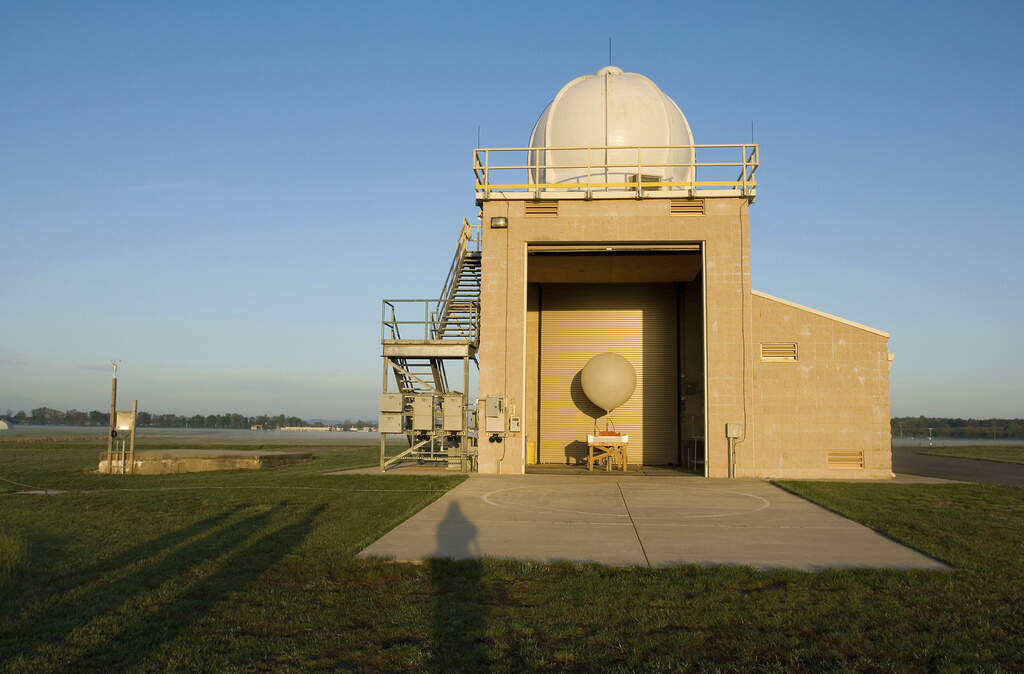
The National Weather Service has been around for more than 150 years – their mission is explicitly to provide forecasts and warnings to protect lives and property.
Experts warn that its hollowing out could have long-lasting implications.
Guests
Louis Uccellini, former director of the U.S. National Weather Service from 2013 to 2022.
Mary Glackin, co-chair of the Ocean Research Advisory Panel. Past president of the American Meteorological Society.
Also Featured
Andy Hazelton, former physical scientist at the National Weather Service.
Kitty Sopow, former social scientist at the National Weather Service.
Keith Meier, retired meteorologist in charge at the Billings, MT National Weather Service office.
Transcript
Part I
DEBORAH BECKER: The Trump Administration's job cuts are impacting a service that affects all of us. The National Weather Service, its mission is to monitor weather patterns, provide daily forecasts and issue timely warnings about severe weather events.
In February, hundreds of weather service employees were among those who received notices that their jobs were being eliminated. Andy Hazelton is a meteorologist in Miami, Florida. He did hurricane modeling for the National Weather Service at the National Hurricane Center. He started at the National Weather Service in October.
ANDY HAZELTON: The firing email was basically sent to all the probationary employees on February 27th, where we all just got this form email from high levels in in the agency that basically, it just had a bunch of legalese about probationary employees and then said we were getting let go. And a lot of us, like the position titles were incorrect, and there were errors, and it was clearly just this mass form thing that was put together hastily or whatever. That's how it all happened.
BECKER: Those emails went to workers designated as probationary, but Hazelton says probationary is any employee in their first year of service. It doesn't necessarily mean that worker is inexperienced
HAZELTON: Probationary.
What that means is you're a new federal employee, but most of us were not new to NOAA. Like I told you, I worked on the university side for eight years prior. Other people in my group had worked as contractors for 5, 10, 15 years, in some cases.
So basically, this federal job is a promotion to what's supposed to be a more stable kind of role. As a reward basically for usually doing good work for the agency and producing. And they're not easy to get. And this isn't, these aren't like brand new people. This is a lot of expertise. And experience that's getting lost.
BECKER: After legal challenges to the mass firings, Andy, has now been reinstated and put on paid administrative leave. So he is giving a paycheck, but he has no access to any of his computer modeling hurricane work. He says he's worried about how these cuts are going to affect the mission of the organization, which was founded more than 150 years ago, to ultimately protect people and property.
HAZELTON: It's unfortunate. We've seen a lot of forecast improvement like for hurricanes over the last 20, 30 years. There's been huge improvements that have been really beneficial to society in terms of people being able to evacuate, prepare and things like that. So I'm worried we might see some slower reversal of that progress and hopefully that's not the case, but it could be.
In hurricane season in Florida, we had Helene and Milton on the West Coast last year, and it's important to get these forecasts right and keep making them better and I hope we'll continue be able to continue to do that, but it's definitely a turbulent time.
BECKER: That was Andy Hazelton in Miami, Florida. At the opposite end of the country in Nome, Alaska, Kitty Sopow was doing another aspect of national weather service work, among her duties during her four years with the service was the release of weather balloons. Twice a day. These are balloons that collect atmospheric data from some, but not all national weather service forecast offices around the country.
KITTY SOPOW: The hot air, the hydrogen goes up into these six-foot-wide balloons. They're cream color and there's a long string attached, and that string clips into the base of the balloon. And it has a GPS tracking information on the end of it. It's a piece of Styrofoam with a wire that comes out and it says, property of the National Weather Service,NOAA.
Those are called radio signs, and they go up into the air until they pop, usually due to increased pressure of getting so high up into the atmosphere. And then they fall to the ground, and then that data is collected.
BECKER: In addition to launching balloons, Kitty worked as a social scientist for the National Weather Service.
That means she worked with local communities in Alaska to help bridge the gap between people's diverse needs and the forecasts and data offered by the National Weather Service.
SOPOW: And so the whole thing about the National Weather Service, truly at the root of it, is risk mitigation. How can we create a message about Earth's personality?
Okay, the weather. How can we create a message that will tell people what they need to do, if they need to do something? When America is celebrated as land of the language. How do we make sure everybody can understand and get access to translation? What if you're blind? What if you're deaf? What if you're new to the country and you don't have the right kind of clothing for Minnesota winter?
Like how can we really get people to be able to talk about weather in a way that everyone can stay safe? We don't have that yet.
BECKER: Kitty received the fork in the road email and says, because of all the uncertainty, she decided to take the offer to leave her job and be paid until September.
But a week later, she received an email saying she was fired. And as of now, has received no pay. She had to leave her federal housing after being fired and is now in Montana. And she says Alaska is a chronically underfunded region and she worries about the future of Alaskans who depend so much on the weather.
Those are just two of the many National Weather Service employees who were notified about job cuts, and they both say the weather service is already understaffed. A report by the Associated Press found that half of the 122 National Weather Service forecast offices around the country have a 20% or greater staffing shortage.
Experts say that is critical under staffing, and it will affect how these offices perform basic forecasts and warnings. We reached out to the National Weather Service and a spokesperson for its parent company. The National Oceanic and Atmospheric Administration sent an email statement saying, quote, we don't discuss internal personnel and management matters.
NOAA remains dedicated to its mission, providing timely information, research and resources that serve the American public. So this hour we're gonna talk about these cuts to the National Weather Service and how they might affect us in the future. Joining us first is Louis Uccellini. He spent 33 years working for the National Weather Service and from 2013 to 2022, he was director of the U.S. National Weather Service. He also served as permanent representative of the U.S for the World Meteorological Organization from 2017 to 2021. Thanks for being with us, Louis.
LOUIS UCCELLINI: Thank you for having me, Deborah.
BECKER: So when you hear these stories that we just heard from Andy and Kitty and their work at the National Weather Service and what they think these cuts might mean what do you think?
What are your thoughts?
UCCELLINI: First of all, I was appalled by the methodology used, to just arbitrarily let these people go. The decisions, whatever decisions were being made, were uninformed of what they do actually and how they serve the public. On a 24/7, by 365 basis, it was not transparent to them, to the organizations, to people outside the organizations and the general public.
And quite frankly, it was cruel. These people, a lot of them had moved to new locations, established their children in school systems, et cetera. And then to be let go, and some just escorted out of the building with 15-minute notice, really appalling.
BECKER: And we mentioned that these cuts come as there are real concerns about staffing levels for the National Weather Service. Has this been an ongoing issue? And do you understand what the staffing levels are like now and how these cuts might affect, what's the overall effect from these things happening simultaneously?
UCCELLINI: It has been a long-term problem, keeping the staffing up to date with respect to not only the weather service, but other components of NOAA. This just adds to the problem. In fact, probably takes it to a level that it's not sustainable. The services that are provided cover 11 service areas from the sun, space, weather to the sea, ocean prediction and prediction's the key word in all 11 areas, severe weather, flooding, hurricanes, fire, winter weather, et cetera.
And it's apparent that the agency is being hollowed out. You've heard from these employees have been let go. It's the employees that are left in the offices are also demoralized, and it is understaffed, especially given where we are with today with the severe weather, fire weather, flooding all happening simultaneously.
And many of these offices have to deal with those problems in a simultaneous manner. Cutting back like this has gotta be causing problems.
BECKER: But why has it been understaffed for so long? What do you think is the real issue here? Is there really not been significant support for this agency for a long time, or what, this is something all of us can understand, right?
This is the weather. So what's the problem? Why is it so tough to make sure that there is enough staffing in those offices, are they not paid well? Are they not respected? What do you think is going on?
UCCELLINI: There's been problems within agencies, trying to hire folks, it's become a long process.
And that certainly was a problem. During the time I was the director of the Weather Service, a very strong attempt to keep up with the staffing levels. The other interesting aspect, a lot of people were hired into the modernization of the weather service at the turn of the century, and those people were retiring en masse.
And quite frankly, human resources couldn't keep up with the demand. But what's happening now is that, just, we were working to get these new employees in, whether they're coming in from universities. The private sector, your first speaker talked about being a contractor.
The military, people who are retiring from the military have skill sets that are needed by the weather service. And all those people were being brought in to try to address staffing issues. And now they're let go. So we have a situation, and we have more people with expertise that are leaving because of the uncertainty.
And quite frankly, the way they're being treated by the new administration, it's causing problems that I never had to face. And it's during a time when these events are becoming more extreme. And affecting a greater number of people. I'm very concerned about this.
Part II
BECKER: With us from Jacksonville, Florida is Mary Glackin. She spent about three decades at the National Weather Service parent organization, the National Oceanic and Atmospheric Administration, or NOAA. She later worked for IBM as senior vice president for Science and Forecast Operations for the Weather Company. Mary, great to have you with us today.
MARY GLACKIN: Thank you, Deborah. It's a pleasure to be here.
BECKER: So we've been talking about these cuts that have been happening under the Trump administration, specific cuts to NOAA and the National Weather Service.
And we talked with Mr. Uccellini about this in the first part of the show and he said, he described what he knows about the agency right now. And how these cuts are affecting morale and some of the work. I wonder what your reaction is to that, Mary, what are you hearing from folks there? And what do you think that these cuts from the White House will do to the National Weather Service?
GLACKIN: I'm quite alarmed, as Louis described earlier, there doesn't seem to be a rhyme or reason to this. They seem to be applying some fail fast approach and learn from it. But the reality is that what's at risk here is the National Weather Service. And the National Weather Service works very closely and drives the economy in a number of ways, including the private sector.
And so there's huge, as Louis talked about, there's impacts to life and property, but there's also impacts to the national economy and national security, as well. So the whole situation is quite alarming.
BECKER: Explain to some folks, there may be some folks listening who say, okay, some people get let go from the National Weather Service, they don't get forecast as often.
Maybe I won't even realize that there have been cuts until I really need them. Like other agencies, you don't know they're gone until there's suddenly an emergency. So tell me why you think this is important, and why funding should be at a greater capacity for the National Weather Service.
GLACKIN: So I think the obvious thing is the delivery of weather warnings and forecasts, in a timely, accurate forecast, in a timely manner. And as your speaker from Nome, Alaska mentioned, making sure it does that final mile, as well, that people are able to take the right action. But what people might not be aware of is how much our economy is dependent on weather and climate information, and how much our national security is as well.
And the role the National Weather Service plays is really a foundational role that underpins all of this. It's responsible for the observing system, including some global observing, with our satellites and for running the basic models and all.
And from that, we have actually a very healthy, in fact, I would say the envy of the world, private weather sector that's been flourishing in this country over the past few decades. And that is at risk with these impacts to NOAA as well, because they're very dependent on weather and forecast information and observations that are coming from the National Weather Service.
And they play the primary role of delivering services to businesses in this country. Whether it's farming, agriculture, financial services insurance, reinsurance, all of that is dependent on the National Weather Service. So with these kind of cuts here, it's gonna weaken businesses as well.
BECKER: So I wonder, you said that, Mr. Uccellini, you said in the beginning that some of this appears to be done without any rhyme or reason, but there does appear to be somewhat of a blueprint for this in Project 2025, which is the Heritage Foundation, Republican administration blueprint that President Trump appears to be following in some regards.
And in Project 2025, it outlines some of the cuts to the National Oceanic and Atmospheric Administration, the parent company of the National Weather Service. And the National Weather Service, saying that there are a lot of functions here.
There's a lot of duplication. Let's just take some of the arguments for the cuts first, and perhaps there could be greater efficiency. What do you say to that? Mr. Uccellini, with 122 offices around the country, could some of the functions of the National Weather Service be done with a lot fewer people?
UCCELLINI: Here's the thing. The mission of the National Weather Service is to provision observations, forecast, warnings, and impact based decision support services. That's in the mission statement of the National Weather Service. Now in this country, most decisions, public safety, especially, are made at the local levels.
So having a local presence is actually what we've found, over the last 15 years, having that local presence is absolutely essential to get the message correctly at all levels of government, and consistently, by the way, that people will take action at the local level. Evacuations in front of hurricanes, that's a local decision.
As an example, okay? So I contend that this statement in 2025 traces back into the mid-nineties, before we really recognized how important it was through the modernization and subsequent refinements. That involved our tremendous partnership with the emergency management community, at every government level.
To ensure that the forecasts are acted upon, not the night before an event, but 7, 6, 5, 4, 3, 2, 1 day before. So people are really prepared for and properly respond to these weather events. So I contend that 2025 is uninformed. I don't think they recognize, they think that the weather service just does a high and low temperature kind of thing.
So, again, I believe that there was an uninformed decision that led them to start cutting people at the cutting edge of this field. And then the front lines, dealing with local decisions being made in the face of fires, extreme, severe weather events, et cetera. I just feel very strongly this was an uninformed decision.
And as Mary pointed out, the private sector itself is now a collaborative partner in many ways with the weather service, in face of these extreme events. It's not a matter of having to replace or that things are being duplicated. They serve specific customers. That are very important in the local communities.
For example, Walmart stores or where people go for shelter in severe weather. They have a private company and have private meteorologists working with them to make those decisions. But they all collaborate with the weather service to ensure consistency of message, as these systems are coming in.
So I think it's a great system that's working together to serve the American public. And I believe that these decisions were uninformed and not helpful, clearly not helpful to sustain the efforts that are going on today, both in the public and private sector.
BECKER: Mary Glackin, and I wonder, because when I read that part of Project 2025, I thought you could also interpret that perhaps the government might make some money off of giving this free data to those private companies who are making money.
And perhaps there could be a commercialization partnership between the Weather Service and some of these companies, is that not really something that's on the table here?
GLACKIN: So I think I agree with Louis that Project 2025 was uninformed. But if you just take the kind of question, is there some way to get some cost savings out of the system?
And I guess my answer to that is maybe, but let's get really clear about what we're going to do here. What areas would we want to try to make more efficient, and how might we go about it? And if people are interested in changing the line between the public and the private sector, what is a public good, and what becomes a business that is gonna be driven by shareholders?
There we should be clear about what that is. I certainly think the public safety aspect of this is clearly a public good. And my worry, because of the start to this whole thing, is the approach seems to be hollow out the National Weather Service and NOAA.
So we're on a path to make it fail and I don't know what happens at the end of that, whether there's a fire sale for what's left over, and the biggest bidder gets everything. The American public deserves transparency here for something that is so critical.
BECKER: On a path to make it fail. Why? Is there something going on ideologically here, do you think, that would be the basis for having some kind of a plan to make the National Weather Service fail? Really? What is it?
GLACKIN: I think here the fact that the cuts were done so arbitrarily, and we've seen this, they've cut people from tsunami warning centers, and they have this fork in the road, which was completely uncontrolled.
What positions would be vacated as part of that. And we're still seeing, they're doing another round now of this voluntary early retirement. So they haven't identified upfront, what's critical, what positions must be preserved, as part of that, was never part, and it's clear from your prior speakers, the letters they got were so sloppy.
They didn't even have their job titles correctly in it. So I think overall, and this is just my opinion. I'm not speaking for my past affiliations here. There just seems to be that we're following an Elon Musk, fail fast and learn approach. You go into a business, you cut everything, figure out what you learned, and then you rebuild it again.
And maybe that would work in a tech company where all that's at risk is your profits this quarter, but that's not what we're dealing with here. It's not an acceptable strategy when lives and livelihoods are at stake. And I think the other thing I would say is what kind of business could do what the National Weather Service would do?
And when you think and take a step back, and looking at this operating, this observing system, running these computers and all, it's not going to be one of the smaller ones. What we'd have to be doing is making a monopoly with some large company, trillion-dollar company.
To come in and do this, and that's a worry and I think it's a worry for the weather businesses in this sector as well.
BECKER: We reached out to Keith Meier, who retired from the National Weather Service in 2023. He was meteorologist in charge or the boss of the Billings, Montana office, and he told us that back in the '90s when offices were fully staffed, there would maybe be 10 to 15 meteorologists, three technicians to repair computers or radars, or be administrative staff.
Now, office staffing, he says, isn't as robust now, and especially with the recent cuts that we've been talking about, it's gotten worse, and he's quite concerned about these systems. This is what he told us.
KEITH MEIER: The people in the weather service will go the extra mile to ensure that the mission is carried out. But when you're only 50% or 75% staff and the work is the same. Something's bound to slip through the cracks, not because of anybody's inattention to it. It's just they're overwhelmed.
And I think that's the fear most of us have as we get into, again, the busy, severe weather season in May and June in a lot of parts of the country, and hurricane season and wildfire season. Is something's gonna slip through the cracks. Just because, it's going back to the Lucille Ball on the conveyor belt with the donuts, or whatever. Where she's, they're doing, she's keeping up just fine. And then pretty soon she's stuffing 'em in her mouth, 'cause she's overwhelmed. That's the fear, is that some of those things are gonna fall on the floor. Just inevitably, when you don't have enough people to do the work.
BECKER: For decades, there has been talk about possibly privatizing the National Weather Service, the idea that private businesses should be in charge of gathering and monitoring the weather, not the federal government.
Keith says that model could be a mistake and would be a mistake, and that the way the National Weather Service is set up now means that it's available to all Americans.
MEIER: I always brag that in going around in my community is, you know what, you can pick up the phone and you can call and talk to a weather service meteorologist if you need some specific information.
And people were stunned by that. It's no, you've paid your $7 of taxes for the year to get access to all the weather information you want on the internet, via phone call. But the way the private sector would like to see it is they'd like to monetize it and monetize that, whether it's through your app.
Or access on the web, and are we prepared for that? And will people pay for it? And I think the fear that a lot of us would have is that the most vulnerable segments of our society either can't or won't be able to pay for lifesaving information. We're gonna leave vulnerable populations unequipped or unprepared to get that information, because they're un unable or unwilling to pay for it.
BECKER: That's Keith Meier, a former meteorologist in charge at the National Weather Service Forecast Office in Billings, Montana.
I wonder, Mr. Uccellini, what do you make of Mr. Meier's statements and the concept of potentially privatizing the weather service? Mary told us that she does not think that this is a good idea, but if not going toward privatization, are there other ways to make the national Weather Service more efficient?
UCCELLINI: Okay. First of all, in every sector of the process for 24/7 by 365, we're covering an area from Guam, the Eastern Atlantic from Northern Alaska, all the way down to the Caribbean. 4,200 employees, now, today. Trying to serve 330 million people. It's the ratio there is the best ratio in the world, by two orders of magnitude.
This is an incredibly efficient operation that is backed up. And it also serves a current private sector across the whole spectrum. They call it the value chain, from observations to central processing, to analyzing, forecasting support to dissemination.
There's private sector involved in every aspect of that, but if you try to privatize it, where there's one company in charge of a weather service and monetize every aspect of it, they're managing to a bottom line and what's happened in other countries that have gone totally private sector like that.
All the other private sector companies go out of business. And from a United States perspective, our private sector, who I brought along when I went to the World Meteorological organization and meetings to have them sit right next to me. We used to rotate people through from different companies.
They could see how the global community is working, and they would tell me countries they can't get into. They're not only forecasting for the United States and working with customers in the United States, but they're working with customers all over the globe. So we've seen this before.
Part III
BECKER: Before the break, Mr. Uccellini, we were talking about other countries and their systems for providing weather forecasts and monitoring severe weather events. And I'm wondering, can you tell us a little bit more about the differences between what happens in, say, Europe or Canada compared to the U.S. and how those agencies are funded?
UCCELLINI: It's interesting the experience that the world meteorological organizations the countries, some countries are, a lot of countries actually around the world are funded through weather modification.
As their primary role, they're in dry countries. The rainfall is really the most, one of the most critical aspects of what they do in terms of forecasting. And attempts made to modify to get more rainfall out of that is one of the drivers for those countries.
In Europe, interestingly enough, some are mandated to do things that here in the United States we point directly to the private sector, the green energy, the renewable energy in Germany, for example. Is dictated by law that the German Weather Service will deal with that.
Here in the United States, we're focused on the public safety and as the renewable energy came along in our partnership meetings with the private sector, became very clear that they were positioned to forecast for some of these areas. You get an idea that there's really a complexity here, but in countries that are privatized, one of the clear signals in Hungary is one of them was the latest one.
After they privatized their entire weather service, there were no private sector companies in that country. And companies here in the United States, they couldn't get customers basically in a situation like that. So it's really complicated out there.
But for the most part, in terms of public safety, it's driven by a national government. Either through law or through practice.
BECKER: And Mary Glackin. I wonder, are there other countries, do you think that rival hours in terms of the service that the National Weather Service and the National Oceanic and Atmospheric Administration, its parent company provide?
GLACKIN: Yes, I do think there are. And one point I'd like to make, is that I shouldn't use the word enjoy, but we enjoy more severe weather and diverse weather than just about any place on earth. China would be the only one that's in that kind of category. So we have a lot to deal with.
And climate change is part of it. I think because of where, because of the strategy that has been taken in the U.S., when I was at IBM, we worked globally, selling weather business around the globe, and had been successful in doing that. There's some governments, like the UK, that is one of them, which also doesn't have a very big private sector, because their government sector is mandated to make money, and it turns out it defaults into kind of a monopoly.
It's hard for the private sector to compete against that. I would say New Zealand is another one where their public, they have really commercialized, is the word I'm looking for. Commercialized their weather services there. And then you don't see any private businesses.
BECKER: So is there then an argument to be made that the U.S. could lean into some of that? Is that a way to make it more cost efficient, because it reads to me if in fact this is following the Trump, the Project 2025, if Trump administration is doing that, or if it's Elon Musk's fail first and learn theory, that you're doing it.
But part of Project 2025 isn't just efficiency and potential commercialization. It also says that one of the main drivers of the climate change alarm industry is the operation of agencies like the National Weather Service. So it seems to me that there's something ideological there, as well. I wonder how you look at those two things and what you say about those as a potential reason to no longer have this agency or to at least reduce it.
GLACKIN: I don't think it's an agent of climate alarm. I think most people understand at this point the kind of extreme events we're seeing have put us in a category that we haven't seen before. And we need in this country to work on resilience and things like that so that we're better able to handle the severe weather that's coming.
I think Project 2025 does talk about privatization without details on how that would be. And again, my real concern about privatization is creating a monopoly that's supposed to be providing public good but will have to move to fee for service. To be able to do that. And I have no idea how small communities, as Louis talked about earlier, with emergency managers and things like that, would be able to afford those kind of services.
BECKER: Mr. Uccellini, you worked as at the weather service during the first Trump presidency. I wonder, is it different now? Is there a stronger call now to reign in government spending and look at agencies like the weather service? Or had this been an idea in the first administration?
UCCELLINI: First of all, I have to note that the National Weather Service in its mission statement doesn't have the words climate change in it.
Now it has to deal with extreme weather, water and seasonal events like drought. That's in their mission statement. And to the extent that climate change is affecting those types of systems, they have to be accommodated for.
Rainfall events have become stronger. Rainfall rates have broken records across the country, things are happening that have never been observed before, that we have to deal with. But we deal with them in the short-term, mitigation approaches that the emergency management absolutely needs on a 24/7 basis.
And they need it for all these types of events. They can't just cherry pick, Hey, I think we'll deal with fire weather today. Or we'll deal with severe weather today.
When both of them could be happening at the same time, in the same area. So I just wanna make sure that people understand we're talking about extreme events that affect their daily lives today.
And you need a weather forecast and you need to connect that with decision makers, as a partner that you've practiced with for years. To make sure that the information actually drives their decision process in a meaningful way. That takes a lot of work. It takes trusted partners, and that's what the Weather Services developed over the past 15 years through the Trump administration.
And in fact, the Weather Act in 2017 was signed by President Trump, which authorizes us to do that. So it's observations, forecast warnings, and impact-based decision support services. It's in the 2017 law that was signed into law by President Trump. And that takes a concerted effort with people, dealing with people who have to make those decisions, with a trusted relationship. That's what's at risk today and that's what we need to focus on when we're talking about what the weather service does for the American people.
BECKER: Are there ways to make the weather service more efficient? What would you do if you had to reduce costs?
UCCELLINI: I think we always are working towards efficiencies and eliminating duplications, and we certainly, not only Mary and I, we overlapped in the weather service during modernization, that we actually reduced the number of office locations and the number of people. From about 6,000-ish, maybe a little bit more at the beginning, towards where they were in the high forties to low 4,800 to maybe 5,000 plus in that range.
And we've been becoming more efficient as we've worked our way down. We think about that in terms of as new challenges arise, should we be doing that with the people we have, and the mission that we have for public safety. We're always driving towards efficiency. And that's part of being a public servant, in my opinion.
Yes. But you get to a point whereas events have become more extreme, and we absolutely need more effort. That's, yeah, at some point you got to even add some resources, like what's going on in the water program now and flood information mapping, down to the street level, that's taken an increase in the workforce, but we had to justify that in front of Congress.
And make sure that everything was understood, not only in terms of what we needed to do, but what they wanted to support and then move forward accordingly. So I think you look at the details here, and I would contend that this Weather Service is an efficient organization today, serving a population over 330 million across nearly half the globe of the United States.
BECKER: And if we just go back to the politics here. What do you think has happened since the 2017 Weather Act? And if you could just give us a brief idea of what was the main thing accomplished by that act and how did we go from that to where we are now? Do you think?
UCCELLINI: I could tell you that you should be asking an emergency manager.
But what we heard at conferences and what we've seen over and over again is their praise for the partnership. And I would second that praise from a weather service, looking and working with the emergency management. But we've had emergency managers get up at conferences and say that this whole effort revolutionized the emergency management community, from one that reacted to an oncoming extreme event.
To one that proactively prepared to ensure that communities responded to these events. And we see that over and over again, in terms of first responders now pre-positioned, coming in behind the severe weather event, rescuing people out of collapsed houses, within minutes of those storms departing. Okay. That wasn't happening before. So that to me is a clear sign.
And we're the honest broker for a number of things that the insurance companies and the financial districts. And I'll give you another example. By law now, a warning coordination meteorologist and local forecast offices have to go out and inspect the damage after a hurricane and designate whether that damage was caused by wind or by water.
Why? Because insurance companies will insure against the wind damage, but not necessarily the water damage of the owners of those buildings didn't have flood insurance. They turned to the weather service by law to have us go out and do that. Why? Because we're viewed as the honest broker in working on these types of issues.
Preferred partners, honest broker, this is the type of work that the people working in the weather service do on a daily basis. That's what they should have been looking at, I contend that these decisions that we're working on today were uninformed.
They were not discussed, even with people on the hill. And as Mary pointed out, they went out maybe following an individual person, an individual's theory about how to break an organization and then rebuild it. I don't know what else to say, but clearly this was not a discussed type of, the warranties, important discussions that needed to be had before they made these kinds of decisions that affected the workforce of the National Weather Service.
BECKER: And Mary, just you had mentioned that you thought, of course, that there could be ways for some of the costs to be reined in, and there may be some efficiencies there, but perhaps there needs to be a plan.
Is that an accurate way to categorize what you've thought about how this process has gone forward with the National Weather Service?
GLACKIN: So yeah, I think it is. I think, I'm informed. I spent 20 years in the weather service and 35 years total at NOAA. And then I spent the five years in the private sector, and I learned a lot in the private sector.
There you're frequently asked, how can you squeeze out a little more profit here? And those things are hard to do. And I think that if that's what's wanted by this administration, there should be a very transparent process to get that. As Louis mentioned, he and I both had a chance to work on when we took the weather service from really a post-World War II structure into what we have today. There's a lot of technology changes that are happening around us. I'm surprised we're almost through the hour without talking about AI and its impact there.
But I think there are things that certainly would improve a great thing that we have already. And I do think the private sector could play some role in that, but it needs to be done in a really transparent way.
It needs to bring in lawmakers that have responsibility for oversight of NOAA and none of that has been happening. And I'd also highlight, there's some great advisory mechanisms that are around in this country that have helped in the past, and they're also not being utilized as part of this.
So it's just not a way to run a weather service.
This program aired on April 7, 2025.