Support WBUR
The 'money ladies' take stock of our current economy
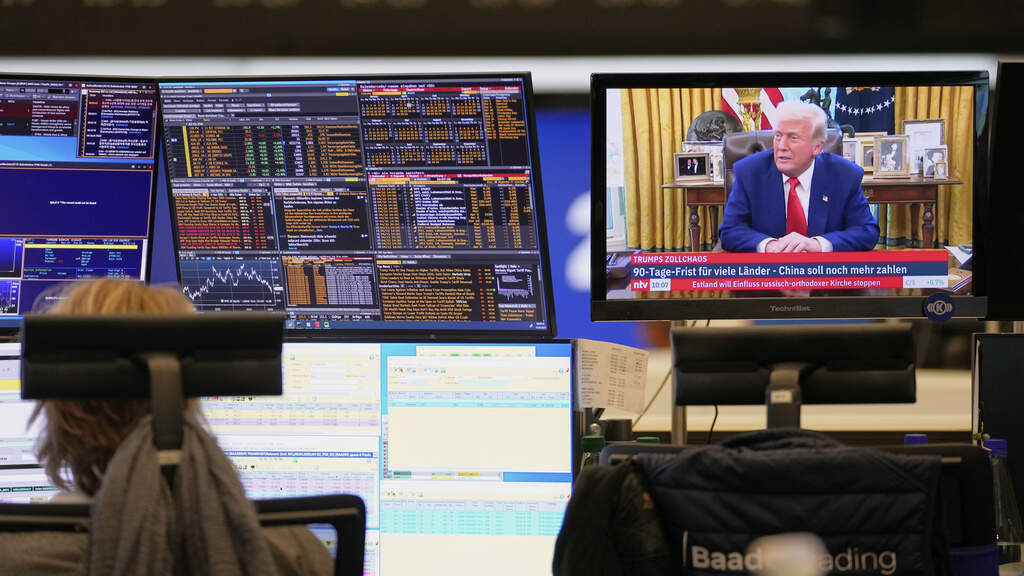
Tariffs, mortgage rates, clashes with the fed – all make for uncertainty in the economy. On Point’s “Money Ladies” Michelle Singletary and Rana Foroohar join us to talk about your money, the global economy, and America’s future.
Guests
Rana Foroohar, CNN global economic analyst. Global business columnist and associate editor at the Financial Times. Author of several books, including Homecoming: The Path to Prosperity in a Post-Global World.
Michelle Singletary, Washington Post personal finance columnist. Author of, among other books, The 21-Day Financial Fast: Your Path to Financial Peace and Freedom.
Transcript
Part I
MEGHNA CHAKRABARTI: President Donald Trump is winning. He's winning at having the worst approval rating at the almost 100-day mark of any president in 80 years. But perhaps Washington spin doctors would say, even with that dismal stat, he shows he is winning because Trump started off his second term with the second worst approval rating of any president in the modern era.
The only person with a worse rating was President Donald Trump himself in his first term, so he is winning by being the most disapproved of president early in his administration twice. Now there isn't a single issue where he has gained approval points from Americans, trade, foreign policy, taxes, health, even immigration, all in negative territory now.
And then there's the one where Trump was once considered the strongest, his handling of the economy. President Trump's approval rating on the economy has plummeted by 24 points, a massive shift according to the economist. And last week, Gallup found that a record high 53% of Americans believe their economic situation is getting worse.
That's the first time a majority of Americans have felt that way since Gallup first started asking that question back in 2001. Just listen to Brittany in Portland, Oregon. She works as an assistant professor and is worried about her job.
BRITTANY: There have been cuts to federal grants, also 'stop work' orders on certain federal grants, and these policies could potentially result in me not having funding for my salary, and therefore, I am concerned quite literally about not having a job in a couple of years.
And my husband is an engineer. And his work depends on having steady growth in the area, so construction going on, and so when the economy's down, we don't have as much construction. So he could potentially even lose his job as well.
CHAKRABARTI: Again, that was Brittany in Portland, Oregon. And here's Beth. She's in Denver, Colorado, and Beth says things are very tight financially in her household.
BETH: We've gone from being very comfortable to, within the last few months, having to cancel subscriptions, memberships, really plan our groceries like methodically, going to multiple stores just to get the best deals. I haven't had my hair cut since January. I stopped getting my nails done.
We've had to cut back on things that we can supply even for our dog or for our child who is a teenager. Just anything we can cut back on, we can. It is just getting worse and worse, and I'm not seeing it come down.
CHAKRABARTI: With all of that in mind, we thought it's high time to bring back On Point's Money Ladies. Michelle Singletary, Washington Post Personal Finance columnist, also nationally syndicated.
Hello there, Michelle.
MICHELLE SINGLETARY: Hi. Thanks for having me. And Rana Foroohar, CNN Global Economic Analyst and Global Business Columnist and Associate Editor at The Financial Times. Hello again, Rana.
RANA FOROOHAR: Hey, great to be here.
CHAKRABARTI: Oh, is it really great right now, Rana? (LAUGHS)
FOROOHAR: It's always great to be with you, Meghna and Michelle.
CHAKRABARTI: So we'll accept that. But Michelle, let me turn back to you. I'm just thinking about these two women we just heard from, Brittany and Beth, just two On Point listeners there, sharing their stories. You are the personal finance columnist, I'd say, basically for the nation. What kind of questions are you getting and are you getting a lot of them right now?
SINGLETARY: I'm getting a lot. Every single day. My inbox is full. I'm getting them when I'm at church. I'm getting them when I'm in this grocery store, just walking, buying my groceries and people recognize me and tap me on the shoulder like, what should I do with my retirement account? What about these grocery prices? Do you think trade is going to, the trade war's gonna get worse?
Should I stockpile toilet paper. It's overwhelming. I had to make an extra appointment with my therapist. Because I was just like I'm stressed and now, people are turning to me and I'm glad they are. But people are very stressed. And I was talking to the head of the United Way Worldwide and they just released a survey.
They have a 211 call line where people can call in for assistance in their community. And those numbers were high even before Trump took office. And now they're seeing the calls increase. More millions of people are calling in for housing assistance. Referrals for utility help, with paying the utility bills and food assistance. Like, I don't have enough food to put on my table.
CHAKRABARTI: Wow. Wow. Okay Rana, I will come back to you in a second here, but Michelle, what are you telling people who are coming to you with these pretty existential issues right now?
SINGLETARY: What Beth said is what I'm telling people, to cut back, look for anywhere where you can mine for more money to accommodate higher prices. And the possibility that you could lose your job. And I don't want to sound so dire, but the fact of the matter is you do need to prepare for the worst. And so I'm telling people, cancel your vacation if you didn't have a good emergency view, or you don't have a good emergency fund, cut back on getting your nails done.
And those subscriptions. Even my husband and I have been looking at our budget at places where there may have been a little bit of fat. Not a lot, how I am with money. But we, every quarter, he and I sit down and do our own budget. And we did it this weekend and for two days we were just looking, can we do this?
Can we cut this? Because he's retired. And so I'm right there with the rest of America looking at my budget, thinking, how can I be tighter?
CHAKRABARTI: This is a good time for me to mention what I had forgotten to mention, which is your book, What to Do With Your Money When Crisis Hits: A Survival Guide, hoping that one day this book is not relevant, but that is not today, sadly.
But so, Rana, just same question for you. Michelle's fielding questions at the individual and family level. When you look across the U.S. economy, do you feel that same dire sense that's being reflected in this sort of polling plunge that Trump is experiencing?
FOROOHAR: Oh, for sure. I think it's incredible in a way that Trump has taken on the two things that Americans really care about. Their money and their freedom, and he's challenging both of them. If you're not worried you're gonna be picked up and thrown into a foreign jail, you're worried your retirement savings is disappearing or may disappear in the future.
I am certainly hearing from a lot of people that are saying to me, even if they're not, say, at the level of some of the folks that Michelle is dealing with, they're saying, how do we invest? Where do we invest? Where is safe? And I think, and I've said this many times on this show, that Trump is, he's throwing kerosene on problems that were already there. He's creating new problems. He's throwing all the chess pieces up in the air. But I do believe that slowly but surely, we were heading to a new and more complicated investing and kind of economic paradigm to begin with.
But boy is he adding a level of chaos that frankly is going to be devastating, not just, and has been, for individuals, but for the country at large. There is now a trust deficit that America will pay a price for. Yeah. In borrowing costs.
CHAKRABARTI: A global trust deficit.
FOROOHAR: Oh yeah.
CHAKRABARTI: Yes, absolutely. Oh, and by the way, this is a good time for me to mention your book, Homecoming: the Path to Prosperity In a Post Global World. Both books very relevant for this time. We're gonna get into a lot of details in the remainder of this hour. But forgive me if I inject, let's say, a little bit of measured skepticism here. And this is why, because I was remembering back in the Biden administration how there was a phase where we, in the media, and people in Washington, you know, politicians and pundits were basically saying, Hey, people are feeling uncertain about the economy.
They don't like inflation, which hit a record high in the Biden administration, but overall, the job, unemployment's low, wages are going up, et cetera. So people are just feeling vibes. They're just feeling bad vibes. But it's not necessarily that the overall economy is doing terribly.
There was a little bit of patronizing going on, if I do say so myself. Are we, is that similar to what's happening here, are people just feeling vibes or is this different, Michelle?
SINGLETARY: I think before, remember, there are two or three Americas when it comes to money. There are people who are struggling, have been struggling.
The struggle never ended, no matter who was in the White House. And they're the people in the middle who were just getting by, comfortable, but a disruption could take 'em down. And then there are people who are doing really well. And so I think some of us took the task, those people who were doing really well, who had that feeling that things weren't quite right, that just wasn't accurate. But now that feeling is true.
It's a real thing now. And all you have to do is look at your retirement account. All you have to do is go to the grocery store. All you have to do is look at going, go buy a car.
CHAKRABARTI: Yeah.
SINGLETARY: I've been writing columns about how the monthly payments for cars on average is like $750 plus dollars a month.
And about 18% of new borrower car borrowers have a car payment of over $1,000 a month.
CHAKRABARTI: Wow.
SINGLETARY: Now, some of that is the selection of the car, but some of it is that interest rates are higher for them. They're taking out longer loans and it's real now for more of those segments of the population than it was before.
And I think that's the difference. Because, consumer confidence, a lot of it is, how do I feel? And some of it isn't based on fact for their individual situation, but in terms of the overall economy, it's bad, y'all. And I'm scared. And I'm scared for a lot of people who may lose their job in the next six months or so.
People always ask, are we headed for a recession? I don't know. And we got it wrong during the pandemic. We thought there would be and there wasn't. But this time around, this manmade thing that's happening is real and a lot of people will suffer.
CHAKRABARTI: Okay, and Rana, we have to take a quick break, and I promise when we come back on the other side of that, I will totally let you take me on this vibes question.
But manmade. Yes. Versus pandemic made. And in this case, Michelle, I just add to that it was, this is made by one man, the President of the United States, so Michelle Singletary and Rana, who our, standby for just a second. We'll hear a lot more from our money ladies, in just a moment. This is On Point.
Part II
CHAKRABARTI: Rana, here's your chance to take on that vibe quest.
FOROOHAR: (LAUGHS) Take on your vibe. Yeah. Look I'll lay out, felt experience is important but let me lay out a few facts. During the Biden administration, yeah, you had COVID, you had some inflation, but you also had the strongest post-COVID recovery in any country, in the rich world, we had a very robust recovery. Now, I'm not saying that some people, particularly in the lower kind of 25% of the income spectrum, didn't feel pain from that inflation. Of course they did. It's a bigger percentage of any take home they have, energy costs, food costs, et cetera.
But it was a pretty good recovery. This time around, we really are on the downswing. We are not in recovery. It would be, I would be hard pressed to find an economist that says that things are going to get better. Most people are pricing in, at this point, 80%, 90% chance of recession within the summer to the fall period, right now.
And that's, a lot of people would say, we're headed there even without a trade war. Because first of all, a lot of the damage has already been done. And we're going to get, let's say we got 10% tariffs and negotiated deals with 90 countries. That's still higher than you had before.
Businesses are uncertain. Nobody trusts Trump, what he says from one day to the next. And that goes for CEOs to individuals. That's not a climate that's good for business, that's not a climate that's good for the economy. And as I've mentioned many times, we are due for a recession anyway. Even if you didn't have Trump, even if you had Kamala, I would be expecting there to be recession probably this year or next.
Mild, I think this time around, we just have to hope we don't get something worse than a recession.
CHAKRABARTI: Yeah. And just to be clear, when the specific definition of recession is, what? Two consecutive quarters of economic contraction.
FOROOHAR: Yeah. Of negative growth, but again, I don't think so much about that. I think there is an important felt experience when people are not spending, when companies are not hiring and are beginning to cut back.
You have that feeling and that's where we're headed. So I suspect by, particularly, if we get more trade trouble by summer to fall, we're gonna see it slow down. Now, I wanna give one caveat, which is that I also think this administration is gonna try to sweeten things up the minute that happens. And that they're already starting to position Jay Powell as being, oh, it was his fault.
He didn't cut rates fast. No, let's fire him and everything will be fine. You know, there'll be a lot of talk. But we know we're dealing with a president that you can't trust from one day to another. Business doesn't like that.
CHAKRABARTI: Yeah. Okay. So both of you have mentioned in different ways retirement for example, and included within that, how markets have been reacting.
Which, to be specific, markets are basically the collection of reactions from millions of people in businesses. So there's something to be said there. Over, in the little break that we had, I just went to Yahoo Finance and I pulled up a bunch of indexes just to see, just to remind myself. Because I'll be honest, Michelle, I've actually been ignoring it, 'cause I can't handle it.
Over the past couple of weeks here, and Nasdaq April 2nd. This giant, let's see, what is it? 17,000 point drop roughly. S&P. Same thing. April 2nd, the Dow, April 2nd. That was all Trump's liberation day, right? Essentially tariff day. And since then, it's been a rollercoaster, a bit rocky.
Some of them have almost recovered to where they were pre-April 2nd. Some of them have not. Michelle, when people are looking at this volatility, how are they supposed to cope?
SINGLETARY: They're not coping in the sense of they're in a panic, and I would say they, that they're not being paranoid.
They should feel that. It does hurt, particularly those who are near retirement. Or in retirement. I, like you, I only just looked at my portfolio. I had not looked since before even the liberation day when Trump came in and said, he is gonna do all this. I said, I just can't, I can't stomach looking at it drop like that. And only when my husband and I did our sort of regular budget session that I'd look, it was bad. It wasn't as bad as I thought it was. And I say that to say it wasn't as bad because then I looked at my one year, three-year, five-year, 10 year to give myself some perspective.
And that really helped calm me down, that the 10 year, I'm still up almost 12%. So I'm like, okay, who? But I lost a lot of what I had gained the last two years. And the reason why that's so important is because I'm getting closer and closer to when I may start withdrawing, because I might retire.
My husband's already retired. We weren't gonna take some money out of his retirement account to do some home improvements that aren't necessary, just cosmetic. And we decided not to because it's down. And we don't want to lock in those losses, and that is what I'm saying is gonna happen.
So we are comfortable without taking money out, but then we aren't gonna help the economy by doing a home improvement project that will engage a lot of small businesses.
CHAKRABARTI: I see what you're saying. Okay. So every choice to not withdraw money does have a knock-on effect elsewhere in the economy. That's a really important point.
Also, looking at the 10 year, really, I take your point on that, as well. Let's have the long view here. But just to swing to the other side of things, as a comparison to what's happened within the Trump administration, the second Trump administration. Okay. I'm looking at the Dow on January 21st, 2025.
So the first full day of the Trump administration, the Dow closed at 43,528. And yesterday, even after some recovery from Liberation Day on April 2nd, it's still only at 40,335. A 3,000-point negative delta there. Rana, I did hear Michelle still say, have some perspective. Hold if you can.
Is that what you did?
FOROOHAR: (LAUGHS) It is not, although I totally respect Michelle's perspective, and it is an argument that I think is totally sound and it's a position that I could have taken. Let me tell you what I did. I did lock in some losses. And I actually moved, I had already moved, at the beginning, actually, a little bit before Trump 2, I moved more money into gold.
I already had a strong gold position. It's done very well, and I moved more into cash. When things got crazy with the trade, the trade liberation Day week, I went completely to cash in gold. I lost about 10% overall locking in losses, but I've already made up over a third of that with the rising gold prices.
And let me tell you my perspective, and I'm not offering financial advice. But I'm just telling you, this is how I look at it. It's my own psychology, coupled with a strong worldview. I believe that we are headed, again, regardless of what would happen with Trump, although he's speeding the situation up, that we're headed to an investing paradigm that's going to be somewhat different than what we've seen for the last half century.
And here's what I mean. I think that we're going to be in what I would call a tripolar world where the U.S., Europe, and Asia are going to have more equal shares of capital flows. I think investors are going to get much more interested in these parts of the world, in part because the U.S., we were overdue for a reset of how the U.S was seen in the global marketplace.
Back in the day, when we started getting this kind of 40-year bull market, with a few dips and ebbs we've been on for some time, the U.S. was, like, 60% of the world economy we're now 26%.
CHAKRABARTI: Oh, wow.
FOROOHAR: Yeah. We were a very, considered a very competent government low political risk.
That's changed. These are not things you can take back so easily. At the same time, China is growing, becoming a larger part of the economy, trying to develop its own monetary orbit, all these things. Europe is, I think, finally getting act together might even issue Euro bonds at some point. All these things are going to mean that you're going to see a much more balanced investing, global investing picture.
So when I get back in, which I will do at some point, I can talk more about that, about my timing, if you want, later. But I'll do that at some point. I'm gonna get, in my equity stake, one-third U.S., one-third Europe, one-third Asia. That's rough breakdown. And I'm gonna keep more in gold cash. Because I think we've got a 10-year picture that's gonna be very up and down.
CHAKRABARTI: Okay. So Michelle, I will bring you back in here, but Rana, my jaw is still, what? Because look, 10% locking in a 10% loss. That's, I'll be honest, that's, you're braver than I am. That's more than I would be able to stomach. Because everyone has a different sort of risk profile.
Does that include sort of the tax hit that you get from the doing this massive change in your portfolio?
FOROOHAR: No, I was I'm in a SEP, most of this is in a SEP IRA, so I'm not taking huge tax hits there, but I'm telling you. Again, this is, as I wrote in my Monday column, I'm the child of two immigrants.
I de-risk early and often. That's like my biological makeup. I don't trust this president. I think it's possible you could find some gains after we get tax cuts and more deregulation. I think it's also possible that they could break something important in the financial plumbing that will cause a lot of dominoes to fall.
And I personally don't want to be in the markets when that happens. So I'm out till the midterms for myself.
CHAKRABARTI: Michelle, what do you think about that?
SINGLETARY: First of all, I think Rana is brilliant. I'm gonna do a little bit of caveat because I deal with regular people. Now, when she said she's invested in gold, please, you all, do not be going out there and listening to those commercials about gold and why don't buy gold bullion and put it in your house, or just be very careful about how you invest. If you want to go that route. If you're listening to what she did, she's an experienced person. She's smart. She probably had somebody helping her. Just, I wanna just put that caveat in there to be, because I see a lot of scamming going on with individuals who don't even really understand what a 401k is.
CHAKRABARTI: Look I'm just presuming Rana has a Bloomberg Terminal at her desk.
FOROOHAR: Look, I know a lot, I do and I'll just, for anybody that is interested in gold, which is actually becoming a bigger part of traditional portfolios, you do an ETFGLD is the name of it, and you make sure, which this one is, it's backed by physical gold.
That's the safest way to trade it if you want to. Gold bullion in your house? I wouldn't, it's heavy for starters. (LAUGHS)
CHAKRABARTI: Michelle, go ahead though. I still wanna hear more of your caveats.
SINGLETARY: Yeah. I just want, because I just wanna be careful, I hear the regular people, and I'm just worried about them being scammed.
But having said that, I think that she's right in terms of rebalancing. And I've been talking to a lot of financial planners and we tend to say, have one to two years, in some cash equivalent. But I think the most important thing that she said is, putting some more of your money in position of cash so that you can weather a longer period of a downturn.
And I think that is, she's absolutely right there. I feel, myself, that the market is going to change that way. That you're gonna need a longer period where you're gonna need to be able to tap money that isn't in the market, that you can use to pay your mortgage or rent or whatever that you need for your house.
And when things stabilize, and I'm hoping soon. That's what my husband and I, are actually gonna do the same thing. We were heavily equities because our individual situation is, we've got two pensions, two social securities. We don't carry any mortgage debt. We don't carry any debt. And so we could be a little bit more risky, but we're taking that risk off the table as well.
FOROOHAR: By the way, can I just say a couple more things, Meghna? I wanna just point out, when I say cash, I'm talking about cash equivalents. So I am in a high-grade government money market fund right now that is yielding almost 5%. Goldman Sachs thinks that the S&P is gonna do year end 2% this year.
So this is not a risky decision for me, on paying down debt. I completely agree. As always, with Michelle there. Let's see. I had a third point, but I can't remember now. Go ahead.
CHAKRABARTI: Okay ... Michelle, let me turn back to you, because Rana said something really interesting about what she's gonna do when she reenters the market.
And that is a third U.S., a third Europe, a third Asia. And the reason why I wanted to just get your view on that, Michelle, is that it's basically one-third U.S., two-thirds global. Now, for the longest time, I think financial advisors were basically recommending the exact mirror image of that, right?
Which would be roughly two thirds U.S., one third, I don't know, pick your international, total international market index. So this is a big change, not just financially, but in terms of as Rana said, looking at the importance of the U.S. economy as a long-term source of wealth globally, and so therefore how that feeds back into people's retirement portfolios.
SINGLETARY: Yeah. I think the mix does have to change. We are, and we can tell this now by the tariff war, that now we're realizing how global we are. I don't know if the average person really understood that so much of what we buy is not made in U.S. Even if the company is based here. Just look at all the angst around buying a car and the tariffs on automobiles and trucks.
We realized, it could be made in America. But most of it isn't. And so I think as you look at how you structure your portfolio, you do need to take that in consideration. And one thing that Rana said that I think that is so disheartening is that he's broken the confidence, Trump, the confidence in America.
That this is the safe haven, that you know, that our government isn't gonna like crash and then inflation be 1,000%. Now, I'm not saying that our inflation will be like that, but because he keeps flip-flopping, because he's breaking rules and there's so many lawsuits.
And some of those might be resolved in the favor of people, but I have had questions and I almost wanna cry. People are asking me, should I put my money, my cash in the bank? Could he take away my FDIC insurance? People are actually talking about putting large sums of money in their home and not a FDIC insured bank or federal insured credit union. Folks, that is alarming to me.
FOROOHAR: Yeah. Yeah, no, it's absolutely true. And it's a terrible snowballing cycle because when trust is degraded in that way, borrowing costs go up and you can see it. People are often, and I am too, sometimes, very confused by the bond market as opposed to the stock market's easier to talk about.
It's up, it's down. The bond market is where the smart money is, and it tells you what you really need to know. And what it's telling us is the risk premiums for holding U.S. treasury bills is increasing. Yeah. Meaning people see us as more of an emerging market these days as opposed to just the safe haven.
And that is concerning.
Part III
CHAKRABARTI: Now back to our conversation about the economic topsy-turvy that Americans are living through right now, which is being reflected in amongst other things. President Donald Trump's plummeting poll numbers on his handling of the economy. Here's Eric from Salinas, California and he is worried about financial stability.
He's approaching retirement.
ERIC: I'm very concerned about the market and also concerned about social security and whether social security's gonna still be around when I retire. I don't like what's happening. And there's a lot of volatility in the market that makes me feel very uncertain at these times.
CHAKRABARTI: So Rana and Michelle, what I want to ask you is we can never fully predict the future, right? Rana, you said maybe President Trump is going to cut a bunch of deals and relax the global heart palpitations that are happening right now. But on the other hand, it's clear that there's still, there's long-term damage that has been done.
So can you talk to me a little bit more about what other global economic analysts that you respect, what they're saying about this maybe accelerated restructuring?
Of the world economy. Yeah, go ahead.
FOROOHAR: For sure. Again, it's something, it's not controversial in the sense that a lot of people thought we were eventually gonna move into, just a less U.S.-centric world.
Yeah, that makes sense. You've gotta go where the growth is. Couple things that are happening though, which is interesting. Is that Americans are very naive. We often speak about all this as though we were the only players, so I really appreciate your comment about what the rest of the world is doing.
The game is now, in some ways, China's to lose. They are going out and saying in very aggressive ways, Hey. If you, X, Y, or Z country, cut some deal with Trump that is bad for us. We're gonna retaliate. They're not taking this lying down. Which I find interesting. And the Chinese, the Chinese economy is not in wonderful shape.
They've got their own problems, but China can take a lot of pain, they just culturally, socially, temperamentally are more suited to that than Americans are. And so there's that. And they're cutting a lot of deals and trying to ring fence different parts of the global economy.
And then Europeans are at an interesting moment, and this is, I find one of the most hopeful. Things that could potentially happen in the global economy right now is if Europe got its act together and became not only the protector of democratic values, but really integrated its capital markets and became a kind of United States of Europe now.
I lived and worked in Europe for 10 years, so I don't wanna be Panglossian about this, that these are multiple countries with their own gripes and cultures and it's a difficult thing. However, I will say that one shameful White House meeting with Trump, Vance and Zelenskyy changed 70 years of German constitutional law within 15 minutes. They basically said, you know what?
We are going to defend ourselves. We are going to run some, do some deficit spending in order to do what we need to do to have more security. The French and even the British are starting to think about, is there a way that we could come together fiscally?
I think if Europe took this moment to get its act together, I think we would see an absolute flood of capital and investment from America into Europe as a hedge. And so that's what people are talking about.
CHAKRABARTI: Interesting. Michelle, did you wanna say anything about that?
SINGLETARY: No, I think what she's saying is so important that the one, if you can think of it, is a positive is that it's gotten Americans to stop being so selfish about, oh, it's just all about us.
And that we are looking at other people and these other countries are saying, what you're doing with Ukraine is wrong. Pulling money out of places that are helping feed people and give them water is wrong. And I think that's hopefully going to bode well for all of us, both being the right thing to do and also financially.
CHAKRABARTI: I wanna go back to something that you said, Michelle, just before the break 'cause it's still ringing in my ears about how there's so much I keep saying, volatility, but it's more than that. It's like illogical unpredictability. And the illogic part is what I think is important that people coming from the White House, that people are saying, oh my gosh, can we trust in the longevity of the FDIC?
Like there was, I can hardly believe that we're saying this out loud as Americans, and yet we are. And here's the thing that I have to remind myself, we're not even officially at the hundred-day mark yet. We're approaching it, but we're not at it yet. So I'm just thinking, folks are now also having to wonder like, What are they, forget 10 years from now, I'm sure a lot of people are wondering what am I gonna do, whether or not they voted for President Trump, what am I gonna do even for the next three and a half years?
SINGLETARY: Yeah, there's a lot of fatigue already four months in and it feels like four 40 years.
And people were already doubtful of Social Security. The last caller Eric was talking about is social security gonna be here? Social security was already having some fiscal issues. We thought Congress was gonna fix it in time. But if that fix still involves people not being able to call in and go to the office and get answers to their questions, then it's gonna undermine the system.
And I'm hearing more people saying, I'm gonna take it now. Because I don't know what's gonna happen. And that may not be the right call for them. Now, some people take it when you are eligible for it at 62, because you need that money right now.
But then some people could have waited and let that benefit grow, but they're so scared of what is happening now that they're taking it. And that means they're taking money off of the table that they might, could have just left it to grow. Now, the X-rays say, social security, depending on how you live, you're going to get the same amount of money.
But if you are not sure about your life expectancy, waiting to 70, you get more, after your full retirement age, from that time to 70, it's not 8% guaranteed return. And then you wouldn't have to worry about the market. But people are pulling the trigger, and I don't even wanna use that term, 'cause of all the gun stuff, but they are applying for benefits maybe too soon because they're so scared.
CHAKRABARTI: So Rana, I wanted to ask you about something that I read, oh, just a couple of days ago. It was written by Rod Dreher, who's a conservative writer, deeply religious. He's a huge supporter of Vice President JD Vance. And what he wrote about was a woman that he had talked to, who she had voted for Trump enthusiastically.
In part because she definitely felt that let's say a more robust trade stance against China specifically was warranted. But she's a small business owner. And as of April 2nd, with all the global tariffs the U.S. has now imposed and the retaliatory ones that came, immediately thereafter.
Because of that, her business has been utterly decimated. She's totally reliant on trade for her small business, and it's like she's in a whirlwind of confusion about how that could have happened and feels genuinely betrayed. And I really feel for her because I think a lot of Americans who did vote for the President are suffering that same kind of sense of betrayal that may feel personal, but it's definitely economic.
FOROOHAR: Yeah, let me give a little perspective. I'll do like a speed round of history here. There was some something, one good thing that came out of Trump 1 was that the USTR at the time, Bob Lighthizer, who I have a lot of respect for, said, Look, we're gonna pull up the scrim on the U.S.-China trading relationship, and we're gonna point out, this isn't working anymore.
It's imbalanced. It's not good for either country. We gotta fix this. Boom. Highly surgical strategic tariffs. On China in specific areas, didn't cause inflation. Chinese took the hit. Okay. That gives a kind of a sense maybe this robust trade stance is where we need to be. Biden comes in, continues those policies, but then he does something crucial, which is he has a home game.
He starts to bring back the U.S. semiconductor industry in two years. He starts to support strategic industries, supply chain analysis, biotech, pharma, clean energy, all these things. What happens in Trump 2 is that you get some folks in the administration, and I wanna give a little credit to some of the smarter people in the Trump administration.
There are a couple, Steve Miran, who's at the Council on Economic Advisors, came out with a paper called "User's guide to restructuring the global trading system," which actually you can, like it or not like it, but it's a reasonable document that says, We need some changes. We wanna be more robust.
Here's the plan, here's the risks. Unfortunately, Trump the president goes completely off piece and just does his own thing, which is a disaster within the administration. You see all the infighting. It's also a disaster because it tells the entire world, we don't know who America's allies and adversaries are.
There's no trust and you just can't do it that way. And so he's broken things that will not be easily repaired, if at all.
CHAKRABARTI: Yeah. One of the things I appreciate most about listening to both of you is that we do move so fluidly or seamlessly between the macro and the micro.
Because even though it's important for us to try to understand the macroeconomic trends and implications, Rana, I am also still always keenly interested. And so how do we apply that in our own individual lives? And Michelle, you're in the Washington, D.C. area. Suddenly it just reminded me that there's all these federal workers, right, who are in a massive state of limbo now. Have you been hearing from folks like that?
SINGLETARY: Every day. Every single day. Professionally and personally, many of my friends work for the federal government. And in fact, just before the show, I got a call and a text message from someone who's worried about her job. And I spent hours on the phone with another person, highly qualified, passionate about the work that he does for the federal government.
And worried about losing his job, after he worked in Stem. Stem!
And I can never get through a show without crying, Trump has basically labeled every single federal employee useless and worthless, and that's just not true. All across this country, not just in the D.C. area.
There are people who said, I wanna work for the federal government because I want to serve the public.
And he just has made him seem like nobody is working. And we see that they're working. When we have government shut down, you see how much we rely on the fellow government and it's so inhumane what they're doing.
Just, I mean, that scene of Musk with that, what is it that, can't think of it. The hedge clipper, when he was like --
FOROOHAR: Oh, the chainsaw.
CHAKRABARTI: The chainsaw. It's no hedge clipper.
SINGLETARY: The chainsaw, that is not a way to trim the federal government. And it's not, people think it's just D.C., but there are people all across the country, communities that are gonna be devastated by the reduction. And then contractors, we keep forgetting about these contractors. I had a relative who lost his contracting job. They brought him in and said, it's not you. We lost this contract that was serving people and they let him go, and now he's trying to figure out how to handle this job loss.
That came out of nowhere. And so I think people are finally saying, this is not how you do things. You can cut and not be ruthless about it. These are people's lives. And they're just not thinking about that. And now here we are, myself and Rana and you, trying to say, okay, this is how you handle this.
How do you handle things like this? What do I tell people? Cut your Apple subscription. That's not going to pay the bills. That's only $9 a month. And so we do what we can. I tell them what I can, and when I told the one worker, I said, go through your budget.
Cut everything. I got to the point where some people, I said, you know what, you're going to have to pull back on your contributions to your retirement plan so that you can use that money to stockpile it when your job goes away in a compromise.
FOROOHAR: Can I jump in and just say one thing?
I would like an optimistic note. There's a lot of protest. I live in Brooklyn. There's a lot of protests every weekend at the local Tesla dealership. The American Teachers Federation, which has trillions of dollars, if you count, not just teachers' pension money, but individual investments, that they've actually deployed telling money managers, we don't like the way Tesla's being run.
We want you to think about reevaluating that in your portfolio. After the teachers came out and started fighting fire with fire, they hit these guys where it hurts in their pocketbooks. The stock fell more and it's now down 77%. I just want people to know, their pension money, talk to your unions, talk to your leaders.
Talk to the people that are managing your money because you do have some power here to fight back against these, then you should use it.
CHAKRABARTI: I am gonna say, we did not plan this Rana, but you just previewed our show that's gonna happen tomorrow.
FOROOHAR: Really? Oh my God.
CHAKRABARTI: About Tesla.
FOROOHAR: Ooh.
CHAKRABARTI: Okay. I just wanna wrap up with this thought that I think the thing that, I try to be an endless American optimist, and I am at the end of the day, but it's tempered right now with a little bit of sadness. Because Michelle, as you have rightly pointed out, like when times are very uncertain like this, you gotta focus on what you need to do to take care of yourself and your family.
But that kind of mindset stretched across the entire country. To me, it's the kind of mindset that people in countries that we used to look at and say, oh, look at Chile. They're just up. And they don't have this like sort of national sense of faith in their nation. They have to protect themselves against the volatility of their own leaders.
And I feel like we may be headed in that direction and that does give me pause, so hopefully. Hopefully I'm wrong on that front. But Michelle Singletary and Rana Foroohar, it's always a pleasure to speak with both of you. Thank you so much.
This program aired on April 28, 2025.