Support WBUR
The fight against Trump's 'war on history'
Pulitzer Prize-winning historian David Blight says President Donald Trump is attacking American history and scholarship for political ends. Blight says it’s time for historians to fight back.
Guest
David Blight, Sterling Professor of History and Black Studies at Yale University. Director of Yale's Gilder Lehrman Center for the Study of Slavery, Resistance and Abolition. Author of many books, including Frederick Douglass: Prophet of Freedom, which won the 2019 Pulitzer Prize in History.
Transcript
Part I
MEGHNA CHAKRABARTI: Next July, the United States of America celebrates its 250th birthday. July 4th, 1776. The formal adoption of the Declaration of Independence, one of the greatest enlightenment era documents ever written. For the first time in the history of Britain's colonial power, its colonists dared to assert that power does not flow from a monarch, but from the people, quote, by the consent of the governed, as it said in the declaration. That quote, all men are created equal. And that rights are quote, unalienable.
And perhaps most importantly, that these were truths and they were so absolute. So uniformly agreed upon that Thomas Jefferson, the author of the declaration, deemed them to be quote, self-evident. But of course, you could debate how self-evident those truths were. You could even debate the declarations' importance or even what we should consider the real birthday of the United States.
Is it July 4th, 1776, or is it September 3rd, 1783, when the Treaty of Paris formally ended the American Revolution. Should it though instead be 1787 when the Constitution was signed, or 1789 when America's new government began operating, or 1790 when Rhode Island, the last of the 13 colonies, finally ratified the Constitution?
Or perhaps more importantly, is America's true birthday as a unified nation where Jefferson's promise of equality of creation, more accurately, should that date be 1865 at the end of the Civil War, or is it the ratification of the 14th Amendment or the 19th Amendment or much later, the Voting Rights Act? You see my point. It's pretty clear. History is vital to our shared understanding of this nation, which means it has always been the subject of argument, debate, and disagreement.
On March 27th, president Donald Trump issued an executive order titled Restoring Truth and Sanity to American History.
Trump believes that liberal historians have been rewriting the nation's history, that they're driven by quote, ideology rather than truth. And that this quote, revisionist movement seeks to undermine the remarkable achievements of the United States by casting its founding principles and historical milestones in a negative light, end quote.
As such, the executive order seeks to make changes to the Smithsonian Institution and to the Department of the Interior's management of public statues. Yale historian David Blight sees this as an attack, not just on historians, but on America's understanding of itself. He's a Pulitzer Prize winning historian for his book, Frederick Douglass: Prophet of Freedom.
He's also author of the book, Yale and Slavery: A History, and recently he wrote in The New Republic that Trump threatens to kill the very idea of history of historical debate by what Blight calls, quote, sanctioned ignorance. And he joins us now. Professor Blight, welcome back to On Point.
DAVID BLIGHT: Thank you, Meghna. Great to be back.
CHAKRABARTI: Tell me in a nutshell what your primary concern is, let's start with the executive order. Because there's actually quite a bit in it that I'd like to dig in with you. But what is your problem with this idea of the Trump administration saying, Hey, some of the most positive aspects of this country, I point to the declaration right there at the top, have not been adequately celebrated by liberal or progressive historians?
BLIGHT: First of all, your litany of possible founding moments was actually terrific. I love the fact that you pointed out 1865 and then the remaking of the U.S. Constitution, a second founding. We have always been a non-static, growing, developing, deeply conflicted, improvisational republic.
What bothers historians most about that March 27th executive order is that it is very openly a political assault. It's a declaration of political war on the practice of history, whether that's by academics, high school teachers, curators in the Smithsonian, superintendents and historians at National Park sites. That executive order, and many actions since by the Trump administration, are saying his administration shall have the power to, in effect, dictate what historical truth is.
That [March 27th] executive order, and many actions since by the Trump administration, are saying his administration shall have the power to, in effect, dictate what historical truth is.
And that of course goes against every instinct, every element of training, every idea that all of us grew up with if we went into the business of history or of teaching. And it goes against the instincts, frankly, of the millions of Americans who read books, go to historic sites, love the Smithsonian, always are watching good documentary films.
They don't want a static, dictated statist control over history. They'd like to know some of the truth.
CHAKRABARTI: So specifically. I like to dig into the details, especially when a president attaches money, right? To the politics. Regarding the Smithsonian Institution. Which is a vital institution in this country.
I should say that not only does the executive order seek to have the Smithsonian essentially let the White House vet anything and everything that the Smithsonian will put on display, but it also says that the vice president and director of the Office of Management and Budget shall work with Congress to ensure, quote, that future appropriations to the Smithsonian Institution prohibit expenditure on exhibits or programs that degrade shared American values, divide Americans by race, or promote programs or ideologies inconsistent with federal law and policy.
To your understanding, professor Blight, has that threat of defunding of the Smithsonian ever happened before.
BLIGHT: No, there've been controversies over exhibitions. The most famous was the 1994, '95 Enola Gay exhibition about the dropping of the atomic bomb. There have been, of course, presidents who have criticized aspects of federal policy about the Park Service or about the museums of the Smithsonian, but no presidential administration has ever tried to step in and tell the leadership of the Smithsonian, the leadership of the National Park Service, the leadership of the Library of Congress, for God's sake. He even fired the chief librarian.
No presidential administration has ever stepped in and said, we, the administration, shall determine what is appropriate, proper, and even truthful. And everyone is fond now of quoting George Orwell.
But there's a good reason. Because what happens to truth in Orwell's 1984, for those who have read it and those who haven't, what happens is that the only truth available in that society and that empire that he called Oceana, is the truth created by power.
There is no skepticism. There is no criticism. There is no research. There is no freedom of mind. Now, I'm not suggesting that Trump and his minions are going to succeed at all of this, but it is exactly what they're trying to do. They're trying to say the source of truth about how Americans should understand their history, should display it, should represent it, should learn it, shall be determined by ideology born of the Heritage Foundation and transferred over to the White House.
CHAKRABARTI: Yeah. 1984 is simply one of the greatest books of all time. And it's not by accident the Winston Smith in the book works in the Ministry of Information.
BLIGHT: Absolutely.
CHAKRABARTI: His job is to throw things down the memory hole. Or to just completely rewrite them to the point where there's that famous line of many in the book where, I'm paraphrasing, about that Big Brother didn't want you to believe what you saw with your very eyes. But simply what Big Brother a.k.a. the government of Oceana said is true.
Professor Blight, I have the utmost respect for you, and because of that I'd like to engage in a — No, it's true. Our conversation from many years ago about your Frederick Douglass book was one of my favorite of all time.
BLIGHT: Sure. Oh my. Thank you.
CHAKRABARTI: And because of that, I'd like to actually engage in a good faith debate with you.
About whether historians or politicians of any political stripe have the habit of engaging in this idealization of what the function of history is in this country. And we'll do that a little bit later, but in your piece, in the New Republic, you actually state something that's even more concerning than the analogy of 1984. You talk about Nazi Germany as using a rewriting of history as a major tool in its takeover of the German government and its expansion beyond Germany. Tell me a little bit about that.
BLIGHT: I've been reading a lot about the rise in development of the Third Reich because it is the world, if you like, metaphor and model for authoritarian regimes.
They have not all become just like the Nazis by any means, but the book I use in my essay is Richard J. Evans' book called The Rise of the Third Reich. He wrote a three volume, massive history. It's absolutely brilliant and I recommend it. He lays out eight steps, eight stages, eight factors that were so important to the rise of the Nazis, and the Nazis took a long time to take power.
They lost elections. They went up and they went down, but they used many tools. And our task now is to look at those stages of the development of any fascist regime and the authoritarian regime and ask ourselves, which ones are we at already, for example. That society, like all of Europe then was in a massive economic depression.
People all over Europe, not just Germany, had come to hold democracy in utter contempt because democracy seemed to be failing them. The Nazis very carefully, slowly at first, went after academic freedom. They went after dissent in the schools and especially the universities. And then this goes without saying, but he has a brilliant analysis of how good the Nazis were at propaganda.
He calls it dynamism, their ability to persuade, their ability through ritual and through owning truth to take over what people thought of the past. And last but not least, and there are three or four others, he says --
Part II
BLIGHT: The Nazis also found a way, and Richard Evans builds this story brilliantly. They gave the cloak of legality to each step they took. If this law prevented them or blocked them, they changed the law. And then there's of course the recrafting of history. The Nazis were brilliant at that.
They created a whole new narrative. They created an ancient past for the Germanic peoples and so on. And last but not least, they used street violence. The brown shirts, the Gestapo. Now we have not completed all eight of those stages in the United States today, but if one goes and looks at my essay and just looks at those eight stages or reads Richard Evans, you must ask yourself, which four or five are we already at?
Or six or seven. Because one of the ways we can understand and then indeed mobilize to fight what's happening in our country is by comparison, by looking outward. Looking outside of our own history, at looking at authoritarian systems across the world. over time, some have lasted a long time. Most have only lasted a short time.
Soviet Union was one of the longest lasting, and now Vladimir Putin is about the business of reinstating a version of it, and we have an essay in the New Republic collection by Amna Khalid that is brilliant. It's showing us what we can learn from these kinds of international comparisons and not always just look inward.
CHAKRABARTI: Okay. Let's talk for a moment specifically about Kevin Roberts, right? Because in your New Republic piece, you basically invite him to debate. And he's the president of the Heritage Foundation, which of course helped give us Project 2025. For a long time, he's been very outspoken about his criticisms of progressivism. And here's a little something that he said at the Academy of Philosophy and Letters conference in College Park, Maryland in June of this year.
And by the way, Kevin Roberts has a PhD in history, and he talked in June very optimistically about what might happen under President Trump.
KEVIN ROBERTS: This is the dawn of America's golden age. We're not here to tweak liberalism. We're here to bury it, and to resurrect something older and truer in its place. We're tasked with renewing a conservatism that is pro worker, pro-family, pro god, pro nation, just as it was under Abraham Lincoln. A conservatism rooted in the American tradition, not ashamed of our history, but proud of our inheritance, just as it was under McKinley and Teddy Roosevelt and then Reagan, and now Trump.
In this renewal, we're witnessing the rebirth of what the founders envisioned. A republic grounded in virtue, guarded by borders, governed with consent in the rule of law and guided by divine providence.
CHAKRABARTI: So interesting. Professor Blight, respond to that.
BLIGHT: I will happily, I've read that. I had not heard the actual tape of it.
He published that as an essay. This is Kevin Roberts declaring war on academic historians, what I choose to call traditional historians. Kevin does have a PhD in American history from UT Austin. He did his dissertation some 23 years ago on slavery in Louisiana. It's actually a very good piece of work.
I know his mentor. Since then, he's turned far to the right. His use of that verb buried, he wants to bury liberalism and all that goes with it. That depends on what you define as liberalism. So I decided, given the fact that Heritage Foundation, with its $100 million budget and its 700 and some employees is the source of Project 2025.
And by the way, the language of that March 27th executive order comes right out of Project 2025. I decided, come on, let's bring Kevin Roberts out to debate us. He has, by the way, as of just a few days ago, agreed to two public debates. We're discussing this now, perhaps one in a red state, one in a blue state.
The model I hope we use, and I've proposed, is two participants on each side with a strong moderator, a civil debate about what is American history, what are its main themes, its great narratives. What ought it be in the American imagination? As we face this 250th anniversary.
I've proposed to him one big general debate about the great arc of American history, just what is it and who's included in it, and the second one on the founding itself, on the declaration, the Constitution, and so forth, and that second one should happen in Philadelphia. But we'll see. I don't know what will be accomplished except he agreed with me that we need a civil discourse between the two sides of this extremely important problem.
CHAKRABARTI: I will say that Kevin Roberts, especially, it's that line about the renewal of the vision of the founder's vision of this country. That really sticks with me. Because when he talks about being guided by divine providence, I would argue that his understanding of divine providence would be unrecognizable to Thomas Jefferson.
But more importantly, it's Heritage Foundation. It's Trump. It's Roberts, it's many actually people in this country's criticism of what they see as illiberal practices by modern historians. And let me give you some examples. And this is our good faith debate. Professor.
BLIGHT: I'm ready for it. And I may end up agreeing with you on some of it.
CHAKRABARTI: So first and foremost, I'm just going to pull from the executive order from March where they provide examples of documents or displays that went up in the Smithsonian. For example, as they point out to the Smithsonian American Art Museum that features an exhibit called the Shape of Power: Stories of Race and American Sculpture.
And one feature of this exhibit says that societies, including the United States, have used race to establish and maintain systems of power, privilege, and disenfranchisement. And that quote, sculpture has been a powerful tool in promoting scientific racism. Now, I would argue that those selective quotes, selective as they are, but they're still rife with a kind of progressive/woke language that a lot of people who aren't ideologically conservative do take issue with.
BLIGHT: No question, Meghna. I have been public, and I actually wrote an op-ed in the New York Times back in November of last year, only a week after the election. Where I said, look, the academic left in particular must look in the mirror. Because a lot of things have occurred over the past 30, 40, 50 years. Especially I would say in area studies where theory of all kinds has taken over for empirical evidence.
Where we at times have lost not only the ability, but even the interest in writing careful stories and careful narrative. It happened in literary criticism where some scholars didn't care about even reading the books anymore. All that mattered was their critique after a close reading. What we've learned to do in the academy, and maybe we've overlearned it, is critique. And critique can be ultimately nothing but cynicism.
That is, there's only power to some people. Now, I have openly admitted that there have been excesses of this kind in the academy, but the attacks by Roberts, the Heritage and now the Trump White House are on the basic narratives of American history, if you go out and look at American schools, which the American Historical Association did in a massive study called lesson plan, it found that American teachers out there are still teaching the grand narrative of American history.
They're teaching the founding; they're teaching the Civil War. They're teaching about the Great Depression and the New Deal, they're teaching about the presidency. They want to teach the best information they can get. There's no question about it. The attack is simply using cherry picked examples to tar the entire practice of American history, and that's what we have to fight back against.
Because once they have declared war on us, look at again at Kevin Roberts's verbs, he wants to bury us. Okay. We have to find our own way to declare political war ourselves. And not just in a defensive sense. We have to show people that the practice of American history has so deeply enriched our understanding of that history in the past half century. We have transformed it. And we've transformed it mostly for the better.
CHAKRABARTI: But wouldn't you say that the teaching of American history in schools and K through 12 is one thing. But as you say, the practice of American history from the academy is another thing. Because of its, as we both agree, its vast cultural importance, right?
BLIGHT: Yes.
CHAKRABARTI: And this is why the executive order of points and then very next paragraph to the National Museum of African American History and Culture, they once posted a document online that said that hard work, individualism and the nuclear family are aspects of white culture now. They received a huge amount of criticism for that.
BLIGHT: And they took it down.
CHAKRABARTI: And they took it down.
But the very fact that it went up in the first place, I think is exactly what people, again, not just Roberts, although he is powerful in this conversation, point to as there has been a shift in the cultural values of people in the academy of people in media and politics that is not representative of the narrative that most Americans have of this country.
BLIGHT: It's true, but that narrative of American history, it is not, should not be utterly pleasing and triumphal.
CHAKRABARTI: Yes.
BLIGHT: Which is what the right wants. History is not just a story you are comfortable living in. History is going to make you uncomfortable. And let's phrase it, any given museum, especially one so large and so profound as the African American Museum.
History is not just a story you are comfortable living in. History is going to make you uncomfortable.
At times they're going to do things that rub people wrong, and the people who protested that particular piece had a right to. Lonnie Bunch and its leadership said, you know what, we overstepped here. We made a mistake. All museums do this. But look at the rest of that museum. It's still the hottest ticket in Washington, D.C. from its basement floors that are about the slave trade and slavery all the way up to that magnificent floor where you learn about Black music.
It's the most popular place in Washington, D.C. and not just for Black people. Why is that? Because it's a rich, beautiful, fascinating, sometimes triumphal and sometimes tragic history, which is what all history is.
CHAKRABARTI: Let me just probe something a little further, because I am in complete agreement. You've made an excellent and important point about history should make us uncomfortable, right?
Even as we celebrate it. But I would argue that both people on the right. And the left have lost the ability to sit with that discomfort. Let me just use a closer to home example here for us.
BLIGHT: Some have.
CHAKRABARTI: I'm going to point to NPR, right?
BLIGHT: Sure. Because for three decades, more than three decades, every 4th of July, they had their most famous reporters and hosts read the Declaration of Independence.
BLIGHT: I loved it.
CHAKRABARTI: Then they stopped it. In 2022, right?
BLIGHT: Yeah. Yeah.
CHAKRABARTI: Because after the sort of summer of Racial reckoning in 2020, NPR decided that the declaration, because it does contain language of its time.
BLIGHT: Yes.
Oh, does it ever.
CHAKRABARTI: Including obviously what's considered to be racial slurs for indigenous people now.
BLIGHT: Yes. Yes.
CHAKRABARTI: Right alongside the assertion that all men are created equal, the fact that it's men and not people, or men and women. Led NPR to decide not to have that reading anymore.
BLIGHT: Big mistake.
CHAKRABARTI: It was an erasure of the ability to accept a document for what it is in its time, and then think through its complexities.
Now, they did do a segment about the pros and cons of the declaration. But that's exactly the kind of thing that I'm talking about, that we --
BLIGHT: I agree with you. That's a big mistake. I used to lay back on a couch or something, on a pillow when that played on July 4th morning and just listened to it.
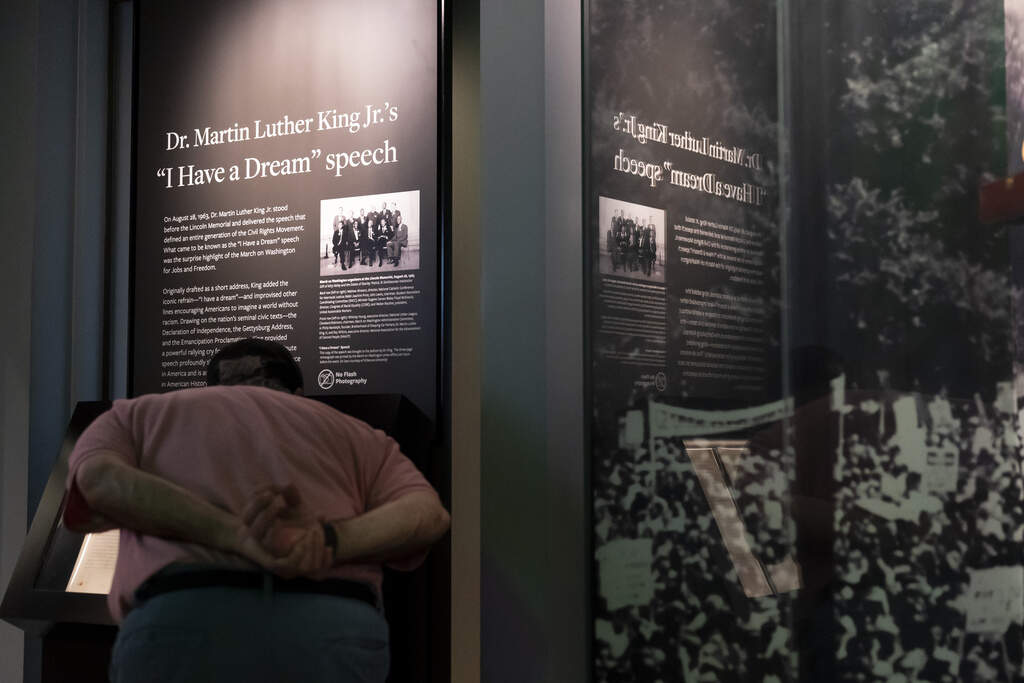
And sometimes I would weep. And you know what you also did, on Martin Luther King Day? You played the I Have a Dream speech and its full recording in King's Voice, and I used to do the same thing. I would just sit there or lay there and weep because these are iconic moments that we should never ever forget.
Hey, the same's true of the 14th Amendment, for God's sake. It doesn't include Native Americans. It doesn't include women. But that's not a reason to ever stop reading the 14th Amendment, especially section one, which is the one thing in the Constitution that actually still probably holds us together if we can keep it.
CHAKRABARTI: Equal protection under the law.
BLIGHT: Exactly. And birthright citizenship. And the right to habeas corpus and yeah, it's two sentences in section one of the 14th, that if you want to know one place in our constitution may have held us together for 150 years plus. That's it. And if you lose it, we're not who we said we were.
CHAKRABARTI: The reason why I wanted to bring up these examples is, again, in our mutual desire to explore the complexities. This reaction, and it is a reactionary movement coming from the right, it just didn't come out of a vacuum, right?
BLIGHT: No, not at all.
CHAKRABARTI: It is a response to what many people see as an overcorrection from the left.
My question for you is, especially since you have spent your career exploring the complexities and the discomforts of American history, do you think that push and pull, that give and take between how we look at our national narratives has always had progress and reaction? Progress and reaction?
We're just in another swing like that right now.
BLIGHT: Oh, no question about that. We are in a new swing of that, but it's an unusual, I'd say, unique swing. Because we've never had a federal government, an executive branch of the federal government, make open warfare on the practice of the curatorial arts, the presentation of history.
We've never had a federal government, an executive branch of the federal government, make open warfare on the practice of the curatorial arts.
Oh, for that matter, art, let's not forget what's happened at the National Portrait Gallery and others. We've never had a presidential administration attempt this scale of takeover of the past. Now, we've had many other times in our history when history just blows up in the public. In fact, I do a course here at Yale as an undergraduate seminar and I just call it the History Wars.
I begin really with some look at how Americans fought over the meaning of the revolution. Then I do, of course, the meaning of the memory of the Civil War, the Lost Cause. We go to the 1930s and we deal with the WPA and the federal writers. And then we do the '60s. We do the trouble Americans had at even facing that they had dropped the atomic bomb. And then in the 1990s is when our current history wars were mostly born. And students love it because they realize that history is a very public problem.
Part III
CHAKRABARTI: I'd like to actually spend the rest the of the conversation understanding with you how we as everyday Americans should engage in this moment. And because I do love the declaration as much as I do, I still read it every year. And when one of my kiddos was in fifth grade, I forced her to sit down with me and read the whole thing word for word.
Because it is so much of a document of its time. Correct me if I'm wrong, but I recall, ugh. I'm just cringing because I'm not sure this is right at all, but obviously that there was great debate even over the wording of the declaration at the time. It was written mostly --
BLIGHT: Oh, sure.
CHAKRABARTI: By Jefferson.
BLIGHT: Yeah.
CHAKRABARTI: And specifically, around the points that some progressives take issue with the document now, about it. Can you, is that right?
BLIGHT: No, there was plenty. In fact, the committee that produced it, Adams, Franklin, Jefferson. Couple other readers, they argued like crazy over parts of it, of course.
And if anyone's been to the Library of Congress, when they display the original draft, in the margins, the changes here and changes there. That's one of my favorite documents ever, is to see the ways they were editing that document. But the controversy was in part because look what they were doing.
They were saying, monarchy is done, we're done with this. And here are some creeds. Now, of course, they didn't live up to them all. Not in their generation, surely and later, but here are some creeds that are self-evident. Here are some principles that are natural. They're natural rights and you used the term, an enlightenment document. It is indeed. It is one of the great. There are others, but it is one of the great enlightenment documents. And why don't we just face it here. One of the things the Trump administration and its many actors are doing, especially on this question of culture.
The Kennedy Center, the Smithsonian Park Service, et cetera, academic history.
They're trying to turn back the enlightenment, and let's not be afraid to say that. Think of the great principles of the Enlightenment, equality, liberty, reason.
The doctrine of consent, the rule of law. These were 18th century ideas that hadn't had a lot of traction yet, and that Declaration of Independence says we're going to give them traction.
We're going to create a republic, and we're going to declare our independence from the largest empire in the world, run by a monarch. Now that Republic could take many different forms and they will be fighting that out for decades and decades. But they are trying to, you wanna make America great again?
What they mean is, let's roll back part of that enlightenment, not just what some liberal academics have done to the teaching of history, not just what one curator at a lower level put into an exhibit at the African American Museum or put on a label at a National Park service site, something that might bother somebody.
No. They are trying to roll back these greatest principles we have. If Republics can work, if democracy can survive its creeds were born in that 18th century. They're even older than that. But they were really born in, practiced out of the age of revolution. And autocrats, authoritarians, fascists, whatever we wish to call them, are always trying to say democracy is the problem.
Not the goal.
Cut it back, restrain it, restore authority to those who ought to have it.
CHAKRABARTI: The idea of authoritarianism, of course, is that all knowledge, understanding, flows from that authority. So therefore, there should be no debate over history. And yet --
BLIGHT: In effect. Yeah.
CHAKRABARTI: You've talked about the practice of history.
How would you define what that practice is, or more ideally, should be?
BLIGHT: It's two different kinds, at least it's the scholar in an archive searching whatever his or her topic may be. Searching for documentation. Yes. We sometimes have a question in mind. Of course, we do, when we go to the archive.
This isn't sui generis. We're not a blank slate.
And we look for that, which may justify a hunch we have, or as my mentor once taught me in graduate school, two ways to do history. You can keep the horse ahead of the cart or you can sometimes put the cart ahead of the horse and you can come out with some good history either way.
Now that's part of the practice of history. It's research. It's that joy. It's that thrill of being in an archive. And you're digging and you're digging, and some days you don't find that much. Some days you find gems and jewels and it's a thrill. The other practice of history is the public practice. It's the teaching of it.
It's in that public school classroom. I was a high school teacher in a public school for seven years at the beginning of my career, all my education came in public schools. It's the public practice of doing an exhibition in a museum. Exhibitions take years to create, and this assault on the Smithsonian is so humiliating, so insulting to the hundreds of curators who work at the Smithsonian whose jobs depend on archives.
They depend on finding the sources and finding the material that they can put in an exhibition to tell a story, whether that's about something like the great migration of Black folks out of the South, or whether that's about the presidency. Lonnie Bunch himself, the secretary, was the chief curator of the Smithsonian's exhibition on the history of the presidency.
That gets lost in all the claims Heritage wants to make against him as the most woke historian in the country. It's just nonsense. And then there's the way that people consume history. The reader of history is also practicing it. They're learning it, they're understanding narrative.
They're understanding how evidence is used. They might not always agree or like what they're reading, but they're part of that practice too. It's a massive enterprise. It's a beautiful, joyous search for a past that helps us understand who we are in the present. How else can we ever understand who we are in the present unless we build it on where we've been and what we've done, and we have to be willing to face the ugly parts and the beautiful parts.
CHAKRABARTI: You talk about great narratives and great themes in American history, but both things, particularly narratives, strike at the heart of one of the, again, the discomforts of the practice of history.
Historians are choosing what those narratives are.
And so that comes with, as you mentioned, just now, their own biases, et cetera. Their own points of view. Their own values in terms of whose stories are important to tell.
If I may, as part of your frustration, your outrage right now, emerging from the fact that just people you don't agree with, their narratives may be in ascendance.
BLIGHT: Oh, sure. They're in ascendance with a certain part of our population, the part of the population that is reached every day by Hillsdale College and by a lot of people who want to control school curriculums. You use the term bias, and I understand why, it's a common idea. All humans have their bias, but there's also such a thing as expertise.
There's such a thing as training and such a thing as ethics. Historians are trained to go into that archive and find empirical evidence and line that evidence up, and the more evidence the better. You shall not say anything you do not have evidence for. It doesn't mean we don't speculate at times. A reader of history always has their favorite historians.
Sure, they do. Why not? Part of that is because their favorite historians probably are great storytellers. Their favorite historians might be people who really discovered something, discovered a whole new world that they wrote about for years. You think about the great historians of the tall ships and navies and maritime history.
There's an interest in all kinds of ancient history, and so on. But at the end of the day, of course we have biases. Of course, we have directions we might want to take our narrative, but we also have rules. We have ethics. We have guides. We are bound by our own kind of oath. Not unlike doctors are.
We don't have life and death in our hands to say the least every day, like a physician or a surgeon.
But we have our own oaths and those oaths are to finding the truth as best we can. And I'll say this too, the more I talk about this and go out and meet people and work with teacher institutes. Americans are quite accustomed now to distrusting institutions.
The Congress, the Supreme Court, universities, and so on.
People know a lot of our institutions are in trouble. They're dysfunctional, they're not working anymore. Many economic institutions, they're not working. And look what Trump just did to the Bureau of Statistics, for God's sake. Anyway, what do you trust? But here's what they're not accustomed to. They're not accustomed to genuine tyranny.
The attempt of government not only to take over those institutions, but then wield them on us as citizens. Whether that's in taking away your health care or trying to control your school curriculum or getting rid of the CDC for god's sake. We just lived through a pandemic, and we don't want to have a federal health organization that monitors this with the greatest scientists in the world.
So we're accustomed to dealing with dysfunctional institutions. We're not accustomed to dealing with the actual, genuine tyranny.
CHAKRABARTI: Yeah. We could have another hour-long conversation about what history tells us when a democracy fails the very people it's meant to serve, and how that creates an internal rot, essentially.
That can lead to the collapse of that democracy, but getting back specifically to the Trump administration. And its desire, as you say, to rewrite American history. You said that one of the most important practices in the history is happening in American classrooms.
And given that important truth, I wonder if maybe your concern or your panic about what's happening in Washington may be a little overstated. Because for as long as we have that robust practice of American history in American classrooms, does that not automatically serve as a bulwark against this purposeful ignorance that you're concerned about?
BLIGHT: Oh, you bet it does. Yeah. I did two teacher institutes this summer, one on the history of the Constitution in Philadelphia. At the National Constitution Center, with about 28 teachers from all over the country. The second one was in Gettysburg Run by the Gilder Lehrman Institute, and that was all about the memory of the Civil War.
I had 60 teachers at the Gettysburg Institute, and I had about 28 in Philly. These were amazing teachers. Now, granted, they apply for this, they're self-selected, but they are all about finding the best material, the best instructional ideas, and the best books to read. Teachers want time to read.
And they deserve time to read.
And it would encourage anybody to see one of these teacher institutes when you see the energy they have. We had teachers from Oklahoma, teachers from Texas, teachers from places where they're dealing with state legislatures imposing on them things like the 10 Commandments on the wall of their classroom, and here were two teachers from Oklahoma telling us all the kind of alternative things they would put up on their wall next to the 10 Commandments. Not to denigrate the 10 Commandments, but just other kinds of guides to morality, other kinds of guides to human, good behavior and so forth over time. And so you realize that especially veteran teachers are very clever and creative in how they do what they do.
As I was way back when in the 1970s, when I was a high school teacher. I thrilled to this idea of just turning kids onto the past. In fact, it's still my principal aim in any classroom where I teach at Yale or anywhere else that I've been, you want to build in them a sense of history.
A thrill at exploring the past, whatever the details are, whatever the narrative is. The purpose of a history classroom is not its politics, it's the growth of a sense of the power of the past, in our lives and in our present.
The first draft of this transcript was created by Descript, an AI transcription tool. An On Point producer then thoroughly reviewed, corrected, and reformatted the transcript before publication. The use of this AI tool creates the capacity to provide these transcripts.
This program aired on September 2, 2025.