Support WBUR
What to know as the student loan industry becomes more privatized
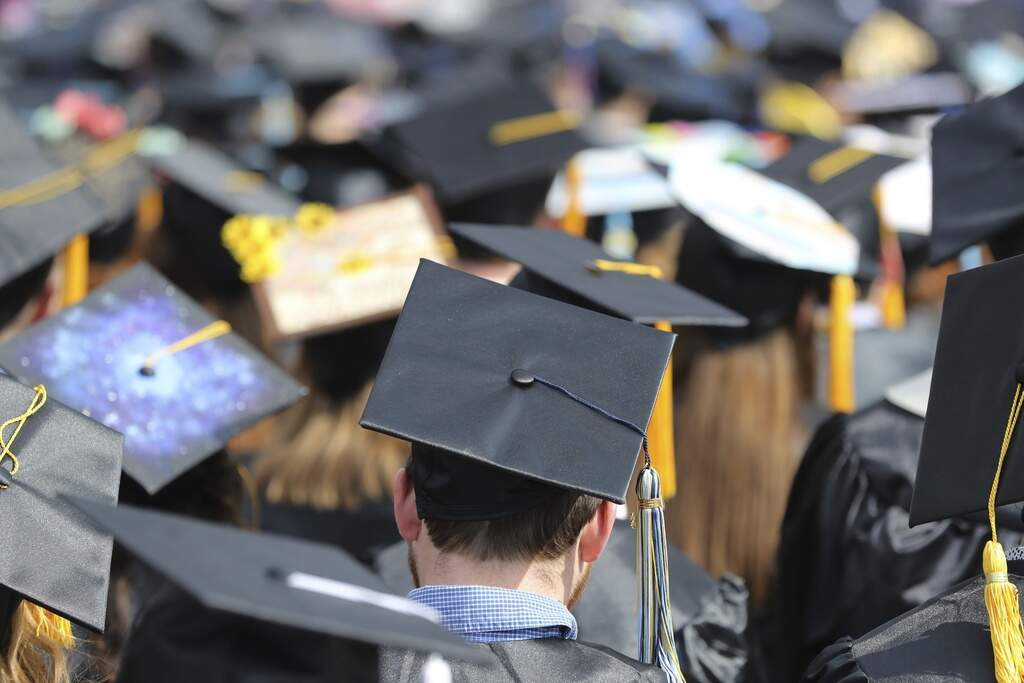
Congress has overhauled the federal student loan system, including big changes on borrowing caps and loan restrictions. Education experts say this will up the demand for private loans. So, what does that mean for student borrowers?
Guests
Persis Yu, deputy executive director and managing counsel at the nonprofit advocacy group, Protect Borrowers. Persis was previously a staff attorney at the National Consumer Law Center and the director of its Student Loan Borrower Assistance Project.
Adam Minsky, lawyer who focuses on helping student loan borrowers. He is also a senior contributor at Forbes.com and has published several books and articles on student loans.
Gail daMota, president of the Education Finance Council, the national trade association representing nonprofit and state-based higher education finance organizations.
Also Featured
Preston Cooper, a senior fellow with the American Enterprise Institute focusing on higher education policy.
Transcript
Part I
MEGHNA CHAKRABARTI: Millions of Americans have taken out loans to pay for college. 92% of those loans are from the federal government, about $1.6 trillion worth. The other 8% are private loans, which amount to about $136 billion. But the private loan market for student loans is growing.
Between 2010 and 2018, new federal student loans fell by 25%. New private student loans grew by 70% in that same period. Now this growth has outpaced nearly every other consumer financial product out there, including mortgages, credit cards, and auto loans. Again, that's the rate of the growth in private student loans. And the private student loan market could soon grow even faster.
The Republican-led One Big Beautiful Bill Act contains several significant changes to the federal student loan program, including new caps on student borrowing, and we'll talk more about those changes a little bit later in the show because there has been bipartisan agreement that the federal loan program needs reform.
But given the kinds of reforms in the One Big Beautiful Bill Act, education experts predict that more students will be driven into the private student loan market. So the question we really want to explore today is what should borrowers and their families know as the private student loan industry gets bigger.
And student loans get more privatized. So we're going to start today with Adam Minsky. He's a lawyer whose many clients include student loan borrowers, and he's also a senior contributor at Forbes.com. Published several books and articles on student loans. Adam Minsky, welcome to On Point.
ADAM MINSKY: Thanks so much for having me.
CHAKRABARTI: So first of all, in terms of your clients who come to you with issues about their student loans and specifically private loans, can you give me a profile of who they are, how much they've borrowed, and why they had to turn to the private student loan market?
MINSKY: Yeah, a lot of these folks took on private student loans primarily for undergraduate education because Federal Stafford loans, which are the most common type of federal student debt is capped for undergraduate borrowers, and it leaves borrowers with a menu of not great options to close the gap between what their federal financial aid will cover and what the cost of education is. Now a lot of times these students will turn to private student loans and often private student loans require a co-signer, which pretty commonly is another family member, often a parent.
And because private student loans generally have fewer repayment options and less flexibility than their federal student loan counterparts. One thing can go wrong and it can cause real problems for people. And that's often when I get the call. When people are having trouble with their payments or they're falling behind or they're in default or collections.
CHAKRABARTI: Okay. So those are the things that go wrong, that precipitate the legal troubles that people who come to you are having. But give me a little bit more detail. How is it different than when people can't pay or miss payments on their federal student loans. So, you know, the good news and bad news for federal student loans is that there's a lot of programs and a lot of options.
That's good news, because people need options when things go wrong. The bad news is it can be really challenging to navigate when those options are challenging to access or are changing all the time, but private student loans just don't have that type of flexibility. The terms and conditions of the loan itself will outline what the options are, and those options are often pretty minimal.
You have to make the payments in accordance with the agreement. The lender usually maintains pretty broad discretion to offer any temporary relief or modifications if you lose your job or get sick, or you have something come up that makes it difficult to afford your payment that month. And a lot of times lenders will not work with borrowers in times of hardship, and so you don't get that high paying job that you wanted, or you get laid off or you get sick.
If you're already living paycheck to paycheck, that can be a problem. That coupled with higher interest rates, generally speaking, private student loans have much higher interest rates than federal student loans. Often those rates are variable, so especially in the current interest rate environment we're in right now, that means interest rates are high, pretty much across the board.
It can make staying on top of these payments exceptionally challenging for people.
CHAKRABARTI: Just for full disclosure, I am still paying off a federal student loan. I got many years ahead of me, but in terms of the variable rate, if memory serves, and again, this is just me, so not at all representative, but if memory serves, when I finally had to start repaying my federal student loan, I had the option of actually fixing the rate at the time, which I did because it was mega low.
Don't borrowers have that option now? Also, with private student loans when they're first applying for the loan?
MINSKY: Depends on the lender and so for most federal student loans are fixed in terms of the interest rate at the time of the loans disbursement. Borrowers who are seeking private student loans, some lenders offer fixed rates.
Some lenders offer variable rates. Some offer a choice where borrowers can choose. I think a lot of problems I see are often they'll start off and offer a variable rate that seems lower than what the fixed rate will be. But people may not understand that's not set in stone.
By definition, that rate's going to go up down the road and that can really bite people in the end.
CHAKRABARTI: Okay. We did ask On Point listeners to share their private student loan stories with us. And we got several. I suppose people really remember when things go wrong more than they remember when things go right, but the specificity of the challenges that some people face is really eye-opening.
So this is Curtis. He's in Salt Lake City, Utah, and he told us that he took out a private student loan more than 30 years ago. And here's Curtis's experience.
CURTIS: In the early 1990s, I took a student loan through Wells Fargo. Unknown to me, they sold my loan to Fannie Mae, who then immediately started hassling me for repayment.
Before I'd finished school, they wanted me to prove that I was still a student. I refused, borrowed money from a friend and repaid the loan in full, cutting them out of all their interest payments.
CHAKRABARTI: So that's Curtis in Salt Lake City, Utah. And this is Natalie in West Palm Beach, Florida. She said she took out a federal student loan, including a Pell Grant to go to college, but then someone from the private loan industry started calling her about her loans.
NATALIE: Unfortunately, I got harassed about losing my loan and said I needed to go to a private bank and was stupid enough to listen to them, and so lost my federal in Pell to pay a regular bank to where now I could have had my loan forgiven, had I not done that. So I'll be paying off a little measly student loan until I'm in my seventies because of all this.
CHAKRABARTI: That's Natalie in West Palm Beach, Florida. Adam, do some of those stories sound familiar to you?
MINSKY: Certainly, some aspects of that do. Yeah, I've encountered situations where, for instance, the private lender will put a private loan into repayment before the borrower has completed school.
Or they'll make borrowers jump through a whole bunch of hoops to prove that they're a student or to prove that they have a hardship that can give rise to possibly a temporary forbearance. They make it really hard for people, and they do pressure people, in many cases. In some cases, lenders will offer borrowers some sort of temporary modification, but only if they fall behind on their payments and incur credit damage.
That's another thing that I see. So yeah, these types of tactics, are not at all surprising.
CHAKRABARTI: A little bit later I'm gonna ask you about why we expect the private student loan market to be any different than, let's say, mortgages. So we'll come to that in just a moment.
But Adam, if you just hang on for a second, I'd like to invite Persis Yu into the conversation. Persis is deputy executive director and managing council at the nonprofit advocacy group Protect Borrowers. And prior to that, Persis was a staff attorney at the National Consumer Law Center and director of its student loan Borrower Assistance Project and she joins us in the On Point studio. Persis, welcome to On Point.
PERSIS YU: Thank you. Thank you so much for having me here.
CHAKRABARTI: Okay. So right now, we're talking about a private student loan market that, as we mentioned at the very top of the show, is fractional in comparison to the 90 plus percent of loans that come via the federal government.
First of all, just give us your quick explanation as to why it is so small in comparison to federal student loans.
YU: For sure. I think as you've heard before, and as Adam mentioned, federal student loan program has much better options. It has much more flexibility, much better terms for student loan borrowers.
And most schools will prioritize giving federal student loans to students over the private student loan markets. In fact, that is what universally, in fact, many private lenders will include that in their disclosures. Is that federal student loan products are better for borrowers or for students than the private market.
Federal student loan products are better for borrowers or for students than the private market.
Persis Yu
CHAKRABARTI: Okay. So actually, let's do some sort of student loan 101 for a moment. For people who either haven't been through the system for a long time, or haven't yet been through the system, when you say the schools are offering these federal student loans, tell me more about what that process is that leads us to student to have to like, choose between loan options.
YU: And so typically when a student is going to school, they're going to apply using the FAFSA. Or some other documentation to share their income to get their financial aid package. And so schools are typically the ones who are putting together these packages for a student to find out how they're going to pay for college.
And typically, the school first looked to see, are there Pell grants, for example, that are available, non-loan products. This is of course the ideal version of how this goes. But to see if there are non-loan products for a student to use to pay for school, then they will go to the federal student loan products.
And then if there is a gap between what aid is available federally and the student, many students do wind up turning to the private market.
CHAKRABARTI: I see. Okay. And again, just for clarity's sake, because one of the problems is it's really complicated.
YU: It is so hard.
CHAKRABARTI: Who is determining, or when is it determined that the maximum value of a federal loan that a student can get?
YU: So a couple different pieces go into play here. First of all, there is the school that determines whatever their cost of attendance is. But also, there are loan, some loan limits on some of the loan products. There is a maximum amount of Pell Grant, for example, that the student will be eligible based upon their income.
And there is a maximum amount of Stafford loans that can be offered to the student. Grad PLUS, which a lot of graduate students relied on, and which was eliminated by the One Big Beautiful Bill was something that could go up to the cost of attendance.
CHAKRABARTI: Okay. So then all that shakes out and students have to make a choice, like if they want to go to this particular school, whatever it might be, and there's a gap. They have to fill that gap somehow. And that's currently where the private loan market comes in?
YU: Absolutely.
CHAKRABARTI: Okay. Or personal resources, which given the cost of college, that might be out of reach.
Part II
CHAKRABARTI: We heard from On Point listeners about their experiences with the private student loan market. Here's another one. This is Alexandra from Hull, Massachusetts.
And she said when she took a private student loan to go to law school, she had no idea what she was getting into at the time.
ALEXANDRA: The predatory nature of those private loans was really awful. And they used illegal tactics to call me at my work, to call neighbors to see if I was home when I wasn't answering the phone, I would work out a payment plan with whomever had bundled my loans, only to find out that they would be sold and they, in that next company, would not uphold the payment plan, and I'd be back at square one again.
Sometimes it was hard to figure out where the loans and who held them were like, where did they get sold to? It was an absolute nightmare that could not be fixed until my forties. I used to joke that I would've gone to debtor's jail instead of putting up with this. It was horrendous. It was one of the hardest things that I went through for years.
CHAKRABARTI: Okay, Adam Minsky, let me ask you, of course in my mind, I keep going to the mortgage market, cannot function without private lenders. But when they do things like sell mortgages to other institutions, which happens all the time, your loan terms, for example. They are transferred to the new owner of the mortgage, and yet here Alexandra is giving us a story about how her loan terms were changed on that transfer.
What is the regulatory framework around private student loans?
MINSKY: In general, private student loans just do not have the same level of regulation or protections that federal student loans have. Now, in theory, if a private student loan is transferred from one loan holder to another, the terms and conditions that underlie that loan should transfer with the debt.
Private student loans just do not have the same level of regulation or protections that federal student loans have.
Adam Minsky
I think the problem that we see, that we might have heard from that caller, is often when the loan goes into default, and the terms and conditions are technically in breach, basically that's often where we see a lot of these problems come up. Where borrowers don't know where their loan is, they don't know who to contact.
Debt collectors, meanwhile, were harassing them. They can face litigation, credit damage. That's often where, at least in my practice, I see a lot of the problems. And, to be clear, you can miss one payment on a private student loan and go into collections in default. That's how easy it is to get into trouble on these loans.
CHAKRABARTI: Oh, wow. Okay. So Persis, I understand that it was the Consumer Financial Protection Bureau, which was the organization that students were supposed to go to, when they had complaints about any kind of loan, but also private student loans. And CFPB said that 40% of their student loan complaints are about private loans.
But of course, this is a federal watchdog that's now basically defunct. Where, who's the regulatory body that is looking over the private student loan market?
YU: Yeah, I think there are real consequences to the stripping down of the CFPB. In fact, one of the cases the CFPB was looking at was at one of these debt buyers NCSLT, who did, who engaged in the practice that the caller talked about often.
And so there is a real harm to student loan borrowers to have the CFPB no longer on the beat. It's going to depend right now on what states borrowers are in. So there is a patchwork of regulatory laws in different states. A number of different states have student loan borrower bills of rights.
There is a real harm to student loan borrowers to have the CFPB no longer on the beat.
Persis Yu
They have different laws for private student lenders, but you have a very spotty patchwork that way. Instead of having one big federal agency who is tasked with protecting student loan borrowers like the CFPB.
CHAKRABARTI: Oh, interesting. Okay. Could be 50 different sets of regulations then.
YU: Yeah, absolutely. And so we do have, a couple dozen states have passed student loan borrower bills of rights.
And so in those states, borrowers have better protections. But what we know is, of course, borrowers live in all states, and these companies are often national. And so these practices are hurting people everywhere. And unfortunately, folks are going to be hurt the most in the states that don't have these kinds of protections.
CHAKRABARTI: Adam, do you want to add to that?
MINSKY: I think what Persis is saying is absolutely correct. Without universal federal oversight, it really does come down to the states and there could be very significant differences in state laws that applies to private student loans.
So for instance, in Massachusetts where I practice, there's a pretty robust set of laws that do protect borrowers from unfair and deceptive student loan servicing and debt collection practices. But there are other states in New England that don't necessarily have those same levels of protection, and someone moves to a different state and suddenly they may not have the same type of recourse that they would have had if they had moved, when it comes to private student loan default or servicing.
HAKRABARTI: Also, just, I don't think I made something clear and fact check me on this. it's not just the student who can take out a private student loan, family members or other borrowers can do so on behalf of the student.
YU: That's absolutely right. And so we do see parents, grandparents also taking out debt to pay for their children's and grandchildren's education. And so it is one of the reasons why the fastest growing population of student debtors is, in fact, older borrowers.
CHAKRABARTI: Oh, okay. And Adam, I'm wondering if there's also, if there's some patterns emerging in terms of who falls into trouble regarding the predatory nature of some of the lenders in the private space.
And also, if there are certain groups of students that are more likely to have to look for private student loans to make ends meet as a college student.
MINSKY: I think in general, first-time college students and families who don't have the financial cushion that would allow them to cover a gap between the federal student aid and the cost of education, to pay for that out of pocket.
Those are often the folks that are taking out private student loans. And I think one of the most concerning patterns I see is that increasingly entire families are being ensnared in this problem. Because, like we were just saying, a parent or someone else can take out a student loan privately on behalf of someone else, or more commonly they're co-signers.
And a co-signer is fully, legally responsible for the debt just as much as the borrower is. In some cases, there can be two co-signers on a private student loan. So it's common nowadays for me to be defending the student and their two parents.
For instance, in a debt collection lawsuit brought in state court and now everyone's wages and everyone's assets are now at risk as a result of that.
CHAKRABARTI: Persis, let me just be blunt about a question, which I know is probably on the minds of many listeners. We're talking about currently a private student loan market that exists because the federal loans or grants that a student is eligible for don't meet the cost of the college that student wants to go to.
Maybe they shouldn't go to that college. I'm just, I'm imagining that a lot of people are thinking, it's just like a house. Don't buy more house than you can afford. There are lots of options for higher education. Maybe you need to, maybe those students need to find another institution that would be just as good, but that could be covered by federal student loans.
There is a sort of a smart consumer aspect to this ... and some responsibilities should be placed in the hands of the people who are deciding which loans to take and which loans not to take.
YU: So I think there's a couple different responses to that.
First of all, I think the reality for most people is they have to take on debt or they don't go to school, and it really is that binary choice, where there is not a ton of options in terms of what options does a student have? Most students go to the school that is closest to them.
And so in that way, they are stuck with the terms that are being offered to them.
Most students go to the school that is closest to them. And so in that way, they are stuck with the terms that are being offered to them.
Persis Yu
So in that way, it is going to be a binary choice of who goes and who doesn't go. And then we also just have general access issues that come along with that. Of course, who is going to be able to afford the full freight without being able to go take on these loans?
That is going to be wealthier students. It is going to be people from predominantly whiter communities. It is going to be people who have resources. So what we're doing is we are further segregating our higher education community when we force students to make these choices based upon the way that we finance higher education.
CHAKRABARTI: Okay. Another major issue here is again, I imagine some people are thinking this, that the problem isn't the loans, the problem is the cost of higher education. And in fact, that's one of the reasons why the policy makers who advance the changes in the federal student loan program, in the One Big Beautiful Bill Act, they pointed to the government needed to do things to help control the cost of higher education. We'll talk about whether the changes achieve that in a moment.
But I want to give voice to that, because many supporters of the changes in the One Big Beautiful Bill Act stress that whether you like the reforms or not, the current federal loan system is simply not working.
PRESTON COOPER: The outstanding student loan portfolio is of $1.6 trillion.
A lot of that may not be repaid. And so the One Big Beautiful Bill takes some steps towards returning sanity to the Federal Student Loan Program.
CHAKRABARTI: So this is Preston Cooper, he's a senior fellow with the American Enterprise Institute, and he focuses on higher ed policy. And Cooper says these changes have been long overdue.
COOPER: Up until now, the student loan program has basically operated on a no questions asked, no strings attached model. Basically, any student attending any accredited college for any program can take out a student loan and many students are able to borrow to the cost of attendance as defined by the institution, which effectively means those student loans are unlimited.
And while the student loan program has enabled many students to access higher education. It's also funded a lot of programs that just charge too much relative to what they're delivering and has also left a lot of students with debt that they probably shouldn't have taken on in the first place and are very unlikely to be able to repay in full.
CHAKRABARTI: So that's why Cooper says the federal student loan reforms in the One Big Beautiful Bill Act, now law, fixes both of these issues. He says that under the new law, beginning July 1st, 2026, graduate students will only be able to borrow up to $20,500 a year. So just over $20,000 a year. That's for grad students. Instead of the entire cost of their degree, as they have been currently been able to do. For professional graduate degree borrowers, that amount will be capped at $50,000 a year.
There are also caps now on how much parents and other caregivers can borrow on a student's behalf. Meanwhile, colleges and universities themselves could lose access to federal student loans if the degrees they confer are not paying off for students.
COOPER: For graduate students, they will no longer be able to borrow unlimited loans.
Those loans will be capped at common sense levels and student loans will no longer go to programs where graduates are earning less than the typical high school diploma holder. So those programs with very low earnings. They will no longer be eligible for the Federal Student loan Program. And this really helps to reign in some of the most egregious cases of abuse of the federal student loan system by colleges which are charging too much for degrees that are delivering too little.
CHAKRABARTI: That's Preston Cooper, senior Fellow at the American Enterprise Institute. So Persis Yu, there is actually some bipartisan agreement that the involvement of the federal government in the student loan industry has, depending on your point of view, but it has helped colleges say we know that the federal government is there, we're setting the cost.
And it hasn't really, the system hasn't encouraged colleges to do more to control those costs. Some people just call it the spigot of federal student loans. Don't they have a point? And shouldn't these reforms do something to help slow the spigot.
YU: So I think no one is trying to let colleges off the hook here.
The cost of college is, I think, pretty nearly universally agreed to be way too high. I think there is real debate about whether, what the role that the amount and whether or not these limits will actually encourage schools to lower their costs. There is a real question in my mind about whether or not this is enabling.
We have seen, in many instances, in fact, with the increase of aid, other schools haven't, in the for-profit industry is I think where we see it the most. Of schools charging students the maximum amount of dollars that they can receive. So I have real questions about some of the analysis that says that this is going to be the thing that is going to make colleges control their costs.
I think the better way to address college's cost is by providing colleges with the resources that they need and then requiring them to control their costs. This doesn't actually require colleges to control their costs. It just tries to tinker around the edges in hopes that by restricting the access that students have, that somehow colleges will change their behavior. So it's a very indirect way of trying to address what I think is a very real problem.
CHAKRABARTI: It is a market-based way though. Right? Because there's effectively, what you're saying is, these changes may reduce demand, right? Because the students may have restricted access. And when demand drops, in an ideal supply demand curve, the cost should drop.
YU: I think I think the private market is not going to save us here. I think that the private market is quite adept at making money in other ways, and I think that is why we are going to see the rise in additional private student loans. Because what I foresee is that instead of people not going to school, because it is very ingrained within our social culture that to get ahead, you need a degree to get ahead.
And especially for communities of color, you need a graduate degree in order to get ahead, in order to get a salary that can sustain your family. And so when you're pushing against the hopes and dreams of your families, the private market is going to step in. It is not necessarily going to provide a better product for students, but it is going to provide a way for students to pay for that education.
And I think schools are still going to be able to charge just the same amount. Especially because the One Big Beautiful Bill also puts other pressures on schools and states in particular, that is going to make it very hard for schools to actually lower their costs.
CHAKRABARTI: Adam Minsky, we've got to let you go here in about a minute. I'd love to hear you on this about if not these changes, then what reforms would you suggest in the federal student loan program that could potentially have an impact, in terms of reducing the cost of higher ed?
MINSKY: I think one of the things that the bill did was actually reduce regulation of the outcomes of these institutions. There were regulations that were passed under the Biden-Harris administration called gainful employment. That basically looked at whether graduates were able to get jobs that paid sufficiently for them to be able to repay their debt.
There were regulations that provide recourse for borrowers who were misled by their institutions, into taking on debt for degrees that didn't pay off. All those regulations are essentially being paused or watered down or repealed under this bill.
I think that is one way, to hold schools accountable for their outcomes.
Part III
CHAKRABARTI: Now I just want to take a moment to note about why the federal government right now still is by far the majority player in the student loan industry, more than 90% of loans coming from the federal government, because back in 2022 we actually talked about this exact issue. And if you haven't listened to it, go to onpointradio.org.
You can find this show. It's really good. And we went through the history of the federal student loan program and how before the 1965 Higher Education Act, there was a privately financed student loan program in this nation that was working pretty well. So here's what Wall Street Journal reporter Josh Mitchell said about that history.
JOSH MITCHELL: A bunch of corporate CEOs said that the economy and that the country needed more skilled workers for their companies. And so they put money into a pot and so did the colleges. They put money into this pot. And this was an insurance fund that insured banks against default on student loans. So if a student defaulted, the banks would get reimbursed by this insurance fund.
And there were also colleges who were directly making loans to their students.
CHAKRABARTI: So the idea is if banks got insured, then they would be willing to give more loans out, expand access to higher education. And Josh Mitchell in that show told us the difference between that system and the federal loan system today is that in the past, they weren't just giving loans to almost everyone who applied.
For instance, again, pre 1965, freshmen were excluded. So given that history, another guest on the show, Beth Akers, who's the author of Making College Pay, Beth asked this important question.
BETH AKERS: Why do we even have government intervention in this, in the student loan market in the first place? Because it sounds like when there were market mechanisms in place, it actually helped make sure that the loans that were made were affordable and not too risky.
And I think we're in a place where we got to step back and ask that again, especially for graduate lending, which is a huge portion of the pot that we're talking about today. If in fact the government were to say, we're not going to make so much loans to graduate students, the private market would likely step in and they'd likely make more responsible loans than the ones that the federal government are making today.
CHAKRABARTI: So that's Beth Akers, author of Making College Pay. She was on this show, about three years ago Persis, I promise I'm going to get back to you with your response to that. Because you've already explained your concerns about the private loan industry.
But there's another question I want to add here, and that is, is the for-profit private loan industry the only model of private lending. So in order to answer that, I'm gonna bring Gail daMota into the conversation. She's president of the Education Finance Council, the National Trade Association that represents nonprofit and state-based higher education finance organizations. Gail, welcome to the show.
GAIL daMOTA: Thank you for having me.
Appreciate it.
CHAKRABARTI: Okay, so how big of a player right now, frankly, are nonprofit lenders when it comes to private student loans?
daMOTA: We're a very small niche industry. Many states do not have a nonprofit in their state, so we're probably about 3% of the student loan market at this time. But what makes us unique is that most of our members use tax exempt financing to raise the funds, to make the loans to the borrowers.
And with that, there are two specific guardrails in place. One is there is a yield restriction. They are not allowed to make huge profits. In fact, the net yield is restricted to 2%. The rest of that has to go back into the programs to reduce the cost for the borrowers. And in addition, the loans, the funds are restricted to either students attending school in that state.
Or are a resident of that state attending, either in state or out of state. So there's a state Nexus requirement and many of these organizations, in fact, all of them provide free services and counseling for students and families within their state.
And many either administer or offer scholarship programs as well. To give you a little idea of where we are when we talk about the interest rates and the costs, the nonprofits, if you look at our members and we took an average of their lowest interest rate and their highest interest rate. And that range is a 4.33% to 8.3% APR. Now the for-profits, we looked at some of the largest ones.
We took the published APR, and these are all fixed rate loans. All of our members offer fixed rate loans. We looked at the fixed rates published on the websites for Sallie Mae, SoFi, College Ave and Citizens Bank, and we took their average and their range is 3.54%, all the way up to 16.74%.
So if you are in one of the lower FICO scores, you're going to get a significantly lower rate from the nonprofit sector or your state agency than you're going to get from the for-profit sector.
If you are in one of the lower FICO scores, you're going to get a significantly lower rate from the nonprofit sector or your state agency than you're going to get from the for-profit sector.
Gail daMota
CHAKRABARTI: Gail, hang on here for just a second because those are really interesting numbers. And I want to dig into them with both you and Persis.
First of all, Persis, what are your thoughts on the varying ranges that Gail just put there on interest rates from non-profit lenders versus profit lenders? My first response is, wow, they are broad ranges. But again, like, that's how lending works. If you have a low FICO score, like if your credit just isn't that good, you're going to get different terms.
That is an accepted part of how lending works. Why not apply that to student loans?
YU: I think fundamentally that shows why we just need to move away from debt financed higher education. That's ultimately where we need to go. Because yes, what it means is that if we rely on this system.
By definition, the poorest students, the folks who have the least resources, are at the end of the day going to pay the most for these loans.
CHAKRABARTI: Gail, I have another question for you about this. You said the net yield is capped at 2%.
daMOTA: Yes.
CHAKRABARTI: How do you convince people to give you their funds with the net yield is so low in comparison to what they could get just about anywhere else?
daMOTA: The tax exempt, you mean the investors?
CHAKRABARTI: Yeah.
daMOTA: Yeah. Most of the investors in the student loan capital markets are like 401k plans, things of that nature. They're large institutions and where the difference comes in is having the ability to issue a qualified student loan bond, which is a tax exempt bond.
It's tax exempt to the investor, so the investor is willing to accept a lower interest rate in return for that tax exemption. So it's key for the nonprofit, that is a mission-based organization, to be able to have access to that tax exempt funding.
CHAKRABARTI: Okay. And a question that I want to return to with both of you on is, again, I'm sorry if I'm repeating myself here.
I'm just trying to figure out a way through this because lending in this country in general does rely heavily, almost exclusively, on private markets. And that is accepted, and it's accepted and a good way to work, especially if there's appropriate regulation ... around that lending.
Gail, in the private student loan space, what do you think some appropriate regulation would be to protect borrowers from the kinds of practices we've been talking about so far in the hour? And do you see any of those regulations on the horizon or not?
daMOTA: There are regulations in place.
It's called the Truth in Lending Act, and then there's the Equal Credit Opportunity Act. There there's the Fair Debt Collection Practices Act, there's the Fair Credit Reporting Act, and student loan lenders are held to all of those federal regulations. And as what was mentioned earlier there are now a multitude of different states that are offering their own state requirements as well. And by the way, the federal government is not held to the Truth in Lending Act. So earlier, when we were talking about the increase in parent borrowing, I would contend that the Federal Parent PLUS loan is a very predatory loan. First off, they don't look at any type of ability to repay.
It's a very nominal credit check to see if there's any adverse credit. But they don't look at FICO scores. They don't look at ability to repay. So the parent is paying at this point in time, 8.94% with a 4.228% origination fee on top of it. And when parents are borrowing for a college student, generally that parent is at or very close to their peak of income.
And if they don't have the ability to repay, today, they're not getting the benefit of the education their child is. So their ability to repay as they age out or go on to social security as they retire is going to go down and not up.
CHAKRABARTI: Yeah. Let me just jump in here for a second. Because I want to give Persis a chance to respond to that.
And let me add something. As Gail's saying, there are regulations around private lenders. We reached out to Sallie Mae. No one from Sallie Mae could join us, but they did send us a statement, which includes this language, that quote:
It's important to note that as a regulated bank, 'our' being Sallie Mae, our private student loans are governed by robust consumer protection laws and regulations, some of which go above and beyond what's required for federal student loans.
Okay. Then they list them. Sallie Mae says, those laws include the Federal Deposit Insurance Act, the Higher Ed Opportunity Act, Truth and Lending. Dodd-Frank Consumer Protection Act, Equal Credit Opportunity Act, Service Members Civil Relief Act, Military Lending Act. It goes on and on. Fair Credit Reporting Act, Uniform Retail Credit Classification.
They list a half dozen more. That does seem fairly robust to me.
YU: So let me tell you what the law does not cover. So the Truth in Lending Act, for example, says that you need to disclose what your interest rate is going to be and what a student is going to wind up paying over the life of their loan. What it does not require is what is that interest rate?
What are those payment terms? What is missing from these laws is the requirement that lenders have flexible repayment options, right? Like the Federal Student Loan program has income journey payment, where you can base your payment on what you earn, which is so important when you are a student, and you don't know how much resources you're going to have.
So that's a critical protection and that is missing from these laws. The other thing is that laws are only so good as they're enforced, and so with the stripping down of the Consumer Financial Protection Bureau, having these laws in place is not helpful if we don't have agencies who are going to actively enforce them.
And that is a huge problem. And we have seen many lenders, despite the fact that laws exist, violate those laws. And so enforcement of these laws is also critical.
CHAKRABARTI: I don't think I gave you a chance to respond to the question of what reforms would you like to see? Because I don't currently, even before the One Big Beautiful Bill Act was proposed and signed into law. We were seeing a growth in this private student loan market, because the cost of college keeps going up. So that was happening already. What reforms would you like to see that would keep private student loan lenders as players in this?
But again, also protect consumers from predation.
YU: Yeah, so I think, like I said, number one, we have to reform the way that we fund higher education and move away from debt finance education. I think that is just critically, we're at a moment where the use of this type of product to fund higher education for students is just not working.
We have to reform the way that we fund higher education and move away from debt finance education.
Persis Yu
And we need a new direction. But we do need, again, enforcement of laws. We need transparency. One of the concerns that we have about the private student loan market is it's very opaque. A lot of the data that we have is based upon analysis of credit bureau data, and that requires lenders to report to the credit bureaus.
And so we don't see a lot of the subprime lenders included in that data. We don't have a lot of even more predatory products that students are relying on, especially if they're low income, first generation, don't qualify for a traditional Prime Credit Report Loan.
CHAKRABARTI: This is sounding so familiar.
YU: Yes. We've seen, we have seen this story before and frankly it's the story that led to the creation of the Consumer Financial Protection Bureau. And so we are definitely seeing history repeat itself right now. But we do need robust protections that are actively enforced by a federal agency, so that all students are able to have their rights protected.
CHAKRABARTI: Yeah. But to go back to what you said a second ago and actually multiple times, we need to reduce the cost of higher education and so that people don't have to go into debt. And with that in mind Gail, we have about a minute left here and I just want to take a giant step back. Because Gallup recently released a poll that's showing that the cost of education higher ed is really changing American's views about the utility of a college education.
This poll recently that came out just this year, finds that over the past 10 years, when asked if college is very important, Democrats in 2014, they said 80% of them said it's very important. In 2025, 42% said that. For independents in 2014, 60% said it's important.
Now it's 38%. For Republicans, it went from 70% to 20%. These costs are so out of control that we now have a majority of Americans saying it's not even worth it to go to college. Something has to be done, Gail.
daMOTA: I agree. I agree. What we would've loved to have seen happen because I think with the One Big Beautiful Bill, what you're going to see with the elimination of the Grad PLUS program is that the lowest income borrowers are simply not going to have the co-signer or the credit to be able to borrow in the private sector, yet there's no increase in the grants or scholarships available to those students. So we agree, if there has to be, particularly for the lowest income students, more Pell Grant and free funding for them.
The first draft of this transcript was created by Descript, an AI transcription tool. An On Point producer then thoroughly reviewed, corrected, and reformatted the transcript before publication. The use of this AI tool creates the capacity to provide these transcripts.
This program aired on September 17, 2025.