Support WBUR
How private companies are influencing the new space race
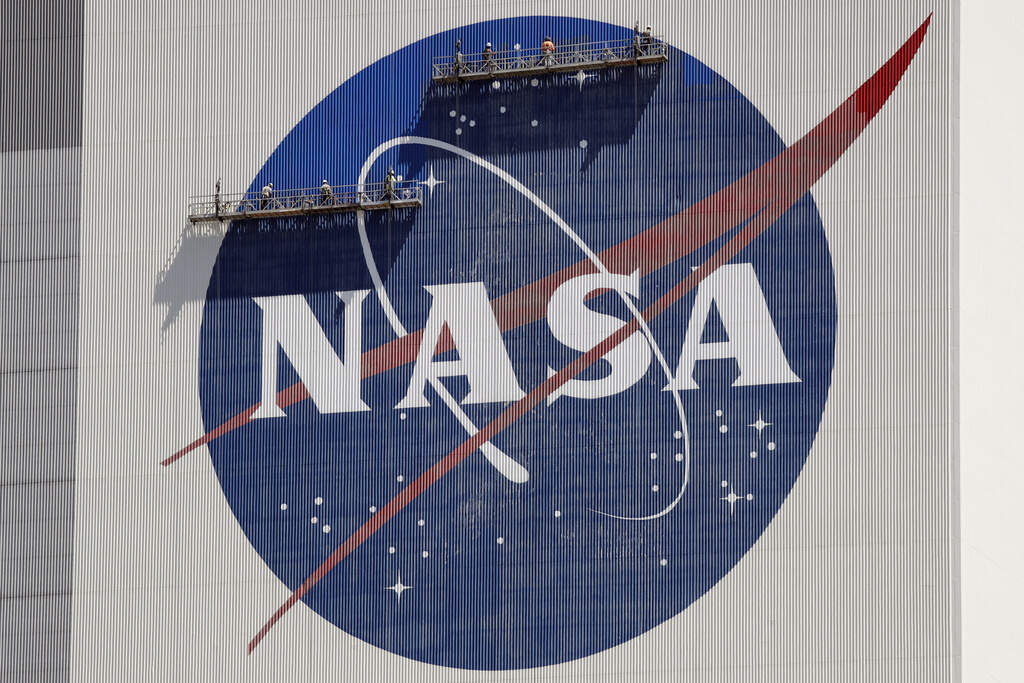
From leased property to defense contracts, private space companies have become fully intertwined with public infrastructure. But not everyone’s sold on how intertwined these systems have become.
Guests
Christian Davenport, Washington Post reporter covering NASA and the space industry.
Ariel Ekblaw, founder and CEO of the Aurelia Institute – a nonprofit dedicated to building humanity’s future in space for the benefit of Earth. Founder of the MIT Space Exploration Initiative.
Also Featured
Eric Berger, senior Space editor at Ars Technica.
Douglas Loverro, former head of NASA’s human spaceflight division early in President Trump’s first term.
Transcript
Part I
MEGHNA CHAKRABARTI: In 2008, a fledgling space company was working to get its first rocket off the ground. The first launch attempt, made in 2006, so a couple years before 2008. That first attempt failed. A fuel leak led to the rocket being engulfed by a giant fireball in the sky.
The second and third attempts made it past the first stage of flight, but then came the separation phase and the rocket failed, never reaching orbit. The company's top engineer referred to the anomaly as a Rudd or rapid, unscheduled disassembly. The engineer's obfuscation of simpler terms that he could have used, such as catastrophe, explosion, or total failure of the second stage engine.
So after three unsuccessful attempts to reach orbit, the company was hemorrhaging money and on the verge of bankruptcy, it almost went out of business, but they did manage one successful launch and then came a savior in the form of you, the American taxpayer, via the federal government and a $1.6 billion NASA cargo contract.
That company is now worth more than $400 billion. So Christian Davenport, this company's name is?
CHRISTIAN DAVENPORT: SpaceX.
CHAKRABARTI: SpaceX. This is a story of how SpaceX was basically saved by NASA and I did not know it. I'm going to be completely honest. So take us back to 2008, what was going on with SpaceX?
DAVENPORT: So you're right.
Elon Musk, the founder of SpaceX, had said he was going to spend about $100 million of his own money to see if he could build a rocket that could finally make it to orbit. And he had said, we'll give it three tries, and if we can't do it, then that's it. I'm out of money. And they tried it three times.
And failed three times and then decided that he could afford to do one more try. Because they were very close on that third failure, and they made it to orbit. And as you said, NASA came in and rescued the company with a contract that led to that $1.6 billion contract to fly cargo and supplies to the International Space Station, and Elon was so excited that he actually changed his login password to, I love NASA.
CHAKRABARTI: This is one of the strangest but oddly charming parts of this story. His login to what? His computer? Or?
DAVENPORT: Yes, I think it's computer system. Yeah.
CHAKRABARTI: Okay. Okay. First of all, before I go any further let me give you a full introduction. Christian Davenport is a reporter who covers NASA and the space industry for the Washington Post, and he's author of the brand-new book Rocket Dreams: Musk, Bezos, and the Inside Story of the New, Trillion-Dollar Space Race.
Okay, so back to SpaceX being on the brink. Why was NASA even looking at SpaceX as a potential contractor if they had those three catastrophic failures of a totally new rocket system?
DAVENPORT: So at the time, NASA was at the very early stages of what has become a major paradigm shift in how we explore space.
And it was looking to outsource some of its most crucial missions to the private sector. And this was the key. It was a bet, can the private sector take over some of these missions, flying satellites, flying cargo and supplies to the International Space Station? Does the entire space enterprise have to be a monopoly of the government as it had been for decades?
NASA was at the very early stages of what has become a major paradigm shift in how we explore space. And it was looking to outsource some of its most crucial missions to the private sector.
Christian Davenport
So it was a little bit of a gamble at the time, and they were looking at SpaceX, they were looking at all sorts of different companies to see if any of them could actually pay off.
CHAKRABARTI: But you do wonder about NASA's decision making around SpaceX in particular. Because a 25% hit rate. NASA is famously very stringent, especially after the various terrible catastrophes they've had, about redundancies.
Success rates, et cetera. But to still say, all right, you got one off the ground, we'll hand you a $1.5, $1.6 billion contract. I guess I'm struggling to understand why they said yes to SpaceX. Was SpaceX the only game in town at that time?
DAVENPORT: And by then they had been, their initial launches were of a Falcon 1 Rocket was, it was a single engine and SpaceX had to prove it could fly its much more robust Falcon 9 Rocket which is really the workhorse. And yes, in the history of rocketry, failures at the beginning are more the norm. But SpaceX actually was successful with its Falcon 9 Rocket, and I think that's what really gave NASA the confidence that, Hey, maybe they can do this.
But yes, you're right. The whole story is so improbable. It's just amazing that SpaceX even exists today, when you go back. And Elon said at the time, the chances of success of the entire company were a long shot. 50/50 would've been good odds. And I think, so NASA was like placing a bet, and if it worked, okay, great.
If it didn't they would look to other people. And as it turns out, SpaceX was able to take that revenue. And we're talking about a lot of money here. And leverage it to build a rocket and a system to get to space affordably and efficiently and really leverage that in a way that's unprecedented in the history of aerospace.
CHAKRABARTI: Yeah, we'll get back to that in a second, Christian. But the story of Musk changing his password to, I love NASA. I can't quite let that one go, because does he still love NASA? Because as the head of DOGE, he helped wipe out a lot of funding for NASA's science exploration and science projects.
I was recently in touch with a now former press person from NASA, because the press office at NASA has been cut by 50%. I feel like he love has been lost.
DAVENPORT: The love has been lost for some of the programs that don't benefit his particular vision of where the space program should be going.
He loves NASA because SpaceX gets the contracts to fly crew and cargo to the International Space Station. It liked the Moon program, although really Elon tried to push NASA on a trajectory, forget the moon, even though that was the stated plan, onto Mars, which is what he wants to do, what SpaceX wants to do.
[Elon Musk] loves NASA because SpaceX gets the contracts to fly crew and cargo to the International Space Station.
Christian Davenport
But some of the other missions, I think he and some other people think are, this is a distraction, it's noise. We shouldn't be doing that. If we are going to be focused on getting to Mars, then we need to be spending the money here. So he likes the aspects that sort of benefit SpaceX.
CHAKRABARTI: Okay.
So he wants Mars focused?
DAVENPORT: 100%.
CHAKRABARTI: Ah, interesting. Okay. Let just pursue this a little bit more. From your reporting and your conversations with any number of space people, DOGE is just one part of it. But do you think that he, that Musk is having influence over sort of NASA's future goals?
Because publicly it seems that NASA is very committed to the moon. Artemis II now I think is scheduled for a February 2026 launch.
DAVENPORT: Yeah, no, you're right. So I think at the very beginning of Trump 2.0 in the inauguration speech, Trump talked about going to Mars and Elon's right there, right, in the inauguration, at his side.
But you saw pushback from members of Congress, particularly Senator Cruz that said, wait a minute. You're not going to get to Mars in your first term, President Trump, or even probably in the next term. But the moon is something that we can achieve now, and they really exerted a lot of power and a lot of influence to make sure that the United States stayed focused on the moon, which by the way was the goal of Trump 1.0.
The whole moon program is Trump's own program. They created it to go to the moon in the first administration. They called it the Artemis program. And it does seem like today, finally, it's settled. They're going back to the moon. But for a moment it did look like, is Elon going to hijack NASA and move everybody, everything to Mars?
But that hasn't happened.
CHAKRABARTI: And by the way, all my fellow space nerds know this, but for those who aren't, Artemis II is the second Artemis mission that's going to have a human crew on board and will go around the moon. Not quite landing on the moon just yet, but humans going back around the moon, I think it's the first time American astronauts have, and there's going to be a Canadian on board.
But American astronauts have been back to the moon. Since the end of the Apollo program. Okay, so let's go back to this sort of burgeoning of the public-private partnership between NASA and we'll keep our eye on SpaceX here for now. What were the stakes for NASA if they couldn't find a successful company, or a soon to be successful company to offer these cargo contracts to?
DAVENPORT: They would've been in trouble because they had a program called Constellation. And when the Obama administration came in, this is in some ways a typical big government procurement that had gone off the rails. It was way over budget. It was years behind schedule. In 2011, NASA canceled or flew its last Space Shuttle mission.
In 2011, NASA canceled or flew its last Space Shuttle mission.
Christian Davenport
So think about that. The United States government, NASA, was not able to fly astronauts anywhere. In fact, Russia was flying our astronauts to the International Space Station. And so they're looking around, and they looked at SpaceX, and they looked at Boeing was the other contractor, and SpaceX had been flying cargo and supplies to the International Space Station.
And at the time, when it got that contract, NASA was thinking, okay. Private sector, you can fly cargo and supplies, but no way are you going to be able to fly our astronauts. That's what we do. When the space shuttle was canceled, they had no other choice and they went and said, you know what? You've been flying cargo and supplies.
We're going to again make a huge bet here. Take a gamble, and we're going to entrust the lives of our astronauts to your rockets and spacecraft. And that's what they did.
CHAKRABARTI: Wow. And the Russians were using the Soyuz technology. Is that right?
DAVENPORT: That's right, yes. Russian Soyuz, yeah.
CHAKRABARTI: Yeah. By the way, I did an interview with Astronaut Sunita Williams a couple of weeks ago.
In that interview, she said she speaks Russian now because she has spent so much time in Russia training on various Soyuz spacecraft for her space missions. Okay, so this is why we're talking with you today, Christian. I'm just delighted that that you're here because the public-private partnership between NASA and private companies.
As you said, for a lot of people it makes sense because the argument is that they can accelerate development of new technologies. The U.S. taxpayer may not have to foot the entire bill, et cetera, et cetera. But then there's this bigger question of, really what part of this partnership and the infrastructure that goes along with it are taxpayers actually bearing the burden of, and to that end, Christian, I just want to ask you again about NASA's, that original big contract to SpaceX.
Do you think it amounted as a bailout or would SpaceX not even be here today if they didn't win that contract?
DAVENPORT: Oh, I think SpaceX would not be here if they didn't win that contract, and I think they acknowledge it and are grateful for it because they, frankly, need that partnership to exist.
Part II
CHAKRABARTI: You might be listening to this and thinking this is a niche conversation, but I'm going to argue that it's not. That the spending the U.S. government does on private companies in the space program actually has an impact on all of us as Americans. And Christian, here's why. Because our initial inspiration, I should say, for this hour.
It came from a conversation we had much earlier this year, about the FAA and the U.S. air traffic control system. That was a very fascinating conversation. And there was this little nugget hidden in that conversation by one of our guests, who was Michael Huerta, the 17th administrator of the FAA, and he was talking about, Does FAA funding have to be revamped? Where are its funding sources coming from? And he said this in passing, but it led us to want to do this show. So here's what Huerta said.
Now, there is a small general fund subsidy that the FAA sometimes receives, but the lion's share of the budget is funded by these aviation user fees.
And some of the things that really have to be looked at is, are those at appropriate levels? As I mentioned, they haven't been looked at since 1990. Think about what's changed since then. We have seen an exponential increase in commercial space launches. Those impose significant costs on the aviation system.
Commercial space pays nothing into the aviation trust fund.
CHAKRABARTI: So that's Michael Huerta, 17th administrator of the FAA. He was on On Point earlier this year. That really caught my attention, Christian. First, check me on this. Check him on this. Is it true that commercial space pays nothing into the FA a's aviation trust fund?
DAVENPORT: I think that is correct. And what he's talking about there, at least in one regard, is when there's a rocket launch the FAA has to clear the airspace and they're getting better and better at that, at minimizing the disruption to air travel. But if you have a new experimental rocket, so for example, years ago, when SpaceX launched its new Falcon Heavy Rocket, which is a massively power rocket.
They weren't sure if it was going to, how it was going to go, and it might very well explode. And so they had to route a lot of air traffic around it. That said, the FAA is working on getting new systems and has actually worked hand in hand with the commercial space industry to minimize that impacts.
But anytime you launch a rocket, it's going through the airspace and you have to clear out some of it for sure.
CHAKRABARTI: They're working hand in hand with these private space companies, but the companies still aren't paying into this, paying in any user fees.
DAVENPORT: And getting a benefit from it.
CHAKRABARTI: Yeah. So it sounds again, FAA, a.k.a. the American taxpayer is footing the bill for various systems that these private companies are using. So air traffic control is one of them. What are some other areas of infrastructure that have been bought and paid for by the federal government? That private space companies are using?
DAVENPORT: The launchpads, for example, the places where they launch from, for the most part, out of government launch sites at the Kennedy Space Center in Cape Canaveral and Vandenberg Air Force Base. SpaceX has a launch complex 39A. This is the launchpad that launched the crew of Apollo 11, Neil Armstrong, Michael Collins, and Buzz Aldrin to the moon. It launched some of the space shuttle missions, but it was sitting there dormant after the space shuttle retired, rusting away in the salt air, and NASA went looking for people to take it over.
Other companies now are taking over these launch facilities as well, from Stoke Space to Blue Origin and others. Now you see all of these old defunct launch sites. If you go down to Cape Canaveral, it's one after another, but they're coming back because they're private companies.
That are coming in and leasing these. But let's be clear, the backbone of the infrastructure that's allowing this industry to flourish comes from the government that was built for, at the days of Mercury, Gemini, and Apollo in a lot of cases.
CHAKRABARTI: But you said that the private companies are leasing these, so they are paying for the use of those facilities.
DAVENPORT: And investing in them, to bring them back to life and to update them, to bring in new infrastructure.
For sure. And if you go down to Cape Canaveral now, it is bustling in a way that after the space shuttle retired and thousands of people lost their job on the Florida Space Coast, that had been thriving, since the Apollo era ... and now it's starting to come back to life. Because you've got all of these companies trying to do it and some are going to make it.
And some won't. And that's just a market economy, but it's changed the whole economy of the Florida Space Coast.
CHAKRABARTI: Yeah. So in that case then, that seems like a fair deal, right? Because it's not just the launch pads, as you're saying. It's the buildings and the technology and the infrastructure around them, which are being invested in by companies like SpaceX.
I presume it also means, like these rockets, every launch that uses a vast amount of water for cooling. All of those things. In that case, it seems like the U.S. taxpayer is benefiting from this particular aspect of public-private partnerships between NASA and private space companies.
DAVENPORT: I think that's right, and I think you can also look at it in another couple of ways. That the more companies that are doing this and competing for these government contracts, then what should happen, and frankly, what has happened in some respects, is that the cost goes down as they compete against each other.
As they try to outbid each other to win the contract. A decade ago, there was one company that was launching, for example satellites for the Pentagon, the United Launch Alliance, which was a joint venture of Lockheed Martin and Boeing, and it had a monopoly on that and was charging $300, $400 million a launch until SpaceX came along and knocked that price down. In some ways, cut it in half.
But again, you're building on national infrastructure to do this. And there is some measure of national pride to it and prestige, with sort of an esoteric thing. And that you do have it with these commercial space companies, but I don't know that you have it in the way that we did with the space shuttle, with Apollo, with these government run programs.
There's a bit of a different feeling because look, the government's about exploration and advancing science and technology and the businesses are too. But they're also businesses. They're about the bottom line. They're about revenue and let's not forget that.
CHAKRABARTI: You have written or there's been reporting from you in the Washington Post about that.
Like basically there's been, what, more than $38 billion of government funding via contracts that have gone into SpaceX.
DAVENPORT: An enormous amount. An enormous amount. And they've got contracts again from NASA, but also the Pentagon. Because as I was saying earlier, the Pentagon needs to get, particularly now, the way that modern warfare, it depends so much on satellites.
That's our reconnaissance, that's our spying. Our communication. Missile warning, missile tracking, missile detection, GPS, that guide those precision guided munitions. All of that is done in space and they need to get satellites up to space quickly. And what they're doing now is not putting up one satellite that's going to stay up there for 20 years.
That's really just a big target. And we know that Russia and China can take those out. So they're putting up these proliferated constellations of hundreds, if not thousands of small satellites, which require all of these rockets to be launching right now. And so that's a big part of what's driving it.
CHAKRABARTI: So I guess the reason why I'm trying to understand the full and complex dynamics of this is if indeed, it's not uncommon, right? For public investment, for private businesses to springboard off that public investment. But we've also had this long-term story in various industries that industry sometimes benefit, but the public does not. And I'm just trying to get a sense as to where we are on the balance of that with NASA and private space companies.
DAVENPORT: Just real quick to take your first point, look at the commercial aviation industry.
I think there's a lot of government investment in airplanes from the post office and really World War I and World War II helped generate that. And then you have a commercial aviation industry coming after all of that government investment. Now people aren't getting on rockets really and flying across the country, so there's not that sort of real tangible benefit to it.
But there is a benefit in that there is a lowering of the cost. We are operating the International Space Station with reliance on the commercial sector, to a great degree. We now have this program to go back to the moon and they're taking that public-private partnership paradigm, NASA is, and applying that to the moon.
The Pentagon is relying on all these commercial companies for the way it fights war. So they are working for the government. And then I guess you could argue therefore for the American people. Not to mention by the way, all the science missions that are done. The satellites, weather forecasting, all of those things as well, which help us understand our climate and the earth and all those sorts of things.
CHAKRABARTI: Christian, you brought up one of my favorite issues, which is the Pentagon and its contractors. Because there's an example of both how it can go very right. And how it can go very wrong, in terms of the now trillion dollars a year we're spending annually, and half of that's going to basically five major contractors.
And even the Pentagon itself doesn't know where a lot of that money is going. So that's the sort of darker side to the very intricate intertwining of the public sector and the private sector. But hang on for just a second. This is Christian Davenport you're listening to. He's author of Rocket Dreams. And Christian.
I want to bring in another guest into the program. Ariel Ekblaw, Ariel is founder and CEO of the Aurelia Institute. It's a nonprofit dedicated to building humanity's future in space for the benefit of earth. And Ariel is also founder of the MIT Space Exploration Initiative. Welcome to On Point.
ARIEL EKBLAW: Hi, Meghna. Great to be here.
CHAKRABARTI: So first of all, tell me a little bit more about what your company focuses on. Because building humanity's future in space for the benefit of earth can mean a lot of different things.
EKBLAW: Indeed, can mean a lot of different things. I think Chris has already hit on some of these themes, which is how do we use space infrastructure, satellites, larger scale space structures in orbit to do really profound things for day-to-day life on earth.
A lot of people are familiar with GPS or weather satellites, but the next era of how to build large space structures. So bigger than your biggest rocket. Even bigger than Starship. Of course, we've been talking about SpaceX a lot today. Two examples of this would be space-based solar power. How do you assemble a massive solar array in orbit that can beam abundant green energy to the surface of the earth, even at night.
So really fundamentally solve that intermittency problem for solar power. And then another example that we love and we're actively working on at Aurelia is building self-assembling habitats. Large volume space habitats for doing things like an orbital bio lab.
There's really amazing research, credit to NASA, over the last 20 years that shows that we might be able to develop better cures for cancer and Alzheimer's drugs using organoids grown in space. That's a special type of biology that you can undertake inside of a space station when you're in orbit, and even do things like artificial retinas that would cure macular degeneration.
So using something that's manufactured in space, bring it back down and cure certain types of blindness on earth. That's a few examples of the massive potential that we see for using space infrastructure for the public.
CHAKRABARTI: Yeah, and correct me if I'm wrong, but I think I've also heard of the idea of self-assembling or robotically assembled habitats being perhaps like a pit stop on the way to Mars.
EKBLAW: Yes. Yeah, exactly. So that was my MIT PhD looking at the future of autonomous robotics, self-assembly, basically picture space Legos, right? These modular pieces, if you put special magnets on them, that's what we do. And then we release these tiles to autonomously float together. The magnets pull them together and they click into place. And are able to form some type of really big, modular reconfigurable structure that would otherwise be too big to fit in a rocket.
Really important, we think, for infrastructure, scaling up capability in orbit, but also could be a future, additional volume on a space station around the moon or a forward deployed base on Mars.
CHAKRABARTI: You just said the word space and Legos together. You've brought together two of my great passions.
EKBLAW: Mine indeed.
CHAKRABARTI: In one sentence. And by the way folks, there's actually video of what Ariel is talking about in terms of these prototypes of self-assembling space habitats. It's so cool. I strongly go urge you to go to the web and find it and it's just really awesome. But getting back to again the funding technicalities. And the principles behind public-private partnership.
I do want to emphasize, and Christian, I'll bring you here, back in here in a second, but I want to emphasize that the reason why NASA, as Christian said at the beginning, went towards a public-private partnership model was that there was a political decision made that NASA was not going to do huge projects anymore. I think that's a pretty straightforward way of doing it. So it's not as if the government can't do it, it's just that we've chosen not to. So Ariel, do you think that was ultimately the right decision? Or are there some risks and pitfalls for relying on companies like SpaceX, like Blue Origin, Boeing, et cetera?
EKBLAW: The way that I think about this split now is NASA is still critically important to a lot of what is going on in terms of these public-private partnerships. So these companies like Vast, Axiom, Voyager, who are thinking about the next generation of commercial space stations, they still work intimately with NASA because there's so much knowledge there about how to do space safely, an incredible well of knowledge.
But what NASA, I think, succeeded in doing with that shift from basically seeding some of the activity to this commercial ecosystem is one, they built up a space economy, so they did what NASA does best, which is help flourish a lot of new jobs, a lot of new opportunity, and really scale that access to space beyond the government, which was a great gift, I think, to the American public, for sure.
And then now what that frees them up to do is, let's go find life on Europa and see if there's life in the near neighborhood of our solar system, that's what NASA should be doing that no commercial entity could justify right now. And that's the wonderful niche where specifically government scale funding and priorities can actually do that for exploration science.
So I think that's the real promise of what NASA has enabled by making this choice. It was definitely painful for a lot of people to see the cancellation of the shuttle program. And NASA ceded some of that immediate transportation capability. But I think the long-term strategy has actually played out really well, because it's both birthed a burgeoning new commercial ecosystem and now has freed NASA up to do exploration science, which in some ways only NASA can do.
The long-term strategy has actually played out really well, because it's both birthed a burgeoning new commercial ecosystem and now has freed NASA up to do exploration science, which in some ways only NASA can do.
Ariel Ekblaw
Part III
CHAKRABARTI: Christian, I want to give you a chance to answer that same question I asked of Ariel, in terms of where are we in the balance between the public bearing too much of the cost of this public private partnership, or of receiving a lot of benefit.
DAVENPORT: Yeah. So here's one example, and I think Ariel just really summed it up so well, that when NASA launched the James Webb Space Telescope this was a triumph, and you think about all of the discoveries that it's uncovered. When it was launched, the rocket that it launched on, it had to be folded up so tightly to fit into the nose cone so that when it was released into orbit, it had to un unfurl itself. And there was something like 200 single points of failure.
And if any of these things went wrong, it wouldn't have worked. So the commercial sector now is building these big rockets. Ariel mentioned Starship. You could fit a James Webb like telescope on there, or all of these space Legos she's talking about. And it enables a lot more for the advancement.
So ideally, you have a real public-private partnership where they're working together and that benefits the American public. Here's the problem. We have this growing commercial space industry, but really so far in terms of making huge advancements, it's SpaceX. And you're looking to, where is the competition?
We have this growing commercial space industry, but really so far in terms of making huge advancements, it's SpaceX. ... Where is the competition?
Christian Davenport
Jeff Bezos has Blue Origin. It's flown one rocket to orbit. One. Nobody else, there are a few other companies, Rocket Lab, that has a smaller rocket. They're working on bigger, medium sized rockets, but they just haven't been able to keep up. You mentioned that you talked to Suni Williams, a NASA astronaut who flew to the International Space Station with Boeing.
CHAKRABARTI: And then ended up staying for a really long time on the ISS.
DAVENPORT: Yeah. Because Boeing had all kinds of problems with its spacecraft, and SpaceX had to fly her and Butch Wilmore home because NASA didn't have enough trust in Boeing to be able to do it safely. So I think we get to a better dynamic when there are more companies that are able to compete with SpaceX.
CHAKRABARTI: Okay. So on that point, let me follow up with this. It's not just SpaceX we're talking about. It's Elon Musk, really. He is the head and the influential once government-affiliated person as well. But similarly with Blue Origin, we're talking about Jeff Bezos.
There are highly powerful individuals here that have so much influence over A, what their companies are doing. And then B, in terms of how they lobby or try to influence government decisions on contracts, is that not different from other government contracting patterns or regimes that we've had even in the Defense Department?
DAVENPORT: Certainly, when you have these companies that are run by the richest men in the world for sure, and they're going after it. There is this juicy part at the sort of beginning of my book where Jeff Bezos is watching Elon cozy up. This is during the first Trump administration, cozy up to NASA, winning all these contracts, and he gets frustrated, and he says, that's it.
We go after everything that Elon goes after, that SpaceX goes after, and NASA at the time was thinking about going back to the moon. So unsolicited, Jeff Bezos went to NASA and met with the acting NASA administrator and pitched a lunar lander, a spacecraft to land astronauts on the moon. And ultimately that's the direction that they went.
But you see so much of the space enterprise and the influence coming from it. In the hands of these, in these companies. And that's why I think you have a lot of people and NASA, believe me, NASA wants, and the Pentagon wants, many more entrants into this.
When there was the big public divorce between Elon and President Trump earlier this year, Elon actually threatened to take away the Dragon Spacecraft, which NASA needs to get its astronauts to the International Space Station. And I had some reporting that talked about how NASA and then the Pentagon were calling SpaceX's competitors and saying, where are you, because we need alternatives.
We can't just rely on one company like this.
CHAKRABARTI: As a citizen of the United States, it was a frustrating moment to see, things like our space program being held hostage by the petulant outbursts of a billionaire, but that's a fact, right? That kind of thing can happen. Ariel, let me turn back to you because, I mean, would that there were more Ariel's in the world. But what Christian is saying is absolutely true. There aren't enough competitors right now, and I can't think of an industry where the barriers to entry are higher than space technology. Isn't that a problem?
EKBLAW: The barriers to entry are incredibly high. Traditionally in the space industry. It's actually one of the things as a nonprofit that we work on at Aurelia Institute is how do you really concretely democratize access to space, not just in how we can get more people up there.
There's a trajectory similar to commercial aviation where the costs come down, as Chris noted, and we're really excited about being able to welcome more people to space, but we also need to think about workforce development now for young kids. So if you know any listeners have young children, your kids may commute to a job in space in the next 15 or 20 years.
Are we training them now to be able to really take advantage of that opportunity? Maybe not an every day, nine to five commute, but in the same way that you might commute to an oil rig, work for three months, three months off, that is an opportunity that's really coming out.
And programs like that have started to seed amazing talent, so to this question about who else besides SpaceX, there are amazing founders, exquisitely talented engineers like Andy Lapsa at Stoke who are taking advantage of this workforce development, training the next generation of people and building a rocket company that has brand new innovation, fully reusable rocket, even the second stage.
And is gonna start to, I think, help make the ecosystem around space launch really healthy.
CHAKRABARTI: Okay. I want to take our focus back to the moon for a moment because as we talked about a little earlierin the hour, that is, in terms of manned admissions, that is NASA's primary focus right now.
So we spoke recently with Douglas Loverro. Douglas was head of NASA's human space flight division early in President Trump's first term. And he has actually been sounding the alarm about America's, what he sees as likely loss in the race to get astronauts back on the moon. And that, of course, is a race that the United States first won in 1969.
But Loverro says that doesn't mean the U.S. is holding onto that dominance.
DOUGLAS LOVERRO: I could go back in history and remind people that the Norse were the first to discover America and the Spanish and the Italians were after them. But it was the British who actually ended up owning the colonies.
So being the first one hundreds of years ago, or 50 years ago, doesn't necessarily dictate long-term success.
CHAKRABARTI: And here's why Loverro is issuing this warning. Because he says the U.S. is set to lose the race back to the moon because it abandoned the prior proven methods of reaching the moon.
Methods, of course, created by NASA and abandoned them in favor of following a plan heavily reliant on SpaceX, and that plan involves creating a new ship, a refueling station that will have to be filled regularly in rapid succession, new protocols.
LOVERRO: Starship is a huge, huge vehicle. Nothing like that has ever taken off from the moon before.
No in space fuel transfer has ever been done before. Nobody's ever tried to do something like that 20 times in a row, in a very short period of time. All of that requires synchronization of timing between Starship, the depot and the NASA space launch system and the ion capsule, and that synchronization is hard to do once, much less multiple times, 20 times in a row.
All of those represent risks to a successful mission and all of that would need to be demonstrated a couple of times before you're willing to risk humans in doing it.
CHAKRABARTI: Despite his reservations about a race to the moon and a race we'll talk about that involves going up against China. Loverro says he still supports the growth of the public-private space sector.
LOVERRO: It's one of our most rapidly expanding parts of the economy. People expect it to get to over a trillion dollars a year by 2030. And multiples of that by 2040, that is being driven by U.S. entrepreneurialism and U.S. government support of these companies.
CHAKRABARTI: And he says that although the partnerships between the federal government and SpaceX or Jeff Bezos's Blue Origin are new, they aren't historical aberrations when it comes to exploration or space.
LOVERRO: America was founded on a public-private partnership between the Queen of Spain and a privateer named Christopher Columbus. So private public partnerships are old, but they're not that old for space, that partnership, it predates the current era. Howard Hughes was the Elon Musk of his time and certainly created partnerships with the U.S. government.
In fact, the actual first public-private space partnership happened with communication satellites in the sixties, between them and the Department of Defense to support the Vietnamese war.
CHAKRABARTI: That was Douglas Loverro, former head of NASA's human space flight division. Christian Davenport, Loverro there, especially earlier in the conversation, he's basically hinting that he does not think that when it comes to returning humans to the moon to create some kind of permanent moon base, that the U.S. is gonna be first. That it could likely be China. Your thoughts on that? Do other people say that?
DAVENPORT: Yeah, I've talked to Doug about this.
He's not hinting at that. He is saying it outright. He believes that China's going to get there first. And because Starship, while it has the potential to be revolutionary, may not be, because it requires refueling, because it's so big, may not get us there before China. So he and others are sounding the alarm.
And this is, there's a great story behind this. It's actually one of my favorite chapters in the book, where you were talking about these public-private partnerships. And NASA decides to extend that paradigm to the moon, to the very spacecraft that's going to land the next astronauts on the lunar surface for the first time since Apollo 17 in 1972.
And here comes Jeff Bezos and Blue Origin, and earlier I talked about how he had said, we're going after everything SpaceX goes after, and he's focused on Mars. We want to get to the moon. And so they assemble this national team of Lockheed Martin and Northrop Grumman, and they win. Blue Origin does. The first round of the contracts. And finally has a win over SpaceX.
But then when it came time to down select, to pick the winner or winners. NASA went with SpaceX who bid $3 billion, versus Blue Origin's $6 billion bid. And that set off a huge political fight. And it gets to this heart of, again, putting the whole enterprise in one company's hands. And finally, Congress came in and exerted some checks and said no, NASA, we need to have two providers, they need to compete.
And so they turned around and gave Blue Origin a contract as well. And Blue Origin hopes, I think, it's unlikely, that they're gonna do it this year. They hope to land a spacecraft. There wouldn't be any people on it, but they hope to land a spacecraft on the moon this year or early next, and then quite possibly could claim that they beat SpaceX to the moon, and that would be extraordinary.
But the real concern is for NASA, as Doug Loverro pointed out, China has shown enormous capability, enormous strides. They're moving so fast, and they plan to get to the moon. And oh, by the way, to the south pole of the moon, which is where we wanna go, because that's where resources are, namely water.
China has shown enormous capability, enormous strides. They're moving so fast, and they plan to get to the moon.
Christian Davenport
CHAKRABARTI: Water, yep.
DAVENPORT: And they're moving very quickly.
CHAKRABARTI: Ariel, I'd love to hear your thoughts on that.
EKBLAW: Yeah, so I think in addition to this push for landing humans on the moon, I think one thing that the public doesn't often hear about is NASA does have a taxi to the moon now.
Because they leverage that same idea of public-private partnership, like what they did with COTS so that, pre cargo program with SpaceX where they were incentivizing a public company, or sorry in the public domain company, to be able to service that. Now for the moon, there are companies that NASA is using to land on the surface. We had two lunar landings back-to-back in one week in March. Intuitive machines and Firefly stuck their landing.
Really impressive. This is maybe one of the first, the few times that a non-state actor has managed to land capably on the moon. It's for cargo and science. Not yet for humans, but I do think that's building up our capacity. And to Chris's point about resources, we're finally seeing what we think might be the first commercial justification to go to the moon a lot and come back.
And that's Helium-3. So this is a rare earth material, really critical for the future of fusion and quantum, already critical for medical tech, for MRIs and for national security companies like Interlune. Actually founded by Rob Meyerson, who ran Blue Origin for Bezos for 15 years, spun this company out to look at how can we bring Helium-3 back for Earth.
When we start to have that kind of commercial justification, even more companies will get involved and I think will bolster and add to this ecosystem of SpaceX and Blue Origin also trying to get the humans there.
CHAKRABARTI: Just to bolster On Point's nerdery, we actually did a show about Helium-3, so people should check it out.
Okay. Christian, I have one last question for you. And again, as I'm very much focused on how is the public benefiting, especially since the U.S. taxpayer is basically, as we talked about, providing the foundation upon which these partnerships are built. One other thing, and I think Ariel had mentioned this before.
Is that for as long as NASA was the source of the exploration and the technology development, that was owned by the public as well, right? All the technologies that NASA developed, they spread throughout the world. I'm wondering if we can count on the same thing happening when a lot of the new technologies or inventions are actually owned, that IP is owned by private companies.
DAVENPORT: Yeah, great question. And I think it's a huge point of tension. And just to another point, as a journalist and as an author who writes books about this too, to what degree are they open about it? Do they keep history? Do they talk, are they open to the media the way that NASA has to be?
So there is a concern about that, that they're doing things and hoarding it and not helping out humanity. That said, because they're driving so fast and moving the needle, they are, just by the very virtue of doing that, changing the landscape. Couple of examples, reusable rockets, the government tried to do it and failed.
SpaceX comes along, lands the rocket and now this is what Blue Origin is trying to do. What Rocket Lab is trying to do, what Stoke is trying to do. Not just a reusable booster, but the whole thing. So they're really moving the technology forward just by virtue of their existence.
The first draft of this transcript was created by Descript, an AI transcription tool. An On Point producer then thoroughly reviewed, corrected, and reformatted the transcript before publication. The use of this AI tool creates the capacity to provide these transcripts.
This program aired on September 25, 2025.