Support WBUR
How Katie Herzog drank her way to sobriety
For 20 years, journalist Katie Herzog tried to stop drinking. But nothing seemed to work. Until she stumbled upon a lesser-known path to sobriety.
Guests
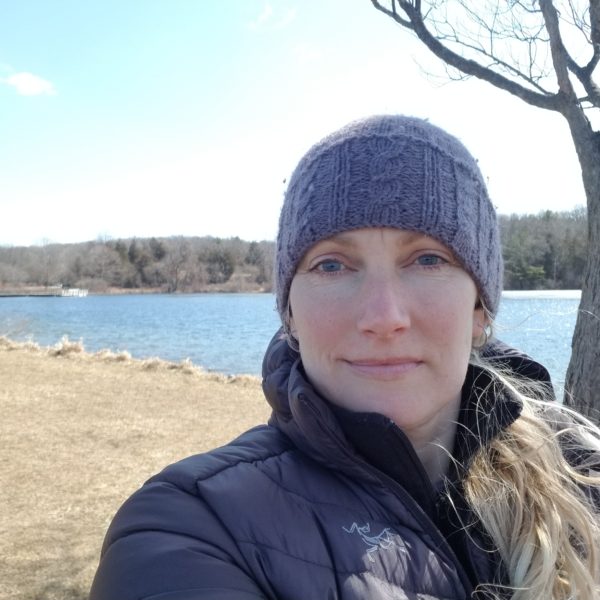
Katie Herzog, author of "Drink Your Way Sober: The Science-Based Method to Break Free from Alcohol."
The version of our broadcast available at the top of this page and via podcast apps is a condensed version of the full show. You can listen to the full, unedited broadcast here:
Transcript
Part I
MEGHNA CHAKRABARTI: Katie Herzog is a journalist and creator and co-host of the podcast Blocked and Reported, which calls itself a podcast that, quote: "Scours the internet for its craziest, silliest, most sociopathic content. Part of an obsessive and ill-conceived attempt to extract kernels of meaning and humanity from a landscape of endless raging dumpster fires."
So yeah, it's the perfect vehicle for a sharp, smart, funny woman. But if you ask Katie when she thinks she was the most fun, she might say that period of her life span some 20 years when she was drinking. Fun, maybe for others, self-destructive for her. In the United States, 30 million adults suffer from alcohol use disorder or AUD.
It's the most common substance use disorder in the country. And Katie tried everything to quit. Nothing worked. Until she read a magazine article about a treatment she had never heard of. That story is in her new book, Drink Your Way Sober: The Science-Based Method to Break Free from Alcohol. And she joins us from On Point station Blue Ridge Public Radio in Asheville, North Carolina.
Katie, welcome to On Point.
KATIE HERZOG: Thanks for having me.
CHAKRABARTI: Let's start from the beginning. When did you have your first drink?
HERZOG: The memories are a bit fuzzy, but 12 or 13 years old. So I grew up in the nineties, so I'm not Gen Z, staying home, scrolling on my phone. I had a good old fashioned American childhood, which meant stealing liquor from parents liquor cabinets, going to keg parties.
I'm from the rural south, and so we would go to these keg parties in high school, burning tires, old Christmas trees, things like that. It was really classic nineties youth. Very boozy.
CHAKRABARTI: There's the whole generation of folks who would hear that and say good times, right?
HERZOG: Oh yeah. They're really missing out today.
CHAKRABARTI: I wasn't a partier in high school, but I did witness one or two cow tippings growing up in Oregon. So at that time, it seemed perfectly natural.
HERZOG: Yes.
CHAKRABARTI: And so then what happened?
HERZOG: I went to college, and college for me was all about alcohol. It was a very social experience. I loved college. I didn't learn that much, at least in the classroom.
Apologies to any of my professors who were listening to this, but socially, it was amazing. I felt free for the first time in my life. And what I did with that freedom was drink. I liked and in those years, I liked nothing more than to sit on my porch and read the New Yorker.
That was like a great, and drink. That was a great day for me. And this was back in the early 2000s when it was still pretty cheap to live in cities. So I didn't have to work full-time. I could work part-time, live in interesting places and spend most of my time socializing or drinking by myself.
It was honestly great.
CHAKRABARTI: Yeah. Thinking back, you and I, we're not exactly the same age, but we're of the same generation. And sometimes I think back to my first year in college, Katie, with a sense of shock. My first year in college, I went to Stanford, so I was in the dorm.
It's like the first meeting, the first social meeting of people in the dorm. It's half freshmen, half other grades. And after the like, safety talk had been done, the next question was, Hey, we're going to host a party this weekend, but we have to take a vote. So does everyone vote for us to get six kegs?
That was like the --
HERZOG: What were the other options? Seven kegs? (LAUGHS)
CHAKRABARTI: No, there might've been if six kegs had been voted down, but it was like everybody, I just sat there. Because I was like, I didn't realize this is what the money is going to be spent on. But it was a unanimous vote.
And I don't know how many people actually wanted six kegs of beer, but the default presumption that was the social lubricant that college students needed. I think it was very hard for people to resist.
HERZOG: Oh, absolutely. And I made no attempt to resist it. I jumped in, both feet.
Loved it.
CHAKRABARTI: So if you loved it, then what went wrong?
HERZOG: College ended and most of my peers gradually hit those markers that you expect in adulthood, relationships, jobs, families, buying homes. And I was really stuck. I became a barfly. And at the time it wasn't that problematic, I was in my early twenties.
Most of my peers gradually hit those markers that you expect in adulthood. Relationships, jobs, families, buying homes. And I was really stuck. I became a barfly.
Katie Herzog
Working again, this was when rent was still cheap, so working part-time and just spending a lot of my time sitting at bars and I really enjoyed this. In the early days, the consequences weren't too terrible, hangovers every once in a while. I was definitely stalled, progressing on a professional level, but I was still having a really good time.
But as the years progressed, I didn't, so I stayed stuck at that bar and then at various other bars for another really 15 years.
CHAKRABARTI: What was going on though when you were a bar fly? Because there are a lot of people who might go, I don't know, a couple days a week after work, have a drink, read the newspaper, or just chat with the bartender and that's it.
So what, so maybe that's not necessarily a problem for those folks. What were you doing?
HERZOG: Right. I would do that and then I would keep drinking. So if I left the bar, which I often didn't, I would stay until last call. I would go home, and I would get more alcohol on the way home, and I would drink by myself.
And over the years, my life wasn't progressing. But the bigger problem was that I had this mental obsession with alcohol. So I knew that I needed to quit. I knew my drinking had become problematic. I wasn't in denial about that, but I spent all of my time thinking about drinking, about where I could drink, when I could drink, if I could drink, knowing that I needed to quit.
I had this mental obsession with alcohol. So I knew that I needed to quit.
Katie Herzog
And I was stuck in this mental loop for really almost 20 years, where my life was really controlled by alcohol.
CHAKRABARTI: Can you tell, you write about this in detail in the book. Can you tell us what that constant noise in your head was like?
HERZOG: Yeah, I think for people who haven't experienced addiction, I think the closest parallel is maybe the experience of love or of heartache where you have, you have a really intense crush on somebody, or you're in the sort of the early phases of love and you cannot think about anything besides this person. It's obsession.
And that's what it was like for me. I might be able to go about my day, work a job, have conversations, but in the back of my mind I was always thinking about alcohol, and it became all consuming. And then, my drinking progressed. I was drinking more, I was drinking more often. And it was just really taking over my life in a way that was preventing me from living a normal life.
CHAKRABARTI: The love analogies are really powerful. One, Katie, anyone who's been in love can understand how you start shaping your life around satisfying that feeling of being with the person that you love. Same thing with alcohol. You were shaping your life around it. But the thing about being in love is like, it feels great. Was this also a great feeling when you were actually drinking or did it change into something else?
HERZOG: It evolved over time. So when I was drinking, the first sort of, the anticipation of drinking did trigger an endorphin rush, and a dopamine dump. So that the anticipation in the first drinks was a very pleasurable experience, but then that would wear off, and I would spend the rest of the drinking session trying to chase that initial high, which I was always unsuccessful at.
But yeah, I mean there were elements of pleasure, but then also elements of anxiety, fear. Knowing that this was bad for me, knowing that it was holding me back. But at the same time I loved it. Like I loved and hated alcohol equally.
CHAKRABARTI: So for many folks who were at this point with an addiction, there's a wakeup call that comes from crashing out in other parts of their lives.
But it sounds like you were still, I don't know if high functioning is the right word, but you were able to medium --
HERZOG: Medium.
CHAKRABARIT: Medium functioning enough that maybe you didn't, did you have a big crash out?
HERZOG: I had many. I had, people always ask about the rock bottom, and I had so many rock bottoms that I don't think the concept really applies to me.
I think the only rock bottom that would've really stuck would've been death. That maybe would've made me quit drinking. I'm not even sure that would've worked. But yeah, I had many low points in my life. I never got in trouble with the law. That's the miracle.
But failed relationships, work problems, some misadventures that were in the moment or in retrospect were very hilarious, but years later was terrifying.
CHAKRABARTI: Yeah. Yeah. So this is a two decade long period that we're talking about. Was there at the end of that 20 years, did you just say, Nope, I'm gonna quit and look for every possible means thereafter?
Or was it an on again, off again effort to quit alcohol? Talk about that.
HERZOG: Very much on, again, off again. So I started really trying, I had the realization that I had a drinking problem when I was 24. And my relationship was failing; my job was failing. I'd been kicked out of the house that I lived in.
In that moment I had this, that was my sort of first 'Aha' moment. Oh, my life is falling apart. Why is this? And I realized the source of my problems was drinking. But then almost as quickly as I had that realization, it left and I just justified it, I'm 24 years old.
I just like to party. I'm just fun. This is just what people my age do. And so I lived in that state for a while. There's this term vacillating denial, and I lived in that state, so in times I would realize this is a problem you need to address. And at times I would just drink through it.
But I did at that age, I started going to AA meetings. I went to a psychiatrist and got a sort of official diagnosis of alcohol use disorder. What used to be called alcoholism. And yeah, and I went to my first AA meetings in that period, but it never stuck and so I did go through periods of sobriety over this 20 years, some of them longer than others.
But that mental obsession, so that was the defining feature of my addiction. I never lost that.
CHAKRABARTI: Yeah. So can we talk for a second about AA? Because when, that first time when you decided I need to do something. What was the first move that you made? Was the first thing you thought about was, I need to try AA or did you do something else?
HERZOG: No, the first thing was AA. Yeah. So the first meeting that I went to was not representative of AA at all. There was one person at the meeting, this woman who I remember she was wearing a sweatshirt with a teddy bear on it that had googly eyes for the teddy bear's eyes.
And I was very distraught. I was having a personal crisis and so I was crying and she was clutching me to her ample breast. It was very uncomfortable. And then nobody else showed up at the meeting. So she gave me a copy of the big book, which is the sort of Bible or maybe the DSM of AA. And said, come back tomorrow.
And when I was leaving that meeting, this guy came up to me in the parking lot and he said, she's a predator. Watch out for that one. So that was my first experience at AA. I did not go back the next day as you might imagine.
Part II
CHAKRABARTI: Katie is a journalist who also for 20 years suffered from alcohol use disorder or alcoholism as you call it straight up in the book.
And by the way, Katie, can I ask you why you decided to do that? Because some of these terms have fallen out of favor.
HERZOG: Yeah. I'm not a big fan of the euphemism treadmill. This idea that, this is the idea that you can change the accepted word for something, but that word just takes on the stigma of the word that it's replacing.
And I think alcohol use disorder is one of those cases, the reason that clinicians use that term now is not just because of the stigma of the term alcoholism. There's actually a better reason, and that's because alcohol use disorder, I also use that term in the book, is a spectrum. And then and so this, it more accurately describes the wine mom who's having a little bit too much to drink on the weekend to someone who has fully pickled their liver.
But I just, people know what an alcoholic is and that term is something that people bristle at. I like it. And it was my book.
CHAKRABARTI: The jargon treadmill, your point is well taken because is there a difference between homeless and unhoused, but --
HERZOG: Houseless.
CHAKRABARTI: Yeah. Yeah. So before we get to the method that helped you achieve sobriety, can you just quickly describe other than AA, like what else did you try?
HERZOG: Yeah, so I did individual therapy, standard talk therapy. I did outpatient group therapy, that was particularly interesting. It was with other recovering addicts or people attempting to be in recovery. And this was through a public health agency at the time, so mostly low income people.
That's where I learned the recipe for prison wine. I did things like --
CHAKRABARTI: Wait, what?
HERZOG: Yeah, prison wine. So you take a, I don't think you'll ever need this, but just in case you do, Meghna, so you take a honey bun, you get a honey bun from the commissary, and you ferment it in orange juice, get a plastic bag and put it in.
If you have a toilet tank in your cell, you gotta basically hide it from the guards. And you just ferment it until it smells terrible and then drink up. It's apparently very effective. So I did stuff like that and then I did, more out there things like I did the master cleanse at one point, which is this, you basically don't eat for 10 days.
You drink this combination of cayenne pepper and lemon juice, and I think there was some honey in. It didn't work by the way. I'd get really into yoga for periods of time, things like that. And AA, I went to AA off and on for years.
CHAKRABARTI: But all of these methods, maybe with the exception of the prison wine involved the sort of fundamental notion that alcohol to be completely eliminated from your life.
HERZOG: Yes. This was, at the time, the prevailing notion was that the only way out of alcoholism or alcohol use disorder was complete abstinence. That was always the goal, in AA, they say one day at a time, but everybody knows that the goal is to never drink again. So abstinence was always, when I went to doctors, I went to therapists and that was always, that was the stated goal, never drink again.
CHAKRABARTI: Yeah. It makes a lot of sense though, and I don't need to tell you this, because you just described how you lived this life for years where you could not stop thinking about it. So anything short, that's like a terrible, all possessing way to live and anything short of being free of kind of that mental enslavement with seems to be like an inadequate solution.
HERZOG: Yeah. The problem that I found with these abstinence-based approaches though, was that the abstinence didn't make the obsession go away. I might not be drinking, but even in periods of sobriety, I was still thinking about drinking, so I was still in that alcoholic prison.
Abstinence didn't make the obsession go away. ... Even in periods of sobriety, I was still thinking about drinking.
Katie Herzog
CHAKRABARTI: Okay. Got it. Now, I'm about to have you tell us a story of how you discovered a different method, the one that actually ended up helping you. But I have to say that part of me, when I read the book and I'm thinking about this moment, like I get this cinematic view in my head of, you're reading this magazine and you're like down in the dumps and there's no other option, and the camera just like slowly pans in on you and your eyes go wide and you're like, this is it. But what was that? What was the moment really like?
HERZOG: I think I was sitting at my desk at work scrolling on the internet, probably Googling how to get sober without AA.
But the article you're talking about, it was in the Atlantic in 2015. It was called The Irrationality of Alcoholics Anonymous, and it was by a writer named Gabrielle Glosser. And she had written a book about women in drinking, and she's a critic of AA. And so that article was, a lot of it was about her criticisms of AA, but there was this passage in it about something completely different, a protocol I had never heard before.
It was called the Sinclair Method. She said it was developed in Finland. She had gone to Finland to meet John David Sinclair. He's the guy who developed this. And the thing that was so appealing about this to me in that moment was that she wrote that under this protocol, under this method, you don't actually have to quit drinking.
CHAKRABARTI: That was like a revelation.
HERZOG: That sounded awesome. Like my problem is alcohol, but I don't have to quit drinking alcohol to address my problem. In some ways it sounded too good to be true. But at the time, I also was really desperate for a solution that would free me from this mental obsession but also allow me to keep drinking.
CHAKRABARTI: Katie, I have to tell you that just yesterday, so barely 24 hours ago, we put the notice out to On Point listeners that we'd be talking to you about people who struggle with alcohol addiction, and we wanted folks' stories.
And we got so many, this may be like one of the top listener input getters for us and for everybody who shared their story, by the way, I just want to say thank you because you really trust us with treating your stories with care and respect.
And so let me just share one with you. Because it might strike a very familiar chord. Katie, this is Emily from Salt Lake City, who started drinking when she was 15. She's 46 now.
EMILY: Alcoholism runs on both sides of my family, and I struggled with binge drinking for years. I first learned about Naltrexone when it was prescribed to my father for his opioid addiction.
I've been taking it for five years now, and it's completely changed how my body handles alcohol. It takes away the euphoric feeling when I'm drinking, the part that makes me crave more and more. I finally feel like I'm in control when I drink, not the alcohol, and it's made a huge difference in my life. I really feel naltrexone isn't used enough as treatment for alcohol use disorder.
I really feel Naltrexone isn't used enough as treatment for alcohol use disorder.
Emily, On Point listener
CHAKRABARTI: So that's Emily in Salt Lake City, and she says this word, naltrexone. What is it, Katie?
HERZOG: So naltrexone is a drug, a medication, and it was, as she mentions, it's used for opioid use disorder. It was developed in the 1960s initially to treat heroin and morphine addiction. It later became FDA approved for the treatment of alcohol use disorder.
So it's been FDA approved for that for over 30 years. This isn't actually a new drug. It's a cheap generic, almost any doctor in America could prescribe this drug, I believe. And it works like this. Because it's an opioid blocker, our brain's natural opioids are endorphins. Everybody knows that term.
And when you take this drug, it blocks the endorphin rush that your brain gets from alcohol. And everybody, I didn't realize this until I started working on the book, but everybody has a different experience with alcohol. But for me, when I drink alcohol, I get high, like energized. For some people, there's a sedating effect.
But for me it was very energetic, almost like doing a little bit of, having a little bit of caffeine. I didn't drink to chill out. I drank to get ramped up. Naltrexone dulls that. There are various different ways to prescribe it, but the Sinclair method, which is what I did, it's very specific.
You take this drug naltrexone, or there are other opioid blockers. There's one called nalmefene, but typically it's naltrexone. Then you wait an hour, at least an hour, which is how long it takes to metabolize and then you drink as normally. And when you do, and this doesn't work for --
CHAKRABARTI: As normally for what you were then?
HERZOG: Yes.
CHAKRABARTI: Okay. So that might be a lot.
HERZOG: So the idea is that if you're not getting the pleasurable effects from alcohol, if you're not getting that endorphin rush, you will drink less.
CHAKRABARTI: Did that happen to you?
HERZOG: Yes. And it took time to get there. The first time I did it I drank I think five or six beers, which was my drink of choice, terrible American lager.
I really liked PBR and Hamm's, like the cheaper, the better. And so at first, I was still in the habit. I still emotionally craved that high. And so it took time and there were spikes in valleys over the course of the treatment. But over time, I gradually started drinking less and drinking less per session, and I started incorporating more alcohol-free days into my week.
And this is a really key part of the Sinclair Method. You only take naltrexone in anticipation of drinking. So if you're not going to drink, you do not take naltrexone. And so on alcohol free days, that leaves your opioid receptors, which are integral to this endorphin dump, it leaves them open, unblocked.
And you try to fill your days with things that will create a natural high, this natural endorphin rush. And this is a way of basically retraining your brain to not expect pleasure from alcohol and to expect pleasure from other things.
CHAKRABARTI: So were you doing this under supervision, like did you have to check in with a doctor or was it like you, they gave you the prescription and you were trusted to do it on your own?
HERZOG: So I initially, after I read that article in the Atlantic, the Gabrielle Glosser article, I got, I took the article to my doctor, and I got a prescription for naltrexone. My doctor had never heard of the Sinclair Method. But she was happy to prescribe naltrexone to me. It's a very commonly prescribed drug.
It's prescribed for a bunch of other things as well, autoimmune disorders and things like that. So she gave me this prescription, and the first time I took it, I went home. And I took it, I bought a beer on the way home, took this drug and just had really terrible side effects.
Nausea, headache, I felt depressed. I just felt terrible. And so I was like, all right it's not going to work. I had been so hopeful that this miracle drug, it sounded like a miracle drug from the article, that this would be the solution to my problem. But after that first time it was just really clear that it wasn't going to, it wasn't for me.
So that was years ago. And then during the pandemic my drinking got worse. My wife is a nurse, so she was working a lot. I'm a podcaster, so I was working very little. I was at home, by myself.
CHAKRABARTI: You're not supposed to make me laugh in the middle of a serious conversation.
HERZOG: I wasn't working for NPR; it was a podcast. So I was at home by myself, it was the summer of 2020, spending a lot of time scrolling on my phone. Watching the world burn and I drank. I drank in secret. I drank daily or every time my wife left the house, I drank problematically.
I was going on these sort of mini benders by myself in secret. And after a year of this, it just got to a point where I was sick. I was waking up every morning at 3 a.m. every morning, sweat pouring off of my body. I felt so much shame, so much guilt about lying to my wife about this.
And at that point, I knew I needed to do something. So I called Hazelden Betty Ford, which is, the biggest rehab conglomerate in the country. And they told me that what I needed to do was go to Minnesota. I live in Washington state, but they told me I needed to go to Minnesota and do 28 days of inpatient rehab.
And this was going to cost tens of thousands of dollars. And then after that, they told me I needed to do three months of intensive outpatient. And that was gonna be 90 minutes in a ferry ride from my house. So this was gonna completely take over my life. And I also thought, if I go to Minnesota for 30 days, my wife is gonna notice, she's gonna find out that something's going on.
So there's no appeal for this. And we're not talking about like Promises Malibu. This was in Minnesota, so there was, I really did not wanna do this. Plus I was a podcaster. I wasn't like a first responder, but I did have a podcast to do and they don't let you, I don't think they let you podcast from rehab, so I just really didn't wanna do that.
I had done some AA Zoom meetings, but again, it just wasn't, it wasn't helpful for me. It didn't address that obsession and the physical cravings for alcohol, but I still had that prescription bottle, from years before when I had taken naltrexone.
CHAKRABARTI: Oh, interesting.
HERZOG: So I just got that out of my hiding place. And I decided I was going to try the Sinclair method one more time. And if it didn't work, I was gonna come clean. I would fess up, tell my family what was going on and go to Minnesota. But I just, I needed to try one more thing before that.
CHAKRABARTI: Katie, in a few minutes I want to actually hear then what happened, but now's the time, because I've got all these like scientific questions, to bring in Joseph Volpicelli, who is the medical director and founder of the Volpicelli Addiction Treatment Center — The Institute of Addiction Medicine. He also conducted the first clinical trial showing that naltrexone is effective in treating alcohol use disorder, and that eventually led to the FDA's approval of the drug for use in treating alcohol dependence in 1994.
Joe, welcome to On Point.
JOSEPH VOLPICELLI: Thank you. Thank you for having me.
CHAKRABARTI: Can you describe just in a little bit more detail what the Sinclair Method is overall?
VOLPICELLI: Yeah, so the Sinclair method is a strategy where you take naltrexone an hour or two before drinking. And what you find is that when you drink after having taken naltrexone, it seems to block the cycle where one drink creates the need for the next drink.
When you drink after having taken naltrexone, it seems to block the cycle where one drink creates the need for the next drink.
Joseph Volpicelli
So people typically drink less. And over time it gets less and less as the reward from drinking diminishes the obsession, as Katie says, begins to dissipate and a person feels less compulsion to continue drinking. And for some people, it turns into a pattern where they continue to drink, but they drink at very moderate levels, and some people just decide it's not worth drinking at all.
CHAKRABARTI: The reason why I'm asking is because obviously we have come to a point in addiction treatment where it is not unusual at all to bring in medication to treat other forms of addiction. Opioid addiction is one of them. But to Katie's point, she was like reading a magazine article and never heard of this applied to alcohol use disorder. Why do you think it's not as well known for alcoholism?
VOLPICELLI: Yes, it's a interesting story. So it was actually approved in 1994 and marketed in 1995. And at the time we thought we had a penicillin moment that naltrexone was really going to change the field and it would be used widely. But it didn't, the naltrexone just stayed on shelves and wasn't being used.
And I think a part of the reason for that is that the whole model of addiction at that time was that the only way to get better was to completely abstain from drinking. And the way to do it is to go to AA meetings or something like that. And I think the notion was that addiction fundamentally is a spiritual disease. And a way to get better is to connect with some higher power.
So the idea of using a medicine to recover didn't fit neatly with that particular model.
CHAKRABARTI: In fact, we'll hear from some listeners later who talked about, for them, the importance of the spiritual component in AA. And why AA has worked for them. But Katie, let me turn back to you.
Did you again, and as you sought out help, was there also this kind of culture of the problem is actually you're not strong enough to just go Cold Turkey, et cetera, that kind of thing that you had to navigate through.
HERZOG: Yeah. I don't know that anybody told me that directly, but that was the message that I absorbed from going to AA meetings and from the culture. And AA is an incredibly impressive program. It's all over the world. It's free. The fact that anybody in America or all over the world can walk into a church basement and get this peer support is truly incredible. It has saved millions of lives. But yeah, the messages that I was receiving in those meetings where, if you just work the steps, if you just try hard enough, this will work for you.
Part III
CHAKRABARTI: Joseph, I have a couple more questions in terms of naltrexone and the Sinclair Method in general. Can you tell me more about why you think that Sinclair, even though it was a sorry, that naltrexone, even though it was approved for use against alcoholism in the nineties, you said, was it really something as simple as just cultural presumptions about alcohol use disorder that kept it from being more widely used?
When you described it in the previous segment, it sounds incredible.
VOLPICELLI: I think we didn't do a very good job of describing how naltrexone works. To be honest with you. I gave many presentations to doctors and health care professionals and I presented beautiful graphs that showed reductions in relapse rates.
But I think people really didn't appreciate it and I can remember examples of stories where I sat down with patients who were taking naltrexone and what they told me was a remarkable story. That they would go into a bar, and someone would reflexively serve them a beer or two, and they'd have a sip, and they would leave the beer at the bar.
And that's something that they never did before. That the craving just went away, that even after they had a sip or two, it didn't lead to more drinking. And I think we didn't do a very good job of describing how naltrexone can break that obsession to one to drink. So I believe that the medical community didn't really understand how it works.
We didn't do a very good job of describing the story of how it works and to be fair, people in the addiction treatment community often come from a history where they recovered using tools like AA. And that's what they were familiar with. And that's what they applied.
CHAKRABARTI: The other thing is and listening to Katie's story, that she came back to naltrexone because it was in her medicine cabinet, and she was desperate to try something in the Sinclair Method. And Joe, correct me if I'm wrong, but this is something that once a person gets the prescription, they're doing on their own. I'm not hearing a formal, a framework of assistance or support around that, which is really different from other models.
AA, of course, being the standout one where you have a buddy, or when you're in treatment, you have medical supervision. Are those formalized things part of the Sinclair Method or not? And if they're not, could that also be one of the things that made people, that made it become less widely known?
CHAKRABARTI: No, I think you're exactly right that when naltrexone first came out and people were using this Sinclair Method, they were basically doing it on their own and there weren't formal communities set up. Now, fortunately, that has changed. People like Katie Lain and Karen Dion had have set up communities that people can join, where they can discuss their experiences using naltrexone and compare notes and how to deal with side effects and what if you're struggling and not making progress, things that you can do.
And so that's changing now. So that's really encouraging. The other thing I want to say is that sometimes doctors get a bad rap about not promoting the Sinclair Method, but it's important to understand that when naltrexone was approved by the FDA in 1994, it was approved looking at data in which naltrexone was used to prevent relapse to drinking.
At the time, the FDA used as their outcome measure that the medicine reduced relapse rates, not that it reduced drinking. And so that's the indication. So when doctors talk to patients about using the Sinclair method, they're not using it by the strict FDA guidelines.
CHAKRABARTI: Katie, do you want to jump in here?
What do you think?
HERZOG: Yeah, so what Joe is saying here is that, let me interpret a good doctor for you.
VOLPICELLI: Thank you.
HERZOG: So when most people go to their doctor and they say, I have a drinking problem, and if their doctor knows that naltrexone is a first line treatment for alcohol use disorder, which is increasing.
In general, they're not going to prescribe or recommend the Sinclair Method. They'll recommend taking it daily, and that can be effective. This is something I didn't realize when I was writing. When I started writing the book, I thought there's one right way to do this. And that's the Sinclair Method.
That's wrong. Daily use can work for some people, it cuts cravings, but typically doctors don't know about the Sinclair Method. And even if they do, imagine that you're a doctor, giving someone permission to drink is going to be tough, right? Because not just because it's against everything that you've been taught against about addiction, but also there are potential legal liabilities here.
So if you tell someone, yes, it's okay, take this pill and then drink, and that person goes and kills someone in a car. Are you going to be legally liable for it? I think that's an open question. And so there are all of these cultural and institutional forces, and this isn't a conspiracy, it's just how things are.
That I think have prevented the Sinclair Method from being more well known. Another one is medical training. So unless you're a specialist, someone like Joe. Most doctors until recently, were getting very little training on how to treat alcohol use disorder, which is, when you think about it, this is a problem that kills 178,000 Americans every year.
Alcohol is incredibly destructive. The court system, the medical system, families, half of murders, alcohol is implicated in half of murders. Domestic violence.
You know, I love to have a good time. I'm not suggesting that everybody should be teetotal, but alcohol is an incredibly destructive substance, and yet, until very recently, the training that most frontline doctors so general practitioners, ER doctors, family doctors were getting, maybe they would attend one AA session during their medical school.
It just wasn't taught. This is changing now in part because of the opioid crisis. Things like harm reduction, medication assisted treatments are now being incorporated into basically every medical student's psych rotation. So this is changing, but for decades, doctors just weren't taught about it.
CHAKRABARTI: Yeah, no, that's a good point. And medical education and medical culture play a big role here. Want to get back to our listeners. Because really, they just sent us some really smart and insightful comments. This is McGregor from Minneapolis, Minnesota, and again, Katie, like you, he struggled for decades, nothing seemed to help him quit until naltrexone.
McGREGOR: What I discovered is a number of years ago, about six years ago now, is the Sinclair Method. It was an absolute miracle. In a course of months, it completely removed the problem altogether. I go to no meetings; I go to no nothing. I don't think about alcohol, I don't drink and frankly don't care. The reason it's not widely known, I do believe, is the recovery industry.
It's very profitable and there's really no reason to prescribe a commonly available medication that's on the open market.
CHAKRABARTI: Joe, I'm wondering if you could respond to that, when McGregor talks about the recovery industry.
VOLPICELLI: Yeah, some people believe that there's a motivation not to use something that helps people recover where they don't need to keep coming back into treatment.
But I think that's not necessarily the case. I think that mostly the problem is an issue of ignorance, that people really don't know how the medicine works and how effective it can be.
And there's also a lot of myths surrounding naltrexone. I remember when we first tried to tell people about naltrexone and they were concerned about that it caused problems with liver enzymes, or the medicine was too expensive or it didn't really work very well for people.
And I think as people are getting more experience with it, they can see that those myths don't really hold up. That it is very effective for many people when it's used correctly. And the liver enzyme problems are not really a big deal.
CHAKRABARTI: Yeah. So let me jump in here because you just said something that we should clarify.
It works for many people. But not everyone. And it is not a miracle drug for all people struggling with alcohol. We've got some calls from folks who didn't have as much good fortune as Katie did. This is Jeff from Portland, Oregon.
JEFF: About a year ago I tried naltrexone and it did not really work for me.
Made me nauseous. When I got used to it, it just didn't really do anything. It was pretty easy to push through any kind of physical sort of issues I had. But yeah, I am still, I'm week to week, month to month with alcohol. I try to, I just try to monitor myself.
But yeah it's hard. Very hard.
CHAKRABARTI: Katie, this is the same thing that happened to you the first time you tried it, right? Like you did have some side effects.
HERZOG: I did, and not everybody gets side effects. And so there are different ways to deal with that. So between the first time I took naltrexone and during COVID when I decided to commit to it, the thing that changed for me was that I spent that time, or some of that time arming myself with information.
So there are, this is one of the rare cases where oftentimes people can get better information on a medication from Facebook than from their own doctors. This is not something I would typically advocate for, but there are Facebook groups, there are Reddit groups, there are YouTube communities, and there are coaches who specialize in naltrexone in the Sinclair Method.
And I spent a lot of time in those communities trying to figure out how to deal with things like side effects. And it's pretty simple. So for me, I started out at the typical dose is 50 milligrams. I started out the second time at 12 and a half. I took it with a full meal and a full glass of water.
Some people take Zofran, the anti-nausea medication. Some people microdose it for a couple days in anticipation of higher doses. So just taking sort of a sliver of a pill. Or taking one 50 milliliter or one 50 milligram pill, dropping it in 50 milliliters of distilled water and then putting a little bit of it on your tongue, for some people, that helps the body get used to it.
And some people just really have no side effects at all. But this is definitely, this can be a barrier.
CHAKRABARTI: Yeah. Joe, just quickly do we know for about how many people it does work in terms of reducing those cravings and for how many people just don't respond in the same way?
VOLPICELLI: Yeah, so it's often reported that about 78%, 80% of people get better on naltrexone using the Sinclair Method. Now actually, I just did a survey of about 200 people were using the Sinclair Method and I asked if you got better or not. And it's true, about 80% of people had at least some improvement using the Sinclair Method, but about half had a dramatic effect where it really reduced their craving.
About 78%, 80% of people get better on naltrexone using the Sinclair Method.
Joseph VOLPICELLI
So there's about half that get dramatic effects, about 30% that get modest effects and about 20% that don't seem to get better using naltrexone.
CHAKRABARTI: That is an astounding number. I just have to say that. But in the last few minutes that we have Joe and Katie, I want to give voice to a lot of people who called in and said they have concerns that people who are struggling with alcohol addiction might think, Oh, the solution is in a pill. Because they assert that the reasons why people became addicted in the first place aren't just biochemical, but that the alcohol was serving a purpose in their lives more broadly.
So let's have a listen to what some of these folks say. This is Gershon from Providence, Rhode Island.
GERSHON: I truly support whatever means someone is able to get sober by. But I think it's also important to realize that alcohol addiction, which is the one I'm familiar with, 31 years sober, is not just a physical addiction.
It has a spiritual and an emotional component, and any solution that doesn't address all three at some point, at least in my 30 years of experience has proved not to be able to sustain the course.
CHAKRABARTI: So that's Gershon in Providence, Rhode Island.
And here's Alice in Puyallup, Washington. She's been sober for 16 years and does credit AA for her success.
ALICE: In particular, I want to talk about the idea that we can take a pill and solve our problem. The medication that has been developed recently, it may be really good to help people get started initially, but it is not the final answer for them. There are other ways, they need to learn how to handle their life, and that's really what AA does for you.
CHAKRABARTI: Katie, we also had other callers who said, what AA did for me was help me realize my character imperfections and the drug wouldn't have done that. And so without that self-realization, they don't think they would've been able to stay sober for all the way until today. What do you think?
HERZOG: I think that this is a very common and unfortunately pernicious myth that everybody who develops a drinking problem or some other addiction has some spiritual deficits within them, some sort of hole that needs to be filled, or has trauma or some sort of depression or anxiety, that there's a reason that they start drinking.
Nobody says that about smoking, for instance. We know that nicotine is highly addictive and also highly deadly, and nobody assumes that if you start smoking and you get addicted to nicotine, that it's because you have some sort of spiritual deficit.
But alcohol, for some reason, people actually, I know the reason, it's because this comes from the teachings of AA. And again, I think AA is a fantastic program, but I don't think that experience is universal. I don't think that I had a spiritual deficit that led me to start drinking. I had other risk factors, genetic history.
I started drinking really young and I drank a lot. Those were three risk factors. I believe that I drank myself into addiction. It started out being fun, and then gradually it wasn't fun anymore, and it became a necessity. And when I eliminated alcohol from my life, my life did get better in all sorts of ways. Because when you don't have that obsession, that compulsion in your head, you are able to address other things in life.
And again, there's just, addiction is not a monolithic experience, and I don't question that for these people, this was really effective and that spiritual component was necessary. I just don't think that it's necessary for everyone. And I think that even for people who do need that or who maybe need to make amends to family and friends that they've hurt, things like this.
If you have that monkey off your back, it is easier to address those other problems later on.
The first draft of this transcript was created by Descript, an AI transcription tool. An On Point producer then thoroughly reviewed, corrected, and reformatted the transcript before publication. The use of this AI tool creates the capacity to provide these transcripts.
This program aired on October 30, 2025.