Support WBUR
Welcome to the casino economy
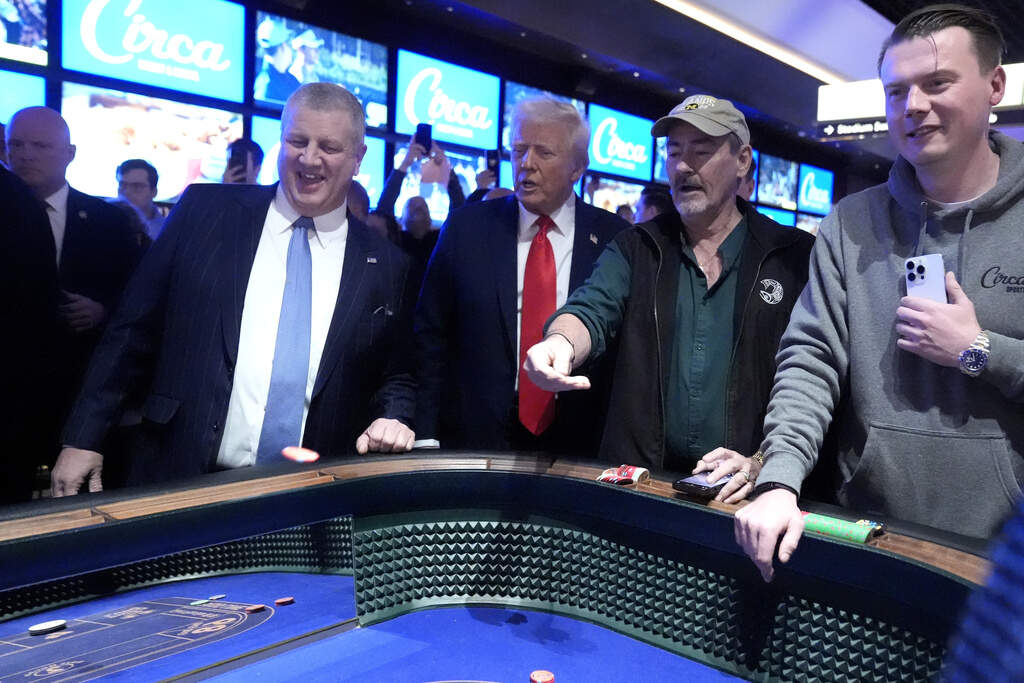
Speculative investment is up. New financial products are on the market. Billions of dollars are flowing to unproven industries. Has the American economy become one giant casino?
Guest
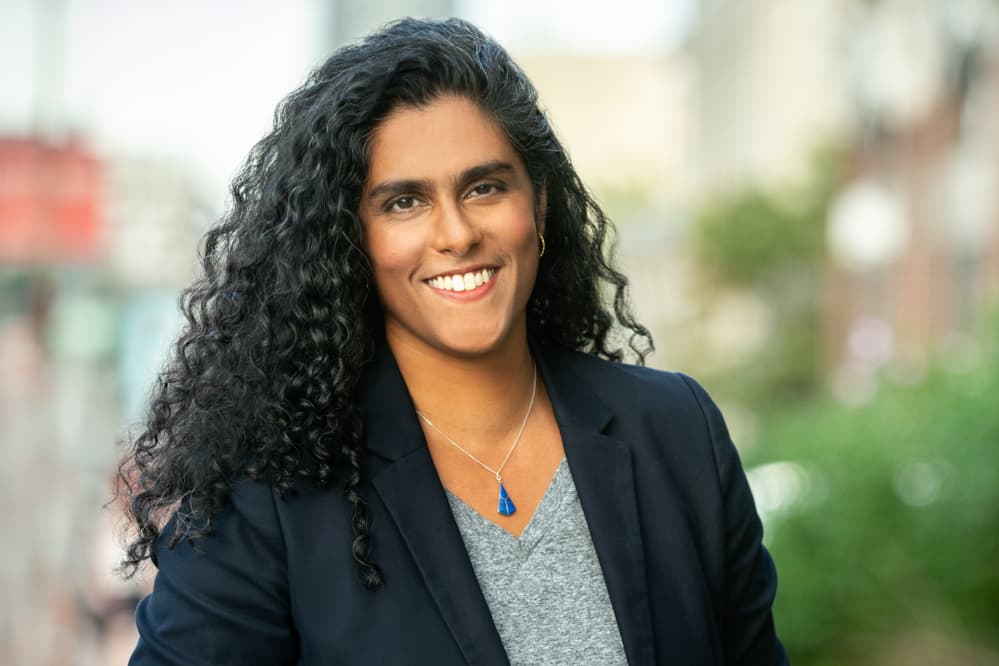
Kyla Scanlon, author of “It Is Trump’s Casino Economy Now. You’ll Probably Lose.” article in NYTimes. Financial social media influencer.
Also Featured
Angela Lee, professor at Columbia Business School and founder of 37 Angels.
Hilary Allen, professor of law at the American University Washington College of Law.
Kenneth Rogoff, Harvard economics professor and former chief economist at the International Monetary Fund.
The version of our broadcast available at the top of this page and via podcast apps is a condensed version of the full show. You can listen to the full, unedited broadcast here:
Transcript
Part I
MEGHNA CHAKRABARTI: You might not be feeling it, but there is a lot of energy in the U.S. economy right now, and much of it is concentrated in the lofty heights where billionaires, institutional investors, and giant banks do business. Up there, you'll find a kind of AI fueled adrenaline rush that's created a market price to equity ratio we haven't seen since just before the .com crash 25 years ago.
Speculative investments are also up and so are the number of new exotic financial products. For example, take the VC-backed FinTech company Coverd. That's C-O-V-E-R-D. Here's the writeup from the app store. Quote, Coverd makes everyday finance more engaging and interactive. See your spending habits, play games, and become more financially savvy.
Win in-game tokens as you play and stay on top of your finances. End quote.
And from their website:
Taco Tuesday wasn't supposed to hit that hard. Cervezas, churros, the round for the cute table. Then Coverd picked up the tab and made it all worth it. Play fun games for a shot to get your credit card purchases covered.
CHAKRABARTI: Coverd launched an app in late September. A credit card is coming soon. In the app, users can play casino style games and if you win, your winnings can go toward paying down your credit card debt. Coverd says that, quote, rather than restricting spending, it elevates it, turning it into a moment of possibility. End quote.
Angela Lee is a professor at Columbia Business School and founder of the investing firm 37 Angels. She's not invested in Coverd.
ANGELA LEE: Gamification is a word that's been popularized for now a couple of decades, and I think as it relates to FinTech, it used to be around gamification, so you earn points, for example, learning about a new financial tool, or you get points for paying off your debt, which are both objectively good things for people financially.
This, to me, falls into the area of predatory, where you are probably attacking people that are a little bit more desperate financially. I think it is manipulative to conflate the idea of financial education and financial freedom with gambling.
It is manipulative to conflate the idea of financial education and financial freedom with gambling.
Angela Lee
CHAKRABARTI: Coverd co-founder Eric Xu would disagree. He's been quoted as saying, quote: There's a generation out there raised on interactive experiences from TikTok to mobile gaming.
Finance is the last major consumer category to catch up. End quote.
LEE: I would say that finance policy and spectacle are more playing the same arena in 2025 than they ever have been before. And things like politics and finances, they feel more like entertainment sometimes than they do sound fiscal policy.
And that, again, feels very 2025. And the idea that I do think that with inflation, with rising costs and that inequality is so much more visible today in 2025 than it was during the last two financial crises, because of TikTok and all the wealth that we see on Instagram and all of social media.
And so you combine all of those things, and it feels, I understand why it's the perfect time for a startup like this to emerge.
CHAKRABARTI: Coverd CEO Albert Wang has said that the app is designed to make spending exciting and turn it into a moment users look forward to. But of course, to win more in the app, you have to game more in the app, which means you have to spend more.
So that makes Coverd a closed loop of dollars and dopamine hits. And as in all finance, the middleman makes its money via transaction fees. And with Coverd's new credit card, hefty interest rates too. Professor Lee says Americans might just be desperate enough for this kind of high risk shot at paying off credit card bills.
LEE: I think there's a broader question, which is, what is the job of venture capital investors? Is the job of a venture capital investor to only invest in things that make the world a better place, or maybe at least make the world not a worse place? Or is the objective of venture capitalists to make money on behalf of their investors?
Many people believe that it's the latter. That there isn't a moral obligation to protect consumers from themselves. And I do think the majority of venture capitalists, their main objective is they have fiduciary responsibility to their investors. And so I would argue, is this good or bad for the world?
I don't know that's necessarily the job of the VC to decide that.
CHAKRABARTI: That's Angela Lee, a business professor teaching venture capital and entrepreneurship at Columbia Business School, and founder of the investing Company 37 Angels. Coverd is one of the new financial tools out there mentioned in Kyla Scanlon's recent opinion piece in the New York Times.
It's a perfect example of what she calls the casino economy, and in fact, her Times piece was headlined: It is Trump's casino economy now, and you'll probably lose. Kyla also writes the Substack Kyla's Newsletter. And she's author of the book In This Economy: How Money & Markets Really Work. Kyla Scanlon, welcome to On Point.
KYLA SCANLON: Hi, thanks for having me.
CHAKRABARTI: So what caught your attention about Coverd?
SCANLON: I think Coverd is just a symptom of a broader issue. I think that a lot of venture capital firms are investing in a lot of companies like Coverd. I don't wanna just single them out. I think that's not great. I think there's a lot of firms doing what they're doing.
And it is partly what the Coverd co-founder was saying, where, there is this Gamification aspect. There is this idea that you have to bet it all to make money. I don't think that's great, but that's really what I wanted the piece to explore, is like, why do we think gambling is the way out of economic uncertainty?
CHAKRABARTI: One thing that Professor Angela Lee said, which I'd love to hear you on before we go deeper into your thesis, is she says that an app like Coverd feels very 2025. What would you say to that?
SCANLON: I think that's right. Yeah. I think that we have seen a big pullback in terms of regulation, in terms of maybe reigning some of these companies in.
It does feel somewhat like a free for all in terms of what you're able to quote-unquote get away with. So I think that is accurate to say that Coverd is very much of the present moment.
CHAKRABARTI: So tell us more about when you look across the broader U.S. economy. I mean your piece listed a bunch, and we'll go through some of the examples, of places where you see the economy essentially turning into a large-scale casino operation.
Why do you say that?
SCANLON: Yeah, I'm not the first person to say that. Greg Ip had a piece in the Wall Street Journal talking about the same sort of speculative fever. I think you just see, every way to turn you see some sort of betting fund, whether it be betting that tariffs are going to quote-unquote save the economy, or that we can now pay people $2,000.
With tariff revenue, the government shutdown was a bet that Americans didn't need health care. Still a continued bet on that. Because we didn't really reach a resolution. If you think about sports betting, if you think about options trading, which enabled by apps like Robinhood, there's this sort of speculative fever, as Greg calls it. And part of that is the monetary policy environment with the Federal Reserve lowering rates, there's a little bit more free-for-all happening.
But then the Trump administration is taking what is pretty uniquely American in terms of prop focus on gambling and yeah, loosening regulations.
CHAKRABARTI: So let's jump to one of the potential pushbacks, which I'm sure you've already heard, and even Greg Ip has heard. That in a sense, the sheer existence of the stock market and all those secondary and tertiary products shows us that gambling, gaming, casino-like atmosphere has always been part of the U.S. economy.
SCANLON: Yeah, so I got this pushback a lot and it's okay, sure, like something has always existed, but that doesn't mean it's getting better. Or I think what we're seeing now is that of course this has always existed, but what's happening now is getting worse. And I think that's an important distinction.
We've had the Tulip bubble back hundreds and hundreds of years ago. We had the Dot-com bubble. We had a bubble in bonds in the 1980s. Humans are very speculative creatures, but when it is not properly regulated and when it is encouraged by venture capital firms in the way of backing these companies, that's when we have a problem.
So I feel like that's a logic flaw, when people are like, this has always existed. It's like, of course, but it's getting worse, right?
CHAKRABARTI: Yeah. Just because it's always existed doesn't mean it can't get worse.
SCANLON: Exactly. Yeah.
CHAKRABARTI: Okay. So since you mentioned venture capital again. Before we leave the role of VCs in what you're calling the casino economy.
You heard Professor Angela Lee say, is it really the role of venture capital to think about their investments from a moral standpoint? And she was like, I don't really think so. What's your thought?
SCANLON: That is a very big debate that I think has been going on for a very long time, where it's like, are the stewards of wealth, are these people who get a lot of money from pension funds? You think about firefighters and teachers. You think about schools investing some form of money with these venture capital firms.
You could argue that they have a role to their LPs and therefore to broader society, to not invest in things that could harm society. Their main goal and the goal of the stock market is to the shareholder, ultimately. And in service to the shareholder, you're tasked with making a lot of money. However that is done. I think we can think about that a little bit more creatively though and not just say, okay, these guys have a ton of money.
They should be able to invest in whatever they want to make more money.
CHAKRABARTI: So what would be a more creative way of thinking about it?
SCANLON: I think it's regulation, right? Should a company like Coverd exist where we're encouraging this sort of inherent gambling, and papering over the problem of economic inequality and of the broken economic ladder?
I think there's a lot of companies out there that don't have very high returns on investment. If you think about education companies, right? A lot of venture capital firms will understandably avoid those because they're not going to make like a 1,000x on that investment. But an investment in an education firm might be net better for society.
So it's very difficult to measure. And it's not anybody's fault that we haven't achieved it, because it is really tough to say, Oh, you should invest in good things, because that's pretty subjective. But I think that's one way to think about it. Is can you measure the tangible impact that such a investment will have on the world?
Part II
CHAKRABARTI: Now, Kyla, another one of the examples you bring up in your piece, which blew my mind, if I'm perfectly honest, is the fact that I believe it was just last month.
JP Morgan Chase, one of the biggest financial institutions in the country, announced that it's going to allow institutional clients to use Bitcoin and Ethereum. So two forms of crypto as collateral for loans. How do you explain that?
SCANLON: Yeah, so essentially the traditional finance industry has been circling around crypto for a very long time.
The traditional finance industry has been circling around crypto for a very long time.
Kyla Scanlon
Firms like BlackRock have crypto ETFs now, and so what's happening is JP Morgan is allowing institutional clients to use their holdings of Bitcoin as collateral for loans. So like the backing of the loans. And it's an interesting shift because crypto is so volatile. It was not trusted a few years ago, and so it's just interesting that now, these very traditional firms are embracing it and allowing it to provide backing to the loans that they're giving out to people.
CHAKRABARTI: But, okay, I'm just going to completely be honest about my struggle with understanding how crypto works, right? Collateral usually, at the level of the individual consumer, we all understand it, right?
If you take a mortgage, your home is the collateral. If you can't pay back that loan, the bank gets your house. But in this case, if I took a loan with a bank, with JP Morgan, I'm not an institutional investor, obviously, I'm just a person. But to make the analogy, and I said if I can't make the payments, don't take my house, take my Bitcoin.
That's making the presumption that the Bitcoin would carry the same kind of value as the house.
SCANLON: Yeah. Yep. It does. And crypto is less volatile than it used to be. Like I used to work in crypto. And back in 2021, like it really had some huge, gigantic swings and has had some serious downturns and it has been struggling as of late.
But yeah, it does assume that there's like this inherent stability to crypto, which is not an assumption that people have had around crypto over the past couple of years. So it is a credibility point for Bitcoin that JP Morgan does trust in it. But I think the worry is that, yeah, like crypto has another huge downturn, that collateral becomes not so valuable and the banks could be left holding the bag.
We've already seen them make bad decisions around some elements of private credit, like Tricolor, which was an auto financing lender, so not crypto, JP Morgan lost $175 million on that. So I think there's just worries that maybe the banks are moving a little too quickly on some stuff.
CHAKRABARTI: Okay. But JP Morgan CEO Jamie Dimon once called crypto the equivalent of a pet rock, right? And hyped-up fraud. So this is a major shift from the corner office at one of the country's largest financial institutions. Now basically, they're treating crypto as alongside gold, stocks, bonds et cetera.
Tell me more about, like you said you worked in crypto, is there, should I back off from my skepticism about JP Morgan's recent embrace of it as effective collateral?
SCANLON: I don't know. Jamie Dimon has also called it hyped up fraud. And in a recent Bloomberg article, he pointed out that he thinks of it as smoking.
So he doesn't think that he should smoke, but he defends other people's right to smoke. So he defends people's right to buy Bitcoin. Which I still feel is like maybe not the best analogy to be using if you're going to be using it as collateral. Yeah, I think like they're seeing some elements of stability. And now that there is so much institutional interest and you have people like Morgan Stanley and BlackRock involved and State Street and Bank of New York Mellon.
There is like this floor, I think, to crypto where it doesn't, it's not going to have the big price swings. So I think the banks are like, okay, this seems safe and stable, but still, it's very nontransparent in terms of what happens with crypto. So I think you're right to have a little bit of skepticism about it.
For sure.
CHAKRABARTI: Okay. So when we talk about institutional investors, though, we are also including, check me on this, things like pension funds, right? Like CalPERS, one of the largest pension funds anywhere. And so if CalPERS wanted to take a loan, I don't know why they would, but from JP Morgan, this means that they would be able, they would, they could buy more crypto and use that as a collateral.
So is this also, is there a potential domino effect of more money going into crypto?
SCANLON: Maybe, yeah, like a place like CalPERS doesn't have direct investment in cryptocurrencies, and I don't think they would be the ones taking out a loan in this way. They have a lot of indirect exposure, so they invest in crypto companies like Coinbase.
So I think that is more of what we could see there. I think this is like just more of a, I don't know, allowing people who have a lot of crypto to get a loan. So I think it's a bit different. Yeah.
CHAKRABARTI: Why did you include it though, as an example of the casino economy?
SCANLON: So it's what I was saying earlier, where it is this thing that was inherently quite volatile and now there is this institutional backing.
I think it just shows that people, like in all aspects of the finance industry, people are trying to find something that works and will generate massive returns or will provide floor to something. And so I think it just shows that this gambling, like crypto used to be viewed as gambling, like it is being accepted.
I think there's still aspects of gambling to crypto, which is why I included it as forms of a casino economy. I think it's like, there's a reason I didn't talk about in depth in the piece. Because I don't think it's one of the more concerning points, but I do think it is a point to the broader gamification of society, financialization, et cetera. Crypto is inherently an asset that only goes up if other people believe in it.
CHAKRABARTI: And also, with a bank like JP Morgan, we're talking about implications in the many billions of dollars as well, I'd say.
CHAKRABARTI: So Kyla, hang on here for just a second because we spoke with Hilary Allen, who's at American University.
She's a law professor with a focus on financial regulation and particularly the financial regulation of new technologies, and we wanted to hear from her about what she thought regarding your thesis that Americans right now are living in a speculative casino-like economy.
HILARY ALLEN: I couldn't agree more. I think in our particular moment, particularly given the increasing levels of economic precarity that people, so many Americans are experiencing, we shouldn't be surprised that people are looking for Hail Marys, even though that's not how you really solve the problem.
And of course, if you've got unscrupulous people who are willing to provide more gambling services to people who are desperate, then you get, I think, where our present moment is, where just everything becomes a type of arrangement where it's not a win-win arrangement.
There's no possibility of a win-win. It's a zero sum and the house usually wins.
CHAKRABARTI: So when JP Morgan announced that it would allow crypto to be used as collateral for institutional investors, Allen said it did not come as a complete surprise, and she's still not happy about it.
ALLEN: I was of course, horrified to see that banks would consider accepting something as volatile, and, dare I say it, Ponzi-ish as Ethereum and Bitcoin as collateral. Because when the time comes, if there's a systemic collapse and they need to start selling off collateral, because everyone's defaulted on their loans, this isn't going to be worth anything or it's not going to be worth much.
And so then they are in a position where they are vulnerable from a financial stability perspective, and we either bail them out or they fail.
And all the institutions with which they're connected, then start having problems too.
CHAKRABARTI: So there's a reason why Hilary Allen is particularly concerned about bad decisions worming their way through the broader economy. She was a member of the Financial Crisis Inquiry Commission established by the federal government in 2010.
And you might recall that commission's job was to look into the causes of the 2008 financial and housing crisis that wiped out a lot of Americans and required the kinds of huge bailouts she was just talking about. Allen sees JP Morgan's move to allow crypto collateral akin to history repeating itself.
ALLEN: The parallels are striking. The crypto markets essentially replicate and exacerbate all the fragilities in the traditional financial system, essentially ensuring a speed run towards crises.
And we've already had multiple crises in the crypto markets. The ICO boom busted in 2018, 2022's crypto winter, markets lost two thirds of their value. These are not unfamiliar dynamics. So the question is, why aren't people seeing them? I think sometimes people's memories are short. Sometimes it is, as Upton Sinclair has said, it is very hard to make a man understand something when his salary depends on him not understanding something.
You get the gist. People are happy to look the other way when there's money to be made.
People are happy to look the other way when there's money to be made.
Hilary Allen
CHAKRABARTI: That's Hilary Allen. She's a law professor at American University who focuses on financial regulation, particularly regulation of new financial technologies. Kyla Scanlon, what's your response to her?
SCANLON: Yeah, I think she's correct and obviously she's an expert on this topic. And yeah, I think it all makes a lot of sense that there is this concern, as I was saying too, that yeah, this was something that was inherently really volatile, that we have allowed into more traditional finance, something that was meant to be a bit safer.
CHAKRABARTI: So with the question of then how to, let's say, mitigate the risk. That the broader economy is expected to tolerate. That's one of the main takeaways I get from your piece. Is that gamification, casinoification, whatever, gambling with money, whether you're an individual or an institutional investor, that's one thing, but it's all based on the presumption that if things go wrong, the U.S. economy as a whole will be able to withstand the fallout and essentially bail out these very same companies, right?
SCANLON: Yeah. Inherently it is assuming that, yeah, we can maintain something like this over time, and it seems to be working, but like one thing I point out in the piece is that the U.S. is pursuing a strategy of isolationism right now.
There's concerns over the dollar. There's concerns over China really taking hold in terms of what they're able to accomplish with like renewable energies and just more of a focus on a future outside of the computer. So yeah, I think that there's concerns that none of this can last and that we're not prepared when it does end.
CHAKRABARTI: You write in your piece that public and private sectors are essentially rolling the dice, that the foundations of the U.S. economy will hold under the pressure. Why do you think they're rolling that dice again?
Because just listening to what Hilary Allen said, she reminded us what happened in 2007, 2008.
Are memories really that short, or are they right to believe that the fundamentals of the U.S. economy will allow the kinds of bailouts we saw 15 years ago?
SCANLON: No, memories are pretty short. I think we've learned this lesson countless times. It happens it seems every 20 years or so. People are just speculative and there's like a herd-like mentality to human behavior, where if we see one person doing something, we go and do it too.
And social media has really amplified that. And so the rise of forums like WallStreetBets, have really encouraged people to like, share their trades, to share what they're investing in. I think it's encouraged some aspects of the gambling. I think it's also good that people are talking about investing, but it does get pretty gambily pretty quickly.
And then from the angle of public and private sectors, they're just also following some sort of mimetic behavior, herd mentality, trying to make an extra buck. And the way that you do that is by betting the house.
CHAKRABARTI: You've written that the private sector is rushing in as a gambler, betting that technology alone can hold the system together.
I'd love for you to talk about this a little bit. Because it does feel very spot on, that the conversation and the way tech developers and financiers are talking about AI. It's almost with this sort of starry-eyed religious belief that no matter what happens in the real economy, a solution can be found within an AI driven future that will protect us all from any downside.
SCANLON: Yeah. That is the promise. I think that it depends on if you believe that promise. I think more and more people, like the approval rate for AI in the U.S. is something like 40%. Like it is really low. Because when you see the messaging that the CEOs of these companies do, like Sam Altman for example, he just, there was an internal memo that was leaked where he's, our AI product is going to need the electricity equivalent of India.
Just to produce something like right now what is essentially Slop videos on a platform like Sora. So I think that's one concern. Is that number one, what are they building to? Is it these Slop videos? Number two, how much money and electricity are they going to be sucking up over time?
The data center buildouts are gigantic, and Bloomberg had a recent piece talking about how some data centers are actually sitting empty because we simply don't have the power availability to make these quote-unquote dreams come true. And then also the third point is like how much of the economy we've wagered on this.
So it's 40% of GDP growth, 75% of S&P 500 earnings. So there's just so much hope going into this. Where I think we're ignoring other aspects of the economy. For example, the last time that we got government data, the only jobs that were added were in health care and social services. That is not a healthy economy. Who knows what has happened since, it's probably gotten worse. But that's like what I mean, right? The private sector is seeing big stars as you pointed out, and perhaps ignoring things that really need investment.
CHAKRABARTI: To say the least, Kyla. No, wait, there's something you said, can you repeat that?
Because I'm not sure I processed it fully that --
SCANLON: I'm sorry.
CHAKRABARTI: It's okay. That is it right now that 75% of, did you say? I don't know. Profit or --
SCANLON: S&P.
CHAKRABARTI: Right now from AI?
SCANLON: Yeah. 75% of S&P 500 earnings growth, 80% of profits and 90% of capital expenditure in the S&P.
CHAKRABARTI: Just from AI?
SCANLON: Mm-hm.
CHAKRABARTI: Have we ever seen anything like that? This isn't even just one sector or one industry. This is a sub, sub-sector of an industry. Have we ever seen anything like that?
SCANLON: I don't know. I think it's pretty unprecedented. So those numbers come from commentary from Morgan Stanley and yeah, she points out that she's pretty concerned.
The analyst that reported on this, the chief investment officer, I'm sorry, Lisa Shalett says that she is very concerned.
Part III
CHAKRABARTI: I can't quite let go some of the mind-boggling facts and figures around AI. So you quoted some numbers from MarketWatch in your piece, and they include the following. That the AI boom has grown into one of the largest speculative waves in market history.
That right now the value of AI linked companies is 17 times larger than the market cap at the peak of the Dot-com era. More than four times as large as the subprime bubble. Help us put that into perspective. Again, the numbers are so big, I'm just having a hard time even fathoming them.
SCANLON: Yeah, they are really big.
I think the point that there's a bunch of pieces published, I think pretty much every day now, talking about how expensive the AI bubble is. And I think a really tangible number is from JP Morgan, where they say, in order to drive a 10% return on all of this AI investment, all the money that everybody's spending through 2030, it would require $650 billion in annual revenue, which means that every iPhone user would have to pay about $34 a month.
So you can contextualize it that way, is that you would have to pay $35 a month to make sure that all of this stuff pays off. So that's like how large the expenditures are, that's how big the investments are, and I think that's one way to conceptualize it. Yeah.
CHAKRABARTI: Okay. But then some, many folks would say no risk, no reward, and right now, right? But they would say that right now, the greater risk is that if we don't pour this kind of ... investment into AI, China's going to beat us to everything that AI could probably do in the future.
And the risks that we're actually taking is being left in China's dust. So the speculation right now is worth it.
SCANLON: So Tracy Alloway, who's a reporter at Bloomberg, I think has the best explanation on this, where there's a lot of major U.S. companies building on top of Chinese open-source AI models.
So the U.S. companies are learning from these Chinese open-source models to OpenAI, Anthropic, et cetera. And so her analogy is that Wall Street is out there valuing U.S. AI like it's a $5,000 Nespresso machine. Where China is actually like handing out these free Nespresso pods to anybody who will have them because they're keeping their models open source.
So her final point is that China is pursuing a commodification strategy for AI, that they are not concerned about how fancy the model is. What they're trying to get to is power availability. So they already have the models done, but like the one who will win the AI war is the one who invest in renewables.
And there's a good piece from phenomenal world pointing out that China has been investing in the renewable age, whereas the U.S. has a lot of culture war issues around renewables. And so I think that is like the ultimate point around AI, is that we might be investing in the wrong thing.
Like we have a bunch of data centers. Sure. But we have not reformed the grid. We haven't thought about how to do electricity different. Some of the labs are, like Meta, I think is investing in nuclear and thinking about how to do energy differently. But I think that what a lot of people are missing is that this is a story about power.
It's not a story about the AI labs themselves.
CHAKRABARTI: Now, so what's really important to understand. And I'm so grateful that you bring it up in your Times piece, is that it's one thing for a bank to make some bad bets, but as we learned from 2007, 2008, is that these bad bets can spread across an entire economy, literally overnight.
And in this case of still going back to that giant fraction of valuation that's coming from just AI in the S&P, three companies made basically, right? Microsoft, Apple, and Nvidia. But that means, as you point out, that almost every American who has a 401k or a 403(b) is also taking those same bets, whether they want to or not. And that is the thing that's really spreading the risk across hundreds of millions of Americans with what downside protection if things go south.
SCANLON: Yeah, definitely. I think the thing that's such a bummer about AI is the gains are pretty privatized, but the losses are socialized.
So if you think about those who will benefit from, and I sound very cynical about AI, and I think it ultimately is a tool and I hope elements of it do work out. But I think the way that we're talking about it right now, broadly speaking, and the way CEOs are talking about it is ultimately harmful.
But I think that when you think about who will benefit from AI, it is those companies. It is the people who are invested in those companies, if it does work. But if all of this blows up, like those companies will probably get some sort of bailout. If it does blow up and then yeah, the 401k holders are going to be in deep trouble.
And in the U.S. like we don't have a retirement plan for people outside of a 401k. So 43% of boomers don't have a 401k at all. And then so the people who do have a 401k, if AI does blow up, they're going to have a retirement crisis as well. So that's like another thing that's concerning is that people who are trying to retire, all their money is in AI, more or less.
The people who do have a 401k, if AI does blow up, they're going to have a retirement crisis.
Kyla Scanlon
And then also there's people who don't have a retirement count in general, and that's a point of concern as well.
CHAKRABARTI: So this brings us to the question of presidential and congressional leadership, right? Because make your case for why you think that so much of the froth right now around these speculative investments is actually being driven by not just the actions, but the attitudes of President Donald Trump, members of Congress.
Make your case for that.
SCANLON: Yeah, plenty of people have written on this topic, but I think the way that you can think about it is that there's just no regulation. So in a normal situation, maybe not, but like in a normal situation, you would see some sort of policy response to AI. There's plenty of thinkers who have proposed some sort of federal jobs guarantee, some sort of re-skilling, some form of assurance that like workers who get displaced by AI will not be totally left to their own.
We've learned this lesson from the rust belt that you like don't want to abandon an entire population, and I worry that's what we're doing with AI, and ideally we would see some sort of policy response.
But I think for the Trump administration, just objectively, like their goal is like how can I skim off the top of this? Can I do a deal with Nvidia where I get 10% of their chip sales? If they do a deal with China, can I take a 10% stake in Intel and make a bunch of money off of that? And so it's tricky to navigate.
Like ideally we'd be seeing some sort of regulation, but I think that's also pretty rose colored glasses. Because we never saw regulation on social media either, which I think is a predecessor to how we can think about AI impacting all of us. So yeah, ideally we'd see something, but nothing. Nothing. Yeah.
CHAKRABARTI: You call this quote the cruelest logic of the casino economy, right? Stripping back the public supports while at the same time juicing the kind of casinoification that we've been talking about.
SCANLON: Yeah, the government shutdown was ultimately a fight over health care access.
There's a lot of focus with the Trump administration on tax breaks. There was a big fight over SNAP and whether or not people who are hungry should get food assistance during the time of the government shut down. A bunch of federal workers were fired under DOGE to save money and we lost a lot of institutional knowledge then.
So I think the way that the Trump administration runs the government is like a business, which is why a lot of people did, I think, vote for him. But it does mean that those who need the most help and the most support are forgotten. And that more and more resources flow towards speculation, towards these privatized wins that don't necessarily benefit the whole population.
The Trump administration runs the government [like] a business. ... But it does mean that those who need the most help and the most support are forgotten.
Kyla Scanlon
And that's why we have invisible prosperity where like all of the wealth in the U.S. is concentrated in spreadsheets, and then we have infrastructure that's decaying, and people are not able to get to work on time because of traffic or the buses running late. And I just think there's a big mismatch there in terms of what wealth really means in the U.S.
CHAKRABARTI: So right now, Kyla, I bet there's a lot of people listening saying, when I look out over the horizon, I see only possibility and I'm going to ignore you two profits of doom. Because the American economy is still very, well, in terms of its comparing, it globally is strong. The dollar is a still effectively the most important currency, around the world.
Only upside because this is the United States. We have 250 years of momentum to keep the country strong, no matter who takes how many bets.
SCANLON: Yeah. I love the U.S. I just was on a 30-day tour of the U.S. with my book and I was in 11 states which was really amazing.
And yeah, some people approached me thinking, I think AI's gonna win. I think it's been great, but a lot more people approached me and they were like, I'm very worried I'm not gonna have a job or gonna be able to afford a house. Or that there's no safety net to catch me. And so I think like both can be true, which is true for many things, that it can be something that's exciting.
There's a very nice chart from the Financial Times that says that AI could be the end of scarcity, the end of humanity, or add 0.2 percentage points to GDP, right? Like we don't know what we're going to be dealing with, but we have to talk about the downsides here because that's what the CEOs are focusing on, is like this is going to replace all workers.
Good luck everybody. I think we are likely in a situation where AI will just be something that adds 0.2 percentage points to GDP. I don't think it's going to be the end of humanity, and I don't think it's going to be the end all save all. But I think we gotta talk about what this is doing to people.
It's this extractive mechanism that we're running into time and time again.
CHAKRABARTI: There's one more person we talked to in order to get a deeper understanding of the details that you're bringing to this conversation, Kyla. And this has to do with the dollar specifically. And we talked to Kenneth Rogoff, economics professor at Harvard, former chief Economist at the IMF and author of Our Dollar, Your Problem: An Insider's View of Seven Turbulent Decades of Global Finance, and the Road Ahead.
KENNETH ROGOFF: So I would say what is happening is that the dollar is losing market share, we were everything. That you go to Russia to a little street market and they were happy to have your dollars. You go to Africa somewhere, they were happy to have your dollars. If you wanted to issue debt and you're even a French company.
You might find that your Asian lender said, I like your euros, but you know what? I like dollars better. And they would insist that everything be done in dollars. So I argue in my book that we reached peak dollar a decade ago and it actually was in decline before Trump.
We reached peak dollar a decade ago and it actually was in decline before Trump.
Kenneth Rogoff
CHAKRABARTI: But Rogoff says that even though the dollar is falling from its peak, that rock and roll stock market right now has managed to keep the value of the dollar up.
ROGOFF: The theme, a casino economy. The stock market's been doing amazing. In fact, in general, the U.S. has been the place to invest. So far. Until there's a crash, and I don't think there's any question that's pushed up the dollar, whatever Trump wants, foreign investors are pouring into the dollar. Because they want more, and right now the dollar's very high.
Okay. It came down a bit. You know, after Trump got elected from a very high level. So yeah, he talks about wanting a weaker dollar. He talks about wanting to have exports, his actions haven't really brought it so far.
CHAKRABARTI: And globally, Rogoff says that the dollar's dominance is declining and what the future holds as that happens is pretty clear.
He says it's only a matter of time before Americans might feel what it's like to no longer be King of the hill.
ROGOFF: Next time we have a crisis, and we look to borrow a huge amount of money, we may find more pushback. Meaning the interest rate goes up, not just a little but a lot. And how will you feel that?
You're used to getting whatever you want, you get stimulus payments, the government provides for everything. Let me tell you, if you lived in most other countries, it wouldn't be like that. I think that's when Americans are really going to get slapped in the face and having the dollar be less the thing everyone wants is bringing the day forward when we run into problems with our debt.
CHAKRABARTI: That's Kenneth Rogoff, economics professor at Harvard. Former Chief Economist at the IMF and author of Our Dollar, Your Problem: An Insider's View of Seven Turbulent Decades of Global Finance, and the Road Ahead.
Kyla, we've only got a minute and a half left, and I want to just ask you about your generation. Because you're not yet 30, is that right?
SCANLON: No, I'm 28.
CHAKRABARTI: 28, okay, good. I'm not gonna make you older than you really are. But the reason why I wanna ask that is, all of these potential downsides that we've been talking about in this casino economy, they're going to fall on people like you, people of your age, really.
And I feel that's one of the reasons why you have your Substack, to explain, like this is what's going on. And if you're younger, you really need to know. I'm just wondering your thoughts on that? That there are a couple of very vulnerable generations who will have to live with the impact of a casino economy for decades to come.
SCANLON: Yeah, definitely. And a lot of my writing is around how we can think of progress and the attention economy and what technology is doing to younger people. But I think if you think economically, those 55 and older, own half of all homes, Americans age 70 and older own 40% of all stocks in the U.S.
So there is like an immense concentration of wealth within the older population that is not being passed down to younger people at least. And so I do think younger people are not getting their foot on the first rung of the ladder, and they're gonna have to deal with these losses. And it's a two-for-one punch.
The first draft of this transcript was created by Descript, an AI transcription tool. An On Point producer then thoroughly reviewed, corrected, and reformatted the transcript before publication. The use of this AI tool creates the capacity to provide these transcripts.
This program aired on November 13, 2025.