Support WBUR
Siddhartha Mukherjee on understanding cancer now
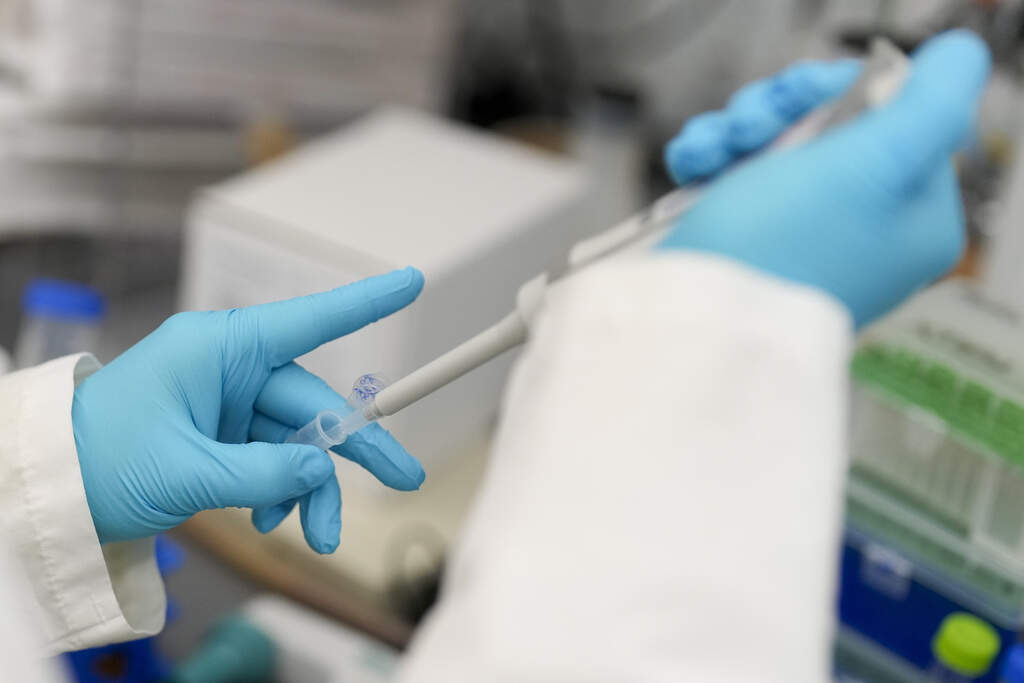
In 2011, Siddhartha Mukherjee won the Pulitzer Prize for his biography of cancer, “The Emperor of All Maladies.” Now, he’s back with an update on how our understanding of cancer has advanced — and what lies ahead.
Guests
Siddhartha Mukherjee, physician and writer. Author of “The Emperor of All Maladies.”
The version of our broadcast available at the top of this page and via podcast apps is a condensed version of the full show. You can listen to the full, unedited broadcast here:
Transcript
Part I
MEGHNA CHAKRABARTI: Cancer is a disease that has plagued human beings for, well, as long as we've been humans. It's an insidious disease and a personal one that arises from within our own DNA. Genetic mutations that result in an explosion of abnormal cell growth. Physician Siddhartha Mukherjee has dedicated his life's work to understand how cancer behaves, how to treat it, how to think about it.
And in 2010, he wrote about cancer in his book, The Emperor of All Maladies. He won the Pulitzer Prize for that, and now 15 years later, he's out with an update to the book. Dr. Mukherjee, welcome to On Point.
SIDDHARTHA MUKHERJEE: Thank you very much.
CHAKRABARTI: I should also say by the way, that Siddhartha Mukherjee is an associate professor of medicine at Columbia University, as well as a physician and a researcher.
He is the author of many other books, including the Song of the Cell. And he's co-founder of a biotech company called Manas that uses AI to help discover new medicines. And we'll talk about that a little later in the show. But Dr. Mukherjee, first let me ask you why update the book now. What has changed in the 15 years since you wrote Emperor of All Maladies?
MUKHERJEE: So the update felt extremely urgent to me, and the reason it was so urgent was, is that so much had changed in cancer research, cancer medicine, cancer treatment, and even the fundamental conception of what cancer is. That I felt that it was absolutely important to write an update that would bring people up to where we are now, and also point a direction to how we've learned what we've learned and where we're going next.
So much had changed in cancer research, cancer medicine, cancer treatment, and even the fundamental conception of what cancer is. ... I felt that it was absolutely important to write an update.
CHAKRABARTI: Okay, so this is really compelling, and forgive me for interrupting, but you said even our understanding of what cancer is has evolved or changed. So how would we define what this disease is now?
MUKHERJEE: The fundamentals remain the same.
Cancer is a disease in which you have mutations in genes. These mutated genes cause cells to grow abnormally. They also confer additional properties and cells that fuel this abnormal growth. They change the metabolism of cells, they change the way the cells interact with other cells around them. But fundamentally, cancer is a disease of genetic mutations.
What's different, what's new, what's changed this time is that we're no longer thinking about cancer as if it's a group of cells, malignant cells sitting in a vacuum. We're essentially relocating cancer into the body and understanding what I describe as the physiology of cancer.
How do the cancer cells change the way they pick up nutrients from their surroundings, and could we use that as potentially a mechanism of treatment? How do cancer cells interact with the immune system? And could we use that as a mechanism to kill cancer cells? How do cancer cells migrate to different parts of the body? And could that be a potential area that we could concentrate on in terms of treatment or even early detection or prevention?
So the idea of what a cancer cell is no longer a genetically mutated cell that's dividing abnormally, furiously, but sitting in some kind of mental or scientific vacuum, but rather something that is within the body. In fact, the last chapter of my book is called A Body in a Body.
Because the cancer cells behaves as if it's an independently growing organism or an independently growing organ within the body.
CHAKRABARTI: Forgive me for asking this, but why wasn't this the conception of cancer before? Because you know this better than I do, but just in taking like a physiology 101 class, one of the first things that people learn is the body is this complex, interdependent system of systems, right? That it seeks to be in homeostasis, et cetera, et cetera. So what was it about oncology or cancer research prior to the recent past that led people to think, people to conceive of cancer as this thing in a vacuum, where nothing in the body exists in a vacuum. Because everything has an impact on other systems.
What was different back then?
MUKHERJEE: Actually, Meghna, to be fair. People had, this is not the first time we even, we've encountered the idea. Otto Warburg, who was a physician at the turn of the century, at the turn of the last century, was interested in why the metabolism of cancer cells is different from the metabolism of normal cells.
Many people a very famous surgeon named William Coley began to administer what he thought could incite the immune system to kill cancer cells. They were ultimately called Coley's toxins. The problem, and of course, you know their famous names like Judah Folkman, who was at Harvard, who was interested in the fact that, how do cancer cells pull out blood vessels so they can feed their own growth? So the idea wasn't that, in other words, scientists did think about the idea that cancer cells were located within the body, and interacted with cells around themselves.
The problem was that most of the mechanisms, the scientific mechanisms, the molecular mechanisms by which this happened were largely unknown. And because there were largely unknown, very few people could intervene therapeutically on this. So there was no therapeutic modality. And meanwhile, the genetic, the genes of cancer were known.
And so the famous story about the person who searches for keys under the lamplight, because the lamp, the light is the strongest, the light was the strongest in cancer genetics. And so that's where we searched. And Bob Weinberg, the great cancer geneticists and also cancer physiologists says that this was, there was a kind of a monomaniacal way in which we searched for keys under that lamplight, and we did find keys.
We did find medicines that would attack particular genetic the consequences of particular genetic lesions in cancer. Sure. We did find them. And we can name some of these targeted therapies that are targeted against mutations in cancer genes.
But we only later began to find, in fact, in the last 15, 20 years, have begun to find mechanisms, for instance, activate the immune system to kill cancer cells, a huge advance. And that's because we finally began to understand the mechanism.
By which the cancer cells hide from the immune system.
CHAKRABARTI: Yeah. So in a sense, and it's my turn now to be fair, this is very understandable because this is out of necessity, how science operates, right? Like you cannot turn a light on the whole planet at the same time.
We do look; we have to ask focused questions. Which kind of narrow the beam of that lamplight as you were saying. And it's very hard, I would say, for a particular group or even groups of researchers to have that beam get too wide. Part of it's because of just the way science practically operates regarding funding, et cetera.
But in terms of the interconnectivity of the body, and as you were saying, these both genetic and whole organ systems, I'm wondering if AI in cancer research is helping widen that beam significantly.
MUKHERJEE: It is helping widen that beam significantly because it's finding patterns through genetics or through large databases.
It's finding patterns, some of which don't make sense if you only consider cancer in this kind of vacuum sealed way. AI is helping by identifying mechanisms of killing cancer cells or arresting their growth, which were previously not thought to be so obvious.
Like for instance, we published a couple of papers recently, some time ago, in which we used, initially we used our own experimental ideas about how cancer metabolism could work. But then over time when we switched this research to a biotech company called Faeth, we asked Faeth to build a metabolic map of cancer using AI.
And by that, can you take a cancer cell and imagine all the pathways by which nutrients are coming in and out and being changed by a cancer cell? And figure out using AI, how that pathway is different from a normal cell. And if you can do that, you can begin to ask questions, can I intervene on one particular pathway?
And kill the cancer cell without affecting a normal cell. So that's one arena, is metabolism, another arena is the immune system. There were questions about why cancer cells could hide away from the immune system. And again, before the advent of AI, using systematic scientific research scientists Tasuku Honjo and Jim Allison, and there are many others.
Those two won the Nobel Prize for this work. Figured out that cancer cells have specific mechanisms by which they hide away or can inactivate the immune system from surveying them or from killing them. But those methods ... that we used were classical methods.
Now we're using all sorts of methods using AI among other things to figure out, what is the entire universe of such molecules that enable cancer cells that hide from the immune system. And then we're using AI potentially to find drugs that would block that interaction. So that cancer cell is now revealed as a foreigner and then killed by the immune system.
Part II
CHAKRABARTI: So much has changed in our understanding of cancer, in research, prevention, even therapies.
So much has changed for the better and some things haven't changed at all. That he has written a new addendum, a new chapter in the story of cancer. And that's why we're talking to him today. Dr. Mukherjee, you --
MUKHERJEE Actually four new chapters, four new chapters.
CHAKRABARTI: So I was just considering it one giant new section of the book, but point taken.
MUKHERJEE: Fair enough.
CHAKRABARTI: And in fact, I was going to say, you write about prevention, screening and treatment and having a new understanding of cancer. Those are the major sections.
MUKHERJEE: Those are the four main sections.
CHAKRABARTI: Let's start, first of all with prevention. And I would actually love for you in the chapter that's titled The Carcinogen Hunters, you open that with a really quite arresting story of an experience that you had in 2011.
Can you tell us that story?
MUKHERJEE: Yeah, so in 2011 after I published the book, I was upstate in New York giving a talk at a wellness retreat for cancer patients. So these are patients who had undergone chemotherapy or were undergoing chemotherapy. And it was the most hostile experience I've ever had with an audience.
I walked in thinking, oh God, I'll just breeze through this. And I finished my little talk on cancer genetics, and the four mechanisms, four known mechanisms that we have by which cancer is caused, which is number one, spontaneous mutations in your genes. So it's what I call stochastic accidents, genetic accidents.
Number two, you can inherit genes from your parents. Obviously, a good example is, BRCA1 is inherited from parents often and that causes breast cancer. The third is viruses. Sometimes viruses can infect cells and tamper with your genomes. Good example of that would be or tamper with your cells.
A good example would be human papillomavirus that causes cervical cancer. And then finally, most perhaps most importantly, carcinogens. So these are usually chemicals or could be x-rays in in nature found outside the body that make mutations that cause DNA. And these mutations again, can lead to abnormal cellular growth.
And so we were discussing all of this and then suddenly I said are there any questions? And I found an incredibly hostile response. This woman raised her hand and she said, listen, I've been drinking my wheatgrass juice every day. I do yoga, I exercise, I do everything. I don't smoke.
I don't have any risk factors for cancer. My parents never had any cancer, and here I am with stage four ovarian cancer. Why? Tell me why. Then after that, a second guy, a second, a man raised his hand and said, listen, I have lung cancer. I'm the same story. Never had any exposures, never had anything wrong with me.
Why am I getting lung cancer? And it grew into this sort of, one by one, I was dreading it because one by hand, one by one, hands were raised and the next person would say, my mother had colorectal cancer and I would say listen, maybe it's, again, genetic accidents, stochastic accidents, and that's very possible.
But it really made me think that maybe we're missing something, that there's some dark matter in carcinogens that we're missing, and that's what led to this experience.
CHAKRABARTI: And then, so how is that?
MUKHERJEE: And then I waited and read and waited and read. And I was looking for this dark matter for that particular seminar, as it were, or conference, ended in a disaster. In the sense that everyone left and the last comment I heard was, oh God, what a complete waste of time. And I felt very, I felt terrible about it, but I began to think about that period of time from 1980 to around 2010 as the lonely decades for cancer prevention. Sure, we had discovered some major chemical cancer agents that prevent cancer.
And there were viruses like human papillomavirus, big discovery for cervical cancer, but for many people who did not have these obvious risk factors. It was a kind of lonely decade searching for answers as to how cancer prevention could be made different.
And what could be different about cancer prevention? And the answer, I think, is beginning to emerge. And that's what's really exciting to me, Meghna, about cancer prevention as a field. The lonely decades are coming to an end. And the answer has to do, it's very interesting.
And again, goes back to this idea of cancer as cells, not in the vacuum, in the body. The answer has to do with the fact that some carcinogens don't act by making genetic mutations in cancer cells. Rather they act by making the surrounding of a cancer cell, the milieu of the cancer cell conducive to its growth.
And a great example of this is air pollution. This is a big discovery made by Charles Swanton's lab in Cambridge, sorry, in London. And the idea is that microscopic particles of air pollution activate an immune response, and that very particular immune response. This is a particular inflammatory response, which is particular to some particles.
And this creates a milieu around the cancer cell that essentially is permissive. It says, now you have permission to grow. And tumors grow out of that. So the prevention is not, or the preventative mechanism is not a genetic mechanism directed against the cancer cell. It is a mechanism that is outside the cancer cell in the milieu that's around the cancer cell.
And by the way, this is probably how asbestos, which is a very potent carcinogen, but really has never been shown definitively to cause mutations in cancer cells. This is probably how asbestos works as well. Asbestos is a very strong irritant. Chemical irritant. It is a very strong inflammatory agent. And that begs the question, could we first of all find all of these potentially inflammatory agents?
Again, it's a very particular form of inflammation. It's not as any inflammation, so let's be very careful about that. And it has very much to do with a particular kind of cell called a macrophage. But anyway, it would be amazing, wouldn't it, if we could devise a test for such inflammatory agents, some of which we don't even know about.
Some of which we, as I said, imagine we didn't know about asbestos. The only reason we figured out asbestos is because it's through human studies. But by the time human studies, the humans have already had cancer.
CHAKRABARTI: Yeah. Dr. Mukherjee, do you mind if I just jump in here because this is really very interesting and in terms of better understanding environmental factors that may, as you said, or once those carcinogens get into the body, allow them to change the permissiveness of the body for cancer cells to grow. But it does make me wonder, look, if we got a better understanding of these carcinogens, that could have a massively scaled up effect on the number of people who are either prevented from, either from ever getting cancer or at least detection, which we'll talk about later, could be detected earlier.
But it seems to me, and do correct me if I'm wrong, that of the billions and billions of dollars going into cancer research, the majority, the vast majority of it's going towards those headline making things like gene therapy, AI, et cetera, et cetera.
And perhaps that looking at things from an environmental point of view is less sexy and we should be actually putting more money in that direction.
MUKHERJEE: Look, we've always wanted to, we've always had this debate within the cancer community. Prevention is the mainstay of all disease, should be the mainstay of all disease research because you get the most bang for your buck.
This is true for that's why we vaccinate. That's why we prevent heart disease because obviously you don't want to treat it. You want to prevent it because you get the most, the best result for every dollar that you spend.
Yes, the only thing I would say is that this field of environmental carcinogenesis being resurrected. After years and years of trying, this is very young. This is young. These are young days. So I think that there should be more money, but we just have to wait a little bit before people catch up.
CHAKRABARTI: Okay. So now let's talk about screening, because in terms, from the patient's perspective, there has been a lot of changes in the past few years in terms of guidance on when people should be screened, when they should not be screened. What would you say are the most important developments there?
CHAKRABARTI: Meghna, my chapter on screening, which was published in the New Yorker as an excerpt, is a sober, is a sobering chapter. It is a sobering chapter because not a day goes by when I open a newspaper or the radio and someone says, get a full body MRI, get a full body CAT scan.
Get your blood drawn and magically find some cancer before it spread, et cetera. It isn't that easy. The chapter is all about showing you mathematically. This is, in fact, what's interesting about that chapter is that is a chapter that is a mathematical chapter more than a medicine or a biology chapter.
Mathematically. I won't go through the details, but it is mathematically true that it's very difficult to screen patients for cancer. It's possible, but it's difficult. The only way I think that we could do, we should do screening. Is by what's called a Bayesian method. And by Bayesian method it goes, refers back to a mathematician named Thomas Bayes, who basically said that if you look for a needle in a haystack, you won't find the needle, you'll find hay.
If you look for a needle in a haystack that has a thousand needles, you'll find needles. If you look for a needle in a haystack that has a million needles. Then absolutely you'll find needles. And by needles, true positive cancers. And by haystack or hay, false positives and all sorts of distractions.
CHAKRABARTI: So you're talking about, you're talking about picking the right people to screen essentially?
MUKHERJEE: Exactly. Exactly. Don't screen a 20-year-old young person who has no risk factors for cancer. Because a lump in that 20-year-old person will likely end up being nothing. Of course there are exceptions to this, but screening is not the solution to that.
But do screen a woman who has a mutation in a gene such as BRCA1 or has a huge family history of cancer. Because in her case, you probably get things that are truly cancerous. The chapter on screening really tells us, or goes through an enormous amount of literature and tells us that if you really look very deeply, very broad screening programs, broad-based screening programs, which have not looked at particular populations, have really not worked.
They've worked very marginally, and I feel bad about it. I felt bad writing the chapter. Because I felt as if I was betraying my own colleagues. That's not true.
It's just, I just have to tell the truth. The truth is that it hasn't worked, unless --
CHAKRABARTI: Dr. Mukherjee, could you just stand by for a second? I have to just remind folks that I'm Meghna Chakrabarti and this is On Point. Forgive the interruption. Go ahead.
MUKHERJEE: I just felt, as I said, I felt a little bit bad ... but the reality is if we screen the right population, and here again, is some, is where AI can help because the right population is defined by genetics, risk factors, exposures, all these complex features.
And if we could deconvolute and figure out, give them a score as it were. And the higher people who have the highest score are the ones who are most likely to be screened, again, we would, I think, get much more bang for the buck. Out of cancer screening.
CHAKRABARTI: But how do you, again, so this, so you're raising the right question, the right sort of secondary question.
How do you pick what to screen for? Because as you've been saying, and as the book is entirely about, cancer isn't a discreet thing, right? There are many kinds of cancers, many manifestations, et cetera, and many causes or at least more causes than we typically think of. And if I may, I'd love to use a personal example, like my mother was the youngest of four sisters. She recently passed away from peritoneal cancer. Her eldest sister died of breast cancer at almost the age of 90. And one of the middle sisters, my middle aunt, she had multiple myeloma.
I have one aunt still living, hang in there. I love her so much. But same family, three different kinds of cancers, or are they different? If you had that family in front of you, of sisters, like who would you recommend get screened for what?
MUKHERJEE: So that's exactly the problem. You just put your finger on the problem. Who would you have screened for?
And so the answer that a lot of the screening mavens are saying, let's screen for everything, or let's screen for as much as we can. The problem with screening for as much as you can is that the more data you collect, the chances are that you'll start getting more and more false positives and false negatives.
The problem with screening for as much as you can is that the more data you collect, the chances are that you'll start getting more and more false positives and false negatives.
Now to the person, to your aunt who had multiple myeloma, that is significant. To a person who actually has the cancer, it becomes significant. But remember when we're talking about screening programs, we're talking about taking healthy people and healthy populations and subjecting them to a screening test.
It's different. Screening is different from treatments. Because in healthy populations, our understanding of risk and our understanding of what we're willing to do has to be different. Because if you get a false positive certainly there'll be some people who have early detection of cancer.
That's a great thing. But there'll be a vast number of people who won't have cancer. Will be detected with lumps, and we will subject them to medical, what I call medical toxicity. We will do biopsies on them, which will then cause punctured lung and then we'll have to deal with the punctured lung, and then we'll have to deal with the costs of that therapy.
So screening is different because it's deployed on healthy populations and our metrics for healthy populations must be different.
Part III
CHAKRABARTI: Dr. Mukherjee, before we get to discussion of changes in treatment, which I know a lot of people want to hear. There's also this sort of original, very deeply personal aspect of the Emperor of Maladies, which you continue to discuss in the new chapters. And I'm wondering if you could read a section of the book for us.
Actually, it's the very, very end. This search for understanding, it's about a patient you knew named Germaine. Would you care to read that section for us?
MUKHERJEE: Sure. So again, this is, as you said, this is the very end of the book.
I think of my patient Germaine often. I remember her sitting with such perfect poise on the evening before she died. I recall her grace and dignity and the enormity of her courage, I think of her will and wit and imagination. And I also think of her sly humor. I know you are writing a journal about your fellowship. I wanted to say good luck. She told me. She winked. This voluminous book was once no more than an untidy sheath of notes that I carried, and she had once seen the papers fall out of my backpack.
Her voice was soft and flexed with infinite kindness. I felt moved to tears. Here was a woman submerged in pain and fear, drenched in grief, and yet she had found time to think about the scribblings of a lowly fellow in scrubs leaning over her with a stethoscope. A group of nurses entered the room to wheel the bed next to her away.
The bed was folded and moved to the corridor outside. The patient had passed. Whatever you write, she said, make me look fabulous. Fabulous. Okay. I don't have much time, but then the soft screech of a bed being wheeled away. What is time? A student of a Zen monk asked his master month after month. There was no reply, just silence.
A few months later, the monk replied, irritably, time is a head of cabbage. There are many variations of the story, but perhaps the point is that time is inscrutable. It lies beyond human comprehension and asking questions about time doesn't make it more understandable. The question is absurd and so is its answer.
The time I spent with Germaine was one evening, or was it a few months or is it a lifetime. Time was a hospital bed that would be folded and stored away in some corner. Perhaps it was an unforgettable evening in a room spent talking about a farm with her, n her hometown in Alabama. Or perhaps a lifetime thinking about a patient that I cannot forget with a shape-shifting inscrutable illness that I'm still trying to understand.
Time is a head of cabbage. A few months after Emperor was published, I received a handwritten letter. It was from Germaine's brother, even though I changed her name and disguised her identity, he had recognized her in my book. She would've loved, admired, and understood your book, he wrote. Understood. A strange word, a word that signals a desire to know, not just about patients, scientists, and doctors.
But about history, about the birth, growth and future of a discipline. That evening somehow Germaine had intuited that Emperor would be much more than a personal journal. She understood what I wanted to understand, and this was the best praise I've ever received about this book.
CHAKRABARTI: That's Siddhartha Mukherjee reading the last words of his updated book, the Emperor of All Maladies.
What is it specifically you think that Germaine intuited about what you want to understand?
MUKHERJEE: I want to understand everything about this disease. It has obsessed me, preoccupied me, taken my life over. I dream about it day and night. It has become like sometimes I feel as if it's my malignant friend.
I want to understand everything about this disease [cancer]. It has obsessed me, preoccupied me, taken my life over. ... Sometimes I feel as if it's my malignant friend.
It sits by me day and night and talks to me and says, here's the latest challenge here. Here's what you don't know. Go figure that piece out. And so I think prevention, screening, detection, I write about all aspects of it, but cancer is my malignant friend.
CHAKRABARTI: Have you ever thought that you are, you have an obsession over something that at least parts of it may never actually be cured.
MUKHERJEE: Oh, that's for sure. If all that we could do in our lifetimes was really change the way cancer was treated so that it would become a chronic disease for many patients.
And it has for, look at breast cancer, a woman with breast cancer, with a particular form of breast cancer, I shouldn't say all breast cancer. But a woman with breast cancer today in 2025, if you compare her with a woman with breast cancer in 1915 or 1925, we had completely different experience. She would have tens of years of life, normal life, functional life.
Even your aunt with myeloma, by the way, what an incredible difference in that disease. That was, myeloma was a death track. There are people living 15, 20, 30 years with myeloma because of all the new treatments that have emerged. Yes, of course, the cure is the ultimate goal, but sometimes even the chronicity of a disease, manageable chronicity of a disease is a great thing to aspire to.
Sometimes even the chronicity of a disease, manageable chronicity of a disease is a great thing to aspire to.
CHAKRABARTI: I'm very glad to hear you say that because, in the popular conversation about cancer, the inevitable focus is cure, right? Finding that silver bullet so no one ever has cancer, or when, if they do, it can be eradicated in anyone who has cancer. But hearing you say that living with it as a chronic disease is also part of, is it part of our sort of new thinking about cancer?
It seems to be a very powerful addition in the popular conversation about this.
MUKHERJEE: I think so, I think that's very important.
CHAKRABARTI: So tell me more about that
MUKHERJEE: Again, your aunt with myeloma is a good example. In myeloma we now have 1, 2, 3, 4, actually five different lines of therapy.
Starting with chemotherapy, moving on to more targeted therapies, moving on to biological molecules that target myeloma. Moving on to CAR T cells that have been weaponized to kill myeloma cells. And very recently in the New York Times we heard about patients ultimately, who've gone through the entire process.
Some of them actually are in a remission that's so deep that it almost feels like a cure. Can't tell you if it's cured or not, because it can always come back. But they're in deep molecular remissions. And same with breast cancer. Patients may go through five rounds of different rounds of treatment, but some of them end up with no evidence of disease.
And of course, they know that it may or will come back, but their lifestyle is different. They think of cancer differently.
CHAKRABARTI: So you write in the book about major developments in treatment. We only have about four- or five-minutes left, doctor, but they seem to be ones that excite you, or that are exciting in the field of cancer research.
You did mention earlier about cancer immunology. And then there you have the appearance of new biological compounds to treat cancers, certain antibodies. Can you tell us a little bit about that?
MUKHERJEE: Yeah, there's several now, the antibodies are harpoon-like molecules that are proteins that can go and stick onto cells, and there are now several that attack cancer cells.
In this case, they're often joined to toxins to poisons so that they can, they're like trojan horses that deliver a poison into a cancer cell.
CHAKRABARTI: And what about personalized therapy, which you also write about?
MUKHERJEE: There is of course a lot of personalized therapy. You could say that in some ways some cancers, such as breast cancer, have been personalized in therapy since the 1960s. In personalized therapies, the idea is to look at the genetics of cancer cells and use very particular drugs that would only work for that combination of genes or gene mutations that you have.
CHAKRABARTI: And so then I guess I'm having a hard time following how that has been updated or changed.
What's particularly hopeful in that area of research now?
MUKHERJEE: There are more medicines that are available now. Personalized therapy depends, if you can't do personalized therapy, if you only have two medicines or three medicines. The more, the wider the medical pharmacopeia gets, the more choices you have in being able to combine therapies for cancer.
That's the advantage of personalized therapies.
CHAKRABARTI: So this brings us actually back to where we started this conversation, but it's the closing set of ideas in the book ... and that is this rethinking of what cancer is as the body within the body.
I'm just wondering what that new holistic conception of cancers allows, what kind of doors does it open? How does it change what you think we should be focusing on regarding research? Because when you're talking about a paradigm shift in any field, it should be significant or it is significant enough to ideally open up new ways of seeing what therapies that we should be searching for, et cetera.
Help me understand the importance of this.
MUKHERJEE: The one obvious importance is to think about really documenting and understanding what this milieu is. It has blood vessels, it has immune cells, it has cells called a macrophages. It has cells called fibroblasts. It has cells that supply nutrients.
So it's almost like we need a compendium of these cooperative cells that help cancer. And you asked me earlier about Manas, and one of the things that Manas is doing is really looking not only at cancer cells, but using AI to look at what are the activities that are enabling in this compendium of cells that are around cancer.
And we collaborate with companies and investigators, scientists to look at different kinds of molecules. They could be proteins, they could be antibodies, they could be small molecules. But we're trying, the idea is not only to target the cancer cell, but to target all cells, including the cells around cancer.
CHAKRABARTI: My last question and we have a minute and a half or so left. In this job, obviously not a physician's job, but as a person who's done lots of shows that talked about cancer, I thought about it in a certain way, but then when my mother was diagnosed with cancer and the experience of watching her experience the disease, it totally changed my relationship with it.
And I'm wondering if that's ever happened to you? Someone close to you that you really care about has had cancer, and has that also changed your relationship watching that experience?
MUKHERJEE: Yeah. Yeah. It happened to be several times actually. I had, like you, a very close aunt who had gastric cancer and suffered enormously.
And watching her go through her sufferings was like a kind of reminder that this is not, this disease is so wrapped up in our understanding. There's a line in the book that we used to use culture to understand cancer.
We now use cancer to understand our culture. And that's what it's become. A cancer has become a metaphor, a meme, a word that occupies far more meanings than a genetic disease of abnormal cells.
The first draft of this transcript was created by Descript, an AI transcription tool. An On Point producer then thoroughly reviewed, corrected, and reformatted the transcript before publication. The use of this AI tool creates the capacity to provide these transcripts.
This program aired on December 16, 2025.