Support WBUR
DOGE didn't save taxpayers $1 trillion, after all
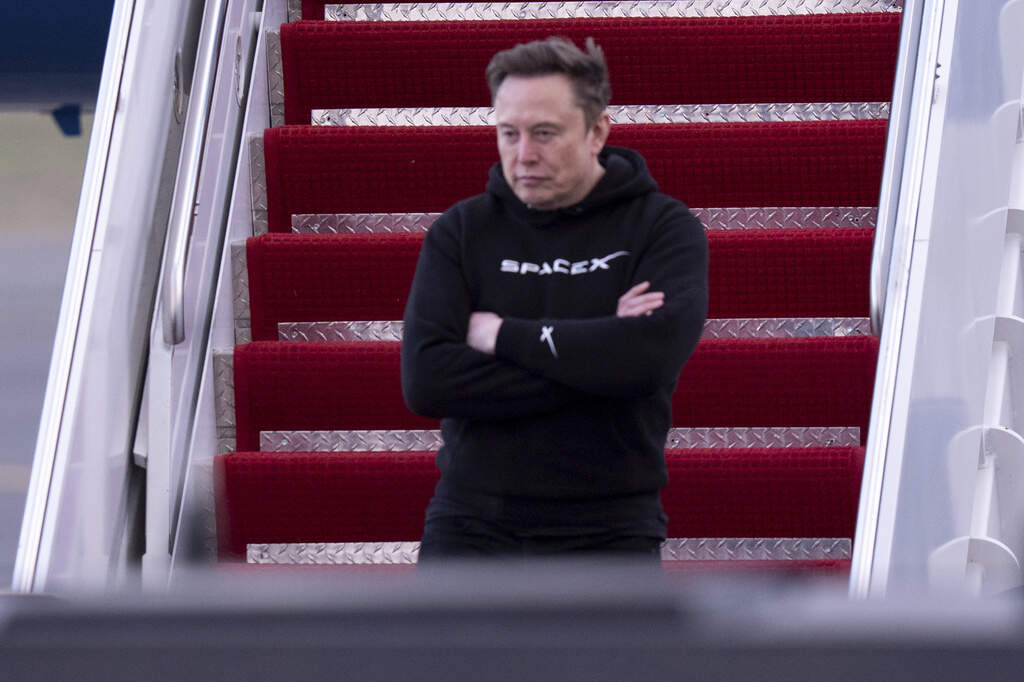
According to recent reporting, DOGE fell short of its goals to save taxpayers $1 trillion and streamline government processes. So what did we get from the agency?
Guests
David Fahrenthold, investigative reporter for The New York Times. Co-author of the article How Did DOGE Disrupt So Much While Saving So Little?
Vittoria Elliott, reporter for WIRED, covering platforms and power. Author of the article DOGE Isn’t Dead. Here’s What Its Operatives Are Doing Now.
Also Featured
George Foote, outside General Counsel for the United States Institute of Peace.
The version of our broadcast available at the top of this page and via podcast apps is a condensed version of the full show. You can listen to the full, unedited broadcast here:
Transcript
Part I
MEGHNA CHAKRABARTI: It's January 20th. Exactly one year to the day when President Donald Trump was inaugurated for his second term. And throughout this last campaign, Trump, his surrogates and his advisors made some form of the guarantee that many politicians make. Promises made, promises kept.
Well today we wanted to focus on whether Trump has kept one of the biggest promises he made during the 2024 campaign, a kind of Drain the Swamp dream on steroids. The promise was led by one of Trump's advisors and the richest man in the world, Elon Musk.
ELON MUSK: Our goal is to reduce the deficit by a $1 trillion, so from a nominal deficit of $2 trillion to try to cut the deficit in half to $1 trillion.
Or looked at in total federal spending, to drop the federal spending from $7 trillion to $6 trillion.
CHAKRABARTI: Yes. Today we are examining whether Musk and Trump's department of government deficiency or DOGE met that cost cutting goal. And not just that, we'll look at what DOGE's ongoing actions are, and lasting legacy, even as it's long since dropped out of the headlines.
So let's start with an example. March 16th, 2025.
NEWS BRIEF: We're getting some breaking news right now. The Department of Government Efficiency or DOGE has entered the U.S. Institute of Peace.
CHAKRABARTI: A little less than a month earlier, President Trump signed Executive Order 14217, continuing the reduction of the federal bureaucracy.
It called for the elimination of the U.S. Institute of Peace, and three other congressionally created organizations, then followed several weeks of pressure tactics. DOGE inquired about the status of USIP security operations. Warnings from USIP that it would not allow DOGE entry into the building without a warrant.
Secretary of State Marco Rubio firing the entire USIP board, the FBI visiting USIP's Chief Security officer who was at home on medical leave. And there were emergency meetings between USIP President and CEO, Ambassador George Moose and DOGE representatives. Because Moose was trying to explain one critical fact to DOGE.
NEWS BRIEF: U.S. Institute of Peace is the latest to be slashed by Elon Musk's, Chainsaw for Democracy. But here's the thing, it's not actually a federal agency.
CHAKRABARTI: The USIP was in fact created by Congress in the 1980s. Its mandate is to seek non-military solutions to international conflicts. But as you just heard that Washington reporter say, it is an independent nonprofit.
It owns its own headquarters building in Washington. It is not actually a federal agency. DOGE though was not deterred. On March 17th, they entered the building outside General Counsel for the USIP, George Foote was there. Now, earlier in the day, Foote had received a call from a man named Ken Jackson, who identified himself as the new acting president of USIP.
Jackson showed up at the headquarters building in a black SUV. Foote spoke to him through the window, but Jackson declined to discuss the issue. Later that same day, Foote found suspended members of the group security contractors prowling around the building. Now, remember, this was private property owned by the USIP.
Technically, those employees, DOGE employees and contractor employees were trespassing. So Foote called the D.C. police. Their arrival, though, was not what he expected.
GEORGE FOOTE: A platoon of D.C. Police, FBI agents, DOGE officials, swarmed into the building complete Trojan horse operation. I raced down there with my associate, my colleague, Sophia Lin, another lawyer in our law firm, and we had a standoff in the back utility corridor of the USIP building.
They gave me another copy of that trumped up resolution. I told 'em it wasn't of any effect. They had no business being in there. They had to leave. And with that, two or three policemen walked around behind me and they said, you have to leave the building. And I said, I'm going back upstairs to get my computer and my materials.
They said, no, you're not. They ushered us out of the building, pushed us out the back door into the driveway of the building, and up they went. They had broken into the building. They were in it. They had guns. The platoon of police went up to George Moose's office. They broke through some doors.
They got to George's office. George Moose is one of the finest public servants this country has ever known. He's been an ambassador and assistant secretary of state. He's been an ambassador in African countries that had this sort of police state action, and he handled the whole situation with aplomb telling the police that he was leaving and that we would see them in court.
And that was the end of the day.
DOGE was in the building. And later that night they ripped the name of USIP and the USIP logo off the wall in the lobby. They were metal letters affixed to beautiful marble wall. They were marching around the building, drinking beer, smoking cigars. It was a total frat house. And then over the following days, they maintained their occupation of the building.
They ate all the food in the cafeteria. They stole all the USIP flags. They did nothing except fire people and terminate contracts. They let the building get into state of minor disrepair. And we did go to court. We did get a judgment that everything they had done was illegal and ordering them to leave the building, they turned it back over to us.
We did a sort of reverse DOGE action, found out that they had broken the security gates and they'd let weeds grow up in the air conditioning, and they'd let roaches and rats in the building. Then our judgment cut stayed and they got the going back.
The point about that day and the drama of the day's events is that you have the U.S. government, the White House, DOGE, the U.S. Attorney's Office, the Metropolitan Police Department, and our private contractors, all colluding, cooperating, to evict owners of a private building. USIP is a private corporation.
Elon and his boys were, I've described it before as the brass knuckles on an authoritarian fist sent into smash an organization. And you tell me what part of the constitution is not assaulted and tattered by that process.
CHAKRABARTI: That's outside general counsel for the U.S. Institute of Peace, George Foote. Okay, so that's one example. We'll hear a little bit more about what happened to USIP a little bit later, but let's turn now to the bottom-line question about DOGE. And here to answer it is David Fahrenthold. He's investigative reporter for the New York Times.
In 2017, he won the Pulitzer Prize for his reporting on President Donald J. Trump's private foundation, and whether or not the foundation had given the money to charities that it promised to. Fahrenthold and his colleagues recently published an article in the New York Times called How Did Doge Disrupt So Much While Saving So Little?
David, welcome to On Point.
DAVID FAHRENTHOLD: Thanks for having me on.
CHAKRABARTI: I guess the headline kinds of gives it away, but did DOGE successfully cut $1 trillion of federal spending?
FAHRENTHOLD: No, not even close. In fact, they didn't cut a dollar of federal spending. In the year that DOGE was active, when they were supposed to be saving $1 trillion, spending didn't go down at all. It went up.
In the year that DOGE was active, when they were supposed to be saving $1 trillion, spending didn't go down at all. It went up.
CHAKRABARTI: And we'll talk about why and how it went up in a minute. So let's go back in time. Tell me a little bit more about the kinds of promises that, not just Trump, but specifically Elon Musk was making, how he arrived at that $1 trillion. Just remind us of the excitement amongst many that this was their chance to really take the chainsaw to the federal government.
FAHRENTHOLD: That's right. During the 2024 campaign, Musk originally said $2 trillion should be cut out of the $7 trillion budget, and then later changed it to $1 trillion. A lot of people really skeptical about that.
A lot of the federal budget is wrapped up in things that either can't really be cut. Like Medicare and social security payments or interest on the debt or things that President Trump had said explicitly that he wouldn't cut, like funding for the Pentagon. So the sliver of the budget that was actually available outside those things to be cut was pretty small.
You'd have to get rid of most of the federal government to make good on that promise. But if there was anybody who could do it, remember who Elon Musk was, how he got to be where he is. He's an incredible process engineer. He's somebody that in making cars and making rockets, he's a genius at being able to look at a process that everybody else does and find ways to do it cheaper, faster, more efficiently, and also do it just as well or better.
If there was anybody that was going to achieve this long-held dream of making the federal government efficient, you couldn't create somebody in a lab. That would, that had the experience better than Elon Musk.
CHAKRABARTI: Yeah. So David, just let me repeat something you said, because I think this is a fact that has been long forgotten in terms of the reality of what the federal government does. So I'm just going to repeat it because it's so important. As you said, the president promised not to cut the defense budget, not to cut social security, things like that, at least for now. As you said, that left, if you're going to reach that $1 trillion or $2 trillion mark, that left, basically, everything else that the federal government does, which would have to go. Correct?
FAHRENTHOLD: The Park Service, the State Department, people had this image from that movie Dave, back in the nineties, where you can just sit around and cut a bunch of wasteful stuff and then you've solved the budget problem. That's not how it is. If you really want to cut the budget, you have to cut things people are really attached to.
And Trump had said definitively that he wasn't going to do that. So there was almost nothing left that was even ripe for the cutting.
CHAKRABARTI: Yeah. And this is not to say that the government didn't need to, or still doesn't need to introduce some efficiencies, I don't, I think you'd have to be hard pressed to say that it's the most efficient operation in the United States. So this was an opportunity. Tell me more, then, about how Musk's initial, what Musk's initial strategy was in terms of the first steps starting in on January 20th.
FAHRENTHOLD: You have to look a little bit further back, okay? Remember originally the people who were supposed to head DOGE were going to be not just Musk, it was Musk and Vivek Ramaswamy, the guy's running for a governor now in Ohio.
And Ramaswamy had made a big show on Instagram of reading what was out there already about finding inefficiency in government reports from the government accountability office, from watchdog groups in government. And there was this disdain in the Musk camp of that, Oh, get out of here, nerd.
We don't need to read what other people had done. Their focus was, DOGE will find things on its own with nobody else's help and they'll find things that nobody else has found. So there was a deliberate effort not to prepare and not to see, read this really large library of what other people have done to find efficiency in government.
So they came in right off the bat and a lot of it was an attempt to go into agencies with one or two DOGE people. And what they would do is try to automate this. I'm gonna search all the contracts that my agency has for these following words. Gender, race, DEI and others things that they just were believed were markers of waste and inefficiency.
And then just say, okay, let's cut all of those. And they very quickly found that you couldn't just do that, that led them to make some really boneheaded and damaging cuts.
Part II
CHAKRABARTI: David you were telling us that DOGE basically sent in a couple of folks to lots of government agencies, they jacked into a system there and used some search terms and said anything that matches these search terms, we're gonna cut it. First of all, remind us who some of these people were.
FAHRENTHOLD: A lot of them were very young. A lot of them were folks who had worked for Musk's companies or who had worked for some other software companies.
They weren't by and large people who had any experience with government, even in the first Trump administration, they were coming into government cults. Some of them had never had really any job before. They were coming straight out of college, or they'd taken time off from college. So these are not people who really knew how the federal government works.
And I think that's an important thing to say right off the bat, because the federal government doesn't work like any other business. It's got its own language. It's got its own rhythms. If you're going to cut it, you have to understand it first.
CHAKRABARTI: So then with that being said, how did they decide on what the search terms they would use would be?
It was extremely random. So we wrote a lot about the VA, a really large government agency that went through this process and they brought in a guy who had a couple of startups under his belt. He had not really achieved that much in the private sector. He comes in and it's just what he thinks is wrong and he puts in things like contracting.
Because he thinks contracting or consulting is bad. And he puts in these search terms. He comes up with a list of hundreds of contracts, which cost millions and millions of dollars. Sends those with really little vetting. Like, I'm sure he doesn't even think he read through all of them. Sends those to the VA brass.
The VA's new installed director, this guy who had been appointed by Trump says, great. Let's do it. DOGE is here. We're gonna take DOGE's advice. And that lasts like four hours. As soon as the cuts get made. And then people within the VA start panicking and sending these all-caps messages. We got the messages later up the chain saying, wait, stop this.
Don't do this anymore. You've cut things that will shut down cancer research. You've cut down things that will, linens won't get cleaned. You've cut all these things we need and then there's an all cap message that goes out to everybody. Hey, stop that. Stop the cancellations, we just told you to cancel.
And the after that initial contact, you can see people going, oh God, like we can't trust DOGE to do this on its own. And that really changes the rhythm of how DOGE works.
CHAKRABARTI: Four hours. David.
FAHRENTHOLD: Yeah, it was so fast. It was incredible that it ever even got to that level.
CHAKRABARTI: So I want to stick with these terms here for just a second. Because you'd mentioned some of them before, like DEI, transgender, but then there were also things like the word disparities that might end up in a contract or a grant.
But of course, I guess the VA is a really good example for this. Disparities could be a word used in language for research on why are veterans, why are there disparities between the rate of, let's say, brain cancer in veterans versus the general population. They could be things that were actually entirely uncontroversial for not only President Trump himself, but all of his supporters who are very openly critical or skeptical of DEI efforts.
FAHRENTHOLD: That's right. Or even in the context of the VA, which runs a large hospital system, something like gender, doesn't always have the DEI context, like it could be something about medical care that's different to different genders.
One of the most common mistakes they made was consulting. So they were like, we don't need consultants, let's just get rid of consultants. But a lot of the things that were actually just service providers within the VA, people who cleaned the hospitals or people who, you know, looked at radiology scans, those had been coded at one point long in the past as consulting.
If you didn't look through those to see what were you really getting with these consulting contracts? They ended up cutting a lot of things that were providing valuable services the VA couldn't do on its own.
CHAKRABARTI: I don't know if you were able to ask this of Musk or anyone even close to him, would he have actually run his own business this way?
FAHRENTHOLD: No. We weren't, we asked and he didn't answer, but there was so many parts about DOGE, the sloppiness. We observed the lack of quality control, the lack of attention to detail, that if you ran Tesla that way, the cars would all, they come out with three wheels. There's no way he would've run the rocket company, SpaceX or Tesla, with this lack of care toward the final product.
CHAKRABARTI: And yet he was not only allowed to, I mean he did it. He did it until other things unrelated to DOGE undermine his relationship with President Trump. It is quite remarkable. I wonder if this also just reveals a general, something more important, but just a total and general disrespect for, as you said earlier, how government works. The presumption by Musk, since he is the richest man in the world, very successful in Silicon Valley.
That thinking could automatically just translate to the clunkiness of the federal government.
FAHRENTHOLD: It is, there was a real sense that they could come in, in days and weeks, in this short amount of time, understand not just one complicated federal agency like the VA, but all federal agencies and understand how the whole system worked and build ways to slash it.
Systematically. There was no need to go through contract by contract. There was no need to go look at hospital by hospital. They could find a way to just write a computer code and slash it systematically from Washington.
CHAKRABARTI: Yeah. Okay. So let's get into the sort of really detailed research you and your team did.
I just clicked on DOGE.gov/savings. It's still there.
And right now, January 20th, 2026, it says estimated savings by DOGE, $215 billion, which is a little shy of the $1 trillion they promised. But you and your team looked at this same list of canceled contracts and grants and you found that the 13 largest claimed cancellations were all incorrect. So take me in detail through what you found.
FAHRENTHOLD: I think the place to start with this is last year in February, they put out what they call the wall of receipts, which is what you're talking about. This website where they list all of the largest contracts that they claim they've cut and the savings they achieved by each.
So what we did that first day, some of my colleagues, was just sort that list, the first day it came out, sorted by size. And then let's start looking in detail at the largest contracts. They look at the largest one on the list. It's an $8 billion contract. They say they've saved $8 billion with a B by cutting an ICE contract.
And so my colleagues looked and within seconds learned that was wrong and it was wrong by a factor of a thousand. It was actually an $8 million contract, so a thousand times less. But what's important to know is to see the sloppiness and the lack of care that goes into that, because it should have been obvious to anyone who thought for two seconds about that, that was wrong.
Because at the time, ICE's budget was not more than $8 billion. So to believe that was right, to believe the most important, largest thing on their list was right. You'd have to think that ICE had given its entire budget away to one contractor for sort of a general services contract. It's implausible, but they believed that so much they put it out on their list and showed it to the public.
And that's where we started looking at this and what you described as right. Even after months and months of us pointing out these errors, the list right now, it's still top 13 items on it are all wrong, and they're not wrong by a dollar.
Many of them are off by hundreds of millions or billions of dollars.
CHAKRABARTI: They're wrong in terms of the savings claim.
FAHRENTHOLD: Yeah, just to give you a couple of examples. So in some cases they count the same contract twice. Like it's even if it's on their list right next to each other, two versions of the same contract.
They did cancel it once, but you can't cancel it twice. Or they would basically do something called they would deal with something called the ceiling value. And this is where it's important to understand a little bit how the government works. Government contracts, many of them have what's called a ceiling value, which is a sort of a credit limit for the contract.
It's the highest amount the contract could ever reach. But in practice, no. Most contracts don't reach that level, and there's a separate process for determining how much they're actually going to be paid. So what DOGE would do is just lower the ceiling value. Say the ceiling value was $2 billion, we're ticketing down to one $1.8 billion.
And then say, Hey, we saved $200 million. You didn't save anything. That's just a theoretical change that was never gonna affect the amount, the money that was actually spent. So they did that again and again, making that error pretty systematically and adding billions of dollars in basically paper savings.
CHAKRABARTI: David, other than deep digging reporters like you and there were many who were continuously looking at this. And other than DOGE's already extant natural critics, did anyone within the administration start saying, Hey, maybe we gotta get our numbers right. As you're saying, it almost defies belief, and yet it happened.
FAHRENTHOLD: There was, you remember at the beginning of DOGE, there was such an allergy to any sort of accountability at all. Any sort of transparency. Musk talked about transparency, but in reality, they wouldn't even tell you who the names of their employees were. They wouldn't tell you the people who were doing this work.
And so after we reported an $8 billion error and a bunch of other mistakes in their first version of the receipts, they actually did delete them. To me that was, it's not much, right? They didn't fix all the problems, but they deleted some of them. That was like a small gesture in the direction of accountability, transparency, and the truth, which DOGE had been content to ignore until then.
That is about as much sort of response as we ever got. That did delete a lot of the mistakes, but not all of the mistakes that we pointed out. But there was never a public acknowledgement. That, wait a second, DOGE is not, maybe they don't really know what they're doing.
Maybe they've been given too much power. We never heard from anybody in the administration who said, okay, wait, maybe you found something fundamentally wrong with DOGE.
CHAKRABARTI: David, I always, over the past year, I've been thinking about how we, in the media, we use specific language for style and ethical reasons. But I wonder if it's time to change that. Because you said accurately that they were, the truth which they were content to ignore. In the reporting, you say, was this a question of DOGE being an exercise in budget cutting or in deception?
But it seems to me, and I'm not putting you specifically on the spot, this is actually a question about us in the media as a whole, and our role in normalizing what is just beyond the realm of acceptable behavior. Is it time for us? I'll say it, that these guys were just lying.
They were lying to the American people, the president. They were just lying.
FAHRENTHOLD: That's something we struggle with all year long. And there were certainly some things in here that seemed like extreme sloppiness.
Carelessness. And you could look at, when we wrote about the VA, you could see examples of what seemed to be that the agency itself recognizing, hey, DOGE isn't doing any vetting at the stuff that we send them.
They're like Ron Burgundy, if we give it to them, they'll put it out there in public. So they would send them things that were clearly bogus. We canceled a contract for this chaplain in Denver, without saying the chaplain died four months ago. And DOGE would just accept it and put it out there.
So there was some element of extreme carelessness that I think agencies exploited. And sent in bogus cuts to avoid having to make real cuts. But that thing I talked about earlier about the ceiling value. That's a choice DOGE made. It's a choice that we and a number of other people pointed out back during 2025 that was bogus.
It was producing, quote unquote, savings that meant nothing to the actual budget, and they continued to do it. So that is a choice that they made to exaggerate on a giant scale their progress. The word lie, I don't know what, it's hard to say, when do you call it a lie versus something else.
But clearly in this case, they made a deliberate choice to exaggerate their own success, and they did it at a giant scale, and they kept doing it even after everybody pointed out that it was bogus.
[DOGE] made a deliberate choice to exaggerate their own success, and they did it at a giant scale, and they kept doing it even after everybody pointed out that it was bogus.
CHAKRABARTI: So let's call it BS for now. Okay, but the ceiling value, I'm looking at an example, and this one has to do with USAID.
Which I mean is gone essentially now, but it was really interesting. I did not know about this until I read your story that there was a 10 year tech contract with the consulting firm. Again, there's consulting in there with the consulting firm, Accenture. And the ceiling value was what, $325 ish million?
$312, that's what you said. $312 million. DOGE claimed it saved all of that, but the actual amount spent was, what, like a tenth of that.
FAHRENTHOLD: Much, much smaller.
CHAKRABARTI: Less than a tenth of that.
FAHRENTHOLD: And that's a case where there was an extra layer of obscurity. So DOGE, when it listed on the wall of receipts, it listed that contract, without identifying information, it just said, Hey, we saved $312 million.
Trust us. And it took us a lot of effort to get past their obfuscation and figure out which contract they were talking about. And then you're right, in that case, we found out that the actual amount of money, that there was some savings, that the contract really was canceled, but it was just much, much smaller than the $312 million they claimed.
And they did that again and again. And certainly they knew or should have known that extra 90% was bogus.
CHAKRABARTI: And so let's stick with USAID for a second because as people have known for quite some time, and you rightly touch upon in this reporting, while fictional savings were being touted by DOGE, the actual cuts that were made at USAID. Have we been able to quantify the amount of real world pain that caused?
FAHRENTHOLD: That is very hard to do. And I think you've hit on a really important point we wrote about, was that DOGE didn't reach its savings goal at all. It didn't save a dollar, and it created all this sort of bogus smokescreen that hid the fact that it was not saving money. But that, I don't want people to get the impression that DOGE didn't change anything.
It changed a lot. Especially at USAID, it got rid of almost this entire funding apparatus that people depended on around the world and there were all kinds of impacts we talked to from West Africa, Yemen, all these places that we're experiencing famines or civil wars. Or people were depending on that money to serve starving people, to serve pregnant mothers, to all these vulnerable populations.
So there was a huge disruption in that. The problem was that for DOGE, those savings as impactful as they were for the people in Yemen or the people in these aid programs were tiny in the context of what they said they were gonna achieve, tiny in the context of the federal budget.
And so to square that circle they caused a lot of disruption, but they didn't make anywhere near the progress they said, that's where these deceptions come in. That's where these sort of inflated numbers come in. To make it seem like that all added up to more than it really did.
CHAKRABARTI: Were you able to find a way to describe how many of these contracts, et cetera, were actually reinstated after the initial sort of burn it all down actions of DOGE.
FAHRENTHOLD: We made some efforts at that and it's hard to do because there's 13,000 contracts on DOGE's list. But there certainly were examples, and some very large ones of, as you said. Contracts that were canceled, were put up on the list. And then somebody, like we talked about at the VA, comes back and says, Hey, wait, we need that.
We can't do the whatever thing the public expects us to do. We need that. So the contract gets reinstated, but it stays on DOGE's walls. It counts as a cancellation for DOGe, even while it's back up and running. And the people involved in it don't see a difference.
CHAKRABARTI: ... The reporting also makes a really important point here.Because we've generally been talking about the big-ticket items, right? USAID, contract cuts from NIH, et cetera. But I was really moved by the last part of you and your team's piece, and that is the federal government really reaches into American's lives.
In so many ways, and a lot of these cuts were like for programs that go, went on in local libraries, for art pieces that were supposed to go outside a federal building to beautify the space. Things that people could actually touch, see and feel. Can you talk about that for a moment?
FAHRENTHOLD: That's right. A lot of the contracts on this list, a lot of the savings on DOGE's list of 13,000 or whatever, were really small. The savings involved was a few hundred, a few thousand, maybe tens of thousands of dollars. And those things, yes, they were small, but they meant a lot in the places where they were gonna be.
And we talked to some people who ran a library program in Baltimore. Public art programs. It was not just folks and aid programs overseas that were impacted. There were a lot of programs that were canceled in the U.S. and their response was bewildering. Like why did DOGE care about my public art project and how is the country better off in a measurable way because this thing was canceled?
It was not just folks and aid programs overseas that were impacted. There were a lot of programs that were canceled in the U.S.
Like why would they put in the effort to cancel this thing if it saved so little money?
CHAKRABARTI: Yeah. Baltimore you mentioned, this is the Port Discovery Children's Museum in Baltimore that you reported on. They had a $200,000 grant from the Institute of Museum and Library Services, and they were supposed to use that money to connect with families and children, and they received a letter saying the program no longer met agency priorities and said "no longer serves the interest of the United States."
Part III
CHAKRABARTI: Let's listen together to Vittoria Elliot, she's a reporter for WIRED, covering platforms and power. She has been covering DOGE and its legacy extensively. And she has a new article in WIRED called DOGE Isn't Dead. Here's What Its Operatives are Doing Now. Vittoria, welcome to On Point.
VITTORIA ELLIOT: Thank you so much for having me.
CHAKRABARTI: Tell me about Yat Choi.
ELLIOT: First off one of the things that I think is important to note when we're talking about DOGE and what it's doing now, the way Musk ran DOGE was actually quite similar to how he took over Twitter. The zero-base budgeting, the cutting everything that's humanly possible, and specifically removing people who are often in positions to protect users.
In the case of Twitter. And we saw that a lot with how those roles were removed from the federal government. So I wanted to point that out because I think we actually do see a lot of parallels with his business practices, including not really caring very much about the rules. So Yat Choi is very interesting because from what we were able to identify, he appears to not be an American citizen.
And that is incredibly important because it's actually very difficult for people who are not Americans to work within the U.S. federal government. Particularly on sensitive types of work. Yat Choi, from what we understand, is part of the National Design Service and that is headed by Joe Geia, one of the co-founders of Airbnb, former co-founder now in the federal government.
And that sort of has this focus on redesigning federal websites. So they've put out some stuff showing the redesign of certain federal websites, but it's unclear what they're doing beyond that. It seems like it's been a safe landing pad for some of the DOGE members, but many others remain in government, in other places.
And I think one of the things that's interesting that both Musk and Geia talked about, when they were part of DOGE was this Apple Store like experience they wanted to create out of government which really informed their work in combining data that really has never interacted across federal agencies before.
CHAKRABARTI: Okay. So much to ask you, Vittoria. First of all, regarding Yat Choi, the closest you could get to what his nationality might be was Canadian. Because he's referred to Canada as home.
ELLIOTT: Yes. Okay. Got it. And I do want you to bring some of the, let's call it colorful detail of Choi's social media presence over the past few months, because I think it's important to hear this, to understand the attitude they bring to some of the fundamental purposes of the federal government.
Like what has he been posting recently?
ELLIOTT: He has been posting pictures of himself and his work, seemingly at different government functions and events, there have been images that we've seen where it appears there's a whiteboard in the background. And given the type of work that they appear to be doing, that is very sensitive. And so there is this sort of cavalier attitude that I think we saw across the DOGE members.
George Foote, who you heard at the top of the hour, we spoke for a panel for WIRED sort of end of year event at the end of last year. And he mentioned that there. The DOGE members left a substantial amount of weed, for instance, in the USIP office. So this sort of very cavalier way of approaching government and their work. That really mirrors the rowdiness of a tech startup is something that we continue to see.
CHAKRABARTI: Yeah. You reported that on Instagram, he described his work as ongoing, making a Jay-Z reference also, and he says, Jay-Z, I showed them the blueprint back in April. Now going back to the mine to lead the pilots this week, and this is also, this is one of those interesting things that no one realizes the government does, but it's really important that he was returning to an underground Pennsylvania mine where federal retirement claims are processed.
ELLIOTT: Yes, and actually my colleague Caroline Haskins has a whole piece on the mine and why, and that it seems like this crazy expenditure, but actually has real uses. So I don't want to pretend to be the expert on that particular project, but we also as a team did look into that.
CHAKRABARTI: Okay. So he is just one example though, of what you and your team have found, and have reported on. That Elon Musk may be out of the headlines. DOGE itself may be out of the headlines, but by no means can anyone say that DOGE operatives or even the way, the kind of thinking that DOGE sought to introduce in government operations is gone.
It's still very much there.
ELLIOTT: Yeah. So I think, you know, what Sahil Lavingia, the DOGE operative that we identified at the VA said to me at the time was that DOGE was a convenient sort of scapegoat for parts of the Trump agenda that were wildly unpopular and might be very difficult to push through.
Particularly the massive cutting of the federal workforce. That they were a really great tool to move that forward, and that's something that predates Elon Musk, obviously. That was something that's part of Project 2025. That's something that Russell Vought, who's now head of OMB, has been very public about wanting to do.
So I think even in just looking at the state of the federal government right now with the cutting of the contracts, the cutting of federal workers, that is the DOGE ethos continuing. Similarly, one of the things that, you know, DOGE needed to do in order to create this quote-unquote Apple store like experience that they're selling to the public, is access vast amounts of federal data and start collecting them and knitting them together in a way that's never been done before.
And that is ongoing. For instance, the SAVE database, which is run by U.S. Citizenship and Immigration Services, it's the database that tracks the immigrants who are in this country legally, or people who have asylum claims, et cetera, that has been knit together with information from Social Security.
From the IRS, from other parts of DHS, in a way that appears to be geared towards both immigration enforcement and state voter data. That I think we are now starting to see as a tool to get people off the voter rolls who are suspected of being immigrants who are voting.
So even though DOGE is not necessarily the face of this push to use technology to be the accelerator of the administration's agenda, Musk was very open in saying that all he needs is access to the computer systems. He doesn't necessarily need anything else. So the idea that technology could be this way of bypassing laws and norms and regulations and all the sort of things that you might need to do, if you want it to, say, shut down an entire federal agency, that continues.
Technology could be this way of bypassing laws and norms and regulations.
CHAKRABARTI: I'm going to come back to you in a second, Vittoria, but David, I just would love to hear your thoughts about this.
FAHRENTHOLD: Yes. I'm really interested in the questions of how these databases coming together. I do think that could, in many ways, be the most important long-term legacy of DOGE.
If we start to see that the government is able to marshal all this data and the service of immigration enforcement, for instance, or if the IRS comes and ask you about your immigration status. If the government's priorities are suddenly able to be acted on by all these independent agencies. And that bureaucratic firewalls don't stop them anymore. That interaction with the federal government could be so different in a couple of years that we see that as DOGE's actual biggest impact.
CHAKRABARTI: Yeah. Vittoria, on that, I was going to ask. You said it's never been done like this before, implying that the data within a particular agency was largely siloed. Now was that because of just longstanding bureaucratic inefficiency?
Or was it to protect Americans and their data? And I asked that because on first listen, you could actually, I imagine, I can't imagine that like bringing together streams of data could be a great way to improve services for Americans, if that's how they choose to do it. But you're saying that's not, so why were these sort of giant databases siloed beforehand?
ELLIOTT: So there's a very critical piece of legislation called the Privacy Act of 1974, and part of what is encompassed in that is that an agency or part of the government can only use your data when collected for what it's collecting it for, which means if you are turning your information over to the IRS to pay your taxes, you should not, surprise, have that data one day used for an immigration thing or to somehow be used to determine your access to a medical care or medical services.
The idea is that whatever you turn over to the government, they're telling you upfront this is what we need it for. And it's not gonna be used for anything else unless they publish something called a system of records notice, which is a sort of update saying, Hey, now we share data for this purpose with this agency.
Or now this type of data might go here or there, but the point is there's a procedure so that Americans can understand that, A, when you turn your data over to a government agency, it's not going to be used for purposes you are unaware of. And B, if that changes, there's some sort of public record that you can look at to understand what's happening.
And that does create a lot of inefficiencies and that is very annoying. But some, and I don't think any federal worker that any of us have ever spoken to would argue that everything works perfectly, that there are no improvements that can be made. But there is a difference between saying there are specific processes that could be better and things are inefficient.
Because the reality is that we are a government of over 300 million people and errors at that scale can ruin people's lives. And I think a really great example of this is data doesn't always match up. There's a lot of issues often with cleaning. I don't know if anyone's ever had the experience of someone having a same name as them.
And suddenly you're getting their emails or their mail. There is someone else with my name who is an academic, I am regularly tagged in her academic papers. Now imagine that you have different government agencies that update their data at different times for different reasons and suddenly all those data sets are mashed together.
You might be listed at the wrong address. You might have gotten married and changed your name. You might have gone from someone who's here on a green card to being a naturalized citizen. What happens when all those things are mashed together and some of those things are not correct? That's the problem.
And when you're someone like Musk who's maybe running a tech company and you have errors on something like that, it'll be an annoying customer service experience for somebody. But it's not gonna change whether or not they can get social security benefits. But that's what happens when it's U.S. government data.
CHAKRABARTI: So that's exactly, that's such an important point because we've mentioned the word efficiency. A lot. Today it's like a byword at Silicon Valley. I would also say optimization. I think I've had conversations with Silicon Valley folks where they use some version of optimize, like, in every other sentence, and that works in Silicon Valley.
You might have a project that fails, at worst case, maybe your shareholders take a temporary hit. But it's fundamentally different than supporting the actual lives of people, which is what the federal government ideally does. And so David, let me ask you, we've only got about three or four minutes left and I want to get some, wrap some final thoughts from both of you.
What do you think the long-lasting impact then or the legacy of DOGE will be?
Because I can also hear in my head voices of some listeners who might be saying, actually my life hasn't really changed at all, but I still get the services I need. Maybe USAID's cuts were terrible for people abroad, but didn't have an impact on me.
What would you say the legacy is for the American people?
FAHRENTHOLD: And just as a first thought, what Vittoria said about matching these data together, it gives me chills because we talked earlier about the database that we've been able to see DOGE's attention to detail most clearly was the one that I talked about.
And there are mistakes all over the place, all kinds of errors. So I wouldn't want those same people with that same level of attention to detail matching up the right John Smith to make sure that people get the same information that belongs to them, but as a broader thought, even if that doesn't cause disruptions in people's lives. I think one of the biggest impacts here has been the sort of reduction in America's ambitions.
The reduction in workforce, the reduction in USAID abroad, the reduction of the sense of like moral purpose to the U.S. government. I think that's a really interesting element of what DOGE said, which is it has to pay for itself.
It has to be efficient. So things like USAID that did good in the world, we're getting rid of them. I think there's been a reduction overall in this sort of sense of America's mission to do good in the world, even if it is slower or more costly.
And I think that will be interesting to see if that ever snaps back or if that's just a change in the way that we see the role of government that it should be, if it can be cheaper, it should be cheaper, even if it doesn't produce the same amount of good in the world.
CHAKRABARTI: Yeah. And Vittoria, same question to you. The lasting effect, because as you've reported, people in various agencies have told you that DOGE operatives, DOGE employees are now buried into various agencies, quote-unquote like ticks. So this new way of thinking of efficiency for the sake of efficiency driven for political purposes as well.
It's not going away.
ELLIOTT: No, it's not. I think that we still see the desire to cut the federal government down to the bone in many ways. And I think it's interesting. Because I used to work in international development and efficiency was always a sexy word that donors loved. Because they wanted to know that they weren't wasting their money on something stupid.
They wanted to make sure it was all going to feed somebody or run a program or whatever. The question to always ask is efficient for whom? Something that might be run very efficiently, might give you poor results. And I think we've seen that a lot with DOGE. Sometimes, as David just mentioned, the best services are not the cheapest or the most quote-unquote efficient ones, but they are ones that take care of people or protect people.
For instance, keeping data separate. And secondarily, I think, when we're dealing with people like Musk who come from the tech industry, who have been really successful, who have a lot of money that they feel proves their success, there's this sort of feeling that somehow the government could never do what they did.
But my question, I think always is the government meant to make a new iPhone or is the government meant to take care of a wide diverse group of people across many different parts of this continent who have very different lives and all of them need to have equal access to the same kinds of support that we all are used to.
The first draft of this transcript was created by Descript, an AI transcription tool. An On Point producer then thoroughly reviewed, corrected, and reformatted the transcript before publication. The use of this AI tool creates the capacity to provide these transcripts.
This program aired on January 20, 2026.